

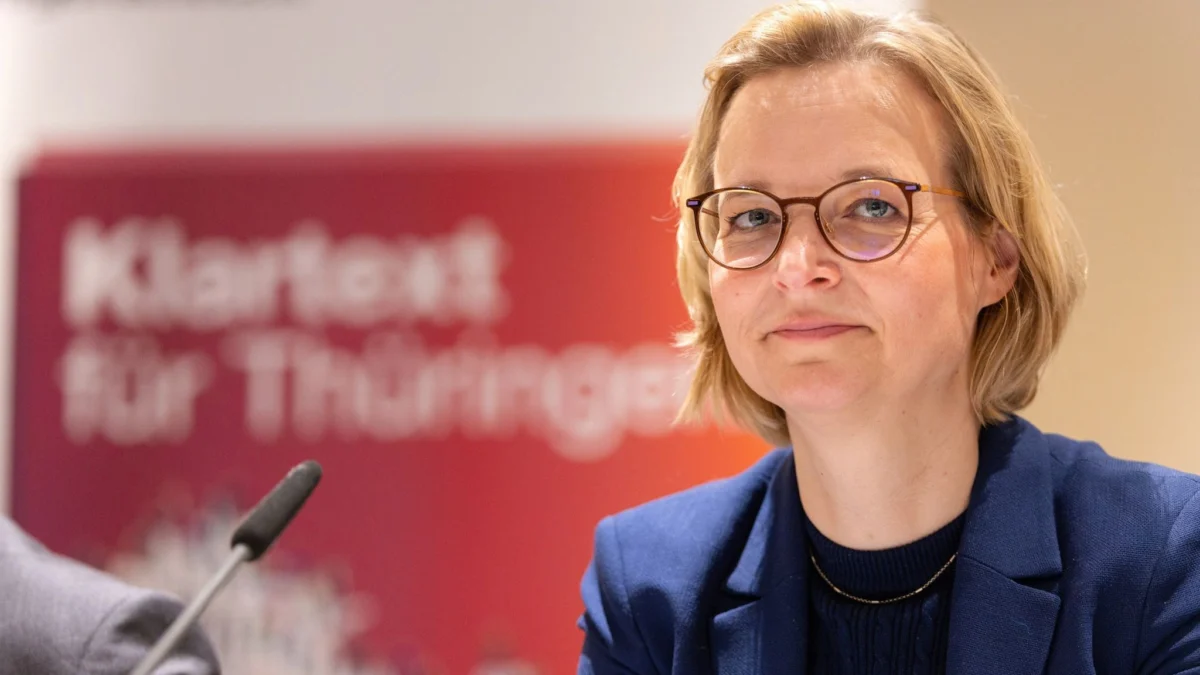
Following a significant internal rupture, a substantial faction of former members of the Bündnis Sahra Wagenknecht (BSW) in Thuringia has formally established a new political entity named "Thuringia.Gerecht" (Thuringia.Justice). The former state leader of the BSW and ex-Minister of Finance, Katja Wolf, has been elected as the inaugural chairwoman of this new party, as confirmed by founding members in Erfurt. This development marks a pivotal moment in the state’s political dynamics, particularly in the wake of a mass departure from the BSW parliamentary group that has dramatically altered the composition and stability of the Thuringian Landtag.
The Unraveling of the BSW in Thuringia
The genesis of Thuringia.Gerecht is intrinsically linked to the recent, rapid dissolution of the BSW’s presence within the Thuringian state parliament. Over the course of just a few days, nearly all members of the BSW parliamentary group declared their exit from the party. The most significant wave of departures occurred on a Friday, when ten parliamentary representatives and the entirety of the state executive board announced their withdrawal from the BSW. This followed an earlier exodus on Wednesday, where three members had already resigned from the then 15-strong faction. This series of events effectively dismantled the BSW’s parliamentary representation in Thuringia almost overnight, leaving its political future in the state uncertain.
Despite the mass defections, the BSW parliamentary group itself has asserted its continued existence. Sigrid Hupach, the group’s chairwoman, emphasized that deliberations regarding the path forward would take place in an upcoming group meeting. This suggests an internal effort to salvage some form of political continuity, even in the face of such profound internal division. However, the formation of Thuringia.Gerecht by a significant portion of these departing members indicates a decisive move towards establishing an independent political force.
Thuringia.Gerecht: A New Force and Potential Government Ally
The emergence of Thuringia.Gerecht could have immediate and far-reaching implications for the current governing coalition in Thuringia, led by Minister-President Mario Voigt of the Christian Democratic Union (CDU). The new party, under Katja Wolf’s leadership, presents a potential new parliamentary ally for the Voigt administration. Wolf has explicitly stated her continued commitment to supporting the state government and upholding the existing coalition agreement between the CDU and the Social Democratic Party (SPD). This stance suggests that Thuringia.Gerecht could provide a crucial parliamentary majority, offering stability to a government that might otherwise face challenges.
The political context in Thuringia is complex. The BSW, a relatively new political party founded by Sahra Wagenknecht, has positioned itself as a critical voice on issues of migration, economic policy, and foreign affairs, often challenging established political norms. Its entry into state parliaments was anticipated to disrupt the existing political equilibrium. However, the internal conflicts that led to the Thuringian exodus suggest that the party’s national direction and state-level implementation have diverged significantly.
Underlying Causes of the BSW Breakaway
According to Katja Wolf, the primary catalyst for the rupture was the perceived shift in the national trajectory of the BSW. She articulated that the party had moved away from its "founding consensus" and that she no longer saw a viable shared path with the Berlin party leadership. Wolf’s statements point to a fundamental disagreement on the party’s ideological positioning and strategic direction. She specifically criticized the BSW for what she described as "flirting with right-wing radicals," indicating a deep concern about the party’s engagement with certain political elements and its broader public image. This suggests that the Thuringian faction felt the national BSW was alienating the very voters it sought to attract by deviating from its initial platform and embracing controversial alliances or rhetoric.
The BSW’s national platform has indeed been a subject of intense debate. While aiming to attract voters disillusioned with traditional parties, its stances on issues such as immigration and the war in Ukraine have drawn criticism from various political camps. The departure of Wolf and her colleagues in Thuringia appears to be a direct response to these national controversies, with the Thuringian group seeking to chart a course that aligns more closely with their interpretation of the party’s original goals and broader public sentiment.
Timeline of Events: A Rapid Political Realignment
To understand the full scope of this political development, a chronological overview is essential:
- Recent Weeks/Months: Growing internal tensions within the BSW, particularly concerning the party’s national strategy and its alignment with perceived "founding principles." Reports of dissatisfaction among state-level organizers and parliamentarians begin to surface.
- Wednesday Prior to Article Date: The first significant fissure within the BSW parliamentary group in Thuringia. Three members depart from the then 15-strong faction. This signals the initial unravelling of the BSW’s parliamentary strength.
- Friday Prior to Article Date: The mass exodus. Ten parliamentary representatives and the entire state executive board formally announce their resignation from the BSW. This action effectively dissolves the BSW’s parliamentary group in its original form.
- Following Days (leading up to Article Publication): The founding members, including Katja Wolf, announce the establishment of the new party, "Thuringia.Gerecht." Katja Wolf is elected as its chairwoman.
- Immediate Future: The remaining BSW parliamentary group, led by Sigrid Hupach, plans to convene to discuss its future course. Thuringia.Gerecht aims to provide parliamentary support to the state government.
This rapid succession of events highlights the volatile nature of new political movements and the challenges of maintaining ideological and strategic cohesion across different levels of government.
Potential Impact on Thuringian Governance
The formation of Thuringia.Gerecht and Katja Wolf’s commitment to supporting the Voigt government carry significant weight for the political landscape of Thuringia. The state has been governed by a coalition of the CDU, SPD, and the Greens, but this coalition has faced challenges in maintaining a stable majority. The departure of the BSW members had created a precarious situation.
If Thuringia.Gerecht can consistently provide parliamentary support, it could solidify the position of Mario Voigt’s government, allowing it to pursue its legislative agenda with greater confidence. This could be particularly important in a state where political alignments have been historically fluid. The BSW, in its previous form, had aimed to be a disruptive force, but its internal divisions have led to a different outcome. Thuringia.Gerecht, by contrast, appears to be seeking a more collaborative role within the existing state political framework.
The implications extend beyond mere parliamentary arithmetic. It raises questions about the future of the BSW nationally and in other states. The Thuringian experience could serve as a case study for the challenges of building a new party from scratch, managing internal dissent, and translating national ambitions into effective state-level politics. The success or failure of Thuringia.Gerecht could influence how similar political movements are formed and function in the future.
Broader Political Context and Analysis
The events in Thuringia are unfolding against a backdrop of significant political shifts across Germany. The rise of new parties, the fragmentation of traditional political blocs, and the increasing polarization of public discourse have created a dynamic and often unpredictable political environment. The BSW itself emerged from a desire to address perceived shortcomings in the platforms of existing parties, particularly regarding economic inequality, social policies, and a critique of Germany’s foreign policy.
However, the internal struggles of the BSW, as exemplified by the Thuringian exodus, suggest that ideological purity and broad appeal are difficult to reconcile. The desire to remain true to a founding vision can clash with the practical necessities of coalition-building and electoral success. Katja Wolf’s emphasis on "founding consensus" and her criticism of "flirting with right-wing radicals" highlight the tension between maintaining a distinct ideological identity and avoiding political isolation or controversy.
Furthermore, the potential for Thuringia.Gerecht to support the CDU-SPD coalition raises interesting questions about political alliances. While the CDU and SPD are traditional rivals, they have found common ground in a coalition government. The addition of a new, potentially centrist or pragmatically oriented party could alter the balance of power within this alliance and influence policy decisions. It also underscores the evolving nature of political alignments, where traditional party loyalties may be superseded by strategic considerations and shared policy objectives.
The fragmentation of the BSW in Thuringia serves as a potent reminder that political movements, especially those seeking to disrupt the status quo, face immense internal pressures. The ability to manage dissent, maintain a coherent message, and adapt to changing political realities are crucial for long-term survival and influence. The establishment of Thuringia.Gerecht, with Katja Wolf at its helm, represents a significant attempt to navigate these challenges and carve out a distinct political identity within the Thuringian Landtag. Its future trajectory will undoubtedly be closely watched by political observers across Germany. The party’s ability to deliver on its promise of "justice" for Thuringia, and its role in the state’s governance, will be critical determinants of its success.
