

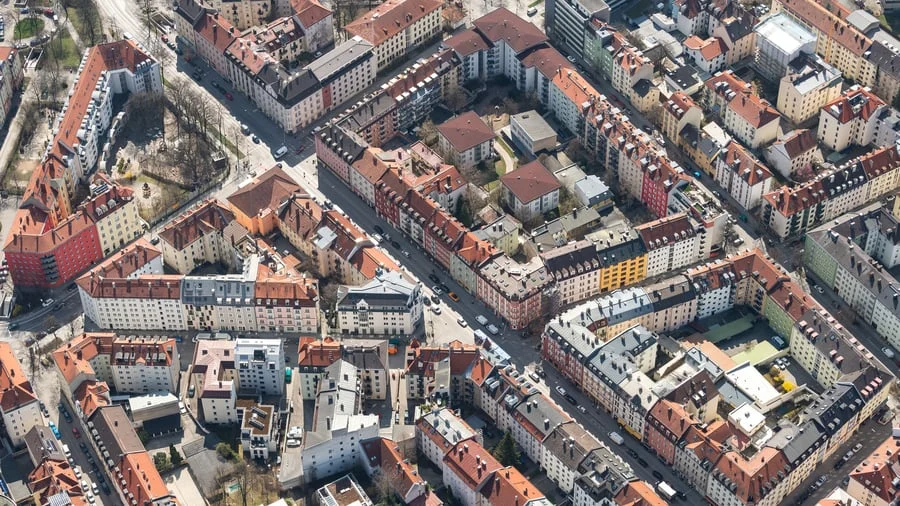
The European housing market is facing an increasingly challenging landscape, characterized by escalating rents and soaring property prices. A recent analysis by the consulting firm Deloitte, detailed in its "Property Index," has revealed a significant shift in the continent’s most expensive urban centers. Munich has now ascended to become Europe’s priciest metropolis for new residential properties, a notable rise from its third-place position in the previous year. This development underscores a broader trend of rising housing costs across major European cities, impacting affordability and contributing to structural housing deficits.
Deloitte’s "Property Index": A Snapshot of European Housing Markets
The comprehensive study by Deloitte meticulously analyzes asking prices for new build properties in 71 large European cities. The findings highlight not only Munich’s dramatic ascent but also the strong presence of German cities within the top tier of most expensive real estate markets. The report indicates that Germany is emerging as one of the most costly regions in Europe for property acquisition.

According to the investigation, the average price for new build apartments across Germany has seen a substantial increase of over eight percent, rising from €4,800 to €5,200 per square meter. Munich, in particular, now commands an average of €11,200 per square meter, a premium of approximately €400 compared to the previous year. This surge has propelled Munich past Paris, the French capital, which previously held the top spot. The Deloitte study, which compares housing markets in 25 European countries for the year 2025, offers a stark illustration of the widening price disparities between major European metropolises.
It is important to note the methodology of the "Property Index." The study focuses on asking prices for new construction and does not differentiate between prime and average residential locations. This means that the reported prices represent the general market sentiment for new developments, rather than the absolute highest prices achievable in premium areas or the lower end of the market.
German Cities Dominate the Top Ten
The Deloitte report reveals a striking dominance of German cities in the European real estate hierarchy. Beyond Munich’s lead, three other major German metropolises have secured spots within the top ten cities with the highest property prices. This signifies a robust and expensive housing market within Germany itself, even when compared to established high-cost hubs like Luxembourg and Amsterdam.

Hamburg and Frankfurt, for instance, are now tied for fifth place, with both cities reporting an average price of €7,700 per square meter. Following closely, Berlin occupies the seventh position with an average of €7,500 per square meter. This consistent presence of German cities at the upper echelon of the price spectrum underscores the significant investment and demand driving these markets.
Munich’s Unprecedented Price Tag
The sheer cost of property in Munich is particularly eye-opening. A new 100-square-meter apartment in Munich, based on the average asking price, would theoretically cost €1.12 million. This figure excludes additional costs such as property transfer tax, notary fees, and potential real estate agent commissions. In contrast, a similarly sized new build apartment in Frankfurt or Hamburg would be available for an average of €770,000, revealing a substantial price difference of €350,000 between Munich and these other major German cities.
This significant price gap highlights Munich’s unique position within the German and European markets. While cities like London and Amsterdam are often cited as benchmarks for high living costs, Munich’s new build prices are now considerably higher. This raises questions about the underlying economic drivers and supply-demand dynamics that have led to such a pronounced price escalation in the Bavarian capital.
Challenging the Perceptions of Other European Capitals
The Deloitte study also offers some surprising insights into the pricing of other well-known European capitals. Paris, despite its long-standing reputation as one of Europe’s most expensive property markets, is ranked lower than expected in this specific comparison. According to the Deloitte figures, the average asking price in Paris for new builds is €5,754 per square meter. This places Paris below Berlin, Hamburg, and Frankfurt, and even below other capitals like Madrid (€6,135), Lisbon (€6,320), and Helsinki (€6,131).
This finding, however, warrants careful consideration of the study’s methodology. Deloitte’s "Property Index" primarily focuses on new construction. In historic cities like Paris, where a significant portion of desirable housing stock comprises older, established buildings in prime city center locations, the prices for these existing properties can differ significantly from those of new developments. Therefore, while the Deloitte figures indicate a lower average for new builds in Paris, it does not necessarily imply that overall property ownership is more affordable in the French capital compared to German cities like Berlin or Hamburg.
Similarly, for Amsterdam, the study notes that its statistics incorporate both new and existing properties, and the figures are not adjusted for variations in apartment size, amenities, or location quality. Consequently, the data for Amsterdam, while indicative of market price levels, does not allow for a perfectly uniform comparison of identical properties.

The Underlying Cause: A Structural Supply Deficit
Nina Schrader, Partner and Lead Real Estate at Deloitte, attributes the current market conditions to a fundamental issue: a structural deficit in housing supply. She states, "The current price and rent developments show that the German housing market is no longer primarily driven by cyclical economic factors, but by a structural supply shortage."
Schrader elaborates on the societal implications: "The consequences of this development are increasingly noticeable socially: housing is becoming less affordable for more and more households and is developing into a central location and competitive factor for cities and regions." This perspective suggests that the escalating prices are not merely a reflection of economic booms but a symptom of a deeper, systemic problem in providing adequate housing to meet demand.
The Deloitte experts anticipate that the situation for homebuyers in many European countries will continue to worsen. In 19 out of the 24 countries for which projections were available, surveyed experts expect further increases in real estate prices in 2026. For the remaining five countries, professionals foresee largely stable prices. Notably, Deloitte does not anticipate price declines in any of the countries examined. This outlook reinforces the perception of a persistent upward trend in property values across the continent.

Vienna and Oslo: Relative Affordability in High-Cost Regions
Even cities often perceived as particularly expensive, such as Vienna and Oslo, appear relatively more accessible in this comparison. Vienna, the capital of Austria, has an average price per square meter of €6,711, while central London stands at €6,620. It is crucial to reiterate the methodological note regarding London, where actual transaction prices are used, unlike Munich’s reliance on average asking prices for new builds. This difference in data collection means a direct, apples-to-apples comparison between these two cities is limited.
Oslo, despite its reputation as a costly place to live, is priced considerably lower than Munich, with an average of €6,930 per square meter. Prague (€7,352) and Copenhagen (€7,001) also fall below Munich’s price point, further emphasizing the Bavarian capital’s exceptional position in the European market.
A Worsening Affordability Crisis

The findings of the Deloitte "Property Index" paint a consistent picture of a European housing market under significant strain. The confluence of rising prices, persistent demand, and a structural shortage of new construction is creating an increasingly challenging environment for individuals seeking to purchase homes. This trend has far-reaching implications, impacting household budgets, labor mobility, and the overall economic competitiveness of European cities.
As housing costs continue to climb, cities may face difficulties attracting and retaining skilled workers, as the cost of living becomes prohibitive. This could lead to a redistribution of economic activity and a potential "brain drain" from the most expensive urban centers. Furthermore, the growing unaffordability of housing can exacerbate social inequalities, creating a wider divide between homeowners and renters, and potentially leading to increased social and political pressures.
The Deloitte report concludes with a cautiously optimistic note regarding market stability, suggesting that after years of volatility, European housing markets may be becoming more predictable. However, the overarching trend of rising prices, driven by fundamental supply-demand imbalances, indicates that the challenge of affordable housing is far from resolved and is likely to remain a defining issue for European cities in the foreseeable future. The focus on new build prices in the study also suggests that policymakers and developers need to prioritize increasing the supply of new housing to address the structural deficit identified by Deloitte’s experts. Without a concerted effort to boost construction and alleviate supply constraints, the current trajectory of escalating property values is likely to persist, further challenging the dream of homeownership for many across the continent.
