

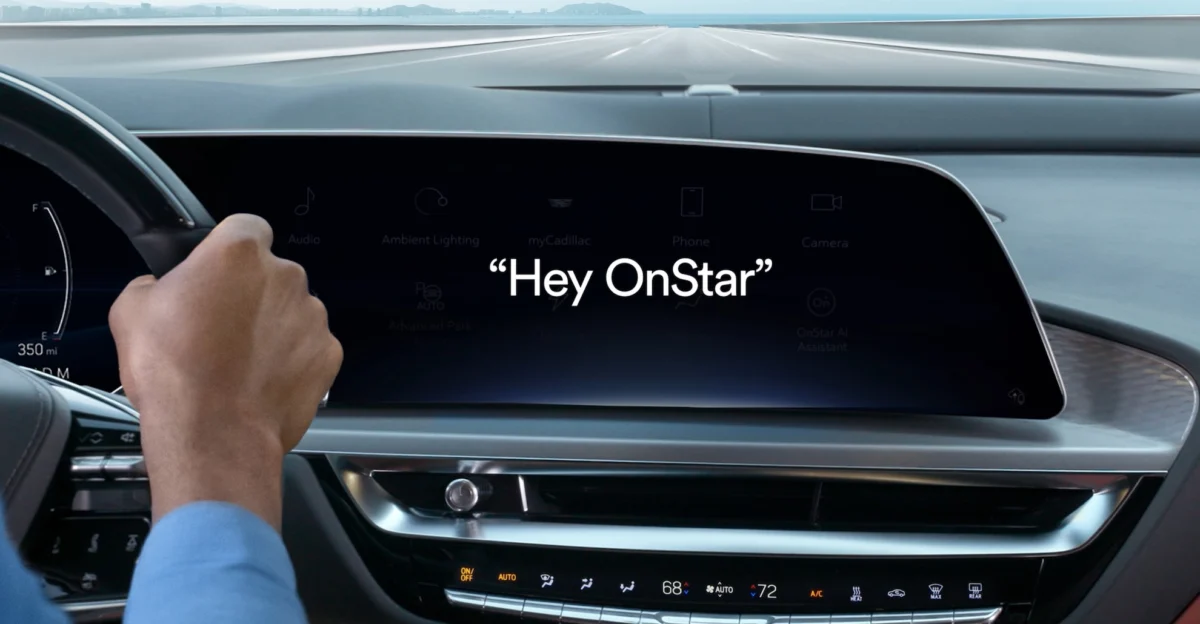
General Motors is embarking on a transformative journey for its pioneering OnStar service, integrating a personal AI assistant as a cornerstone of a comprehensive overhaul for the subscription-based connected car platform. This strategic move, announced at the GM Forward event in New York, signals a profound shift for OnStar, which debuted three decades ago, from a traditional call-center-driven safety and assistance service to a sophisticated, proactive "connected intelligence platform." The OnStar AI Assistant is slated to make its debut in the 2027 Cadillac Lyriq EV in the coming months, with a broader rollout planned across the GM vehicle portfolio thereafter. Complementing this in-car innovation, GM also revealed plans for a new, unified OnStar mobile app set to launch in 2027, designed to seamlessly sync with the vehicle’s embedded software and consolidate the company’s disparate brand-specific applications.
This latest technological pivot marks a significant departure from previous modernization attempts, placing agentic AI squarely at the center of the user experience. For years, OnStar has been a beacon of in-vehicle safety and connectivity, offering services ranging from automatic crash response to remote diagnostics. However, the automotive landscape has evolved dramatically, with tech-forward competitors like Tesla setting new benchmarks for integrated software and AI. GM’s response is not merely an update but a fundamental reimagining, aimed at embedding OnStar more deeply into the daily lives of drivers and passengers, transforming it into an indispensable digital companion.
OnStar’s Evolution: A Three-Decade Journey to AI Integration
OnStar’s history is a testament to General Motors’ foresight in connected vehicle services. Launched in 1996, OnStar was revolutionary, offering features like emergency services, roadside assistance, and stolen vehicle tracking long before in-car connectivity became commonplace. For many years, the service relied heavily on human operators, providing a comforting, albeit resource-intensive, layer of support. Over its 30-year tenure, OnStar has undergone numerous updates, particularly in the last five years, as GM sought to keep pace with an accelerating technological curve and the rise of digital-first automotive competitors.
The company’s journey towards AI integration has been progressive. In 2020, GM launched the OnStar Guardian app, extending critical safety features like crash detection and emergency assistance to smartphones, even for non-GM vehicle owners, broadening its reach and potential subscription base. This was followed in 2021 by an expansion of the Guardian app’s capabilities, further solidifying its role as a personal safety companion. A significant step in GM’s AI strategy came in 2022, when it began leveraging Google Cloud’s conversational AI, Dialogflow, to enhance in-vehicle voice command recognition, allowing drivers to articulate specific requests more naturally. By 2023, this functionality expanded to provide drivers with responses to common queries, including routing and navigation assistance, laying the groundwork for more sophisticated interactions.
The collaboration with Google deepened with the announcement last year that Google Gemini, Google’s advanced generative AI model, would be integrated into GM vehicles starting in 2026. This partnership underscored GM’s commitment to leveraging cutting-edge AI for in-car experiences. However, the newly announced OnStar AI Assistant represents a pivotal shift: an in-house effort designed to deliver a highly interactive and custom experience, distinguishing it from the broader Google integrations. While Gemini may power certain aspects of the infotainment system, the OnStar AI Assistant is positioned as GM’s proprietary brain for personalized assistance, deeply integrated with the vehicle’s core systems and OnStar’s established safety infrastructure.
A Unified Digital Ecosystem: The New OnStar Mobile App
A critical component of this comprehensive makeover is the introduction of a new OnStar mobile app in 2027. This forthcoming application is designed to be a singular, cohesive platform, replacing not only the current OnStar Guardian app but also the individual vehicle brand apps for Buick, Cadillac, Chevrolet, and GMC. This consolidation aims to streamline the user experience, providing a unified interface for vehicle management, connectivity, and OnStar services across the GM ecosystem. The app will act as a digital twin to the in-car software, ensuring a seamless and synchronized experience for users whether they are interacting with their vehicle from inside or remotely. This strategic simplification reflects a broader industry trend towards integrated digital platforms, enhancing brand loyalty and reducing user friction.
The Vision: OnStar as a Connected Intelligence Platform
Sterling Anderson, GM’s chief product officer, articulated the ambitious vision for OnStar, stating, "OnStar is now transitioning to be a connected intelligence platform, not just the call center that it’s historically been known as, but a mechanism for interpreting, understanding, and providing predictive, proactive support to its owners." This statement highlights the core of the transformation: moving beyond reactive assistance to proactive, intelligent support.
The OnStar AI Assistant is engineered to offer a rich array of functionalities that enhance both convenience and safety. For instance, the system will integrate with vehicle cameras, providing live views and capabilities for crash and safety recordings. Users will be able to configure these connected cameras to activate automatically upon sensing an impending event, such as an aggressive horn honk or sudden impact. The system will then capture the event and securely upload it to the OnStar app, providing valuable documentation. Beyond safety, the AI will enable intuitive voice control over various vehicle functions, from adjusting climate settings to answering specific questions about any vehicle feature, such as how a particular advanced driver-assistance system works or the optimal tire pressure. This level of integration promises a highly personalized and responsive driving environment, where the vehicle anticipates needs and responds to natural language commands.
Driving GM’s $25 Billion Subscription Ambition

This tech-centric reboot of OnStar is not merely about enhancing the customer experience; it is a critical pillar of General Motors’ ambitious financial strategy. The company has publicly declared its aim to build a $25 billion subscription business by 2030. Connected services, with OnStar at the forefront, are central to achieving this audacious goal. By offering a compelling suite of AI-powered features, GM intends to increase subscription adoption rates and average revenue per user.
The global market for connected car services and in-car intelligence is rapidly expanding, with analysts projecting significant growth over the next decade. Reports suggest the automotive software and electronics market could reach hundreds of billions of dollars annually, with subscription services becoming a primary revenue stream for automakers. Companies like Tesla have demonstrated the immense potential of a software-driven business model, where over-the-air updates and premium features generate recurring income. GM’s investment in the OnStar AI Assistant and its broader software architecture positions it to capture a substantial share of this burgeoning market, transforming vehicles from one-time purchases into continuous sources of revenue through digital services.
The Competitive Imperative and Architectural Shift
The announcement also underscores the intense competitive pressures within the global automotive industry. Automakers worldwide are locked in a race to integrate advanced technology, particularly AI, directly into the core of their vehicles. Chinese automakers, in particular, have rapidly advanced in software-defined vehicles, offering highly integrated, intelligent cockpits that resonate with tech-savvy consumers. Traditional automakers like GM are compelled to innovate rapidly to avoid being outpaced.
This shift has necessitated a fundamental transformation in GM’s approach to vehicle development. Moving beyond traditional hardware-centric engineering, the company has had to embrace agile software development methodologies, adopt sophisticated AI tools, and design a new electrical and centralized compute vehicle architecture. This new architecture is crucial for handling the immense data processing requirements of AI, enabling seamless over-the-air updates, and supporting the complex interplay of sensors, cameras, and intelligent systems that power the OnStar AI Assistant and other advanced features. This foundational change is not just about adding a new feature; it’s about re-engineering the very DNA of GM vehicles for the digital age.
Addressing Data Privacy and Building Trust
Amidst the excitement of advanced technology, concerns surrounding data privacy and security remain paramount, especially in the context of connected vehicles that generate vast amounts of personal and contextual data. General Motors and OnStar have faced scrutiny regarding data sharing practices. Earlier this year, in 2026, the Federal Trade Commission (FTC) finalized an order that imposed strict limitations on GM and OnStar, banning them from sharing certain consumer data with consumer reporting agencies. The order further mandated increased transparency with consumers and required explicit consent for specific data collection practices. This ruling highlighted the growing regulatory focus on automotive data practices and the need for robust privacy safeguards.
In response to these concerns and in line with evolving regulatory expectations, GM addressed data privacy directly with the OnStar AI Assistant. The company stated that customers will retain control over what data is shared. For features like Connected Camera recordings, GM affirmed that these recordings would have time limits and be encrypted, and crucially, that neither GM nor OnStar would be able to access them. A GM spokesperson further clarified that any third-party sharing would be "feature-specific and consent-based, with information shared only as needed to provide requested functionality." Customers will have the ability to manage permissions and withdraw consent at any time, though it was noted that choosing not to share certain data might lead to limited access to related features, while core OnStar services would continue. This commitment to user control and transparency is critical for building and maintaining consumer trust in an era where data security is a primary concern.
Broader Implications and Future Outlook
The launch of the OnStar AI Assistant carries significant implications for General Motors and the broader automotive industry. For GM, it represents a bold bet on software and AI as key differentiators, essential for staying competitive and achieving its aggressive financial targets. Success in this endeavor could significantly bolster GM’s brand image as an innovator, attract new tech-savvy customers, and create sustainable, high-margin revenue streams. However, the execution will be complex, requiring continuous innovation, robust software development capabilities, and effective user adoption strategies.
For the automotive industry, GM’s move is a clear signal of the accelerated integration of AI across manufacturers. It reinforces the shift from hardware-centric to software-centric innovation, where the intelligence and user experience provided by the vehicle’s digital brain are as crucial as its mechanical performance. Telematics and connected services are rapidly evolving from mere conveniences to indispensable elements of the modern driving experience, becoming powerful tools for brand differentiation and customer loyalty.
From a consumer perspective, the OnStar AI Assistant promises an unprecedented level of convenience, personalization, and enhanced safety. Imagine a vehicle that not only guides you to your destination but also proactively suggests maintenance based on predictive diagnostics, anticipates your preferences, and provides instant, context-aware information about your journey or vehicle. This vision, powered by AI, could redefine the relationship between drivers and their cars, making vehicles more intuitive, helpful, and integrated into daily routines than ever before. As automakers like GM push the boundaries of in-car AI, the future of mobility appears increasingly intelligent, connected, and personalized. The journey of OnStar, from a nascent emergency service to a sophisticated AI-powered intelligence platform, reflects the profound technological transformation sweeping through the automotive world.
