

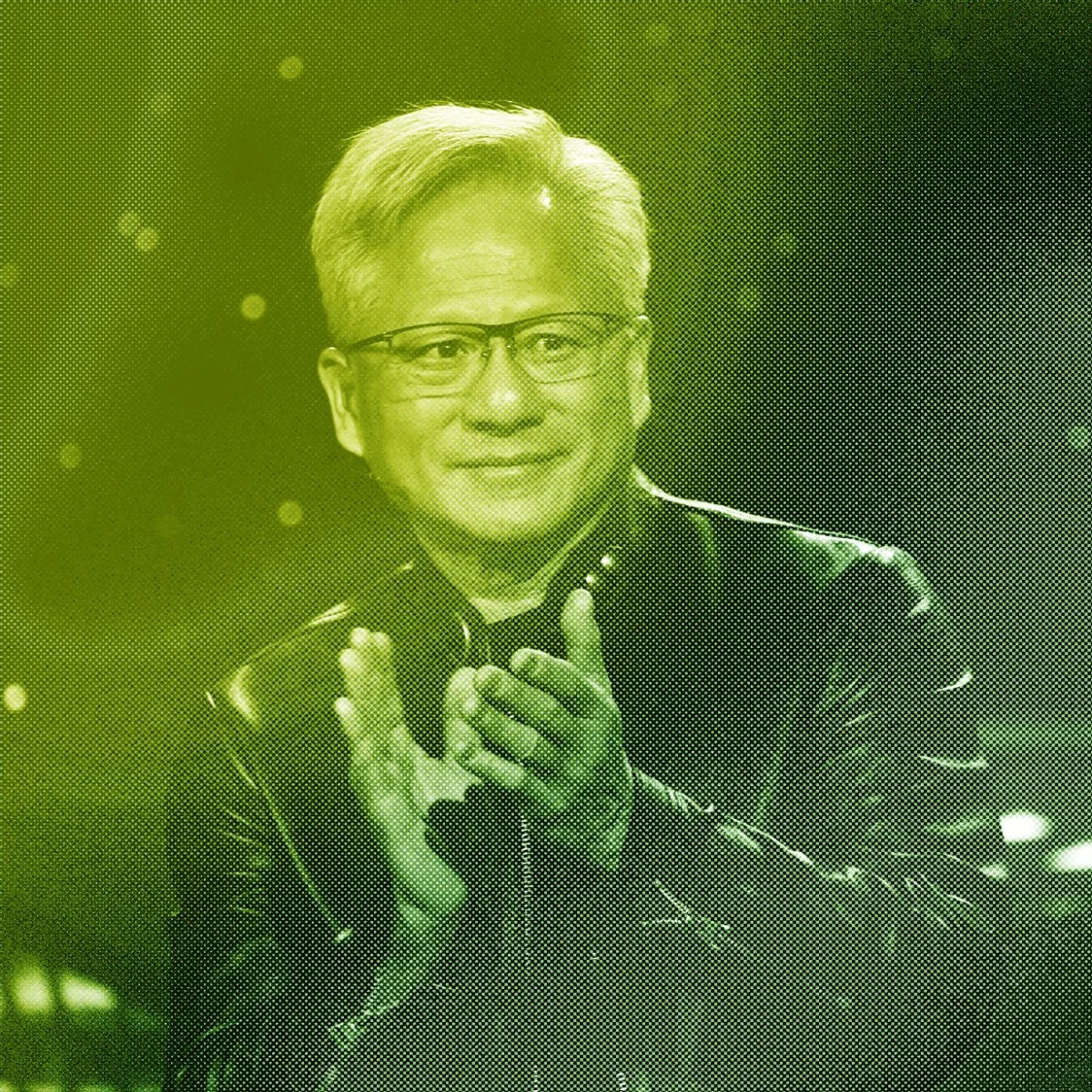
This week on WIRED’s Uncanny Valley podcast, hosts Brian Barrett and Zoë Schiffer delved into the seismic shifts and brewing controversies within the tech industry. The discussion spanned the recent Nvidia GTC developer conference, a significant moment for artificial intelligence, the unexpected backlash from Tesla’s most ardent supporters, and the apparent retreat from Meta’s ambitious metaverse vision.
Nvidia’s GTC: A Trillion-Dollar AI Future on Display
Nvidia’s annual developer conference, often dubbed the "Super Bowl of AI," served as a critical juncture for the company and the broader artificial intelligence landscape. CEO Jensen Huang presented a compelling, albeit ambitious, outlook for the company’s role in the burgeoning AI economy. Huang projected that the revenue opportunity for AI chips within Nvidia alone could reach a staggering trillion dollars by 2027, underscoring the immense growth and investment flowing into the sector.
A key announcement from the conference was the unveiling of specialized hardware designed to accelerate AI inference, a crucial component of deploying AI models in real-world applications. This move signifies a maturation of the AI chip market, moving beyond general-purpose GPUs that were historically repurposed for AI tasks. Nvidia’s partnership with Groq, focusing on optimizing inference speed and cost-efficiency through integrated chip architectures, is a testament to this evolution.
"This is the first year where we are going to see specialized chips for artificial intelligence," noted Schiffer, highlighting the significance of dedicated hardware for AI workloads. Barrett elaborated on Nvidia’s historical trajectory, emphasizing how the company’s dominance in gaming GPUs inadvertently positioned it for leadership in AI, a position it is now actively solidifying with purpose-built solutions.
Understanding AI Inference: A Critical Distinction
To clarify the technical discussions, the podcast hosts distinguished between two core processes in AI development: training and inference.
- AI Training: This is the foundational stage where large language models are fed vast amounts of data, such as the entirety of the internet, to learn patterns, relationships, and language structures. This process is computationally intensive and requires significant hardware resources.
- AI Inference: Once a model is trained, inference is the process by which the model responds to user queries or performs tasks. When a user asks a question of an AI chatbot like ChatGPT or Claude, the process of receiving that query and generating a response is inference.
Schiffer explained that the industry’s investment focus has increasingly shifted towards inference, as serving millions of users in real-time demands substantial and ongoing computational power. The cost associated with inference has become a significant factor in the economic viability of AI services.
The conference also featured a somewhat whimsical, AI-generated music video that underscored the importance of inference, with lyrics like "inference runs the whole world now." References to Nvidia’s Blackwell and Vera platforms within the song pointed to the company’s ongoing development of advanced AI hardware.
Beyond hardware, Nvidia also announced NemoClaw, an enterprise platform designed for AI agents, positioning itself as a secure and scalable solution for businesses looking to leverage autonomous AI systems. This move reflects a broader industry trend, with companies like OpenAI (with OpenClaw, Moltbot) and Meta actively acquiring or developing capabilities in the AI agent space, signaling a scramble to capture this emerging market.
The Shifting Sands of Tesla Fandom
In stark contrast to the forward-looking advancements at Nvidia, the podcast turned to the turbulent landscape surrounding Tesla. Brian Barrett detailed how Tesla has recently encountered significant discontent from its most dedicated fan base, particularly concerning the "lifetime full self-driving service" promotion.
Tesla offered a limited-time deal allowing owners to transfer their Full Self-Driving (FSD) software to new vehicles. While FSD’s capabilities remain a subject of debate and regulatory scrutiny, the prospect of a one-time, permanent upgrade for a substantial investment proved attractive to many loyal customers. However, Tesla abruptly altered the terms, requiring new vehicle deliveries by March 31st to qualify for the transfer. This change sparked considerable backlash, with long-time supporters feeling betrayed.
"People who are traditionally Tesla ride-or-dies… are starting to turn on Tesla themselves," Barrett observed. He highlighted a growing community of former Tesla enthusiasts and influencers who are publicly distancing themselves from the brand. This phenomenon is distinct from broader consumer skepticism towards Tesla, often linked to Elon Musk’s political stances or broader market trends; this is a more direct disillusionment stemming from perceived broken promises and customer service issues.
Zoë Schiffer noted that Tesla’s stock performance has often been propped up by this fervent fan base, who invest in the company based on Elon Musk’s vision rather than solely on its business fundamentals. If this core support begins to erode, it could pose a significant challenge to Musk’s influence and the company’s valuation.
The discussion also touched upon Musk’s evolving narrative for Tesla, shifting the company’s identity from an automotive manufacturer to a leader in humanoid robots and robotaxis. While these future-facing ventures are part of the stock’s appeal, the current discontent among car owners suggests that neglecting the core customer base could have tangible repercussions.
Schiffer recalled conversations with Cybertruck owners who expressed discomfort with the polarizing nature of the vehicle and its association with Musk’s public persona. This sentiment, coupled with the FSD service issue, suggests a growing disconnect between Musk’s ambitions and the realities experienced by his most loyal customers.
The conversation then pivoted to the peculiar phenomenon of Tesla owners displaying stickers on their vehicles that read, "I bought this car before Elon went crazy." Schiffer expressed a strong opinion on this trend: "I feel bad. I think this is embarrassing." She argued that owners have two clear choices: either embrace the vehicle and its current associations or sell it and opt for alternative electric vehicles. The middle ground, she contended, is an uncomfortable compromise.
Barrett pointed out that the EV market is becoming increasingly consolidated, with fewer options available to consumers as manufacturers scale back EV plans. This makes Tesla one of the few remaining significant players for those seeking an electric vehicle, adding complexity to the situation for disillusioned owners.
Meta’s Metaverse Retreat: A Grand Re-evaluation
The podcast also addressed Meta’s significant pivot away from its metaverse ambitions with the decision to cease support for Horizon Worlds on the Quest headset. Initially slated for shutdown on March 31st, Meta has since revised its stance to maintain limited support for the "foreseeable future," a concession that underscores the waning enthusiasm for the platform.
"Huge bummer that they changed the entire name of the company to be about this product," Schiffer remarked, referencing Facebook’s high-profile rebranding to Meta in October 2021. The company reportedly poured billions of dollars into Reality Labs, the division responsible for its metaverse ventures, with significant financial losses accumulating over time.
The hosts drew parallels between the metaverse’s struggles and the failed promise of 3D television, a technology that was heavily promoted but ultimately failed to capture widespread consumer interest. Brian Barrett’s "unifying theory of consumer technology" posits that "everything is 3D TV until proven otherwise," highlighting a pattern of companies pushing unproven technologies with fervent conviction, only to face eventual capitulation after substantial financial setbacks.
A core reason for the metaverse’s lack of traction, according to Barrett, is the inherent consumer reluctance to wear devices on their faces for extended periods, particularly when the experience does not offer a demonstrably superior alternative to existing technologies. The metaverse, and by extension Horizon Worlds, demanded a fundamental shift in user behavior without providing a compelling enough reason for that change.
"I think that this vision of the future where everyone sits in their little individual houses with their headsets on interacting with virtual avatars of their friends and family or strangers or whoever is… I think that is such a grim, tragic vision of the future," Schiffer stated, reflecting on the social isolation inherent in the metaverse concept.
The AI Imperative: A Different Trajectory
In contrast to the metaverse’s faltering promise, the podcast explored why artificial intelligence is perceived as a fundamentally different and more viable technological paradigm. While Meta and other tech giants are making substantial investments in AI, comparable in scale to their metaverse spending, the underlying nature of AI innovation suggests a more robust and adaptable future.
Schiffer argued that AI is not a singular platform but rather a foundational innovation that can be built upon to create a diverse range of applications. Unlike the metaverse, which tied users to a specific ecosystem and vision, AI offers a broad spectrum of possibilities, from business-to-business solutions to consumer products and beyond.
"AI is kind of like an innovation that you can build a lot of other things with. You’re not necessarily locked into one platform," Schiffer explained. This inherent flexibility allows AI to permeate various industries and address a wide array of user needs.
Barrett further emphasized that AI has already passed the critical hurdle of demonstrating tangible value to users. "AI is good at a lot of stuff. It has sort of passed that first hurdle of, does anyone actually want this? Yeah, a lot of people actually want this," he stated. The immediate utility of AI in tasks like information retrieval, content creation, and problem-solving has resonated with consumers, unlike the more abstract and aspirational goals of the metaverse.
The comparative success of AI is further bolstered by its minimal requirement for specialized hardware worn on the face, a significant advantage over VR and AR-focused metaverse experiences. While the long-term implications and the scale of investment in AI remain subjects of ongoing debate, its immediate applicability and broad appeal position it as a technology with a fundamentally different trajectory than the metaverse.
WIRED/TIRED Segment: Observations from the Week
The podcast concluded with the popular WIRED/TIRED segment, offering a personal touch on emerging trends and outdated concepts.
Brian Barrett’s WIRED Pick: The Great Big Game Show, an immersive experiential event that offers a fun, interactive, and wholesome way to engage in competitive games.
Brian Barrett’s TIRED Pick: The conscientious use of Meta Ray-Bans. While acknowledging the utility of recording devices, Barrett expressed concern over their use in social settings without explicit consent, particularly when children are present, highlighting the potential for discomfort and invasion of privacy. He urged users to be mindful of their surroundings and the implications of constant recording.
Zoë Schiffer’s TIRED Pick: Mansplaining. Schiffer declared her complete exhaustion with men explaining topics to her, especially when she possesses expertise in the subject matter, citing a recent instance where she was lectured on Elon Musk’s Twitter takeover, a topic she has extensively covered in her work.
Zoë Schiffer’s WIRED Pick: Lauren Groff’s novel, The Vaster Wilds. Schiffer lauded the book for its powerful depiction of early settler life, comparing its raw intensity to Cormac McCarthy’s The Road but with a focus on female resilience. The novel’s profound impact left a lasting impression on her.
The episode underscored the dynamic and often unpredictable nature of technological advancement, highlighting how even established giants like Nvidia and Meta are navigating a rapidly evolving landscape, while established brands like Tesla face scrutiny from their most devoted followers. The podcast serves as a crucial guide through these complex narratives, offering insights into the forces shaping our digital future.
