

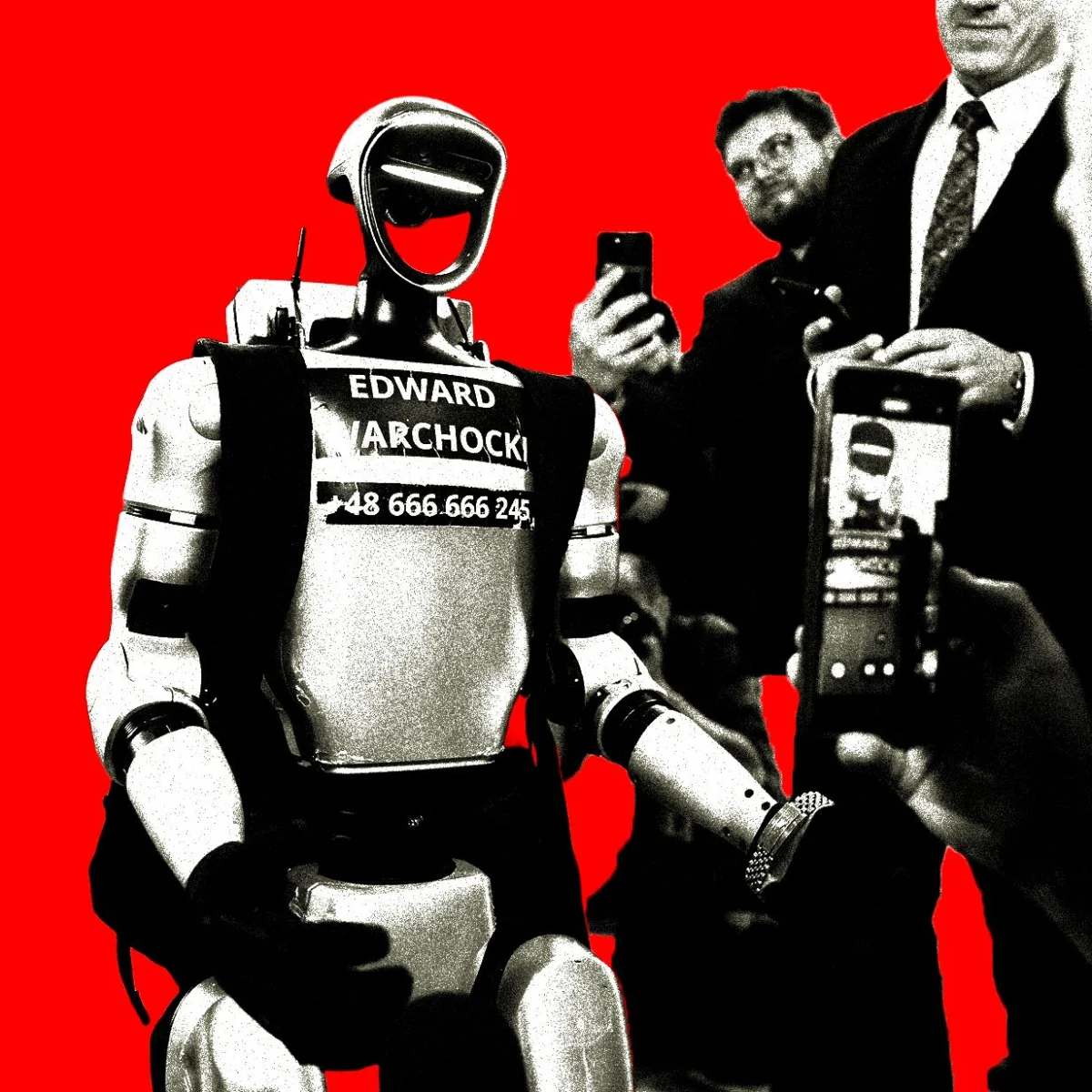
The emergence of artificial intelligence has ushered in a new era of digital companionship and public interaction, with humanoid robots increasingly stepping into the spotlight. Once confined to laboratories and specialized industrial applications, these sophisticated machines are now captivating global audiences as social media personalities, entertainers, and even quasi-celebrities. At the forefront of this phenomenon is the Unitree G1, a remarkably accessible and versatile humanoid robot that is rapidly transforming how we perceive and interact with artificial intelligence. This article delves into the story of Edward Warchocki, a Unitree G1 that has become an unlikely star on the streets of Poland, and explores the broader implications of this burgeoning trend in robotics and digital influence.
From Lab Curiosity to Viral Sensation: The Edward Warchocki Phenomenon
Edward Warchocki, a four-foot-tall humanoid robot, began its public life on the streets of Poland as little more than a technological novelty. Initially, the robot, purchased from China by Polish software developer Bartosz Idzik and his friend Radosław Grzelaczyk, was silent and, according to Idzik, "clearly scared" onlookers. The duo had purchased the robot with the initial idea of exploring its capabilities, eventually naming it "Edward Warchocki" – a blend of Grzelaczyk’s dog’s name, Eddie, and the Polish word for growling, "warczeć," along with a nod to a common Polish name. This initial apprehension, however, quickly dissolved when Idzik integrated the robot with a large language model, enabling it to engage in live conversations in Polish.
"When he started to talk, people loved him," Idzik recounted. "Without talking, it’s just a 40-kilogram machine." This conversational capability proved to be the turning point, transforming Edward from an object of curiosity into a beloved character. The robot’s interactions with the public quickly garnered attention. Edward embarked on a series of public appearances, visiting the Polish parliament and engaging with politicians, undertaking outdoor excursions like hiking and wading in a lake, and even experiencing a lighthearted "arrest" by local police.
The robot’s ascent to global fame accelerated in April when a video of Edward, equipped with a backpack and a Rolex watch, humorously chasing away wild boars in Warsaw went viral. This single event propelled Edward Warchocki into international headlines, amassing over one million followers and an astonishing four billion views across various social media platforms. This unexpected success highlights a critical shift: the ability to communicate and exhibit personality, even if programmed, is key to human-robot engagement.
The Global Wave of Humanoid Influencers
Edward Warchocki is not an isolated case. The success of this Polish robot is indicative of a broader trend: the rise of humanoid robots as influencers and entertainers on a global scale. By 2026, it is anticipated that such robotic personalities will be a common sight worldwide. Examples abound:
- Rizzbot: This Unitree G1 model, often seen sporting a cowboy hat, roams the streets of Austin, Texas, engaging passersby with flirtatious banter. Its social media presence, @rizzbot_official, showcases its charming interactions.
- Bart Robot: Captured breakdancing with enthusiastic Knicks fans in New York, Bart Robot celebrated the team’s championship run. Its account, @bartrobot_, documents its dynamic public engagements.
- Brickell Clanker: This robot adapted its persona to the events, changing its attire to match the winning team’s jerseys and celebrating with World Cup fans after each game. Its activities are often shared on platforms like Instagram.
What is particularly striking about these emerging robotic celebrities is their shared origin. Unless one is closely monitoring the robotics industry, it’s easy to overlook that Rizzbot, Bart Robot, Brickell Clanker, and Edward Warchocki are all based on the same foundational model: the Unitree G1.
The Unitree G1: An Accessible Platform for Robotic Innovation
The Unitree G1, manufactured by a leading Chinese robotics company, has emerged as one of the most accessible and affordable humanoid robots on the global market. This has been a significant factor in its widespread adoption and the subsequent proliferation of humanoid influencers. The G1 stands approximately the size of a child, characterized by a hollowed-out face featuring a ring of blue light and lightweight, aluminum limbs.
The versatility of the Unitree G1 is evident in its diverse range of documented activities:
- Entertainment: The robot has appeared on "America’s Got Talent," showcased impressive martial arts skills, engaged in simulated boxing matches, and demonstrated parkour abilities.
- Cultural Integration: Unitree G1 robots have been seen dancing at concerts, running alongside children, attempting culinary feats (with mixed success), streaming live with popular online personalities like Kai Cenat, and even engaging in acts of simulated begging and "dating."
- Spiritual and Religious Engagements: Demonstrating remarkable adaptability, Unitree G1s have been ordained as monks in Japan and Korea, and have been observed praying at a mosque in Dubai.
These varied performances have generated significant online buzz, with one anonymous X (formerly Twitter) user aptly describing the robot as "lit as fuck!" This widespread engagement underscores the public’s fascination with robots performing human-like activities, blurring the lines between technology and entertainment.
Unitree’s Commercial Ascendancy and Market Impact
Unitree’s imminent public offering on the Chinese stock market, scheduled for approximately two weeks from the time of reporting, further solidifies its position as a major player in the robotics industry. The company’s financial disclosures reveal a robust commercial performance, distinguishing it from many competitors whose products remain largely in laboratory testing phases.
In 2025, more than half of Unitree’s revenue was generated from the sale of humanoid robots to actual customers. The company shipped an impressive 5,511 humanoid robots that year, with an average selling price of less than $25,000 per unit. A significant portion of these sales, 43 percent, originated from markets outside of China, indicating strong international demand. Furthermore, Unitree achieved profitability for the first time in the previous year, a testament to its effective business strategy and the market’s receptiveness to its products.
Bartosz Idzik, reflecting on his choice of the Unitree G1, stated, "We tested a lot of humanoids, and the G1 was the best for its purpose." He added a poignant observation about global technological dynamics: "We are used to China copying other countries, but from the perspective of humanoids, other people should copy China." This statement suggests a shift in manufacturing and innovation leadership, particularly in the field of robotics.
Challenges and the Question of "Real Jobs"
Despite its commercial success and burgeoning popularity, Unitree and its robots frequently face skepticism. While the G1 excels at attention-grabbing and crowd-pleasing activities, a persistent question remains: can these robots perform traditional economic roles, such as working on an assembly line or performing domestic chores? The transition from influencer to essential worker is a significant hurdle, and the widespread adoption of Unitree G1s in practical, labor-intensive roles is yet to be fully realized. The industry and consumers alike are keen to see when the Unitree G1 will secure a "real job" that contributes directly to economic productivity.
Accessibility and Acquisition: The US Market Perspective
The allure of creating their own robotic personalities has extended to individuals in Western markets. Jake Cooperstein, a 24-year-old resident of Miami, was inspired by the success of robots like Edward Warchocki. In January, he visited a robotics shop in New York and was thoroughly impressed by the ease of operation of the Unitree G1. His experience quickly led to placing a deposit for his own unit the following day.
On Unitree’s official website, a basic G1 model is listed at $13,500. However, this price point excludes additional costs such as tariffs, shipping, and taxes. In the United States, a distributor typically lists the robot at approximately $19,000. Cooperstein found the base model insufficient for his ambitions, noting that it lacked advanced features like dexterous hands and prohibited modifications. Consequently, he opted for the U5 variation, designed for educational purposes. This model offers enhanced customization and additional components but comes at a significantly higher price of $66,000.
The price differential and the availability of different configurations highlight the evolving market for humanoid robots. While basic models are becoming increasingly affordable, advanced customization and specialized features can dramatically increase the cost, positioning these robots as premium technological assets rather than mass-market consumer goods for all applications.
The Future Landscape of Human-Robot Interaction
The rapid evolution of humanoid robots like the Unitree G1, coupled with advancements in AI and language models, signals a transformative period in human-robot interaction. The ability of these machines to engage, entertain, and even form a semblance of connection with humans opens up a plethora of possibilities, from new forms of entertainment and companionship to potentially revolutionizing industries.
However, the journey from viral sensation to indispensable workforce participant is fraught with challenges. Ethical considerations, the potential impact on human employment, and the ongoing development of truly autonomous and adaptable AI will continue to shape the narrative of humanoid robots. As Unitree prepares for its public debut, its success will not only reflect its own innovation but also serve as a bellwether for the broader acceptance and integration of artificial intelligence into the fabric of daily life. The era of the humanoid influencer is here, and its implications are only beginning to unfold.
