

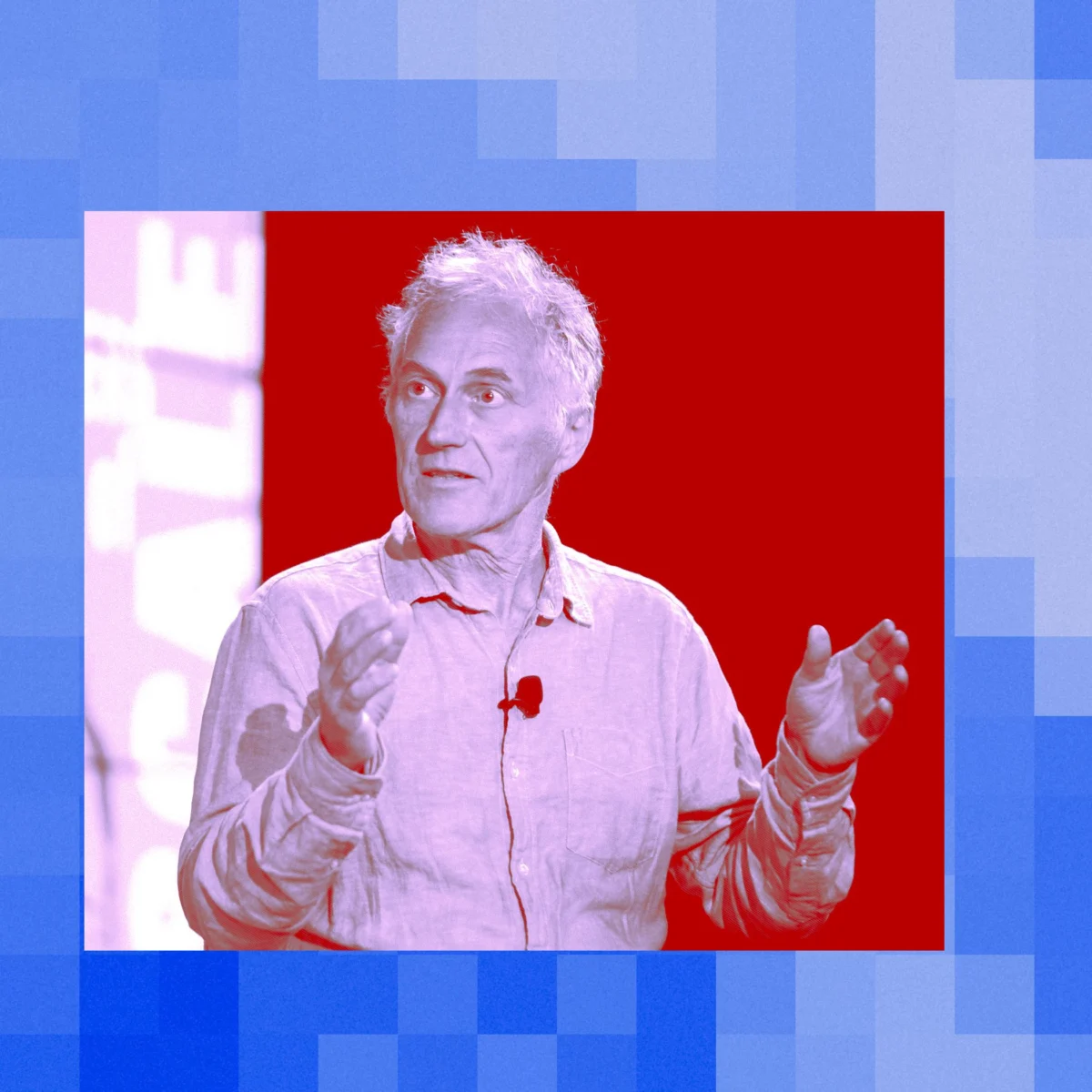
Tim O’Reilly, a figure synonymous with the open-source movement, internet innovation, and the dissemination of technological wisdom, is championing a radical vision for the future of Artificial Intelligence: one where open-source AI becomes a democratizing force, akin to electricity powering a new industrial revolution. His guiding principle, "create more value than you capture," a yardstick he has long applied to businesses, individuals, and societies, is now being applied to the very design and deployment of AI systems. O’Reilly expresses concern that current trends, dominated by hyperscale companies, risk replicating the closed-off ecosystems of the past, akin to Microsoft’s dominance in the 1990s, thereby stifling innovation and limiting user agency. He advocates for an open-source AI future that extends beyond just accessible model weights to encompass the entire AI system stack, thereby empowering designers and users with unprecedented control and flexibility.
The Case for Openness: Beyond Model Weights
O’Reilly’s critique of the current AI landscape is rooted in his understanding of open-source principles, which he argues extend far beyond merely sharing code or model parameters. "When most people talk about open-source AI, they’re really just talking about open-weight models," O’Reilly stated in a recent interview. "It’s much bigger than that. In the ’90s, when everybody else was focused on open-source licenses, I was like, ‘No, no, it’s about the architecture of the system. Does it enable participation?’" This architectural perspective is crucial, he believes, to fostering a truly open and innovative AI ecosystem.
The dominant narrative among major AI labs, according to O’Reilly, is that the largest and most advanced models are the ultimate arbiters of future success. However, he contends that these "big models" are often optimized for specific, and not necessarily universally desired, use cases. This approach, he argues, leads to an "architecture of control rather than an architecture of freedom and participation," enabling companies to track users and dictate their interactions with AI. O’Reilly emphasizes the importance of a clear separation between the AI model, the "harness" that integrates it with other systems, and the end-user application. The current proprietary models, he suggests, blur these lines, concentrating power and limiting customization.
A Shift from Proprietary Lock-in to Decentralized Innovation
O’Reilly’s advocacy for open-source AI stems from a deep-seated belief that proprietary, closed systems ultimately hinder progress and concentrate power in the hands of a few. He draws parallels to the early days of the internet, where the emergence of the World Wide Web, largely an open and decentralized phenomenon, outpaced the proprietary online services of the time. "The real action is open source," he asserts, believing that the future of AI will mirror this pattern, with significant innovation emerging from decentralized, community-driven efforts rather than solely from heavily funded corporate labs.
The venture capital landscape, which has heavily funded the current AI race, is also a point of contention for O’Reilly. He argues that the influx of massive capital into a few dominant companies creates an "anti-capitalist" dynamic, where the desires of a few powerful individuals and entities, rather than market forces, dictate strategic direction. This, he explains, is a pattern he observed in the rise of ride-sharing companies like Uber and Lyft, where billions were spent to subsidize rides, effectively allowing venture capitalists to select winners rather than allowing the market to organically determine success. "All the capital piles on and chokes out other possible paths," he laments.
Addressing Security Concerns and the "Frontier Model" Debate
A common concern raised against open-source AI is its potential for misuse, with critics arguing that open access to powerful models could enable malicious actors to bypass safety guardrails and develop harmful applications, such as sophisticated cyberattacks or bioweapons. O’Reilly, however, counters this by pointing to the fact that most reported cybersecurity incidents have originated from "frontier models"—the cutting-edge, often proprietary, systems.
"All of the cybersecurity incidents we’ve seen are from the frontier models," O’Reilly noted. "So risks like cybersecurity and the ability to develop pathogens are actually an argument for slowing down the frontier models more than an argument for restricting open-weight models." He suggests that a more distributed and open approach might paradoxically lead to greater resilience and security, as a wider community can identify and address vulnerabilities. The race to develop ever-larger and more powerful "frontier" models, he believes, might be diverting resources and attention from the development of more practical and widely applicable AI tools.
The Evolving Role of AI in Creativity and Knowledge Dissemination
O’Reilly views AI as a profound new creative medium, actively experimenting with its capabilities and even maintaining a blog detailing his interactions with AI. He posits that the notion of AI being unable to contribute to creative endeavors will soon seem as quaint as the idea that cameras couldn’t produce art. "AI is literally a medium, in the same way that written words are a medium, or paint or music is a medium," he explained. "The idea that you can’t write with AI will seem as curious as the idea that you can’t make a good portrait or landscape with a camera."
This perspective has significant implications for industries like publishing, where O’Reilly’s own company, O’Reilly Media, has a long history. While acknowledging a decline in traditional book sales, O’Reilly sees AI as a transformative tool for knowledge creation and dissemination. "The book business has been in decline for 25 years," he admitted. "At our peak, our book business was maybe $70 million, and it’s now $30 million. As books generated less revenue, we had to find a way to compensate people for sharing their knowledge, because that’s our fundamental business. So now AI comes along and hoovers everything up. Can we build a set of tools that help people with that?" He envisions AI as a "superpower" for invoking expertise and facilitating the creation of new forms of knowledge.
Open Memory and User Control
A key component of O’Reilly’s open-source AI vision is the concept of an "open memory consortium." This initiative aims to counter the trend of companies like Meta seeking to lock users into their platforms by offering AI that "knows you best." O’Reilly’s vision proposes an alternative where users can maintain control over their data and context, allowing them to switch between different AI models and providers without losing their personalized experience. "Mark Zuckerberg’s thesis is, he’s going to lock you in because Meta will give you the AI that knows you best. The open-source vision needs to say no to this," he stated. "Open source can give you the ability to switch models, switch providers, and maintain all the context that it needs."
The "Ferment of Innovation" and the Future of AI
O’Reilly anticipates a future where the most significant AI breakthroughs will emerge from a "ferment of innovation" that is not necessarily driven by venture capital, much like the early days of the web. He points to projects like Pi, an open-source agentic harness, and the work of his nonprofit, the AI Disclosures Project, as examples of this burgeoning movement.
The implications of this shift are far-reaching. If open-source AI becomes the dominant paradigm, it could lead to a more equitable distribution of AI’s benefits, fostering innovation across a broader spectrum of individuals and organizations. This decentralized approach could also accelerate the development of AI applications tailored to specific needs and communities, rather than a one-size-fits-all solution dictated by large tech corporations. The long-term impact could be a more dynamic and resilient AI ecosystem, one that is less susceptible to the control of a few powerful entities and more responsive to the diverse needs of global society. As O’Reilly concludes, the goal is to provide the tools and infrastructure that allow individuals to "innovate freely, to paint outside the lines."
