

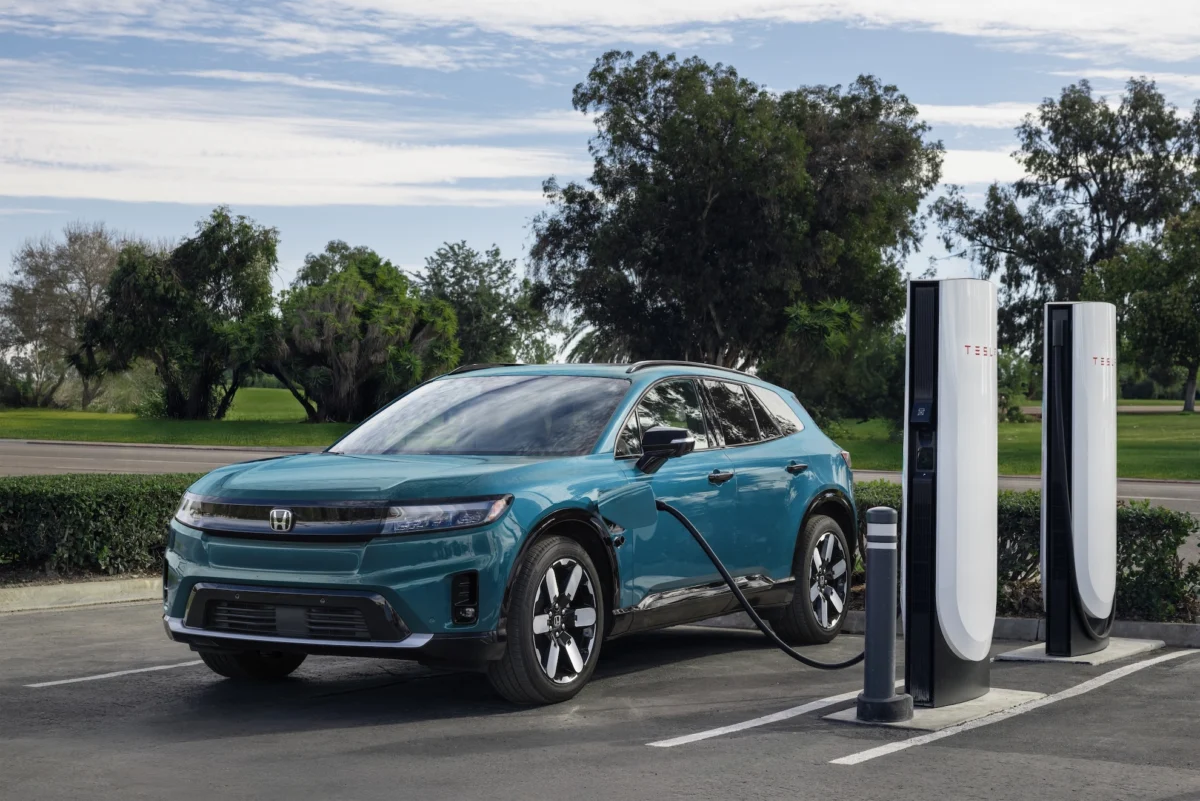
The recent confirmation by Honda to TechCrunch regarding the discontinuation of its Prologue SUV marks a pivotal moment, as it effectively removes the last all-electric vehicle from the automaker’s U.S. portfolio. This decision is more than just an internal strategy shift for Honda; it serves as a stark illustration of a broader and increasingly pronounced retreat of electric vehicle models from the American market, a trend that stands in sharp contrast to the accelerating EV adoption observed in many other parts of the world. This winnowing of choices for U.S. consumers has prompted a deeper examination into which other EVs have departed or are in the process of leaving, and the multifaceted reasons behind their exits.
The landscape of the U.S. electric vehicle market has undergone significant turbulence, particularly since the autumn of 2025, when the substantial $7,500 federal tax credit for eligible EVs concluded. This policy change delivered an immediate and outsized impact on sales, removing a critical incentive that had buoyed consumer interest and made many models more competitive on price. However, the forces driving this retraction are complex and extend far beyond a single tax credit. A confluence of factors, including escalating international tariffs, evolving consumer preferences, persistent cost barriers to EV ownership, recalibrations of company priorities, and various regulatory actions, have collectively contributed to the current market contraction.
According to joint data released in July 2026 by automotive intelligence firms Kelley Blue Book and Cox Automotive, a total of 247,226 electric vehicles were sold in the second quarter of the year. While this figure represented a modest increase from the first quarter of 2026, it constituted only about 5.8% of the total U.S. automotive market. More tellingly, these sales remained significantly below the volumes recorded in the corresponding period of the previous year, particularly before the federal tax credit expired. For instance, Q2 2026 EV sales were 20.5% lower than Q2 2025. This downturn follows a dramatic dip in late 2025, where fourth-quarter sales plummeted by 36% compared to Q4 2024. While the gap has narrowed somewhat in 2026, indicating a slow, nascent recovery, the market remains in a challenging phase, prompting many automakers to reconsider their EV offerings.

Despite these headwinds, it is crucial to note that American consumers are still purchasing EVs, and the market is not entirely devoid of new entrants. Models like the Rivian R2, for example, are still slated for introduction, signaling that innovation and investment persist, albeit with greater caution. However, for a growing number of existing or planned EV models, the current U.S. market conditions have proven untenable. The following sections detail the prominent electric vehicles that have recently exited, or are in the process of exiting, the U.S. market in 2026, reflecting a period of significant strategic realignment for the automotive industry.
Honda’s Comprehensive EV Reassessment: Prologue, O Series, and Afeela’s Untimely End
Honda, a long-standing titan in the automotive industry known for its pragmatic engineering and broad market appeal, has undertaken one of the most significant and sweeping re-evaluations of its electric vehicle strategy for the U.S. market. This reassessment has led to the cancellation of multiple EV projects, effectively stripping its American lineup of any dedicated battery-electric vehicles for the foreseeable future.
The most recent and impactful casualty is the Honda Prologue. Officially confirmed to TechCrunch on July 16, 2026, the Prologue’s discontinuation came after initial reports from outlets like CarBuzz. This mid-size SUV, which launched with considerable anticipation, was the product of a strategic partnership with General Motors, utilizing GM’s Ultium platform and built at their Ramos Arizpe Assembly Plant in Mexico. It shared significant underpinnings with the Chevrolet Blazer EV, representing Honda’s most grounded and production-ready all-electric offering for the U.S. market. The Prologue initially showed promise, with approximately 33,000 units sold in 2024 and 39,000 in 2025. However, sales experienced a precipitous decline following the expiration of the federal tax credit in late 2025, ultimately leading to Honda’s decision to cease production. This move leaves Honda without a single all-electric vehicle in its U.S. lineup, a stark reversal from its earlier ambitions.
Prior to the Prologue’s demise, Honda had already signaled a broader retreat in March 2026, announcing the cessation of development for three other key EVs planned for the U.S.: the Acura RDX EV, the Honda O sedan, and the Honda O SUV. These vehicles were part of Honda’s ambitious "0 Series," first unveiled at CES 2024 with futuristic concepts like the Saloon and Space-Hub, followed by a mid-sized SUV prototype debut at CES 2025. The O SUV, in particular, was slated for North American production at Honda’s "EV Hub" factory in Ohio and was expected to launch in the first half of 2026. Honda cited rising U.S. tariffs and intense competition, particularly from Chinese manufacturers, as primary reasons for this dramatic overhaul of its EV plans. The cancellation of these pre-production models highlights the intense pressure automakers face to achieve profitability and scale in the challenging U.S. EV market.

Adding to Honda’s restructured EV narrative is the curious case of Afeela. Born from a groundbreaking joint venture between Sony and Honda Mobility (SHM), Afeela began as Sony’s Vision S prototype at CES 2020, a surprising foray into automotive technology. Honda joined the initiative in 2022, and a sleek Afeela-branded prototype debuted at CES 2023. Despite an extensive marketing blitz and widespread visibility, including appearances at major tech conferences like TechCrunch Disrupt, the Afeela never transitioned from concept to mass production. In March 2026, SHM announced it was abandoning its plans for the two Afeela-branded EVs, a decision that closely followed Honda’s wider EV cancellations. The Afeela’s failure to launch underscores the immense complexities and financial commitments required to bring a new EV brand and product to market, even with the backing of two industrial giants. The project’s high-profile nature and ultimate cancellation highlight the risks associated with ambitious, tech-forward automotive ventures that struggle to find a viable path to production and market acceptance.
Hyundai’s Strategic Adjustments: The Ioniq 6’s Tariff-Induced Exit
While the Korean automaker Hyundai has generally performed strongly in the U.S. EV market with models like the Ioniq 5 and the upcoming Ioniq 9, it has not been immune to the pressures driving market adjustments. In March 2026, Hyundai announced its decision to discontinue sales of the Hyundai Ioniq 6 sedan in the U.S. market. This move was largely attributed to the intricate web of U.S. tariffs and regulations surrounding imported vehicles.
The Ioniq 6, a critically acclaimed electric sedan, is manufactured in South Korea and subsequently imported into the United States. Under current U.S. policy, imported EVs face specific tariff structures and are ineligible for certain federal incentives, placing them at a competitive disadvantage against domestically produced counterparts. In contrast, Hyundai’s Ioniq 5 and the forthcoming Ioniq 9 are assembled at its new manufacturing facility in Georgia, making them more favorably positioned for U.S. consumers.
A Hyundai spokesperson, while not directly addressing the tariffs, stated that the company is "continuously evaluating its product portfolio to best meet market demands and strategic priorities, with a strong focus on vehicles manufactured in North America." This implied strategic shift prioritizes models that can benefit from local production, either through direct cost savings or eligibility for consumer incentives. The company did, however, confirm its intention to continue importing the higher-priced, lower-volume N-model variant of the Ioniq 6, catering to a niche performance segment less sensitive to broader market pressures. The Ioniq 6’s withdrawal underscores how geopolitical and economic policies can directly influence product availability and automaker strategies in key markets.

Nissan’s Ariya Pause: A Setback for a Pioneer
Nissan, a pioneer in the modern EV era with its groundbreaking Leaf hatchback over a decade ago, also faces challenges in its latest electric offerings. Last year, the Japanese automaker decided not to produce a 2026 model year of its all-electric Ariya SUV for the U.S. market, with no clear indication of its return.
The Ariya was first unveiled with much fanfare in 2020, with plans for a Japanese market launch in 2021, followed by its introduction in other key regions. It represented Nissan’s most significant all-electric vehicle since the Leaf, designed to offer a more premium, SUV-style experience with enhanced range and technology. The decision to halt the Ariya’s U.S. production reflects broader industry struggles to maintain consistent sales momentum and profitability for newer EV models in a rapidly evolving and increasingly competitive environment. While Nissan has not provided extensive public commentary on the Ariya’s specific challenges in the U.S., market analysts suggest it likely faced pressures similar to other discontinued models: intense competition, evolving consumer expectations regarding range and charging infrastructure, and the impact of reduced incentives. For a company that once led the charge in mass-market EVs, the Ariya’s absence marks a notable pause in its American electric offensive.
Polestar’s Forced Departure: Caught in Geopolitical Crosshairs
The Swedish EV manufacturer Polestar, a performance-oriented brand majority-owned by the Chinese automotive giant Geely, has faced perhaps the most dramatic and externally imposed exit from the U.S. market. In June 2026, Polestar was effectively banned from selling its new EVs in the United States due to a specific U.S. government action targeting "Chinese-connected vehicle technology."
This unprecedented move stems from a directive issued by the U.S. Department of Commerce, which requires specific authorization for companies with significant ties to China to import and sell vehicles containing certain "connected vehicle technology" components. The underlying concern revolves around potential data security risks and the safeguarding of critical infrastructure. While Polestar maintained that its vehicles adhere to the highest cybersecurity standards and that its U.S. operations are distinct, it failed to secure the necessary authorization.

A spokesperson for Polestar expressed disappointment, stating, "We regret that despite our efforts to demonstrate our commitment to U.S. data security and our independent operational structure, we have not been granted the necessary permits to continue importing new models." The company confirmed it would continue selling its existing inventory of Polestar 3 and Polestar 4 vehicles in the U.S. until stock runs out and pledged to "continue to support customers, including providing access to its service network."
The situation is further complicated by the fact that Polestar’s sibling company, Volvo Cars (also owned by Geely), did receive the necessary authorization in May 2026, allowing it to continue selling its connected cars in the U.S. This disparity highlights the specific and potentially arbitrary nature of such regulatory actions, which can disproportionately affect different brands within the same corporate family. The Polestar 3, notably, was assembled in both a Volvo factory in South Carolina and in Chengdu, China. This forced departure underscores the growing impact of geopolitical tensions and trade policies on global automotive supply chains and market access, creating significant uncertainty for foreign-owned brands operating in the U.S.
Tesla’s Strategic Pivot: Farewell to Model S and Model X
Even the undisputed leader in the U.S. EV market, Tesla, has made significant adjustments to its product lineup, signaling a strategic pivot away from its foundational models. In January 2026, Tesla announced its decision to end production of the Model S sedan and Model X SUV. The final Model S and Model X vehicles rolled off the assembly line in spring 2026, with the company subsequently removing their dedicated assembly lines at its Fremont, California factory.
This decision reflects Tesla’s evolving vision for its future, which CEO Elon Musk has increasingly framed around artificial intelligence, full autonomy, and robotics, rather than traditional vehicle segments. While the Model S and X were instrumental in establishing Tesla’s premium brand image and pioneering long-range EVs, their sales had been steadily declining for years. As Tesla introduced higher-volume, more affordable vehicles like the Model 3 sedan and Model Y SUV, consumer demand shifted dramatically. The Model 3 and Y quickly became the company’s best-sellers, capturing a much larger market segment.

A Tesla representative, in a rare public comment on product strategy, stated, "The company’s focus is on maximizing production efficiency for its mass-market vehicles and advancing its long-term vision for AI and robotics integration." The removal of the Model S and X production lines at Fremont is directly linked to making space for the manufacturing of Tesla’s Optimus humanoid robots, a project Musk views as critical to the company’s future. This move, while a significant departure from Tesla’s origins, illustrates a company prioritizing its long-term strategic objectives and high-volume, cost-efficient production over maintaining a full product lineup for legacy models that no longer align with its future trajectory.
Volkswagen’s ID. Series Retrenchment: ID.4 and ID. Buzz on Pause
Volkswagen, a global automotive powerhouse with ambitious EV targets, has also scaled back its U.S. electric vehicle offerings, reflecting a broader recalibration of its North American strategy. In April 2026, Volkswagen announced it would cease production of the ID.4 electric SUV at its U.S. factory in Chattanooga, Tennessee. This decision marks a significant shift, as the ID.4 was positioned as a cornerstone of VW’s electric offensive in the U.S.
The company stated that this production change is part of a pivot towards higher-volume, gas-powered vehicles, such as its upcoming Atlas SUV, to better meet immediate market demand and optimize manufacturing capacity. While U.S. customers can still purchase the ID.4 until current inventory is depleted, VW anticipates this stock will last into 2027. This move signals a pragmatic response to market realities, where the anticipated surge in EV demand has not fully materialized at the pace initially projected, prompting a temporary re-emphasis on profitable internal combustion engine (ICE) models.
Furthermore, Volkswagen’s retro-styled electric van, the ID. Buzz, is currently on a hiatus for the 2026 model year, with no new models being produced for the U.S. market. While VW has indicated that the ID. Buzz is merely taking a pause and is expected to return in 2027, its temporary absence contributes to the overall reduction in available EV choices.

Interestingly, despite these production adjustments, Volkswagen continues to invest in future mobility solutions. Its subsidiary MOIA America, in partnership with Uber, began testing autonomous microbuses based on the ID. Buzz platform in Los Angeles in April 2026. This initiative is a precursor to a planned robotaxi service set to launch in late 2026, initially with human safety operators. This dual strategy—scaling back current EV production while pushing forward with autonomous mobility—highlights the complex, multi-faceted approach major automakers are taking to navigate the transition to an electric and autonomous future.
Volvo’s Subcompact Exit: The EX30’s Brief American Stint
Volvo, another Swedish brand with strong ties to Geely, had ambitious plans for its compact EV offerings in the U.S. market, but these have also been curtailed. In March 2026, Volvo announced its decision to pull its subcompact EX30 and its EX30 Cross Country variant from the U.S. market. Production for U.S.-bound models was slated to conclude after the summer.
The EX30 had generated considerable buzz prior to its official U.S. entry in 2025. It was positioned as Volvo’s most affordable all-electric option, designed to attract a broader demographic of EV buyers looking for a premium yet accessible electric vehicle. A Volvo spokesperson indicated that the decision was part of a "strategic optimization of our global product portfolio to better align with regional market demand and profitability targets." While specific reasons for its U.S. withdrawal were not fully detailed, analysts point to potential challenges in achieving sufficient scale, competitive pricing pressures in the subcompact segment, and the broader market’s cooling demand for smaller EVs in favor of larger SUVs.
Despite the EX30’s departure, Volvo remains committed to the U.S. EV market with its larger, all-electric SUVs, the EX60 and EX90, which will continue to be sold in the United States. This suggests a strategic focus on segments where Volvo perceives stronger demand and greater profitability, reinforcing the trend of automakers streamlining their EV offerings to concentrate resources on their most viable products.

Broader Implications and the K-Shaped Market
The collective departure of these electric vehicle models from the U.S. market in 2026 paints a clear picture of a sector undergoing significant correction and strategic realignment. This trend stands in stark contrast to the global EV market, which continues its robust expansion, creating a "K-shaped" trajectory where some regions flourish while others, notably the U.S., experience a relative slowdown.
Several overarching implications emerge from this "Great EV Retreat":
- Policy Impact: The immediate and dramatic effect of the federal tax credit’s expiration underscores the critical role of government incentives in driving EV adoption. Without these subsidies, the higher upfront cost of many EVs becomes a more significant deterrent for consumers.
- Consumer Sentiment and Infrastructure: While environmental consciousness remains a factor, consumer priorities in the U.S. are heavily influenced by practicality, range anxiety, charging infrastructure availability, and total cost of ownership. Many consumers are hesitant to fully commit to pure EVs when hybrid alternatives offer a perceived bridge solution without the full range of EV-specific challenges. The growth in hybrid sales reported by Kelley Blue Book and Cox Automotive highlights this preference.
- Manufacturing and Tariffs: The cases of Hyundai and Polestar clearly demonstrate how geopolitical factors, trade policies, and domestic manufacturing incentives are profoundly reshaping automaker strategies. The push for U.S.-based EV production is not merely about job creation but also about ensuring eligibility for consumer incentives and mitigating tariff risks.
- Profitability Pressures: Automakers, facing immense capital expenditures for EV development and production, are under increasing pressure from investors to demonstrate profitability. When a model fails to achieve anticipated sales volumes or struggles with competitive pricing, its discontinuation becomes a pragmatic business decision.
- Market Maturation and Competition: The initial gold rush mentality in the EV space is giving way to a more mature, albeit turbulent, market. New entrants and established players alike are facing intense competition, particularly from Chinese manufacturers globally, forcing a re-evaluation of product portfolios and market positioning.
Looking ahead, the U.S. EV market is unlikely to see a complete reversal of this trend overnight. The signs of a slow recovery are present, with new models like the Rivian R2 still entering the fray and continued investment in charging infrastructure. However, the current period represents a crucial recalibration. Automakers are likely to focus on fewer, more strategically viable EV models, potentially emphasizing larger SUVs and trucks that align with established American consumer preferences, and prioritizing domestic production to leverage incentives. The "K-shaped" global market trajectory suggests that while EV growth continues elsewhere, the U.S. market will likely remain a more challenging and selective environment for electric vehicles in the immediate future, with a premium placed on value, practicality, and local production. The next few years will be critical in determining whether the U.S. can regain its momentum in the global race for electric mobility.
