

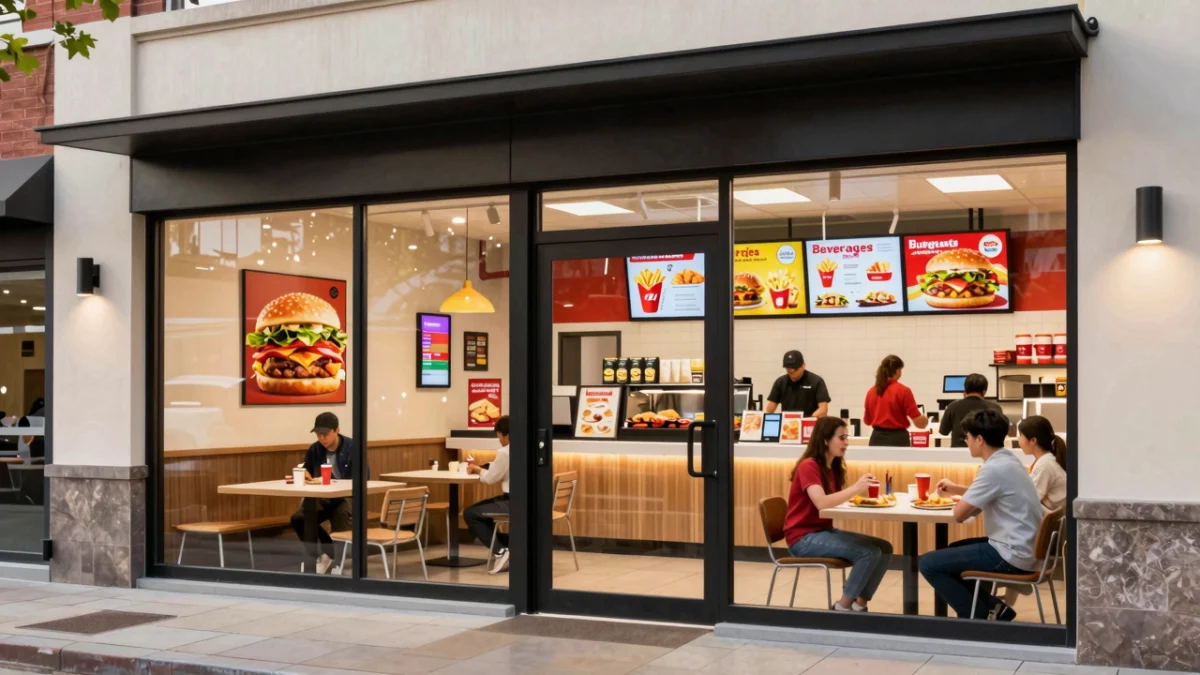
The quick-service restaurant (QSR) sector has undergone a profound transformation, reaching a market valuation exceeding $387.5 billion by the end of 2023 and setting the stage for a highly competitive and technologically integrated landscape in 2026. As the industry moves toward the latter half of the decade, the focus for prospective franchisees has shifted from mere brand recognition to a sophisticated trifecta of health-conscious menus, sustainable operations, and high-tech business models. Industry analysts suggest that the next two years will be defined by the ability of brands to balance the traditional demand for speed with an increasing consumer insistence on nutritional transparency and environmental responsibility.

The State of the QSR Market Heading into 2026
The fast food industry is no longer a monolithic entity defined solely by burgers and fries. Current data indicates that 25% of all U.S. franchises now operate within the QSR space, reflecting its resilience in various economic climates. Investors looking at the 2026 horizon are prioritizing brands that demonstrate high Average Unit Volumes (AUV). For instance, established giants like Chick-fil-A continue to set the benchmark for performance, often achieving AUVs that far outpace the industry average, thereby making them highly sought-after despite rigorous selection processes.
The market’s growth is being fueled by a permanent shift in consumer behavior. Off-premise dining, which includes drive-thru, carryout, and delivery, now accounts for a significant majority of total sales for many brands. In response, franchises are redesigning their physical footprints to prioritize double drive-thru lanes and dedicated pickup windows, which have been shown to increase sales by as much as 30% compared to traditional single-lane models.

Chronology of the Industry’s Transformation
To understand the 2026 landscape, one must examine the pivotal shifts that occurred over the previous five years. In 2020 and 2021, the global pandemic acted as a catalyst for digital adoption, forcing brands to perfect their mobile apps and third-party delivery integrations almost overnight. By 2023, the industry had moved into an "efficiency era," where the focus turned toward mitigating rising labor costs and ingredient inflation through automation.
As we move into the 2024–2025 period, the industry is witnessing the "health-conscious pivot." This phase is characterized by the mainstreaming of plant-based proteins and Mediterranean-inspired diets. By 2026, it is projected that the most successful franchises will be those that have successfully integrated "ghost kitchens"—facilities designed exclusively for delivery—to minimize real estate overhead and maximize output in high-density urban areas.

Financial Benchmarking and Profitability Metrics
For investors, the decision to enter a franchise agreement in 2026 rests on precise financial metrics. Profitability is no longer gauged simply by gross revenue but by a nuanced analysis of EBITDA margins and cash-on-cash returns.
Key Performance Indicators (KPIs)
Industry standards for a healthy franchise now include:

- Average Unit Volume (AUV): Top-tier brands are now aiming for AUVs exceeding $3 million to offset higher operational costs.
- EBITDA Margins: Ideally, a franchise should maintain a margin between 12% and 20%.
- Cash-on-Cash Return: A target of 20% to 35% is generally considered the threshold for a high-performing investment, allowing for a full return on the initial capital within three to five years.
Operational efficiency factors also play a critical role. Labor costs typically consume 25% to 30% of revenue, while Cost of Goods Sold (COGS) ranges from 28% to 32%. Management of these two variables, often through the use of AI-driven inventory and scheduling tools, separates profitable units from those struggling with margin compression.
The Rise of Health-Conscious and Specialized Concepts
A significant trend shaping 2026 is the surge in demand for fresh, nutritious options. Sales of plant-based menu items have seen a 20% increase year-over-year, driven by "flexitarian" consumers who seek to reduce meat consumption without fully committing to a vegetarian diet.

Brands like Tropical Smoothie Café and Jamba have capitalized on this by offering customizable, fruit-and-vegetable-forward menus. Tropical Smoothie Café, in particular, has reported an AUV of approximately $1.01 million, demonstrating that health-focused concepts can achieve commercial scale. Similarly, The Great Greek Mediterranean Grill has found success by offering made-from-scratch meals that align with the Mediterranean diet, which is consistently ranked as one of the healthiest eating patterns by nutritionists.
The "freshness" factor has also extended into the snack and dessert category. Crumbl Cookies has disrupted the traditional bakery model with a rotating weekly menu and a digital-first marketing strategy that leverages social media "drops" to create a sense of urgency and exclusivity. This model has allowed the brand to maintain high engagement levels and impressive unit performance despite a relatively narrow product focus.

Technological Integration and AI-Driven Marketing
The role of technology in the 2026 franchise model cannot be overstated. Approximately 68% of Chief Marketing Officers (CMOs) in the restaurant space are now prioritizing Artificial Intelligence (AI) tools to enhance customer acquisition and retention.
AI and Digital Visibility
Digital-first marketing is no longer optional. With one in five Americans now using AI-powered search engines and voice assistants to find dining options, franchises must optimize their digital presence beyond traditional SEO. Data shows that a single-star increase in a restaurant’s Yelp or Google rating can correlate with a 5% to 9% increase in total revenue.

Automation and Ghost Kitchens
To combat labor shortages, many 2026-ready franchises are implementing automated kiosks and AI voice-recognition systems for drive-thru ordering. Furthermore, the "ghost kitchen" model—where multiple brands operate out of a single kitchen facility—is becoming a standard for expansion. This allows a franchisee to test new markets with a significantly lower initial investment, as the need for high-visibility retail space and a front-of-house staff is eliminated.
Initial Investment Costs and Support Structures
The capital required to enter the fast food sector in 2026 varies widely depending on the brand and the complexity of the operation. While a Chick-fil-A franchise can be secured with a $10,000 fee, the selection process is notoriously difficult, with an acceptance rate lower than many Ivy League universities.

Other brands offer a more traditional investment path:
- The Great Greek Mediterranean Grill: Requires a minimum cash investment of approximately $300,000.
- Wayback Burgers: Typically requires $250,000 in liquid capital.
- Teriyaki Madness: An Asian-inspired fast-casual concept with an entry point around $200,000.
- Bruster’s Real Ice Cream: Offers a lower-cost entry point at $150,000.
- Travelin’ Toms Coffee Truck: Represents the mobile QSR trend, requiring as little as $30,000 for those looking for a non-traditional retail model.
Franchisors are also enhancing their support systems to ensure long-term viability. This includes comprehensive training programs, site selection assistance using geospatial data, and centralized supply chain management to protect franchisees from localized price spikes.

Broader Economic Impact and Future Outlook
The expansion of the fast food franchise sector has significant implications for the broader economy. As of 2024, the industry is a major driver of employment and real estate development. However, the shift toward automation and smaller-footprint stores (such as drive-thru-only models) is changing the nature of restaurant work, shifting it toward more technical and supervisory roles.
Industry analysts predict that by the end of 2026, the distinction between "fast food" and "fast casual" will continue to blur. Consumers are increasingly willing to pay a slight premium for speed if it is accompanied by high-quality ingredients and a seamless digital experience. The brands that will dominate the market are those that view technology not just as a tool for efficiency, but as a way to personalize the customer experience.

Furthermore, sustainability will move from a marketing talking point to an operational requirement. Franchisees in 2026 will likely face increasing pressure to adopt compostable packaging and energy-efficient kitchen equipment, driven by both consumer demand and evolving municipal regulations.
In summary, the 2026 fast food franchise landscape offers diverse opportunities for investors, ranging from high-volume traditional brands to nimble, tech-heavy emerging concepts. Success in this evolving market requires a rigorous focus on financial data, a commitment to menu innovation, and the agility to adopt technological advancements that improve both the bottom line and the customer experience. By aligning with trends in health, efficiency, and digital engagement, new franchise operators can position themselves for sustained growth in one of the economy’s most dynamic sectors.
