

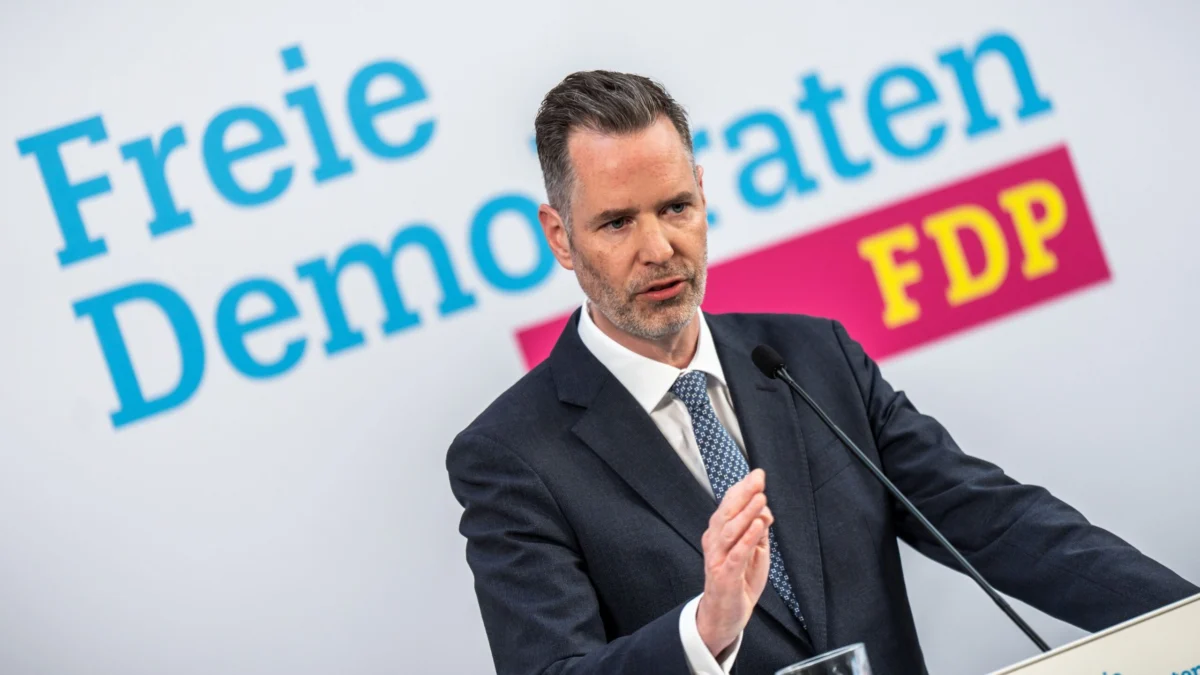
The core tenets of a liberal democracy are not ephemeral concepts to be discarded at convenience. Instead, they represent the bedrock upon which an open society is built, demanding careful consideration rather than outright dismissal. The critical questions that emerge in this context revolve around who can credibly embody these principles and whether other political forces could legitimately claim them. While theoretically, such a claim might be possible, the current political climate in Germany presents a challenge in identifying a singular political entity that can convincingly champion these fundamental values. This situation echoes a principle famously articulated by Guido Westerwelle: "If others move away from us, we don’t run after them, and if others move towards us, we don’t run away." This philosophy underscores a commitment to principled positioning, even amidst evolving political currents.
The Unwavering Foundation of Liberal Democracy
In the contemporary political discourse of Germany, the discussion often veers towards the pragmatic and the immediate, sometimes overlooking the fundamental principles that underpin a healthy, open society. These principles, often associated with liberalism – individual freedoms, the rule of law, democratic accountability, and a robust civil society – are not merely ideological preferences but essential components of a functioning democracy. Their significance lies not in their susceptibility to short-term political winds, but in their enduring capacity to foster societal progress and protect individual rights. The challenge, as highlighted, is not to question the validity of these principles, but to identify their credible custodians within the political arena.
The concept of "credibility" in this context is multifaceted. It encompasses not only stated policy positions but also a consistent track record of action, a demonstrable commitment to democratic norms, and the ability to articulate these values in a way that resonates with a broad segment of the population. It requires a political force that can act as a bulwark against authoritarian tendencies, champion minority rights, and foster an environment where diverse viewpoints can be expressed and debated without fear of reprisal. In essence, it demands a political actor that can serve as a guarantor of the liberal democratic order.
The Shifting Sands of German Politics: A Search for Credible Champions
Germany, since its post-war reconstruction, has largely benefited from a political consensus around its democratic foundations. However, recent years have witnessed significant shifts. The rise of populist movements, the fragmentation of traditional party loyalties, and the increasing polarization of public discourse have created a complex and dynamic political landscape. Within this environment, established parties have faced the challenge of maintaining their relevance and articulating their commitment to core liberal values in ways that counter the appeals of more radical or nationalist alternatives.
The implications of this search for credible champions are profound. If no single political force can convincingly embody and defend these foundational principles, there is a risk of their erosion. This could manifest in several ways: a weakening of democratic institutions, a decline in public trust, an increased susceptibility to demagoguery, and a diminishment of the protections afforded to individual citizens. The historical experience of Germany, particularly its descent into authoritarianism in the 20th century, serves as a stark reminder of the fragility of democratic systems and the importance of vigilant guardianship.
The Westerwelle Doctrine: Navigating Political Currents with Principle
Guido Westerwelle, a prominent figure in German politics and former leader of the Free Democratic Party (FDP), offered a strategic approach to navigating these complex political waters. His statement, "If others move away from us, we don’t run after them, and if others move towards us, we don’t run away," encapsulates a philosophy of principled self-reliance and strategic positioning. This doctrine suggests that a political force should not be swayed by transient trends or seek to emulate opponents simply to gain short-term popularity. Instead, it should maintain its core identity and principles, confident that its values will eventually attract those who align with them, while remaining steadfast against those who seek to undermine them.
This approach has significant implications for any party seeking to represent liberal democratic principles. It implies a commitment to long-term vision over short-term electoral gains. It suggests that authenticity and consistency are paramount, and that attempting to be all things to all people can lead to a dilution of one’s core message and a loss of identity. For the FDP, this was a strategy aimed at carving out a distinct ideological space, particularly in relation to the larger coalition partners they often worked with. It was a call to remain true to liberal ideals, even when faced with pressure to compromise or conform.
Supporting Data and Context: The Evolution of the German Political Landscape
To understand the contemporary relevance of this discussion, it is crucial to examine the data and historical context of German politics. Following World War II, Germany embarked on a deliberate path to establish a stable, democratic republic. The "Grundgesetz" (Basic Law) enshrined fundamental rights and democratic principles, serving as a bulwark against the return of authoritarianism. For decades, the political landscape was dominated by two major parties, the Christian Democratic Union (CDU/CSU) and the Social Democratic Party (SPD), with smaller parties like the FDP and the Greens playing important coalition roles.
However, this landscape has undergone significant transformations. The reunification of Germany in 1990 brought new challenges and political realignments. More recently, the rise of the Alternative for Germany (AfD) has introduced a new dynamic, challenging established political norms and offering a more nationalist and, at times, Eurosceptic platform. This has, in turn, put pressure on other parties to define their positions more clearly and to articulate the enduring values of German democracy.
Timeline of Key Developments:
- 1949: Enactment of the Grundgesetz, establishing Germany as a democratic federal republic with strong protections for fundamental rights.
- Post-War Decades: Dominance of CDU/CSU and SPD, with FDP as a key coalition partner, generally upholding liberal democratic consensus.
- 1990: German Reunification, leading to significant political and economic adjustments.
- Early 2000s: Emergence of new political challenges, including globalization and evolving social structures.
- 2013: Founding of the AfD, initially focused on Eurozone criticism, later shifting towards a more nationalist and anti-immigration agenda.
- 2015: Refugee crisis in Germany, which significantly impacted the political discourse and contributed to the rise of anti-immigration sentiment.
- 2017: AfD enters the Bundestag for the first time, marking a significant shift in the parliamentary landscape.
- 2021: Formation of the current "traffic light" coalition (SPD, Greens, FDP), indicating a move away from the CDU/CSU’s long-standing chancellorship.
This historical trajectory illustrates a gradual but significant shift in the political terrain. The traditional anchors of German politics have been challenged, creating a vacuum or at least a diffusion of the perceived guardianship of liberal democratic principles.
Potential Claimants and the Challenge of Credibility
The question of which parties could credibly embody the principles of an open society in Germany is complex.
-
The Social Democratic Party (SPD): Traditionally a champion of social justice and workers’ rights, the SPD has also historically aligned with democratic values. However, its recent electoral performance and internal debates have sometimes led to questions about its clarity of vision and its ability to mobilize a broad base in defense of liberal principles, particularly when facing populist challenges. Their focus often lies on social welfare and economic equality, which are integral to a just society, but the articulation of broader liberal freedoms might need more emphasis.
-
The Green Party (Bündnis 90/Die Grünen): Known for their commitment to environmental protection and social justice, the Greens have also become strong advocates for civil liberties and human rights. Their progressive stance on many social issues positions them as potential defenders of an open society. However, their strong emphasis on specific policy areas and their sometimes perceived radicalism by some segments of the electorate can present challenges in achieving broad consensus on foundational democratic principles.
-
The Free Democratic Party (FDP): As the party historically associated with liberalism, the FDP explicitly champions individual freedoms, market economics, and the rule of law. The Westerwelle doctrine itself originated within this party. Their challenge lies in demonstrating that their commitment to individual liberty extends to all members of society and that their economic policies do not inadvertently exacerbate social inequalities, which can undermine the fabric of an open society. Their recent role in the "traffic light" coalition has put them in a position to directly influence policy related to individual freedoms and the rule of law.
-
The Christian Democratic Union (CDU) and Christian Social Union (CSU): While representing a more conservative wing of the political spectrum, the CDU/CSU have historically been staunch defenders of Germany’s democratic order and a market economy. However, in recent years, the party has faced internal divisions and challenges in articulating a consistent vision that appeals to a broad electorate. Their focus often leans towards traditional values and economic stability, and the articulation of core liberal freedoms might be perceived as less central compared to parties explicitly identifying as liberal.
The difficulty in assigning this role unequivocally to any single party stems from the multifaceted nature of liberal democracy and the diverse priorities of each political force. What one party emphasizes as a core liberal tenet, another might view as secondary to its own agenda.
Broader Impact and Implications: The Health of German Democracy
The ongoing debate about who embodies the foundational principles of an open society has significant implications for the health of German democracy.
-
Electoral Behavior: If voters perceive a lack of clear champions for liberal values, they may become disillusioned or gravitate towards parties that offer simplistic solutions or exploit societal anxieties. This can lead to increased political instability and a weakening of democratic norms.
-
Policy Development: The ability of a government to enact policies that protect individual rights, promote equality, and uphold the rule of law depends on a broad consensus around these principles. If this consensus erodes, policy-making can become more divisive and less effective in safeguarding democratic freedoms.
-
Societal Cohesion: An open society thrives on mutual respect, tolerance, and the ability to engage in constructive dialogue. When the fundamental principles that enable this are questioned or undermined, societal cohesion can suffer, leading to increased polarization and distrust.
-
International Standing: Germany’s commitment to liberal democratic values has long been a cornerstone of its international influence and its role in organizations like the European Union. A perceived weakening of these principles could impact its standing on the global stage.
Conclusion: The Perpetual Vigilance Required
The enduring relevance of foundational principles for an open society in Germany, as articulated through the lens of Westerwelle’s philosophy, underscores a critical truth: these principles are not self-executing. They require active and credible defense. The current political landscape, characterized by fragmentation and evolving ideologies, presents a significant challenge in identifying a singular political force that can unequivocally claim this mantle.
The task for all political actors, and indeed for the citizenry, is to remain vigilant. It is to engage in rigorous debate about the meaning and application of these principles, to hold elected officials accountable for their actions, and to foster an environment where the values of individual liberty, the rule of law, and democratic participation are not merely abstract ideals but lived realities. The search for credible champions is not a one-time event but a continuous process, essential for the sustained health and vitality of any open society. The principle of standing firm in one’s convictions, as Westerwelle advocated, remains a vital compass in navigating the complex and often turbulent currents of modern politics.
