

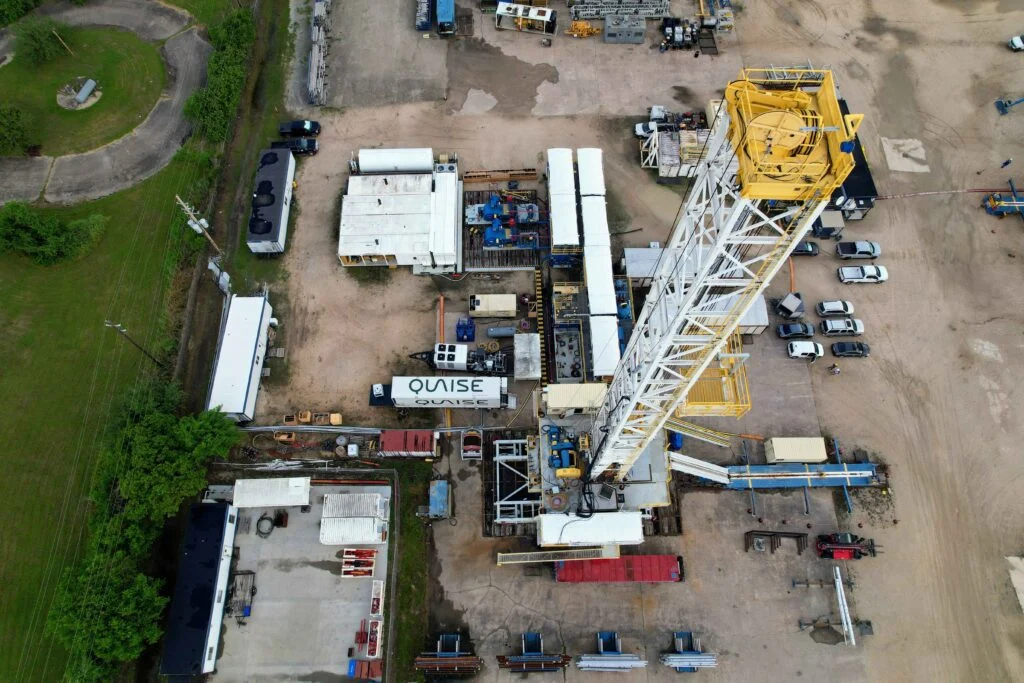
As the global demand for electricity surges, driven by the exponential growth of energy-intensive data centers and the rapid electrification of the transportation sector, the search for a consistent, carbon-free baseload power source has intensified. While solar and wind have made significant strides in decarbonizing the grid, their intermittent nature necessitates a reliable "firm" power counterpart. Traditional geothermal energy, which harnesses the Earth’s internal heat, has long been viewed as a promising solution, yet it has remained a niche player in the global energy mix. However, a new frontier in energy extraction—superhot geothermal—is poised to transition this technology from a localized resource to a global powerhouse by tapping into the massive heat reserves located miles beneath the Earth’s surface.
At the forefront of this movement is Quaise Energy, a company utilizing groundbreaking millimeter-wave drilling technology to reach depths previously considered inaccessible. By targeting rock formations at temperatures exceeding 750°F (400°C), developers aim to unlock an energy source that is virtually inexhaustible, geographically ubiquitous, and capable of producing power at a scale comparable to fossil fuel plants but without the associated greenhouse gas emissions.
The Limitations of Conventional Geothermal and the Superhot Shift
To understand the significance of superhot geothermal, one must first examine the limitations of the current industry. As of 2024, conventional geothermal energy accounts for approximately 16 gigawatts (GW) of installed capacity worldwide. This represents a mere fraction of the global energy supply. The primary constraint has been geological; traditional geothermal projects require a rare "trifecta" of conditions: naturally occurring hot water or steam, porous rock, and natural fractures that allow the fluid to circulate. These conditions are typically found only in specific tectonic regions, such as parts of Iceland, New Zealand, and the western United States.
Superhot geothermal, often categorized under Enhanced Geothermal Systems (EGS), fundamentally shuffles this deck. Instead of searching for rare, naturally occurring reservoirs, engineers intend to create them. By drilling deeper into the Earth’s basement rock—typically granite—developers can reach temperatures where water becomes "supercritical," a phase where it behaves like both a liquid and a gas. At these temperatures, the energy density of the fluid is significantly higher. A single superhot well has the potential to deliver up to ten times the energy output of a conventional geothermal well at similar flow rates. This efficiency gain changes the economic viability of geothermal, allowing for high-capacity power plants to be built on relatively small surface footprints.

The Technological Breakthrough Millimeter-Wave Drilling
The primary obstacle to reaching superhot rock has historically been the "drilling wall." Conventional mechanical drilling utilizes rotating bits that crush and grind through rock. As wells go deeper, the rock becomes harder and the environment hotter. At depths of 5 to 10 miles, temperatures exceed the operating limits of electronic sensors and the structural integrity of mechanical bits. The time required to pull thousands of feet of pipe out of a hole to replace a worn bit—a process known as "tripping"—becomes prohibitively expensive, causing costs to rise exponentially with depth.
To bypass this physical limitation, Quaise Energy is developing a hybrid drilling system that replaces mechanical contact with directed energy. This technology, which originated from nuclear fusion research at the Massachusetts Institute of Technology (MIT) beginning in 2008, utilizes a gyrotron to generate high-power microwave beams in the millimeter-wave spectrum. These beams are guided down the wellbore via a metallic waveguide.
When the millimeter waves strike the basement rock, the minerals absorb the energy and heat up almost instantaneously. The rock then cracks, melts, or vaporizes into fine ash. Simultaneously, a high-pressure gas stream is pumped down the waveguide to clear the debris and carry it to the surface. Because the drilling head does not make physical contact with the rock, there is no mechanical wear and tear, allowing for continuous drilling at extreme depths. This method aims to make 6-to-12-mile-deep holes a routine industrial operation, effectively "flattening" the cost curve of deep-earth exploration.
A Chronology of Innovation and Development
The journey toward superhot geothermal has been marked by decades of theoretical physics and recent rapid commercialization.
- 2008: Research begins at the MIT Plasma Science and Fusion Center, led by Paul Woskov, focusing on using gyrotrons for geothermal drilling.
- 2018: Quaise Energy is co-founded by Matt Houde and Carlos Araque to commercialize the MIT research.
- 2020-2022: The company successfully demonstrates the ability to melt and vaporize rock using millimeter waves in laboratory settings, scaling the technology from small samples to larger blocks of granite.
- 2023: The U.S. Department of Energy (DOE) increases its focus on EGS, providing grants and technical support through the FORGE (Frontier Observatory for Research in Geothermal Energy) site in Utah.
- 2024: Quaise Energy announces a successful $134 million Series B funding round, earmarked for the first full-scale field demonstrations.
- 2025-2026 (Projected): Commencement of "Project Obsidian" on the flanks of the Newberry Volcano in Oregon, marking the world’s first attempt to create a superhot geothermal power plant using these advanced techniques.
Project Obsidian and the Path to Commercialization
The Newberry Volcano site in central Oregon serves as the ideal testing ground for superhot technology. Unlike the deep crust elsewhere, the geothermal gradient near the volcano is much steeper, meaning superhot conditions (300–350°C) are reachable at depths of only 2 to 3 miles.

The development plan for Project Obsidian is structured in three distinct phases:
- Validation: An initial confirmation well will be drilled to map the temperature profiles and rock properties of the site. This well will eventually serve as a monitoring station to collect real-time data on reservoir behavior.
- Triplet Formation: Using commercially available high-temperature drilling tools, the team will drill an injection-production pair. Water will be injected into one well, heated by the rock, and extracted from the other. A third well will then be added to create a "triplet" system, optimizing the heat exchange process.
- Scale-Up: In the final phase, Quaise intends to integrate its millimeter-wave drilling technology to go even deeper. The ultimate goal for the Newberry site is to generate 250 MW of power from just six wells situated on a single four-acre pad. For comparison, a traditional gas-fired power plant of similar capacity would require significantly more infrastructure and fuel logistics.
Economic and Workforce Implications
One of the most compelling arguments for superhot geothermal is its potential to leverage the existing infrastructure and expertise of the oil and gas industry. As the world transitions away from fossil fuels, there is a growing concern regarding the displacement of millions of workers in the petroleum sector. Geothermal energy offers a direct "pivot" for this workforce.
Reservoir engineers, geologists, drilling crews, and rig technicians possess skills that are almost entirely transferable to geothermal development. The equipment used in the early stages of geothermal drilling is virtually identical to that used in shale gas extraction. Furthermore, by repurposing depleted oil and gas wells or utilizing the same drilling pads, the industry can reduce the environmental footprint of new energy projects.
From a macroeconomic perspective, superhot geothermal could provide the stability that the modern grid requires. Unlike solar and wind, which fluctuate based on weather and time of day, geothermal provides a constant flow of electricity. This "firm" power is essential for maintaining grid frequency and supporting the 24/7 operations of the technology sector. If successfully scaled, superhot geothermal could lower the Levelized Cost of Energy (LCOE) by providing high-density power near population centers, reducing the need for expensive long-distance transmission lines.
Addressing Safety and Environmental Concerns
As with any technology that involves subsurface intervention, superhot geothermal faces scrutiny regarding safety and environmental impact. The primary concern is induced seismicity—small earthquakes caused by the injection of fluids into the Earth’s crust.

Industry experts and regulatory bodies have pointed to data from the DOE’s FORGE site and commercial projects by companies like Fervo Energy to mitigate these fears. These projects utilize dense sensor networks to monitor seismic activity in real-time. To date, the seismic events recorded at these sites have been so small that they are undetectable by humans at the surface. Furthermore, because geothermal systems circulate water in a closed or semi-closed loop, they do not pose the same groundwater contamination risks associated with chemical-heavy hydraulic fracturing in the oil industry.
Future Outlook and Global Impact
The implications of successful superhot geothermal deployment are global. While the initial projects are focused in the United States, the resource itself exists beneath every continent. The upper 6 to 12 miles of the Earth’s crust contain orders of magnitude more energy than all known fossil fuel reserves combined. By mastering the technology to reach this heat, nations could achieve energy independence regardless of their natural fossil fuel deposits or surface weather patterns.
However, the road to scale is not without hurdles. The industry requires significant capital investment and a shift in how utility companies and governments perceive geothermal energy. For decades, it has been viewed as a "nice-to-have" secondary resource. The success of Quaise Energy and its contemporaries will depend on proving that superhot rock is not just a scientific curiosity, but a commercially viable backbone for a decarbonized global economy.
As Project Obsidian moves toward its operational phase, the energy world will be watching. If Quaise can successfully demonstrate that millimeter waves can indeed "punch through" the drilling wall, the "apple skin" of the Earth’s crust will no longer be the limit of human energy production. The transition from extracting fuel from the Earth to extracting heat from the Earth may well be the defining shift of the 21st-century energy landscape.
