

The cyclospora outbreak that has sickened thousands across the United States is drawing renewed and intense attention to a decades-long transformation in how fresh produce is sourced, processed, and distributed nationwide. While federal investigators diligently work to pinpoint the precise origin of contamination, a growing chorus of food safety experts and public health officials points to the highly centralized sourcing and extensive distribution networks of the modern food industry as a critical factor that can escalate what might once have been an isolated incident into a widespread, multi-state public health crisis.
The current outbreak, which saw a significant spike in reported cases in late 2025 and early 2026, has already impacted numerous states, prompting the Centers for Disease Control and Prevention (CDC) to issue multiple health alerts. The microscopic parasite, Cyclospora cayetanensis, known for its lengthy incubation period and elusive nature, presents unique challenges for epidemiological tracking. Compounded by what some experts have characterized as an initially uneven federal response, the outbreak has laid bare potential vulnerabilities within the very infrastructure designed to feed a nation efficiently.
Dr. David Relman, a distinguished professor of microbiology and immunology at Stanford University, articulated this concern, stating, "The general trends that have taken place in the food industry, the way in which food has been sourced and then distributed has played some role here." He elaborated on the mechanism: "It’s possible that as food sourcing and distribution becomes consolidated you get pooling and then redistribution of what might have been a very local contamination problem, so that it now becomes a widely distributed contamination problem." This phenomenon suggests that a single point of contamination, rather than remaining geographically confined, can be inadvertently amplified and disseminated across vast distances.
Marion Nestle, professor emerita of nutrition, food studies, and public health at New York University, echoed this sentiment, emphasizing the amplified consequences of consolidation. "Consolidation means that if something goes wrong, it goes wrong big time," Nestle asserted, highlighting how centralized processing facilities further extend the potential reach of a contamination event.
A Chronology of Contamination and Investigation
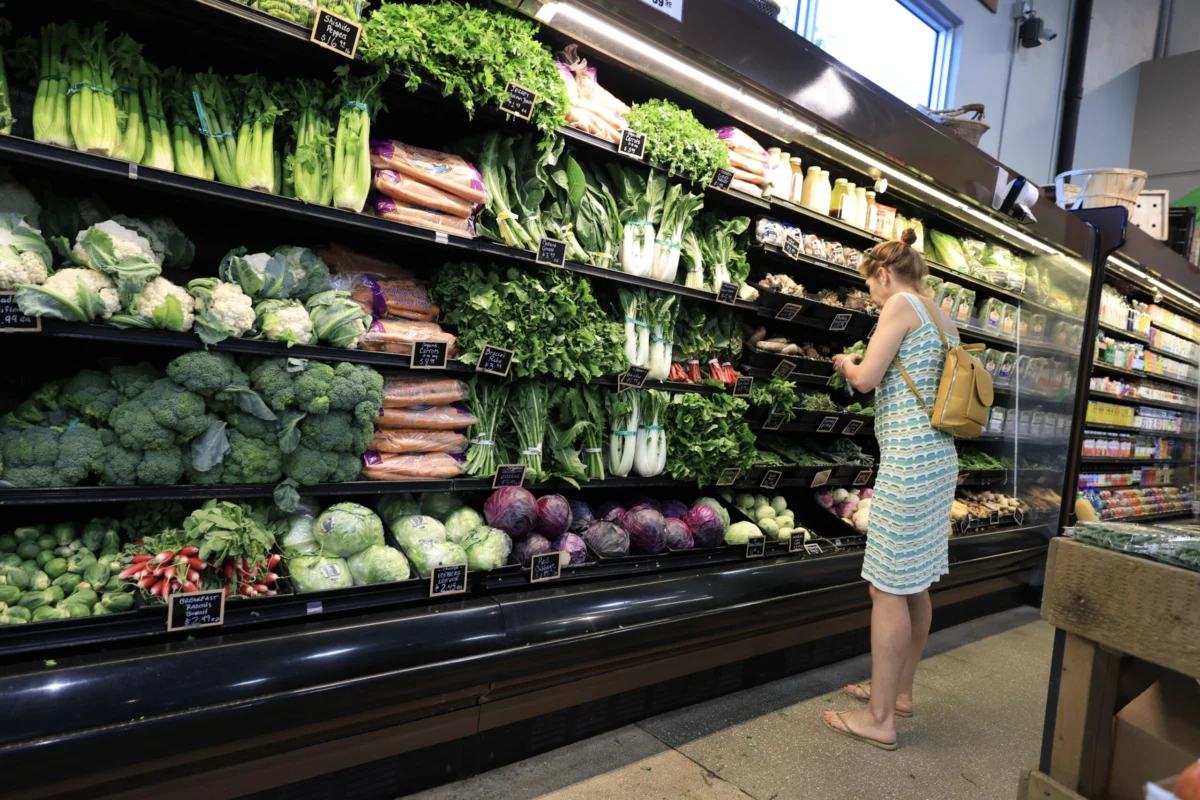
The timeline of the 2025-2026 cyclospora outbreak underscores the challenges inherent in tracing foodborne illnesses within a complex supply chain. Initial reports of elevated cyclosporiasis cases began to surface in late summer 2025, primarily affecting individuals in the Southeast. By August 15, 2025, when fresh vegetables were prominently displayed in grocery stores in places like Delray Beach, Florida, public health officials were already noting an unusual clustering of cases.
As autumn progressed, the geographic scope expanded, with states beyond the initial cluster reporting confirmed infections. The long incubation period of Cyclospora, which can range from a few days to over a week, made it difficult for affected individuals to recall specific food items consumed, complicating early traceback efforts. Symptoms, including watery diarrhea, loss of appetite, weight loss, abdominal cramps, nausea, and fatigue, are also non-specific, often delaying diagnosis.
By early 2026, the CDC and the U.S. Food and Drug Administration (FDA) intensified their investigation, deploying epidemiological teams to interview patients and analyze food consumption patterns. It was not until late spring 2026 that the FDA’s investigation began to coalesce around a specific product: shredded iceberg lettuce. This ingredient, distributed through Taylor Farms’ foodservice business, was identified as a potential common denominator, reaching a diverse array of customers including major restaurant chains like Taco Bell and various other institutional foodservice operations across multiple states. By July 24, 2026, the CDC confirmed the outbreak had spread to at least nine states, solidifying the multi-state nature of the crisis and focusing the investigation on the implicated product.
Dr. Relman specifically referenced bagged lettuce as a prime example of how modern distribution practices could exacerbate foodborne illness outbreaks. "Think of the difference between one head of lettuce and a bag of chopped lettuce that may have come from many, many heads," he posited. "These bags are now being produced in huge numbers and distributed in far-flung distribution networks." The pooling of produce from multiple farms into a single processing facility, then packaging it for broad distribution, creates a conduit for widespread contamination if even a small portion of the raw material is tainted.
Consolidation: The Double-Edged Sword of the Supply Chain
The journey of the U.S. food industry towards fewer, larger players has been a persistent trend over the past several decades, driven primarily by a relentless pursuit of efficiency, economies of scale, and the ability to serve national markets. This consolidation, however, comes with inherent trade-offs, particularly in the realm of food safety.
"Big is not necessarily better," warned Marion Nestle. "The bigger the supplier, the greater the opportunity for contamination." The U.S. Department of Agriculture (USDA) has long documented this trend across various agricultural sectors and food distribution channels.
Taylor Farms, the salad producer under scrutiny for its connection to the cyclospora outbreak, exemplifies this growth strategy. Over the past decade, the company has significantly expanded its footprint through a series of strategic acquisitions. Notable examples include the acquisition of Earthbound Farm in 2019, Curation Foods in 2021 (which brought fresh packaged salads, green beans, and fresh-cut vegetables into its portfolio), and most recently, Equinox Growers in March 2026, securing the largest greenhouse operation in the Mid-Atlantic region. These acquisitions have allowed Taylor Farms to consolidate its position as a dominant force in the fresh-cut produce market, increasing its capacity and geographic reach.
Similarly, the restaurant supply sector has experienced a parallel concentration. Broadline distributors such as Sysco, US Foods, and Performance Food Group collectively serve hundreds of thousands of restaurants, schools, hospitals, and other institutional kitchens nationwide. While federal regulators notably blocked Sysco’s proposed $8.2 billion acquisition of US Foods in 2015 on antitrust grounds, both companies have continued to expand through smaller, strategic acquisitions of regional distributors and fresh produce processors.
Sysco, as the nation’s largest foodservice distributor, has spent the last decade bolstering its fresh produce business. This includes acquiring regional powerhouses like Paragon Foods in Pennsylvania (2021), The Coastal Companies in the mid-Atlantic (2021), and Greco and Sons (2021), a specialty food distributor with ten distribution centers across the country. These deals have significantly expanded Sysco’s capabilities in fresh-cut produce and value-added processing, enabling a larger share of restaurants to source their ingredients through a single, extensive distribution network.
US Foods has also pursued similar expansion. In 2016, it acquired Freshway Foods, a prominent fresh fruit and vegetable processor, repacker, and distributor operating in the eastern half of the United States. Such moves by these industry giants reinforce the trend towards fewer, larger entities controlling increasingly vast segments of the food supply chain.
The Expert Debate: Scale and Safety
The question of whether consolidation inherently compromises food safety remains a subject of nuanced debate among experts. While many, like Relman and Nestle, highlight the amplified risk, others offer a different perspective.
Timothy Lytton, an expert in health and safety regulation at Georgia State University, argues that larger produce growers and processors often possess more sophisticated food safety systems compared to smaller farms. "It’s not entirely clear that larger operations have more food safety problems than smaller operations," Lytton stated. He suggests that these larger entities typically have greater financial resources to invest in crucial preventative measures such as advanced testing protocols, robust traceability systems, rigorous internal and external audits, and comprehensive quality control programs. These investments, Lytton contends, can lead to a higher baseline of food safety in well-managed large operations.
Lytton also referenced studies conducted in California farmers’ markets, which have occasionally identified E. coli contamination in fresh produce grown by small farmers. He explained that "while you may have a farmer who’s very concerned about the quality of the product, you also have in an organic model a more holistic idea about farming that often involves animals near crops." This proximity of animals, particularly livestock, to produce fields can inadvertently create food safety hazards if proper biosecurity measures are not meticulously maintained, leading to potential pathogen transfer to crops.
Even Lytton, however, acknowledges the undeniable challenge posed by large handler networks when contamination does occur. "When contamination does occur within large handler networks, the resulting recalls at the distribution level are much broader and harder to manage," he conceded. This is precisely the scenario unfolding with the cyclospora outbreak, where a single point of contamination in a highly centralized system can necessitate widespread, complex, and costly recalls impacting multiple states and numerous businesses.
Industry Response and Regulatory Scrutiny
In the wake of the cyclospora outbreak, the food supply industry has reiterated its commitment to food safety and traceability. CNBC, in its reporting, reached out to major food suppliers for comment on their safety precautions and tracing procedures. Sysco, one of the implicated broadline distributors, directed inquiries to the International Foodservice Distribution Association (IFDA), its primary trade group.
A spokesperson for the IFDA emphasized the industry’s capabilities: "The foodservice supply chain that feeds our communities is intricate and foodservice distributors are highly skilled in tracking and tracing the food they distribute. They maintain robust records, identifying the source, internal movement, and recipient of all products they handle, and they have a proven track record of providing FDA with critical traceback information within 24-48 hours to support foodborne illness outbreak investigations and swiftly remove products from commerce." This statement highlights the industry’s technical capacity for traceability, a crucial component in mitigating the impact of outbreaks.
Despite these assurances, the cyclospora outbreak has intensified calls for greater regulatory oversight and potentially more stringent requirements for food safety across the consolidated supply chain. Consumer advocacy groups, such as the Center for Science in the Public Interest (CSPI), have publicly urged the FDA and USDA to re-evaluate existing food safety regulations in light of the increasing scale of food production and distribution. "The current framework was designed for a different era of food production," stated a CSPI representative, "and it needs to evolve to address the realities of today’s highly consolidated system."
The FDA, while not directly commenting on the industry structure, has consistently emphasized its commitment to protecting the public health by ensuring the safety of the nation’s food supply. Its ongoing investigation into the cyclospora outbreak, involving extensive traceback efforts and collaboration with state health departments, is a testament to this mission. However, the "bumpy federal response" criticism suggests that coordination and speed of action may need improvement to match the rapid spread potential of modern foodborne illnesses.
Broader Implications and the Path Forward
The cyclospora outbreak serves as a stark reminder that while consolidation can yield significant efficiencies and cost savings for businesses, it simultaneously introduces systemic risks that can have far-reaching public health and economic consequences. The direct costs of foodborne illness outbreaks, including medical expenses, lost wages, and productivity, are substantial, estimated by the CDC to be in the billions of dollars annually. Beyond these direct costs, there is the immeasurable impact on consumer trust, which can take years to rebuild.
Dr. Relman underscored the critical importance of robust public health infrastructure, stating, "We often don’t appreciate a system like the food inspection system, or the public health system in large until it fails. We can’t keep doing that." This sentiment points to a need for proactive investment and continuous improvement in public health surveillance and response mechanisms, rather than simply reacting to crises.
The implications of this outbreak extend beyond immediate public health concerns. It may spur legislative action, prompting Congress to consider stricter regulations on food processors and distributors, potentially requiring enhanced traceability technologies, more frequent inspections, and clearer guidelines for outbreak response. For the industry, it could accelerate the adoption of advanced food safety technologies, such as blockchain for improved supply chain transparency, and lead to a re-evaluation of the balance between efficiency and resilience in their operations.
Ultimately, the cyclospora outbreak of 2025-2026 is a pivotal moment, forcing a critical examination of how America feeds itself. It highlights the intricate web of challenges in ensuring food safety in a globalized, consolidated, and rapidly evolving food system, and underscores the ongoing tension between market-driven efficiencies and the fundamental imperative of public health protection. The lessons learned from this widespread illness will undoubtedly shape the future of food safety policies and practices for years to come.
