

BROOKLYN, Mich. – Ford Motor Company is making a significant strategic pivot, dramatically expanding its accessory and parts business in a concerted effort to capitalize on the lucrative $53 billion U.S. aftermarket industry and bolster its profitability. The automaker is embarking on an ambitious plan to elevate its aftermarket offerings, spanning from meticulous exterior detailing and vehicle wraps to high-performance parts and sophisticated systems. Central to this new strategy is the adoption of what Ford is likening to a "Nike shoe drop" model, introducing new and highly anticipated special-edition vehicle models with exclusive, factory-backed customization options. This initiative was unveiled during a recent event at the Michigan International Speedway racetrack, underscoring Ford’s commitment to transforming its after-sales business.
The Strategic Imperative: Tapping into a Lucrative Market
The automotive aftermarket represents a vast and consistently growing segment, driven by consumers’ desire for personalization, enhanced performance, and vehicle protection. The Specialty Equipment Market Association (SEMA), a leading auto aftermarket trade association, reported that U.S. consumers spent a staggering $52.9 billion on vehicle accessories and modifications in 2025 alone. This robust market, characterized by higher profit margins compared to traditional vehicle sales, presents an irresistible opportunity for original equipment manufacturers (OEMs) like Ford.
Matt Simpson, Ford Customization’s executive director, articulated the vision, stating, "Think like a ‘Nike dropping a sneaker’ is the vision. We’re significantly increasing our investment in this group to bring more choice and to engage customers in this aftersales." This comparison to the iconic sportswear brand highlights Ford’s intent to cultivate a sense of exclusivity, anticipation, and rapid-release cycles for its customized vehicles and accessory packages, aiming to create a fervent customer base eager for the next "drop."
Automakers have historically leveraged special-edition vehicles and performance-tuned models to command premium pricing and enhance profit margins. However, Ford’s current approach signifies a more methodical and expansive strategy, designed to democratize customization across its entire product portfolio and various price points. This includes not only an expanded catalog of individual accessories but also substantial investments in its Ford Custom Garage initiative, which was launched last year as a singular, comprehensive platform for factory-backed vehicle customizations.
Ford Custom Garage: A New Era of Personalization
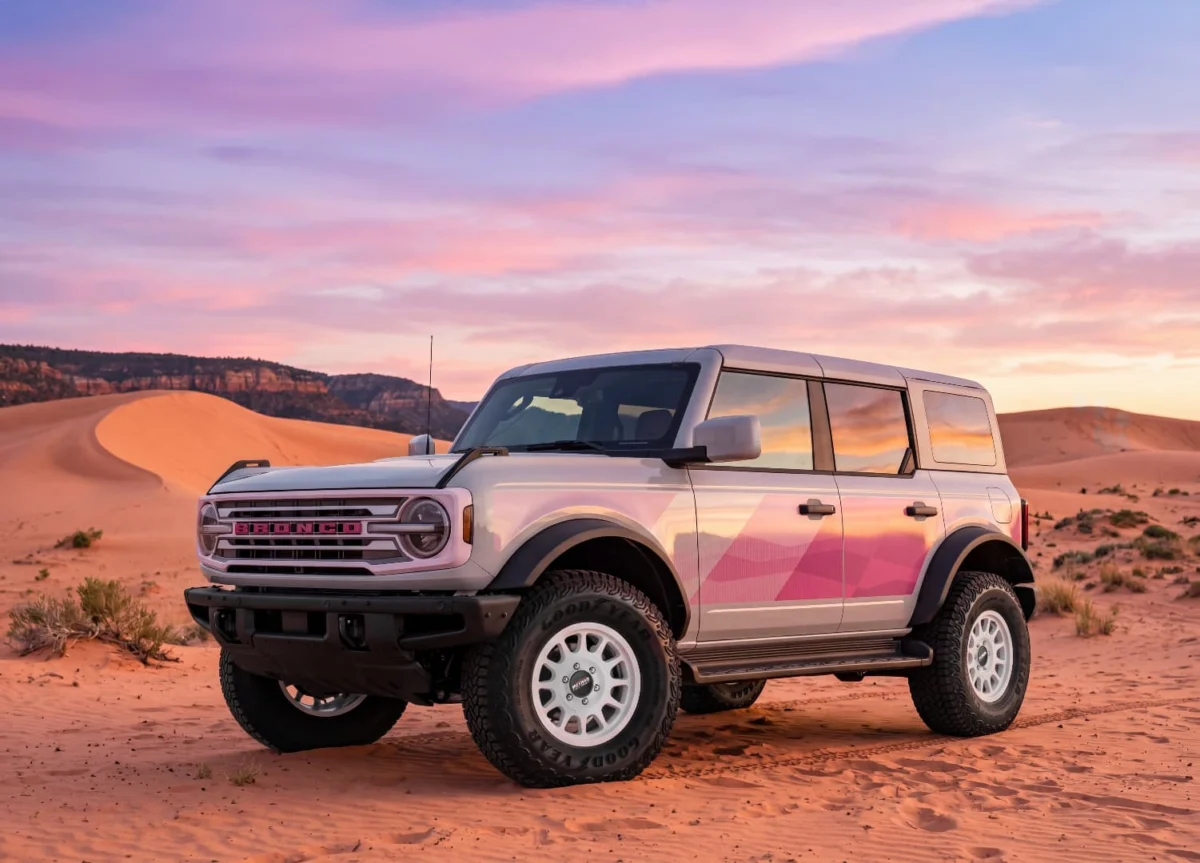
The Ford Custom Garage represents the cornerstone of this strategic shift, offering customers a streamlined, one-stop shop for integrated customization. Its inaugural "vehicle drop," embodying the "Nike shoe drop" philosophy, took place recently with the unveiling of a captivating, sunrise-inspired Ford Bronco SUV. This vibrant model, while striking a playful chord reminiscent of popular culture, was conceived by Ford’s designers without direct inspiration from the Mattel toy, emphasizing its unique design ethos.
This limited-edition Bronco, featuring the distinctive Desert Rising package, is part of the new Bronco Horizon Series. Ford announced plans to produce only 1,000 units of this exclusive model, making it a highly sought-after collector’s item. The Desert Rising package itself is priced at $13,695, elevating the vehicle’s total cost to $57,350. This premium pricing strategy for limited-run, factory-customized vehicles directly contributes to Ford’s goal of boosting profitability from its aftermarket division.
The Custom Garage’s offerings extend far beyond the Bronco. It encompasses a wide array of full packages designed for other popular Ford models, with prices starting in the thousands of dollars. For instance, performance packages for the iconic Mustang can range from $16,000 to $18,000. Enthusiasts of the F-150 pickup truck, a perennial bestseller, can opt for special performance versions that can add nearly $27,000 to the vehicle’s cost. These substantial price points underscore the high-value nature of these integrated customization solutions.
Simpson emphasized the financial rationale behind this expansion, stating, "It is a growth lever for us. It’s been a good business for us. We think it can be significantly bigger, hence the investment." This declaration signals Ford’s confidence in the long-term potential of this segment to be a key driver of financial performance.
Navigating Vehicle Complexity and the "Right to Repair" Debate
This expansion comes at a time when modern vehicles are becoming increasingly complex, integrating sophisticated electronics, advanced powertrains, and intricate software systems. This complexity often makes it challenging for individual owners or non-certified aftermarket shops to perform modifications or repairs without specialized tools, diagnostic equipment, and up-to-date technical knowledge.
The issue of vehicle repair and owner autonomy, often referred to as the "Right to Repair," gained public prominence recently. Ford CEO Jim Farley faced scrutiny after former President Donald Trump suggested that Ford and rival General Motors were supporting legislation that would restrict owners’ ability to work on their own vehicles. Farley subsequently clarified Ford’s position, asserting that while he believes customers should have the right to repair their vehicles, working on new vehicles under warranty often necessitates specialty tools and expertise to ensure proper function and maintain warranty validity.
Ford’s intensified focus on factory-backed customization and aftermarket services can be seen as a strategic response to this evolving landscape. By offering integrated, warranty-covered customization packages directly from the factory or through certified dealerships, Ford provides a solution that addresses both consumer demand for personalization and the technical complexities of modern vehicles. Unlike aftermarket modifications that might void parts of a vehicle’s warranty, Ford’s Custom Garage ensures that all enhancements are fully covered. Furthermore, buyers have the convenience of rolling the cost of these additional parts and packages into their monthly vehicle payments for purchases or leases, making premium customization more accessible.
Financial Growth Targets and Customer Loyalty
Ford has publicly articulated ambitious financial targets for its high-margin software and physical services revenue, which encompasses its burgeoning customization business. The automaker aims to achieve an 8% annual growth rate for this $15 billion segment through the end of the decade. The expansion of the Custom Garage and the "Nike shoe drop" strategy are critical components in realizing these aggressive financial objectives.
"We’ve never had a Ford showroom as prime for this as we have today," Simpson noted, highlighting the current appeal of Ford’s vehicle lineup. "Bronco, the Mustang, Maverick, the F-Series, this is the most passionate lineup of vehicles that Ford has ever had." This diverse and emotionally resonant product range provides a fertile ground for customization, as owners of these iconic vehicles often exhibit a strong desire to personalize their rides.
Ford’s internal data supports this observation, revealing that 46% of its new vehicle buyers in the U.S. engage in some form of customization. Bronco buyers lead this trend, followed closely by consumers purchasing Mustang pony cars and F-Series pickup trucks. These demographics represent enthusiastic and engaged customer segments that are prime candidates for Ford’s expanded customization offerings.
While Simpson refrained from disclosing specific growth targets for the customization division, he affirmed Ford’s ambition to increase both the number of buyers opting for these packages and the average amount of money they spend on them. A key insight driving this strategy is the strong correlation between customization and customer loyalty. "The more that someone spends on accessories with us, the higher the loyalty is," Simpson explained. This suggests that customers who invest in personalizing their Ford vehicles develop a deeper connection with the brand, potentially leading to repeat purchases and sustained engagement with Ford’s ecosystem.
Broader Implications and Future Outlook
Ford’s aggressive foray into the factory-backed aftermarket signals a significant shift in how OEMs view and participate in the customization space. Traditionally, much of the aftermarket business has been dominated by independent shops and third-party suppliers. By bringing more customization in-house and under warranty, Ford is directly competing for a larger share of this market.
This strategy has several broader implications:
- Enhanced Profitability: For Ford, it promises a substantial boost to its bottom line through higher-margin sales, contributing significantly to its overall financial health.
- Brand Reinforcement: It strengthens brand identity and customer engagement, particularly for enthusiast-driven models like the Bronco and Mustang, fostering a more passionate and loyal customer base.
- Dealer Empowerment: Ford’s dealership network stands to benefit immensely. They become key touchpoints for customization sales, installation, and warranty service, generating additional revenue streams and strengthening their relationship with customers.
- Quality Assurance: Factory-backed customizations ensure that all modifications meet Ford’s stringent quality, safety, and performance standards, offering peace of mind to consumers.
- Competitive Pressure: This move could compel other automakers to re-evaluate and potentially expand their own factory customization and aftermarket programs to remain competitive in attracting and retaining customers who value personalization. Stellantis, for instance, has a long-standing and successful Mopar division dedicated to parts and accessories, while General Motors also offers a comprehensive range of GM Accessories.
In a market increasingly characterized by affordability pressures and declining sales in some segments, the ability to add high-margin accessories and packages directly from the factory offers a crucial buffer. "Even with declining sales and unaffordability squeeze, a lot of these accessories, especially the kind of basic, like I want to protect my vehicle, that’s margin for the dealer to add in," Simpson concluded. This highlights the resilience of the customization market, even amidst broader economic headwinds, as consumers prioritize protection, personalization, and enhanced functionality for their significant vehicle investments.
Looking ahead, Ford’s "Nike shoe drop" strategy could evolve to include even more rapid release cycles, digital configurators with augmented reality, and perhaps even deeper integration of AI-driven personalization suggestions. The commitment to expanding Ford Custom Garage, combined with a clear financial imperative and a deep understanding of customer passion, positions Ford to redefine the factory customization experience and unlock a significant new avenue for growth and brand loyalty in the years to come.
