

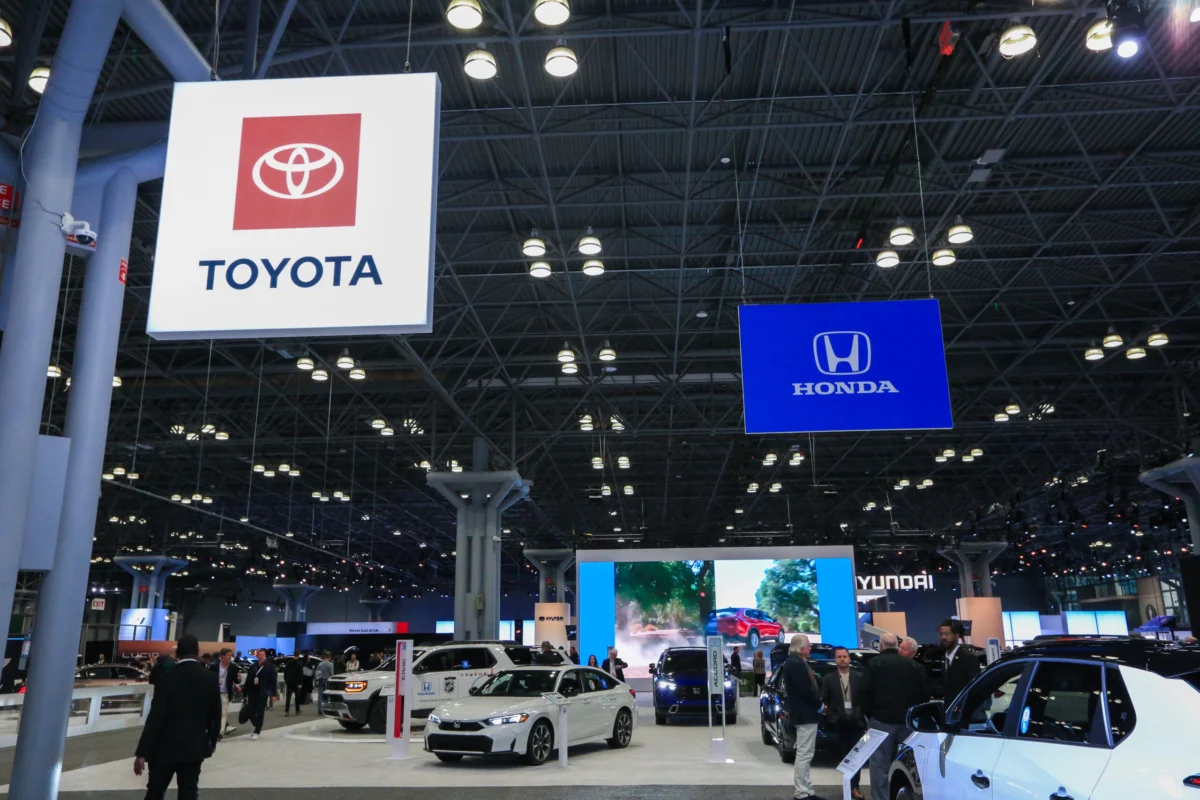
The United States automotive market is witnessing a significant paradigm shift, with hybrid electric vehicles (HEVs) experiencing unprecedented growth, profoundly reshaping the competitive landscape. In the first half of 2026, sales of hybrid cars surged by nearly 20% year-over-year, claiming a record 15.4% market share, a figure that dwarfs the pure electric vehicle (EV) segment by almost three times. This remarkable ascent underscores a pivotal moment where consumer preference for practical fuel efficiency and established technology is outstripping the rapid, yet often challenging, transition to full electrification. At the forefront of this burgeoning segment are just three automakers – Toyota, Hyundai Motor Group, and Honda – all non-American entities, collectively commanding an overwhelming 86% of the U.S. hybrid market, according to data compiled by automotive market analysis firm Baum & Associates. This dominance highlights years of strategic investment and a deep understanding of evolving consumer needs, contrasting sharply with the broader industry’s uneven embrace of diversified powertrain technologies.
Elizabeth Krear, CEO of the Center for Automotive Research (CAR), succinctly captured the current market reality: "The only growth we’re seeing is in hybrid market share. All other propulsion systems have lost market share year to date." This statement paints a clear picture of a market where hybrids are not merely holding their own but actively expanding their footprint, indicating a strategic advantage for those manufacturers who have consistently championed the technology. The concentrated control of this high-growth segment by a select few foreign automakers points to a significant competitive moat, built on decades of research, development, and market positioning. Alan Baum, principal at Baum & Associates, echoed this sentiment, noting, "Consumers want the vehicles. The problem is there are relatively few automakers that offer those vehicles." This supply-demand imbalance further solidifies the market power of the current leaders, who are now reaping the rewards of their long-term vision.
Toyota’s Enduring Hybrid Hegemony
Leading the charge in this hybrid resurgence is Toyota, a company that has become synonymous with hybrid technology since its pioneering efforts decades ago. In the first half of 2026, Toyota, encompassing both its namesake brand and luxury division Lexus, sold more than 600,000 hybrid vehicles in the U.S., securing an impressive half of the entire hybrid market. This formidable performance has propelled Toyota’s overall U.S. sales volumes closer to traditional market leader General Motors, a company that has heavily staked its future on pure EVs. Toyota’s extensive hybrid lineup, featuring popular models like the RAV4 Hybrid, Camry Hybrid, Highlander Hybrid, Sienna Hybrid, and the iconic Prius, alongside a robust offering of Lexus hybrid variants, caters to a wide spectrum of consumer preferences, from compact sedans to full-size SUVs. This breadth of choice, combined with a reputation for reliability and fuel efficiency, has cemented Toyota’s position as the undisputed leader.
Toyota’s "North Star strategy," as described by CAR’s Krear, involved a pragmatic approach to carbon emissions reduction. Rather than solely pursuing full electrification, the company argued it could achieve a greater environmental impact at scale by producing vast quantities of fuel-sipping hybrids with smaller batteries, making greener technology accessible to a broader consumer base. This strategy allowed Toyota to "meet the customers where they were at," offering meaningful fuel savings without requiring significant changes in driving habits or reliance on a nascent charging infrastructure. This long-term commitment, often met with skepticism and even criticism from environmental activists and some shareholders advocating for a faster EV transition, now appears prescient.
Hyundai Motor Group’s Rapid Ascent and Honda’s Resurgence
Challenging Toyota’s dominance and securing significant market share are Hyundai Motor Group (HMG) and Honda. HMG, which includes the Hyundai, Kia, and Genesis brands, has rapidly expanded its hybrid offerings, just barely surpassing Honda in hybrid sales during the first half of 2026. HMG’s strategy has involved integrating hybrid powertrains across a wide range of vehicles, notably including popular larger SUVs, a segment critical to the American market. Models such as the Hyundai Santa Fe Hybrid, Tucson Hybrid, Kia Sorento Hybrid, Sportage Hybrid, and Niro Hybrid have resonated with consumers seeking fuel efficiency without compromising on space or utility. This agile expansion across key vehicle segments demonstrates HMG’s responsiveness to market demand and its commitment to offering diverse powertrain options.
Honda, a long-standing rival in the hybrid space, maintains its position as the second-bestselling hybrid brand in the country, trailing only Toyota. Hybrids now account for a substantial 31% of American Honda’s total sales, a clear indicator of their strategic importance to the company. Honda achieved a U.S. hybrid sales record in the first half of 2026, driven by popular models like the CR-V Hybrid and Accord Hybrid. Gary Robinson, vice president of auto strategy at American Honda Motor Co., expressed satisfaction with this performance, stating, "We’re extremely happy with how our hybrids have been doing." This success is particularly noteworthy given Honda’s broader corporate challenges, including reporting its first annual loss in almost 70 years as a public company in 2026, partly due to a substantial $16 billion charge related to restructuring its EV division. Despite these setbacks in its EV ambitions, Honda’s sustained investment and performance in the hybrid segment underscore its adaptability and resilience.
The Underpinnings of the Hybrid Boom: Consumer Pragmatism and Market Realities
The surging demand for hybrids is multifaceted, driven by a convergence of economic factors, technological perceptions, and evolving consumer priorities. High and volatile fuel prices remain a primary catalyst. While the upfront cost of a hybrid vehicle has historically been higher than its gasoline-powered counterpart due to the complexity of its dual powertrain, the significant savings at the pump—ranging between 30% and 50% on fuel costs—offer a compelling value proposition. According to Krear, buyers can typically recoup the added initial investment in just two to three years, making hybrids an economically sound choice in an era of inflation and cost-consciousness.
Beyond fuel economy, lingering anxieties surrounding pure electric vehicles continue to steer buyers toward hybrids. Concerns about EV range, the availability and reliability of charging infrastructure, and the time required for charging remain significant hurdles for many potential buyers. For consumers in rural areas or those frequently undertaking long journeys, the convenience of traditional gasoline refueling combined with improved fuel efficiency offers a compelling compromise. Hybrids eliminate "range anxiety" and the need for new charging habits, presenting a familiar yet more economical driving experience.
Furthermore, the "broader selection" of hybrid vehicles available today plays a crucial role. Early hybrids, such as the original Toyota Prius and Honda Insight, were predominantly small, niche cars. However, the market has evolved dramatically, with hybrid powertrains now integrated into the most popular vehicle segments, including compact SUVs, mid-size SUVs, and even some trucks and performance cars. This alignment with consumer preferences for larger, more versatile vehicles has expanded the appeal of hybrids beyond a niche environmental conscious demographic to the mainstream buyer.

A Look Back: The Hybrid Journey Through Time
The journey of the hybrid vehicle in the U.S. market is a testament to perseverance and strategic foresight. While Toyota introduced the Prius in Japan in 1997, it was Honda that brought the first hybrid to the U.S. market with the Insight sedan in 1999. The Prius followed shortly after in 2000, quickly establishing Toyota as a dominant force. By the mid-2000s, Toyota commanded approximately 75% of the nascent hybrid market share, though hybrids at that time constituted a mere 2% of overall new-vehicle sales.
Dave Christ, group vice president and general manager of the Toyota brand in the U.S., reflected on those early days: "We really brought it out at a time when hybrid technology probably wasn’t necessary, but we felt a long-term commitment to the technology, and we felt that putting it in our lineup was good for consumers." This long-term commitment was a defining characteristic of Toyota and Honda. They continued to invest heavily in hybrid technology even as the automotive world began to pivot towards pure electric vehicles, a move that drew criticism from some quarters, particularly towards Toyota, for not embracing full electrification more aggressively. Their conviction, however, was rooted in a belief that hybrids offered a practical, scalable path to reducing emissions while meeting diverse consumer needs globally.
Corporate Strategies and a Shifting Global Landscape
The current hybrid boom represents a vindication of Toyota’s long-held diversified powertrain strategy. While competitors, particularly American and some European automakers, have poured billions into an "all-in" EV strategy, Toyota has maintained a multi-pathway approach encompassing battery electric vehicles (BEVs), plug-in hybrid electric vehicles (PHEVs), traditional hybrids (HEVs), and even fuel cell electric vehicles (FCEVs). This strategy, often articulated by figures like Akio Toyoda, aims to hedge against market uncertainties, technological limitations, and infrastructure challenges, ensuring that Toyota can offer suitable solutions to customers in different regions and at varying stages of electrification readiness. This approach has allowed Toyota to adapt quickly to the renewed demand for hybrids, leveraging its extensive existing hybrid portfolio and production capabilities.
Honda’s recent financial performance, including its significant EV restructuring charge, underscores the complexities and risks associated with an aggressive, singular focus on electrification. While committed to its long-term EV goals, Honda’s sustained success in the hybrid segment provides a crucial revenue stream and market presence. Gary Robinson’s comments about Honda’s plans for a new hybrid system designed for larger vehicles indicate a strategic pivot to maintain and strengthen its position in this thriving market, particularly as consumer preferences continue to favor SUVs and trucks.
In contrast, American automakers have largely de-emphasized hybrids in favor of direct EV investments. General Motors, for instance, with its ambitious "all-electric future" vision, currently offers only one hybrid in its U.S. lineup: the performance-oriented Corvette E-Ray. While GM has acknowledged that "hybrids do have a role in our future product plans," the lack of broader hybrid offerings has left a significant gap in their product portfolio that is now being capitalized on by their Asian rivals. Ford, after an initial push with models like the Escape Hybrid, largely shifted its focus to EVs, although recent statements from executives suggest a re-evaluation and potential expansion of hybrid offerings in response to slowing EV demand and production challenges. Stellantis, encompassing brands like Chrysler, Dodge, Jeep, and Ram, has also primarily focused on plug-in hybrids and full EVs, with a limited presence in the traditional hybrid market. This strategic divergence has created a competitive vacuum, allowing Toyota, HMG, and Honda to consolidate their market power.
Future Outlook and Broader Implications
The future outlook for the hybrid market appears robust, suggesting that hybrids are not merely a temporary bridge but a significant and enduring segment of the automotive landscape. Baum & Associates projects that by 2030, hybrid vehicles could constitute a quarter of the U.S. market, while pure EVs are expected to reach only 9.5% market share. These projections underscore the continued importance of hybrids in the transition to a more sustainable automotive future, particularly as the pace of EV adoption faces headwinds.
The implications of this trend are far-reaching. For consumers, it means continued access to practical, fuel-efficient, and reliable vehicles that offer a compelling blend of conventional familiarity and environmental benefit. For automakers, it highlights the critical importance of diversified powertrain strategies and the ability to adapt to evolving market demands rather than committing to a single technological pathway. Those who failed to invest in or maintain a strong hybrid presence are now playing catch-up, potentially at a significant cost in terms of market share and profitability.
Furthermore, the environmental impact of widespread hybrid adoption cannot be understated. While not zero-emission, hybrids significantly reduce fuel consumption and tailpipe emissions compared to conventional gasoline vehicles. Their widespread availability and affordability mean that a greater number of drivers can contribute to emissions reduction efforts immediately, providing a pragmatic pathway towards broader decarbonization goals, especially in regions where charging infrastructure for EVs remains underdeveloped.
As Honda’s Gary Robinson confidently stated regarding their future hybrid systems, "At that point, there’s really nothing to stop us in terms of battling it out with anybody in terms of hybrids." This sentiment encapsulates the renewed vigor and strategic confidence of the dominant players. The U.S. automotive market is undeniably in a period of dynamic transformation, and for the foreseeable future, the hybrid vehicle, championed by its Japanese and Korean pioneers, will continue to play an indispensable and growing role.
