

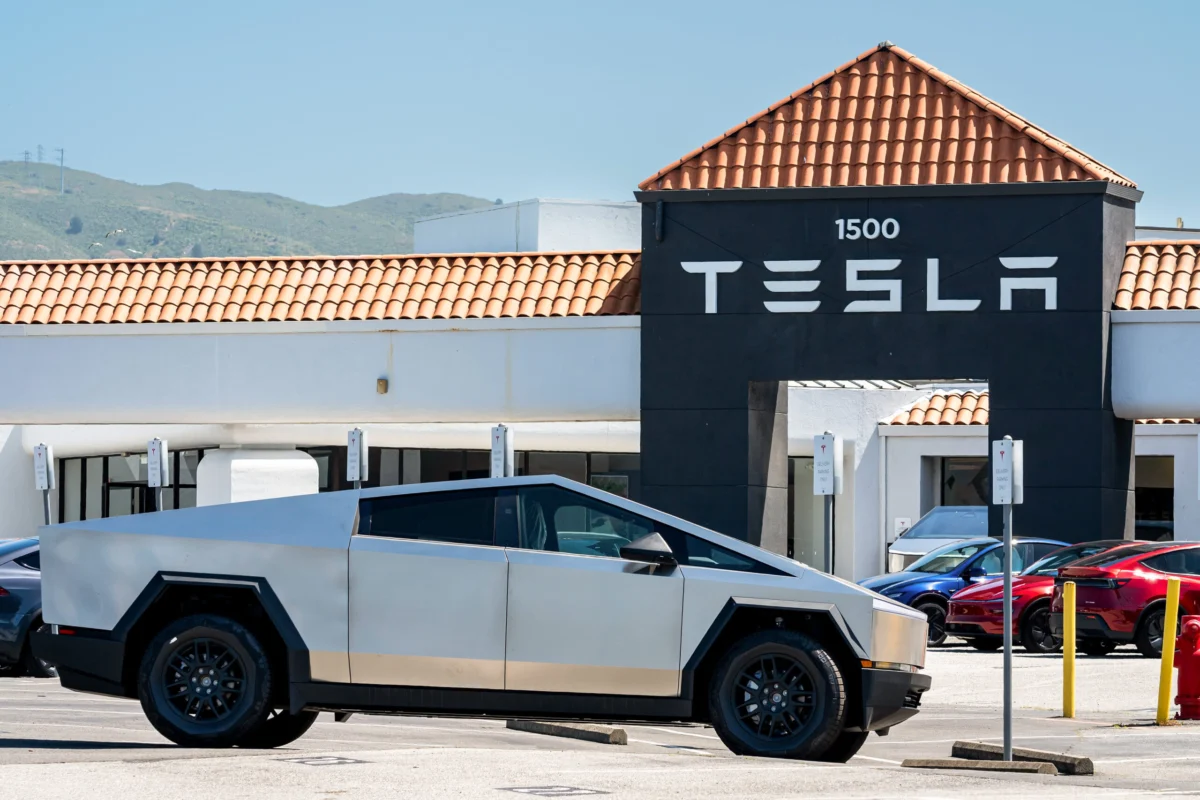
In a significant strategic pivot, Tesla CEO Elon Musk announced on Friday that the electric vehicle manufacturer would be "winding down" production of its polarizing Cybertruck at the Gigafactory in Texas around the middle of next year. This move is intended to clear manufacturing capacity for the highly anticipated Cybercab robotaxi, a two-seat autonomous vehicle that Musk has consistently heralded as central to Tesla’s future revenue streams and overall valuation. The announcement, made through a post on the social media platform X, signals a decisive shift in Tesla’s product development priorities and manufacturing allocation at its flagship Texas facility.
The Cybertruck’s Ambitious Genesis and Rocky Road to Production
The journey of the Cybertruck has been nothing short of tumultuous since its dramatic unveiling in November 2019. Musk introduced the angular, stainless-steel-clad pickup truck as a radical departure from traditional pickup designs, asserting that "Trucks have been the same for a very long time… like 100 years. Trucks have been basically the same. We want to try something different." The reveal event itself became instantly iconic, not least for the infamous moment when the "armor glass" windows shattered during a live demonstration, an incident that quickly went viral and encapsulated the vehicle’s audacious, yet sometimes flawed, ambition.
Initially slated for production in late 2021, the Cybertruck faced numerous delays. These postponements were attributed to a confluence of factors, including the complexities of its unconventional exoskeleton design crafted from ultra-hard 30X cold-rolled stainless steel, battery supply constraints, and broader global supply chain disruptions exacerbated by the pandemic. Manufacturing with stainless steel proved particularly challenging, requiring new production techniques and tooling, which significantly protracted the development timeline. The vehicle’s unique construction, while designed for durability and a distinctive aesthetic, presented substantial hurdles in achieving mass production efficiency and consistent build quality.
Finally, after years of anticipation and a reported one million pre-orders, Tesla commenced Cybertruck deliveries in late 2023 at an event in Austin, Texas. The initial batch of vehicles marked the culmination of a lengthy and resource-intensive development cycle, yet the enthusiasm was tempered by the realization that the initial specifications, particularly regarding range and price, had fallen short of earlier promises made during the 2019 unveiling. The most affordable rear-wheel-drive variant, for example, was initially projected to start at $39,900 but was eventually launched at a starting price significantly higher, around $60,990, with the top-tier "Cyberbeast" model exceeding $99,990.
Production and Sales: A Niche, Not a Mass Market Success
Despite Musk’s pre-launch prediction that annual sales would eventually total 250,000 units, the Cybertruck struggled to achieve mass-market penetration. Tesla, famously, does not break out its sales figures by model or region, making precise tracking challenging. However, industry analysts have provided estimates that underscore the vehicle’s limited commercial impact. Cox Automotive, a prominent automotive research firm, estimated U.S. sales of the Cybertruck in 2024 at approximately 20,237 units. This figure represents a significant underperformance against the ambitious annual target, indicating that the radical design and premium pricing limited its appeal to a niche audience rather than the broad pickup truck market.
For context, the U.S. pickup truck market is one of the most competitive and lucrative segments in the automotive industry, historically dominated by established players like Ford’s F-Series, General Motors’ Chevrolet Silverado, and Stellantis’ Ram series, which collectively sell millions of units annually. Even within the nascent electric pickup segment, the Cybertruck faced competition from the Ford F-150 Lightning and the Rivian R1T, both of which offer more conventional designs. While the Cybertruck garnered a dedicated following among early adopters and Tesla enthusiasts drawn to its distinctive appearance, it failed to capture the imagination of the wider truck-buying public, many of whom prioritize practicality, established utility, and proven reliability over radical aesthetics.
Interestingly, one significant buyer of the Cybertruck last year was Musk’s own aerospace and technology conglomerate, SpaceX. According to a SpaceX financial filing, the company spent $131 million acquiring the angular steel trucks at Tesla’s suggested retail price, suggesting an internal demand or strategic use within Musk’s broader ecosystem. While this purchase boosted the Cybertruck’s sales numbers, it also highlighted a potential reliance on related-party transactions for a portion of its limited sales volume.
Beyond the Numbers: Design Controversy and Quality Concerns
The Cybertruck’s polarizing design transcended mere aesthetics, becoming a lightning rod for social commentary and even eliciting negative reactions from other road users. Reports emerged from owners describing instances of rude gestures, verbal abuse, and more serious road rage incidents directed at them due to their choice of vehicle. Wired magazine, in an October 2025 feature story, even suggested that "There is likely no object that feels more emblematic of US president Donald Trump’s return to the White House than the Tesla Cybertruck," linking the vehicle’s controversial image to Musk’s public political endorsements and his involvement with efforts to reduce federal regulations. The article interviewed Cybertruck owners who recounted being spat on and sworn at, illustrating the intense public sentiment surrounding the vehicle.
Beyond the social reactions, the Cybertruck also faced substantial scrutiny regarding its specifications and build quality. Many early reviews and owner reports indicated that the vehicle’s actual performance, including range, towing capacity, and payload, often fell short of the initial ambitious figures advertised by Tesla. In some cases, its capabilities were found to be inferior to those offered by leading traditional fuel-burning pickups, a critical disadvantage in a segment where utility is paramount.

Moreover, the Cybertruck’s production has been plagued by a series of quality and manufacturing issues. The National Highway Traffic Safety Administration (NHTSA) website lists 11 voluntary recalls for the 2024 Tesla Cybertruck, a remarkably high number for a vehicle in its inaugural year of significant production. These recalls addressed a range of serious concerns:
- "Trapped" Acceleration Pedal Risk: Perhaps the most widely publicized issue, this defect involved a pad on the accelerator pedal that could become dislodged and trapped, potentially leading to unintended acceleration, a severe safety hazard.
- Software Defects: Various software glitches affecting critical vehicle functions.
- Inverter Fault: An issue that could result in a sudden loss of drive power, leaving drivers stranded or in dangerous situations.
- Other Issues: Recalls also addressed problems with windshield wipers, exterior trim pieces, and seat belt indicators, all indicative of a rushed production process or unresolved design flaws.
These recurrent quality control problems not only tarnished the Cybertruck’s reputation but also likely contributed to its lower-than-anticipated sales by eroding consumer confidence in its reliability and safety.
The Strategic Pivot: Making Way for the Cybercab
The decision to cease Cybertruck production at Giga Texas by mid-2025 is not merely a discontinuation but a strategic reallocation of valuable manufacturing resources. Musk has explicitly stated that the freed-up capacity will be dedicated to the production of the Cybercab robotaxi. The Cybercab, a compact two-seat autonomous vehicle, represents a cornerstone of Tesla’s long-term vision for becoming a dominant player in the autonomous ride-hailing market.
Musk has frequently articulated that Tesla’s valuation hinges less on its traditional vehicle sales and more on its potential to deploy a vast fleet of self-driving robotaxis. This vision involves a future where privately owned cars spend most of their time idle, and autonomous vehicles provide on-demand transportation, generating substantial recurring revenue for Tesla. The Cybercab is designed specifically for this purpose, prioritizing efficiency, cost-effectiveness, and autonomous functionality over the multi-purpose utility of a pickup truck.
The shift to Cybercab production at Giga Texas underscores Tesla’s commitment to this autonomous future. Giga Texas, one of Tesla’s most advanced manufacturing facilities, is equipped with state-of-the-art automation and robotics. Optimizing this plant for high-volume production of a simpler, purpose-built autonomous vehicle like the Cybercab likely offers greater manufacturing efficiencies and a clearer path to profitability than continuing to grapple with the complexities of the Cybertruck’s unique construction. This move also aligns with Tesla’s broader manufacturing strategy to streamline production processes and reduce costs through innovations like gigacasting, which is expected to play a crucial role in Cybercab manufacturing.
Implications and Future Outlook
The wind-down of Cybertruck production at Giga Texas carries multifaceted implications for Tesla, the broader automotive industry, and the electric vehicle market.
For Tesla:
- Strategic Focus: It unequivocally signals Tesla’s prioritization of autonomous driving and robotaxi services as its core future business model, potentially at the expense of more conventional vehicle segments.
- Resource Optimization: By discontinuing a complex, low-volume product, Tesla can reallocate engineering talent, capital expenditure, and factory space to projects deemed more critical for its long-term growth and profitability.
- Brand Perception: While some may view it as an admission of a misstep with the Cybertruck, others may interpret it as a decisive, forward-looking strategic pivot, demonstrating agility and a willingness to adapt to market realities and internal priorities. However, it might also disappoint the significant number of customers who placed pre-orders and waited years for the Cybertruck.
- Financial Impact: While potentially incurring some write-offs related to Cybertruck-specific tooling, the long-term financial implications could be positive if the Cybercab project scales successfully and unlocks the vast revenue potential of autonomous mobility.
For the Cybertruck:
- Uncertain Future: Musk’s statement did not explicitly rule out Cybertruck production at a different facility in the future, but it offered no concrete plans. His response to an X user calling the update an "end of an era" – "True, but the Cybertruck fleet will be around for a long time" – suggests that while current production is ending, the vehicle’s legacy will endure, possibly as a collector’s item or a unique presence on the roads. It is plausible that if demand were to significantly materialize or manufacturing complexities were resolved, production could resume elsewhere.
For the EV Market and Pickup Segment:
- Validation of Conventional Design: The Cybertruck’s limited mass-market appeal might be interpreted by competitors as a validation that radical, polarizing designs have a limited audience, and that the mass adoption of electric pickups will likely come from more conventional, albeit electrified, offerings like the Ford F-150 Lightning.
- Lessons Learned: The challenges faced by the Cybertruck in production and market acceptance provide valuable lessons for other manufacturers venturing into niche or highly unconventional EV segments. It underscores the importance of balancing innovation with practicality, proven utility, and consistent quality.
Broader Impact:
- Investor Sentiment: The announcement could be met with mixed reactions from investors. Those who prioritize the robotaxi vision might see it as a positive step, while others who were banking on the Cybertruck to boost sales volumes might be disappointed. Tesla’s stock (TSLA) performance will likely reflect the market’s interpretation of this strategic shift.
- Technological Shift: The move further solidifies the industry’s trajectory towards autonomous driving and ride-sharing services, emphasizing that the future of personal transportation extends beyond mere vehicle ownership.
In conclusion, Tesla’s decision to wind down Cybertruck production at Giga Texas by mid-2025 marks a pivotal moment in the company’s trajectory. It represents a bold strategic redirection, prioritizing the transformative potential of the Cybercab robotaxi over the niche appeal and production challenges of the Cybertruck. While the Cybertruck leaves behind a legacy of audacious design and engineering hurdles, its cessation of production at Giga Texas clears the path for Tesla to double down on its vision for an autonomous, electric future, a future it believes will redefine personal mobility and unlock unprecedented value for the company. The coming years will reveal whether this strategic gamble on robotaxis will deliver the mass-market disruption and financial returns that the Cybertruck ultimately struggled to achieve.
