

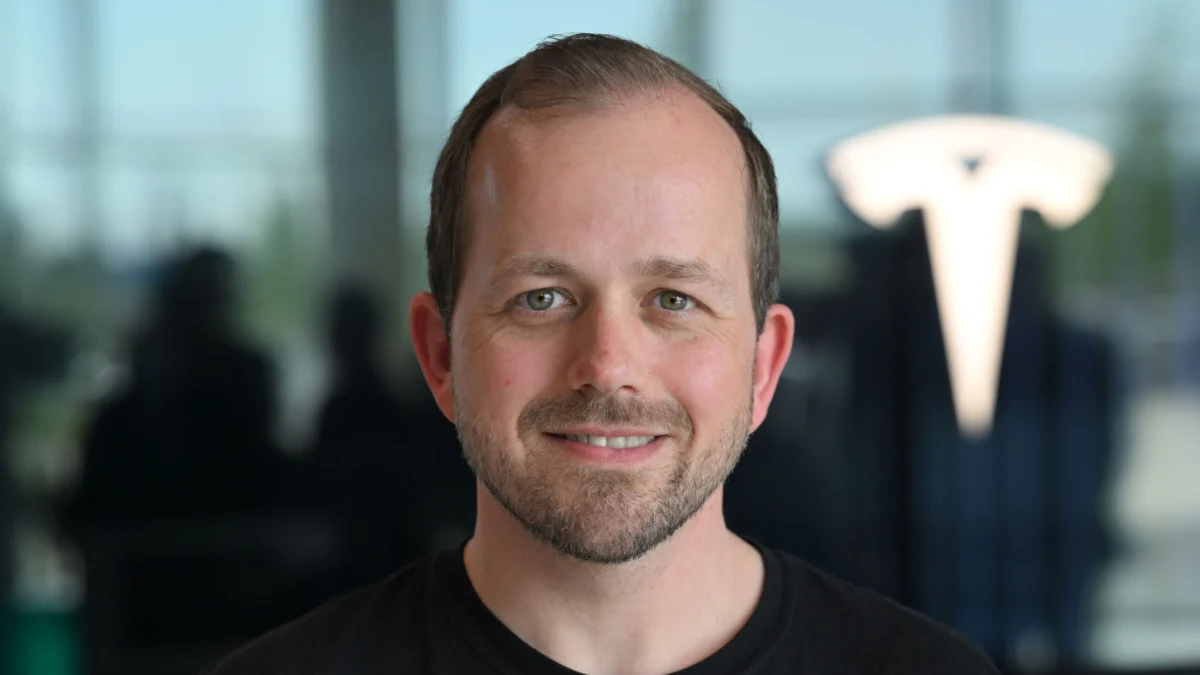
The District Court of Fürstenwalde/Spree has issued a penal order against André Thierig, the plant manager of Tesla’s Gigafactory in Grünheide, for defamation. Thierig has been ordered to pay a fine of 80 daily rates, a decision confirmed by Jasmin Wiriadidjaja, Director of the District Court. However, Thierig has filed an objection, triggering a public trial.
The penal order was initiated by the Public Prosecutor’s Office in Frankfurt (Oder) following a criminal complaint filed by the IG Metall trade union. A penal order is typically issued without an oral hearing, but Thierig’s objection renders it non-binding until a verdict is reached. Under German law, Thierig is presumed innocent until proven guilty in the main proceedings. The court is not bound by the initial penalty of 80 daily rates and could impose a higher fine during the public trial.
The Accusation of Defamation
The charges stem from an incident that occurred shortly before the works council elections at the Grünheide facility. According to the legal definition in Paragraph 186 of the German Criminal Code (Strafgesetzbuch), defamation is punishable when someone makes or disseminates a statement about another person that is capable of damaging their reputation, provided the statement is not demonstrably true. If such an offense is committed publicly, the penalty can include up to two years of imprisonment or a fine.
In this case, Thierig allegedly communicated his accusations via email to nearly 11,000 employees and also posted them on the social media platform X (formerly Twitter), making them accessible to the public. The core of the accusation revolves around an incident during a works council meeting.
Chronology of Events
The dispute began on February 10th, just three weeks before the crucial works council elections. During a works council meeting, the chairperson reportedly interrupted the proceedings and summoned factory security. The reason for this action was that a representative of IG Metall refused to hand over his laptop. Subsequently, the police were called to the scene and confiscated the device.
Later that same afternoon, Thierig sent an email to all employees addressing the incident. He stated, "We do not know why the IG Metall representative recorded the meeting. However, we do know that a works council meeting is a non-public event." In the evening, he amplified his claims on X, writing in English, "For unknown reasons he recorded the internal meeting and was caught red-handed!"
IG Metall’s Response and Investigation
The IG Metall union vehemently denied Thierig’s accusations, describing them as an "outrageous and calculated lie." In response to Thierig’s public statements and the criminal complaint filed by the union, the Public Prosecutor’s Office launched an investigation.
To facilitate the investigation and clear his name, the union representative offered investigators full access to his laptop, including providing the password. An agreement was reached before the Labour Court in Frankfurt (Oder) between the parties, stipulating that certain claims made by Thierig would not be repeated until the conclusion of the works council elections.

In March, the Public Prosecutor’s Office announced the findings of the laptop analysis conducted by the State Criminal Police Office (Landeskriminalamt). The official statement indicated that "the investigations conducted there revealed no indications of recorded and/or stored recordings on the notebook." Furthermore, there were "no data that could suggest that the microphone was switched on at the time of the incident."
Tesla’s Counter-Narrative
Despite the forensic findings, Tesla maintained its stance. The company stated it was "not surprised" by the outcome of the laptop analysis. In its response, Tesla argued that a recording on the laptop was not the "sole technical possibility" for capturing the events. The company asserted that the union representative had opened WhatsApp in his browser and activated the microphone. Tesla concluded its statement by saying, "It remains untrue, as the union publicly wants to believe again, that the uncovered incident did not happen."
In his February 10th email to the workforce, Thierig had also revealed that Tesla had filed a criminal complaint against the union representative. He justified this action by stating, "As an employer, it is our duty to ensure that law and order are observed in the Gigafactory. We are consistently fulfilling this duty."
Broader Context: Works Council Elections and Union Influence
The incident and the subsequent legal proceedings unfolded against the backdrop of contentious works council elections at the Tesla Gigafactory. The works council plays a crucial role in representing employee interests within the company, overseeing working conditions, social matters, and, to some extent, economic issues.

On February 10th, just weeks before these elections, Thierig had repeatedly warned the workforce against a potential victory for IG Metall. The union ultimately lost the works council election held in early March. Following the election results, IG Metall challenged the outcome, alleging undue influence by Tesla. This challenge is separate from the defamation case but underscores the prevailing tensions between the company and the union at the Grünheide plant.
Legal Implications and Potential Penalties
The charge of defamation under Paragraph 186 of the German Criminal Code carries significant penalties. If found guilty, Thierig faces imprisonment or a substantial fine. The fact that his alleged defamatory statements were disseminated via email to a large number of employees and publicly on X elevates the seriousness of the offense.
Even if Thierig is ultimately fined, he would not be considered to have a criminal record according to German law. A conviction only results in an entry in the central criminal register (Führungszeugnis) if the penalty exceeds 90 daily rates. This threshold also applies to the possibility of a prison sentence, which would only be considered if the individual cannot or will not pay the imposed fine. Therefore, a fine of 80 daily rates, as initially ordered, would not result in a criminal record or an automatic prison sentence. However, the court has the discretion to increase this penalty.
Reactions and Future Outlook
As of the publication deadline, both Tesla and Thierig had not responded to requests for comment regarding the ongoing legal proceedings. A spokesperson for IG Metall stated that the union had not yet been officially informed of the court’s decision and would issue a statement once they had full certainty regarding the latest developments.

The defamation case highlights the ongoing labor relations challenges at the Tesla Gigafactory in Grünheide. The dispute between management and the IG Metall union has been a recurring theme, impacting employee morale and the company’s operational environment. The outcome of the public trial will not only determine the legal responsibility of André Thierig but could also influence the broader landscape of labor relations at the burgeoning automotive manufacturing site.
The German legal system prioritizes due process, and Thierig’s objection ensures that his case will be thoroughly examined in a public forum. The proceedings will likely involve presenting evidence from both sides, including testimonies and expert analyses, to ascertain the truthfulness of the statements made and their impact on the reputation of the IG Metall representative. The court’s final judgment will aim to strike a balance between protecting individuals’ reputations and upholding freedom of speech, while also considering the specific context of workplace dynamics and union representation.
