

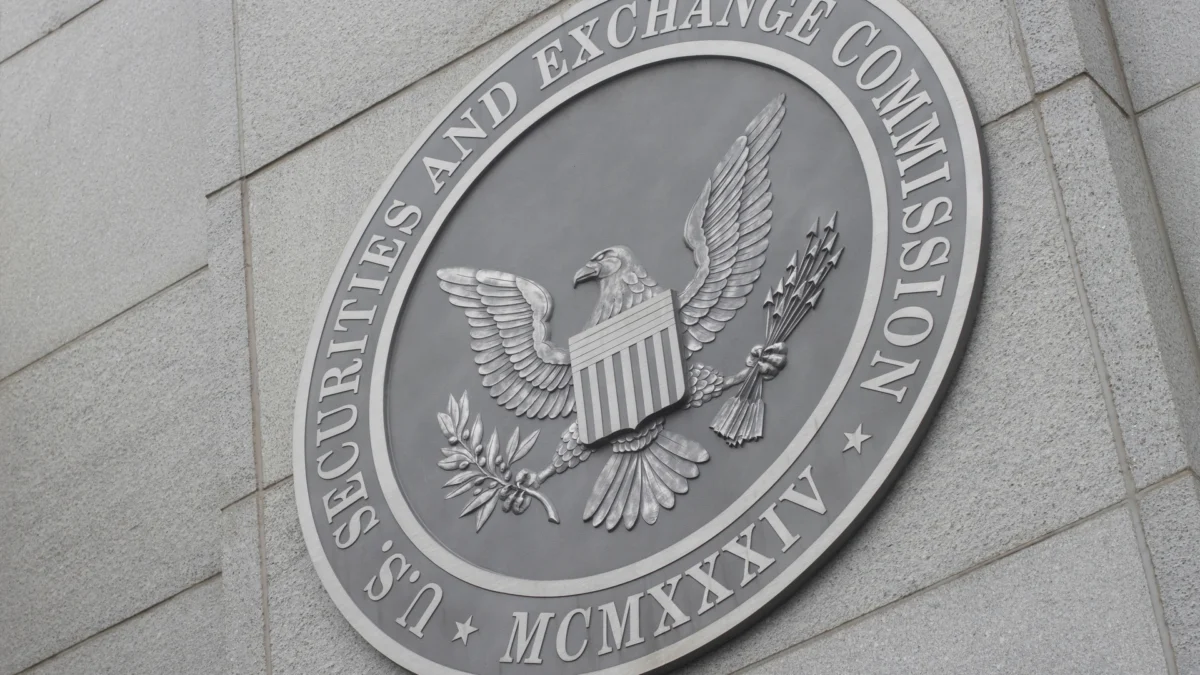
The U.S. Securities and Exchange Commission (SEC) has put forth a significant proposal aimed at updating the regulatory framework for how investment advisers and regulated funds hold assets, with a particular emphasis on the rapidly evolving cryptocurrency market. This initiative, unveiled on Thursday, represents a crucial step towards providing clarity and compliance pathways for financial professionals navigating the complexities of digital assets.
A Shifting Regulatory Landscape for Digital Assets
The SEC’s proposed rules seek to address a long-standing gap in regulations that were largely designed for traditional financial instruments. Since the inception of Bitcoin in 2008, the cryptocurrency market has ballooned from a niche interest into a multi-trillion-dollar asset class, attracting significant investor attention. However, the existing regulatory infrastructure has struggled to keep pace with this dramatic growth, creating an environment of uncertainty for both investors and the firms managing their assets.
SEC Chairman Paul S. Atkins, a proponent of fostering innovation in the U.S. digital asset space, acknowledged this disparity in a statement accompanying the proposal. "Since the advent of Bitcoin in 2008, the crypto asset market has grown from a niche curiosity into a multi-trillion-dollar asset class to which investors actively seek exposure," Atkins stated. "Unfortunately, our rules and regulations have not kept pace."
The core of the proposal revolves around the concept of "custody," which refers to the safeguarding of client assets. Under the proposed rules, investment advisers and regulated funds, acting through their advisers, would be permitted to hold client crypto assets directly. However, this direct holding would only be an option when no "permitted custodian" is available. This provision aims to ensure that while direct holding is possible, the preference remains for regulated and secure custodianship.
The Context: A Delayed Legislative Push and SEC’s Proactive Stance
This regulatory push from the SEC comes despite recent legislative setbacks. Last month, lawmakers in the Senate blocked the advancement of the Clarity Act, a piece of legislation intended to establish a comprehensive framework for distinguishing between various digital assets, categorizing them as securities, commodities, or payment stablecoins. The failure of the Clarity Act to garner sufficient votes highlighted the ongoing debate and challenges in Congress regarding the regulation of the digital asset space.
However, the SEC had signaled its intent to proceed with rulemaking in this area regardless of the legislative outcome. Prior to the vote on the Clarity Act, the Commission had submitted a proposal to the White House aimed at clarifying the custody framework for investment advisers and companies dealing with crypto assets. This proactive approach underscores the SEC’s commitment to addressing regulatory ambiguities in the digital asset market.
Chairman Atkins has consistently expressed a vision for the United States to become the "crypto capital of the world." This proposed rule update can be seen as a tangible step towards that goal, by creating a more defined and compliant environment for investment in digital assets.
Key Provisions of the Proposed Rules
The SEC’s proposed rules introduce several significant changes and clarifications regarding crypto asset custody:
- Direct Holding of Crypto Assets: As mentioned, investment advisers and regulated funds will be allowed to hold client crypto assets directly, but only as a last resort when no qualified custodian is available. This provision acknowledges the unique nature of certain digital assets and the potential for limited custodian options in specific circumstances.
- Acceptance of Blockchain-Based Records: A notable aspect of the proposal is its recognition of blockchain technology itself as a potential record-keeping mechanism. The SEC stated that records maintained on a blockchain could count toward compliance requirements, provided they meet certain stringent conditions. This reflects an understanding of the inherent immutability and transparency often associated with distributed ledger technology.
- Utilizing State Trust Companies as Custodians: The rules will also permit the use of state-chartered trust companies as custodians for client and regulated fund crypto assets. This expands the pool of eligible custodians, offering more options for firms to secure digital assets in a regulated manner. However, the use of these trust companies will also be subject to specific conditions, ensuring that they meet the SEC’s standards for safeguarding assets.
Addressing the "Grey of Uncertainty"
Chairman Atkins articulated the rationale behind the proposed rules, emphasizing the need to replace the current ambiguity with a clear regulatory path. "To that end, today’s proposal would provide a clear regulatory framework for the custody of crypto assets, giving investment advisers and funds a compliant pathway where none existed before – and replacing the grey of uncertainty created by custody rules crafted for a bygone era," he stated.
The existing custody rules were developed in an era when digital assets were not a significant part of the financial landscape. This has led to a situation where advisers and funds have had to navigate complex interpretations or operate in a regulatory grey area when dealing with cryptocurrencies. The proposed rules aim to rectify this by providing explicit guidance.
Broader Implications and Market Reactions (Inferred)
The SEC’s move is likely to have far-reaching implications for the cryptocurrency industry and traditional finance.
For Investment Advisers and Funds:
The clarity provided by these rules will be a significant boon. It offers a more defined roadmap for compliance, reducing the risk of regulatory penalties and enabling them to more confidently offer crypto-related investment products or services. The ability to use blockchain-based records could also streamline operations and reduce costs.
For the Crypto Market:
Increased regulatory clarity often leads to greater institutional adoption. By providing a safer and more predictable environment, these rules could encourage more traditional financial institutions to engage with the crypto market, potentially leading to increased liquidity and market maturity.
For Investors:
Investors are likely to benefit from enhanced protections. Clearer custody rules mean that their digital assets are more likely to be held by qualified custodians or managed under strict protocols, reducing the risk of loss due to operational failures or fraud.
Potential Challenges and Considerations:
While the proposal is a significant step forward, several aspects will require careful consideration as it moves through the rulemaking process. The conditions attached to direct holding, the use of blockchain-based records, and the requirements for state trust companies will need to be thoroughly examined. The industry will also be keen to understand the enforcement mechanisms and the SEC’s ongoing interpretation of these rules.
Timeline and Next Steps:
The SEC’s proposal is the first step in a formal rulemaking process. Following the publication of the proposed rules, there will be a public comment period, during which interested parties, including industry participants, legal experts, and the general public, can submit their feedback. The SEC will then review these comments and may make revisions to the proposal before issuing a final rule. This process can take several months, and the final rule may differ in certain aspects from the initial proposal.
The SEC’s proactive stance on regulating crypto asset custody, even in the absence of comprehensive congressional legislation, underscores the agency’s determination to adapt its oversight to the evolving financial landscape. This proposal represents a pivotal moment, aiming to bridge the gap between traditional financial regulation and the burgeoning world of digital assets, ultimately fostering a more robust and secure ecosystem for crypto investments in the United States. The journey towards making the U.S. the "crypto capital of the world" may have just gained a significant regulatory tailwind, even as legislative paths remain complex.
