

A recent poll in the German state of Sachsen-Anhalt reveals a significant surge for the Alternative for Germany (AfD) party, which is now polling at 32 percent, an increase of two percentage points since July. This strong performance places the AfD as the leading political force in the state, a stark contrast to their standing in the 2021 state elections, where they secured 20.8 percent of the vote.
The incumbent Christian Democratic Union (CDU), led by Minister-President Sven Schulze, is experiencing a notable decline. The party has fallen to 22 percent, a two-point drop from the previous month’s figures. This represents a substantial decrease from their 2021 election result of 37.1 percent, when Reiner Haseloff was the Minister-President. This shift in public sentiment underscores a growing challenge for the CDU’s traditional dominance in the region.
The poll results paint a complex picture for potential coalition formations, highlighting the difficulties that lie ahead for any governing party in Sachsen-Anhalt. Minister-President Schulze has publicly criticized the AfD’s recent donation activities, though he has definitively ruled out any cooperation with the party. The state’s constitutional protection agency has classified the AfD as reliably right-wing extremist, further complicating any potential political alliances.
Shifting Political Landscape and Potential Coalitions
Beyond the AfD’s rise and the CDU’s decline, the poll indicates that The Left (Die Linke) would emerge as the third-largest political force, securing 11 percent of the vote, a two-point decrease from previous surveys. The Social Democratic Party (SPD) shows a slight improvement, gaining one point to reach 8 percent. The Green Party also sees a one-point increase, placing them at 6 percent, which would be sufficient to re-enter the state parliament.
Parties like the BSW (Bündnis Sahra Wagenknecht) with 4 percent and the Free Democratic Party (FDP) with 3 percent would narrowly miss the 5 percent threshold required to gain representation in the state parliament, facing the challenge of being excluded from legislative proceedings.
This distribution of support presents a significant hurdle for the formation of a stable government. The AfD, despite its leading position, would not command an outright majority on its own. The crucial factor for the AfD’s electoral strategy is whether the SPD and the Greens manage to cross the 5 percent threshold. If they do, the AfD’s ambition of governing alone would be thwarted. However, if either the SPD or the Greens falter and fail to reach the parliamentary threshold, the proportion of votes not represented in the state parliament would increase, potentially allowing the AfD to secure a majority of seats with a significantly lower percentage of the popular vote.
CDU Faces Internal Debate on Engagement with The Left
The CDU’s current position, coupled with the projected parliamentary landscape, suggests that the party might face a significant internal debate regarding its approach to The Left. While the AfD is positioned as the leading party, Minister-President Schulze has been unequivocal in his stance against forming any coalition with them, citing the constitutional protection agency’s classification.
However, the poll also reveals a division within the CDU’s own voter base. Precisely 47 percent of CDU supporters favor cooperation with The Left, while an equal percentage opposes it. This internal division could lead to a contentious discussion within the CDU following the election about how to navigate potential governing scenarios, particularly if traditional coalition partners prove insufficient.
A hypothetical minority government led by the CDU, potentially with the support of the SPD and the Greens, could be a possibility. However, such a government would likely require tacit or indirect tolerance from The Left, a scenario that the CDU has historically rejected.

Direct Presidential Election Results Offer Limited Comfort to CDU
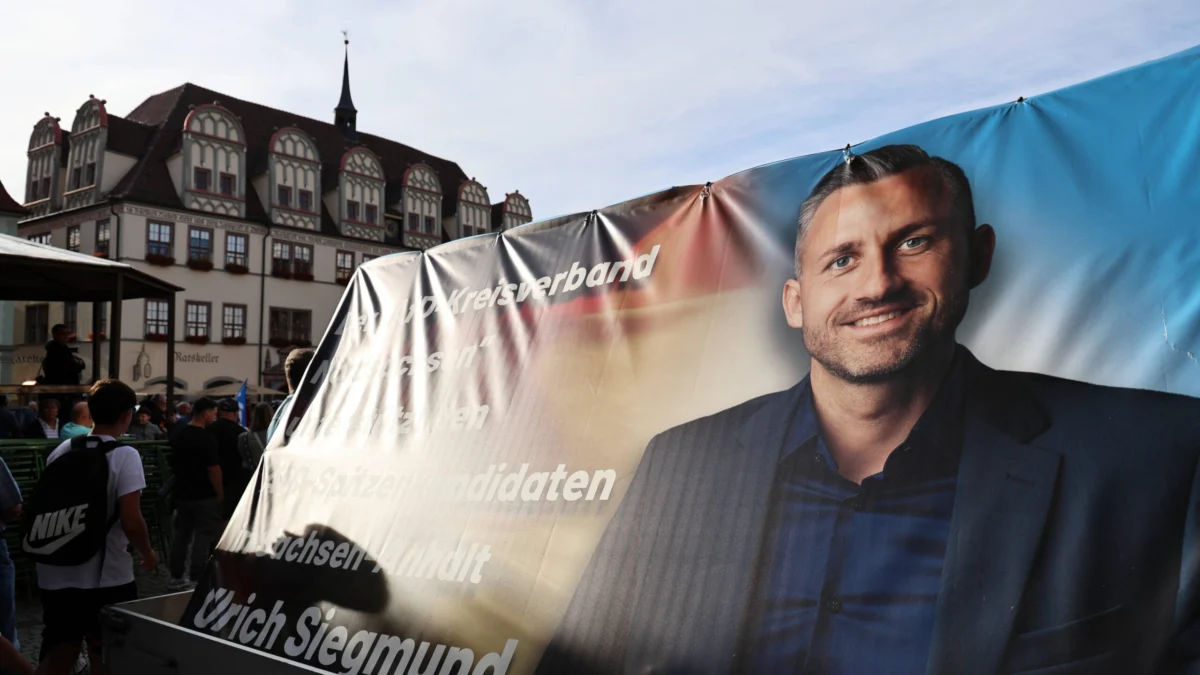
In a hypothetical direct election for the Minister-President position, Premier Schulze, despite his party’s current struggles, holds a narrow lead over the AfD’s top candidate, Ulrich Siegmund. The poll indicates that 41 percent of respondents would vote for the CDU politician, while 39 percent would cast their ballot for the AfD candidate. This marginal lead offers a glimmer of hope for the CDU, but it is overshadowed by the broader decline in their party support and the formidable challenge posed by the AfD’s ascent.
Siegmund’s objective of governing solely with the AfD appears increasingly distant given the current polling. However, the dynamic nature of electoral politics means that even minor shifts in support could significantly alter the balance of power. The upcoming election in Sachsen-Anhalt is thus poised to be a critical juncture, with the potential for substantial political realignments and complex governing challenges.
Background and Context: The 2021 Election and Shifting Political Currents
The 2021 state elections in Sachsen-Anhalt saw the CDU secure a strong 37.1 percent of the vote, forming a coalition government with the SPD and the Greens. The AfD, at that time, was already a significant force, capturing 20.8 percent. The political climate in Germany, and particularly in its eastern states, has been characterized by evolving voter preferences and a growing dissatisfaction with established political parties. This trend has been amplified by various socio-economic factors, including economic uncertainties, concerns about migration, and a perception among some segments of the electorate that their voices are not being adequately heard by mainstream political institutions.
The AfD has successfully capitalized on these sentiments, presenting itself as an alternative to the status quo. Their platform often focuses on issues such as national identity, border control, and criticism of climate policies, resonating with a segment of the population that feels marginalized or overlooked. The party’s consistent messaging and its ability to tap into public anxieties have contributed to its growing support base across several German states.
The decline of the CDU in Sachsen-Anhalt, as reflected in the current poll, suggests a broader erosion of trust in traditional governing parties. The CDU, historically a dominant force in German politics, is grappling with the challenge of maintaining its appeal in a rapidly changing electoral landscape. Its efforts to address contemporary issues and connect with voters appear to be falling short for a significant portion of the electorate, leading to a loss of support to parties like the AfD.

Implications for Governance and Political Stability
The current polling data has profound implications for the political stability and future governance of Sachsen-Anhalt. The rise of the AfD as the leading party presents a significant dilemma for the established democratic parties. The classification of the AfD as a threat to democratic order by the constitutional protection agency makes any form of cooperation with them politically and ideologically untenable for the CDU, SPD, and Greens.
This situation forces the CDU into a precarious position. While they have consistently ruled out a coalition with the AfD, their declining poll numbers suggest that they may struggle to form a viable coalition with other parties. The potential for a minority government, reliant on the tolerance of parties they may not directly govern with, introduces a level of uncertainty and potential instability. Such arrangements often face challenges in passing legislation and maintaining consistent support.
Furthermore, the division within the CDU’s own voter base regarding engagement with The Left highlights an internal struggle within the party. This could lead to significant policy debates and potentially internal friction, further complicating their ability to present a united front. The outcome of these internal discussions could shape the future direction of the CDU in the state and its approach to political alliances.
The possibility of the AfD gaining a majority of seats despite not achieving a popular majority is a critical concern. This scenario, which could arise if other parties fail to clear the 5 percent threshold, would significantly alter the power dynamics within the state parliament and could lead to increased political polarization. It underscores the importance of voter turnout and the performance of all parties in securing parliamentary representation.
The direct presidential election results, while offering a slight advantage to Minister-President Schulze, are a qualified positive. It indicates that, on a personal level, he retains some appeal. However, it does not negate the broader trend of declining support for his party, which is the primary driver of the current political uncertainty.

Conclusion: A Precarious Political Future
The latest poll in Sachsen-Anhalt paints a picture of a rapidly shifting political landscape, dominated by the ascendance of the AfD and the decline of the CDU. The data suggests that forming a stable governing coalition will be a significant challenge, fraught with ideological divides and strategic complexities. The established parties face the difficult task of navigating these challenges while attempting to address the underlying concerns of voters who have gravitated towards the AfD. The coming months will likely be characterized by intense political maneuvering, internal party debates, and a heightened focus on the strategies that will shape the future of governance in Sachsen-Anhalt. The outcomes of these political developments will have broader implications for the national political discourse and the dynamics of democratic politics in Germany.
