

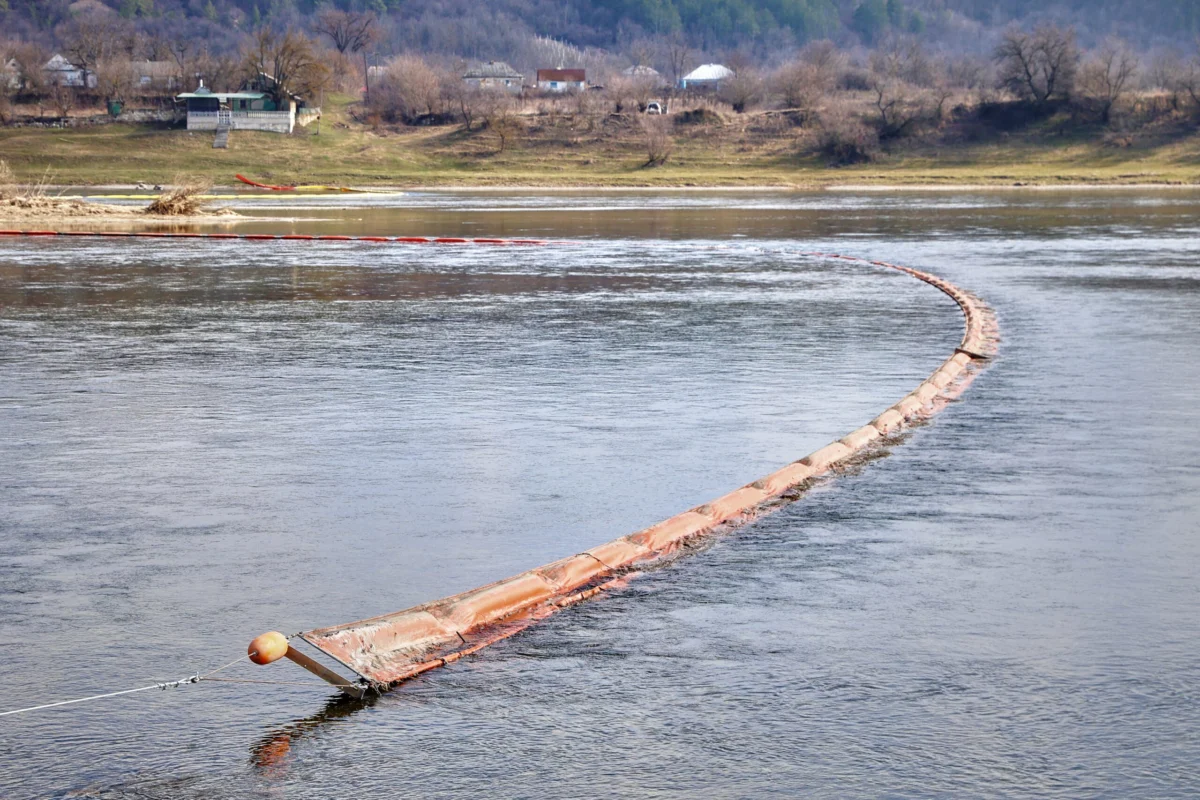
The Republic of Moldova is currently grappling with a severe environmental and humanitarian emergency after a Russian military strike on a critical Ukrainian hydroelectric facility resulted in a massive oil spill into the Dniester River. The incident, which has contaminated the primary water source for approximately 80% of Moldova’s 2.5 million residents, has forced the government in Chisinau to declare a 15-day environmental state of alert. As tens of thousands of citizens find themselves without access to running water, the crisis highlights the escalating collateral damage of the conflict in Ukraine and its profound impact on the stability of neighboring European Union candidate states.
The contamination originated following a targeted Russian aerial assault on the Novodnistrovsk hydropower plant on March 7, 2026. The facility, located in southwestern Ukraine just 15 kilometers (9 miles) upstream from the Moldovan border, suffered significant damage to its infrastructure. In the aftermath of the strike, large quantities of industrial oil and lubricants—essential for the operation of the plant’s massive turbines—leaked directly into the Dniester. The river, which serves as the lifeblood of the region, flows from the Ukrainian Carpathians through Moldova and back into Ukraine before emptying into the Black Sea.
Chronology of a Developing Disaster
The timeline of the crisis underscores the speed at which environmental degradation can escalate into a national security threat. On March 7, Ukrainian authorities reported a series of missile and drone strikes targeting energy infrastructure, including the Novodnistrovsk plant. While initial reports focused on potential power grid instability, Moldovan environmental monitors began detecting unusual iridescent slicks and a distinct chemical odor on the surface of the Dniester within 48 hours of the attack.
By March 10, the pollution had crossed the international border into northern Moldova. Water treatment facilities in the Soroca and Ocnița districts were the first to report elevated levels of hydrocarbons, prompting immediate precautionary shutdowns. As the "wave of pollution," as described by the Moldovan Ministry of Environment, moved further downstream, it reached the intake valves for the city of Balti, Moldova’s second-largest urban center.
On March 15, the situation reached a breaking point. With contaminant levels exceeding safety thresholds by significant margins, the government was forced to suspend water pumping operations for Balti and several surrounding districts. This left approximately 90,000 residents of the city without tap water, leading to the closure of schools and the transition of public services to emergency protocols. On Sunday, March 16, President Maia Sandu officially addressed the nation, and the Ministry of Environment declared a formal state of alert, granting the government expanded powers to manage the crisis.
Impact on Population and Infrastructure
The humanitarian impact of the water shortage has been immediate and severe, particularly for the most vulnerable segments of the population. In Balti, where many residents live in aging Soviet-era apartment blocks, the lack of running water has paralyzed daily life. Elderly residents, such as 84-year-old Liuba Istrati, have been forced to rely on the physical labor of hauling buckets of water up multiple flights of stairs to maintain basic hygiene and care for sick family members.
The Moldovan military has been mobilized to mitigate the crisis, deploying 10-tonne water tankers to various neighborhoods in Balti. However, the demand far outstrips the supply provided by mobile distribution units. Education has also been disrupted, with schools moving to online learning formats because they cannot meet the sanitary requirements necessary to host students on-site.
The reliance of Moldova on the Dniester River cannot be overstated. Unlike neighboring countries with diverse water sources, Moldova is geographically constrained. The Dniester provides nearly 80% of the nation’s total water supply, including the water used by the capital, Chisinau, further downstream. Any prolonged disruption or long-term contamination of this artery threatens not only public health but also the country’s agricultural sector and industrial stability.
Technical Response and International Assistance
In response to the spill, Moldova has launched an intensive cleanup operation, though officials admit the country lacks the specialized equipment required for a disaster of this magnitude. This led to an urgent appeal for international aid, which was met swiftly by Romania.
The Romanian government has dispatched specialized teams from its General Inspectorate for Emergency Situations (IGSU), equipped with chemical absorbent booms, floating barriers, and advanced filtration materials. These teams are working alongside Moldovan engineers in the Curesnita region to trap the oil slicks before they can migrate further south.

Gheorghe Hajder, Moldova’s Environment Minister, noted in a press briefing that the intervention has shown signs of success. As of Wednesday, March 18, monitoring stations reported that three critical points on the river had seen a reduction in pollutant concentrations to "admissible limits." However, the Ministry warned that the cleanup remains a volatile process. Oil products in a moving river do not flow in a single mass but rather in "waves" and "pockets" that can be trapped by riverbed vegetation or sediment, only to be released again by changes in water flow or temperature.
The technical challenge is compounded by the nature of the Dniester itself. Spanning over 1,300 kilometers, the river has a complex ecosystem of wetlands and tributaries. Biologists, such as Ilya Trombitsky of the NGO Eco-TIRAS, warn that while the visible oil may be contained, the microscopic impact on the food chain could be lasting. Invertebrates, such as small crustaceans that serve as the primary food source for the river’s fish population, are particularly susceptible to hydrocarbon poisoning.
Political and Legal Fallout
The environmental crisis has rapidly transformed into a diplomatic confrontation. President Maia Sandu has been unequivocal in her assessment, stating that "Russia bears full responsibility" for the threat to Moldova’s water security. The Moldovan Foreign Ministry underscored this stance by summoning the Russian Ambassador to Chisinau, Oleg Ozerov. In a highly publicized diplomatic gesture, Moldovan officials presented the ambassador with a bottle containing brownish, contaminated water taken directly from the Dniester.
The Moldovan General Prosecutor’s Office has announced the opening of a criminal case to investigate the pollution as an act of ecological sabotage. This move aligns with a growing international movement to recognize "ecocide"—the deliberate or negligent destruction of the environment during conflict—as a punishable offense under international law.
Conversely, the Russian Embassy in Moldova has rejected all accusations, characterizing the Moldovan government’s claims as "unfounded" and "politically motivated." In a formal statement, the embassy argued that no scientific evidence had been provided to link the pollution to the strike on the Novodnistrovsk plant, dismissing the bottle of river water as a "murky liquid with no markings." Moscow has consistently denied targeting civilian infrastructure in Ukraine, despite documented evidence of strikes on power plants, dams, and grain terminals throughout the two-year conflict.
Broader Implications for Regional Security
This incident serves as a stark reminder of the "gray zone" tactics utilized in modern warfare, where the destruction of a target in one country can effectively cripple the infrastructure of a neighboring neutral party. For Moldova, a country that has recently accelerated its path toward European Union membership, the crisis exposes the fragility of its current utility systems and its dependence on cross-border resources.
Analysts suggest that the strike on the Novodnistrovsk plant may be part of a broader Russian strategy to destabilize the pro-Western government in Chisinau by inciting social unrest through the deprivation of basic necessities. By forcing the Moldovan government to declare a state of alert and divert military resources to water distribution, the Kremlin may be attempting to test the resilience of the Sandu administration and its ties with European partners.
Furthermore, the ecological damage to the Dniester basin has long-term implications for the Black Sea. As the contaminated water eventually flows into the sea, it adds to the cumulative environmental toll of the war, which has already seen the destruction of the Kakhovka Dam in 2023 and the subsequent flooding of industrial sites.
Future Outlook
The immediate priority for the Moldovan authorities remains the restoration of safe drinking water to Balti and the northern districts. Minister Hajder indicated that if water samples remain within safe parameters for two consecutive 48-hour periods, the government will consider reopening the primary pumping stations. However, the long-term recovery of the Dniester’s ecosystem will likely take years, requiring extensive remediation of the riverbanks and monitoring of fish stocks.
As the 15-day state of alert continues, the international community is watching closely. The crisis has reinforced the necessity for integrated regional water management and the fortification of civilian infrastructure against military aggression. For the people of Moldova, the current struggle for a basic glass of clean water is a sobering testament to the far-reaching and unpredictable consequences of the ongoing war on their doorstep. For now, the buckets and tankers in the streets of Balti remain the most visible symbols of a nation caught in the crossfire of a conflict it did not start, but whose environmental and humanitarian costs it is now forced to pay.
