

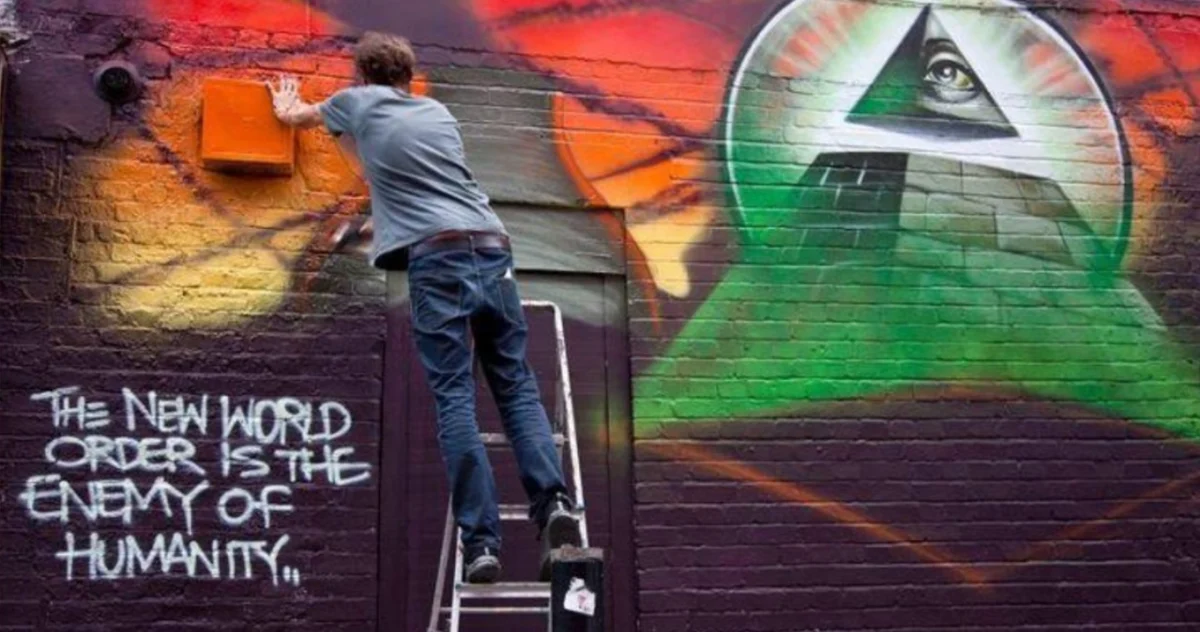
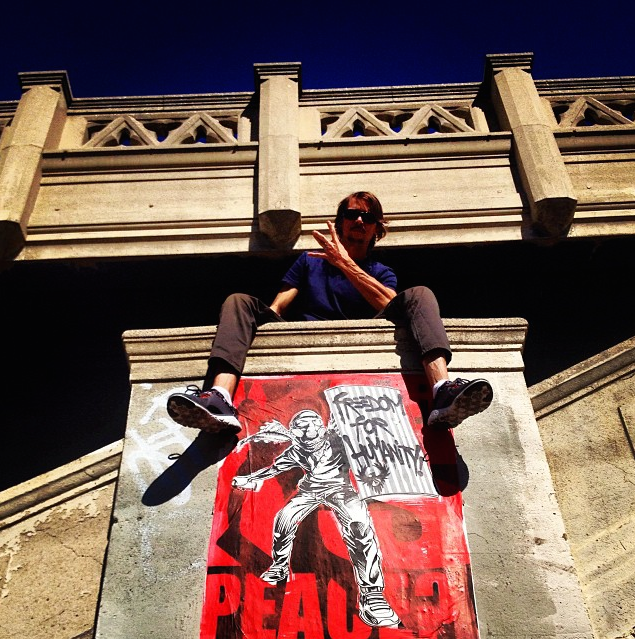
The enduring power of protest is often captured not in the thunder of marching feet or the roar of impassioned speeches, but in the quiet, potent symbols left behind. These are the artifacts of dissent: a wheat-pasted broadside clinging precariously to a Los Angeles overpass, a hand-lettered cardboard sign held aloft in the biting snow outside a Tokyo office building, or even a newspaper headline, etched into the very fabric of software designed to fundamentally challenge the global financial architecture. These seemingly disparate objects, born from moments of profound discontent, share a common thread, a lineage of resistance that now finds a focal point in the "Relics of a Revolution" exhibition at the Bitcoin 2026 Conference in Las Vegas.
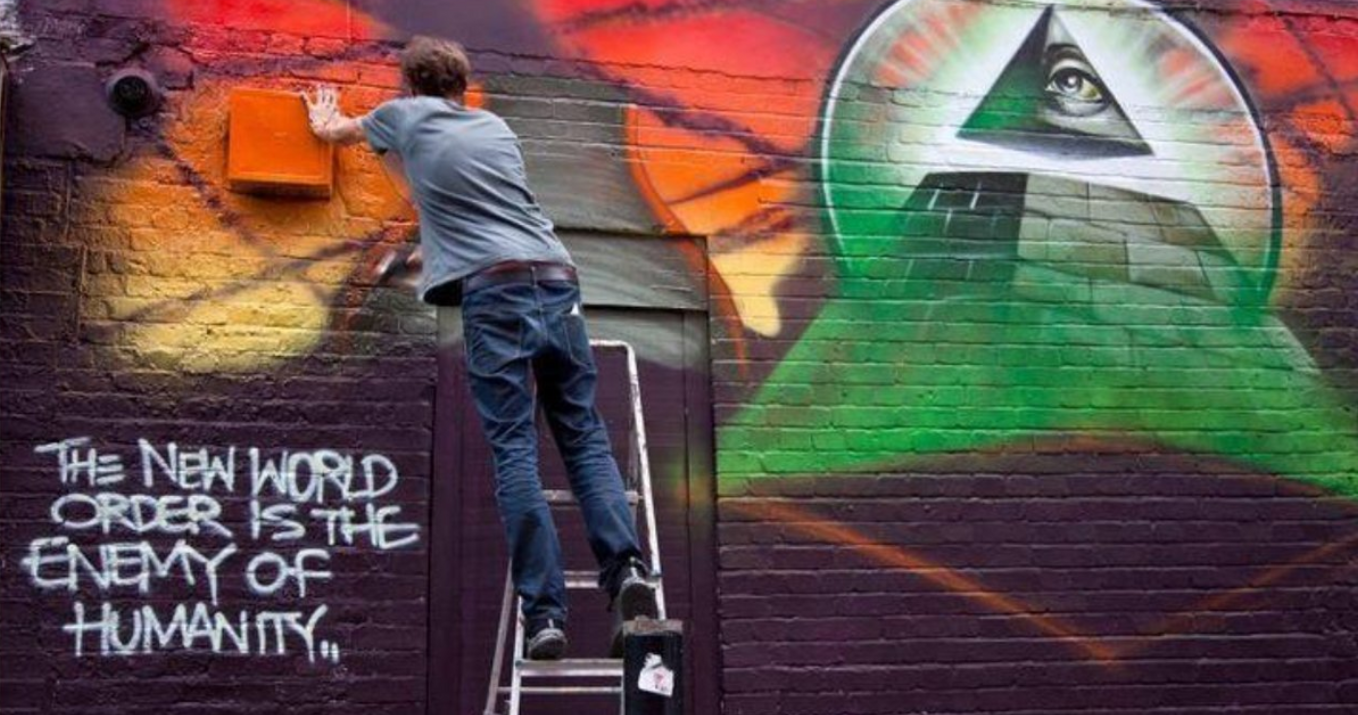
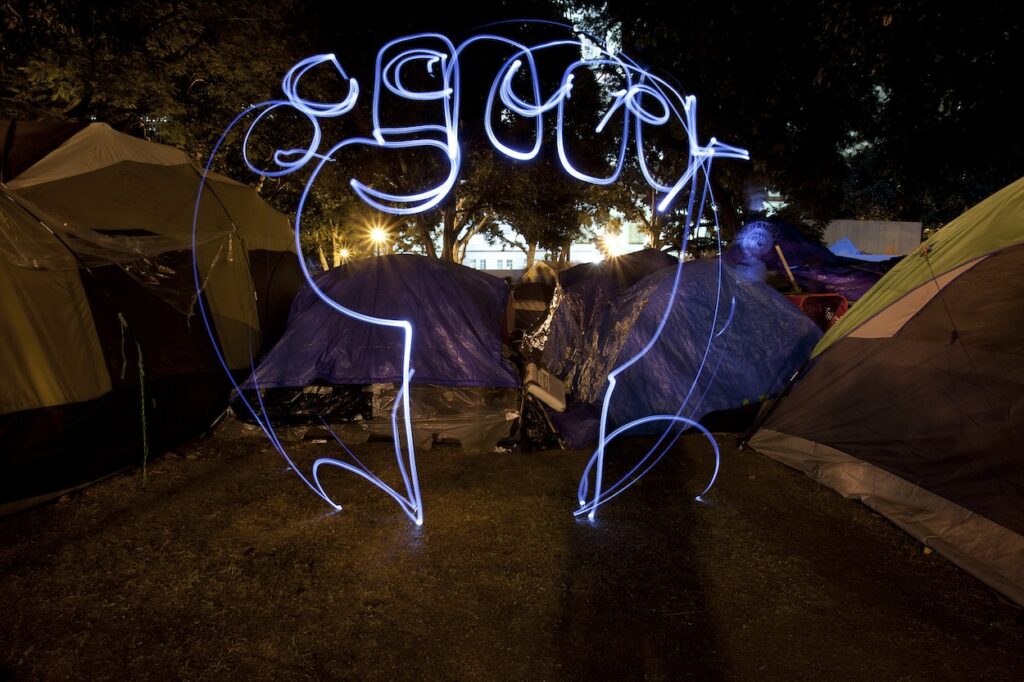
This exhibition, a cornerstone of the conference’s cultural programming, meticulously traces a specific narrative of dissent, one that bridges the visceral energy of street-level protest with the foundational genesis of Bitcoin. At the heart of this narrative is the work of Mear One (born 1971, Santa Cruz, CA), an artist whose nearly four-decade career has transformed the urban landscape of Los Angeles into a canvas for political and economic critique. His pioneering contributions to the Melrose graffiti art movement in the late 1980s, marked by early exhibitions at prestigious venues like the 01 Gallery and 33 1/3 Gallery (which later hosted Banksy’s North American debut), cemented his reputation. By 2004, he was a prominent voice on the "Be the Revolution" tour, a nationwide street art intervention against the backdrop of the Bush administration’s policies. His work has been recognized by institutions such as the Los Angeles Museum of Contemporary Art, featuring in its landmark "Art in the Streets" exhibition in 2011, and is held in the permanent collections of the Laguna Art Museum, among others. From anti-Gulf War broadsides in the early 1990s to his participation in the Occupy Wall Street encampments of 2011, Mear One’s art has consistently posited that the root of societal problems lies not in individual actors or specific policies, but in the foundational architecture of power and money itself.
In anticipation of his panel discussion at Bitcoin 2026, Mear One sat down to discuss the intersection of protest, art, systemic flaws, and the enduring quest for freedom, offering insights into why the revolution, in his view, is far from over.
The Street as a Megaphone: Early Days of Protest Art
Bitcoin Magazine (BMAG): You began your artistic journey on the walls of Los Angeles in the mid-1980s, a time when graffiti was largely considered criminal activity, and the idea of it gracing museum collections seemed almost unimaginable. By the early 1990s, your work had evolved to encompass large-scale political statements, such as anti-Gulf War broadsides and direct confrontations with economic power structures. What compelled you to utilize the street as a medium for political expression during that era, and who were you aiming to engage with your art?
Mear One: Graffiti, in its essence, is the unfiltered voice of the discontented soul. In those early days, before the internet and social media permeated our lives, it served as a powerful vehicle to reach the masses. When you clandestinely place your ideas in the public sphere, through illegal graffiti, it resonates with the everyday urbanite navigating traffic, and it often serves as a stark reminder to city officials of their policy failures. Conscious art naturally speaks to conscious individuals, and the inherent rebellious energy of vandalism helped to ignite a movement that was otherwise lacking direction. The streets were our common ground, a space for connection, and the act of remaining anonymous and permissionless amplified that sense of empowerment.
Echoes of Critique: From Street Art to Satoshi’s Code
BMAG: Within Bitcoin culture, the phrase "all wars are banker’s wars" has gained significant traction. The very Genesis Block of Bitcoin contains a headline from The Times of London detailing a bank bailout. Reflecting on your artistic output during the Gulf War era and the Occupy Wall Street movement, how closely do you see your work aligning with the structural critique that Bitcoin would later embed within its protocol?
Mear One: The moment I encountered Bitcoin, it immediately evoked the spirit of the graffiti, hip-hop, and punk rock cultures that shaped my formative years. It mirrored the revolutionary ideals I was striving to communicate through my art. There’s a deep-seated human desire for an ideology or movement that not only speaks to our current societal predicaments but also offers tangible solutions to the perpetual "new world order slave trap" that so many have come to accept. It’s no coincidence that the architects of our current economic matrix are often the same entities that shape our educational systems and instigate wars for financial gain. Satoshi Nakamoto understood this fundamental truth. Human conflict, at its core, is rarely driven by genuine animosity between peoples; rather, it stems from economic and political power struggles that overshadow our intrinsic human desires for freedom, love, and spiritual connection. My artistic mission has always been to seek and embody freedom, to liberate myself from the prevailing system, which forms the bedrock of my art, philosophy, and acts of resistance.
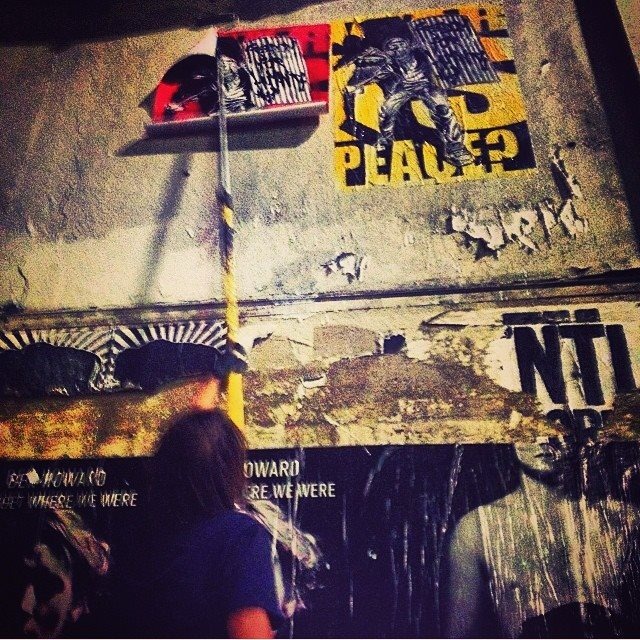
The "Be the Revolution" Tour: Shifting Perspectives
BMAG: In 2004, you participated in the "Be the Revolution" tour alongside Shepard Fairey and Robbie Conal, bringing anti-war and anti-corporate street art across the nation during the Bush administration. This was four years before the 2008 financial collapse, and three years after 9/11, an event that had been used to justify significant expansions of surveillance, military spending, and executive power. What did this experience teach you about art as a tool for economic and political resistance, and how did it influence your perspective when the financial crisis ultimately unfolded?
Mear One: The "Be the Revolution" tour, alongside Robbie and Shepard, provided a vital outlet for expressing my deep-seated angst and disillusionment with American politics at that time. The relentless pursuit of wars for foreign resources, perpetuated for profit, and the exacerbation of the divide between the haves and have-nots, continues to weigh heavily on my philosophical outlook.
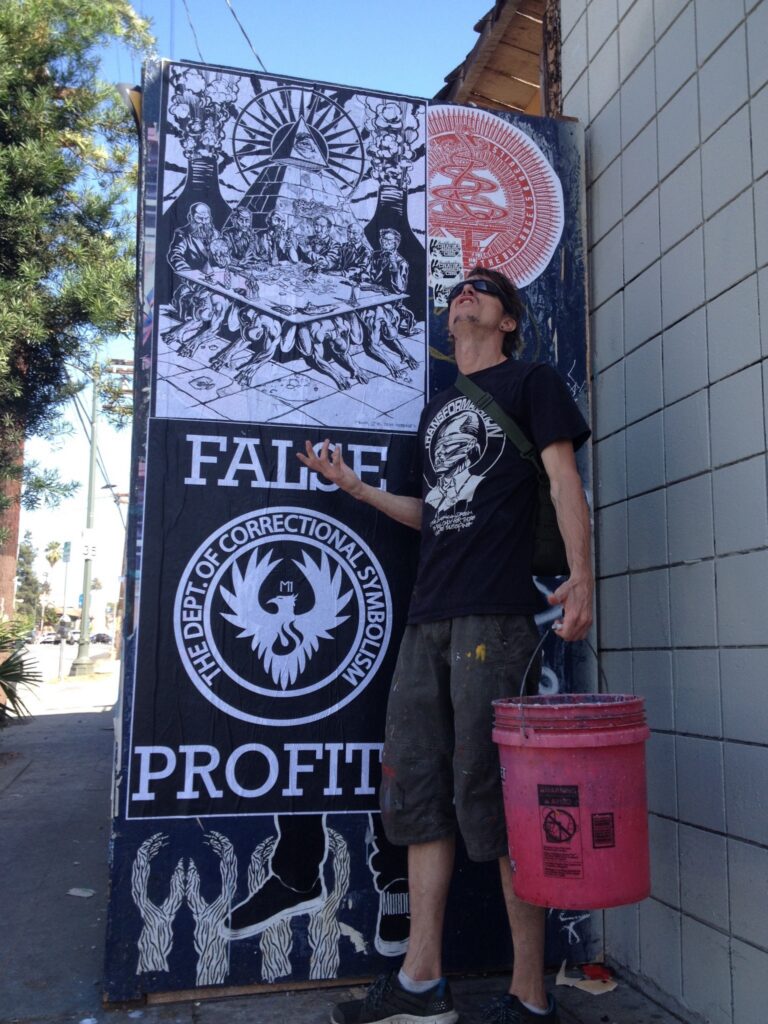
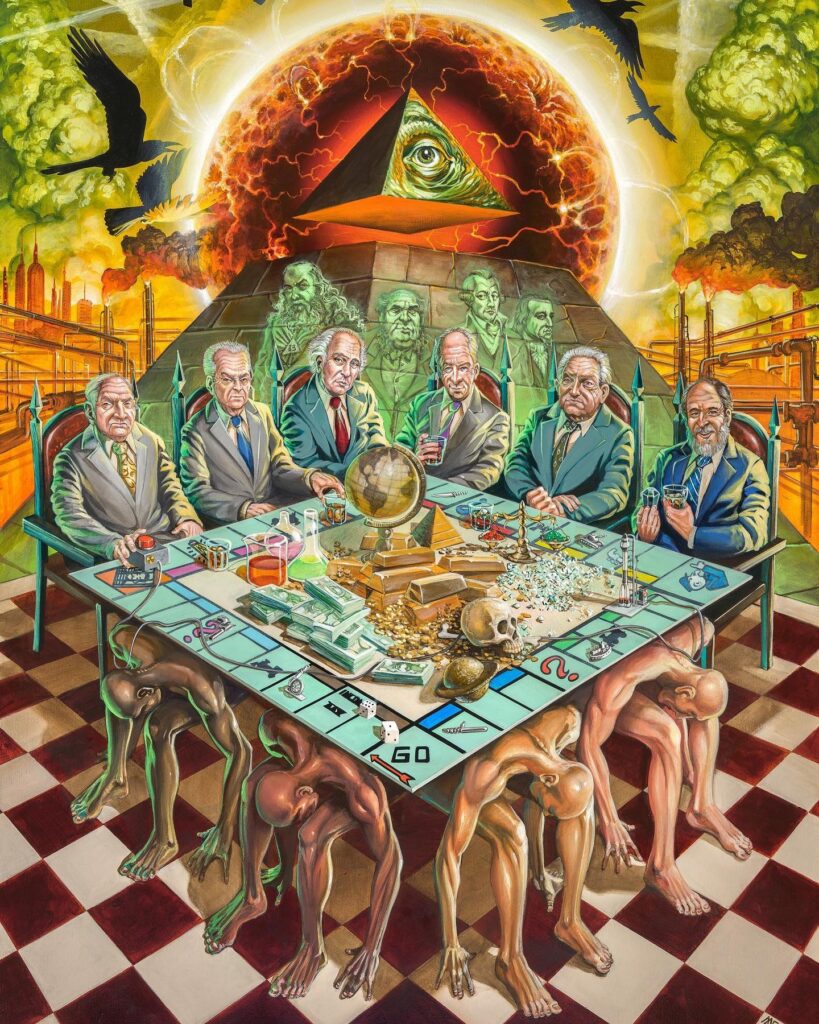
However, the financial crash of 2008 marked a profound shift in my revolutionary perspective. For the first time in my life, I felt an urgent need to understand the intricate workings of the monetary system, to define what money truly is, and to articulate through my art a more accurate depiction of the emerging new world order. This introspection culminated in my most controversial work to date, "False Profits." As the adage goes, "You cannot dismantle the master’s house with the master’s tools." Subversive art, subliminal art, illegal art—art that confronts viewers with facts and satire through a spray can, paintbrush, wheat paste, music, comedy, or film—is arguably the most potent catalyst for change. Great art possesses a prescient quality, often narrating the cause before the effect is widely understood by the masses, thereby acting as a crucial early warning.
Ephemeral Art, Enduring Messages
BMAG: Street art, by its very nature, is ephemeral. It is subject to being buffed, painted over, torn down, or weathered by the elements. Yet, some of your protest works from the Occupy era and earlier have endured. What does it signify to you that pieces created with an inherent sense of urgency, works intended to be temporary, are now being exhibited as historical artifacts within a gallery setting?
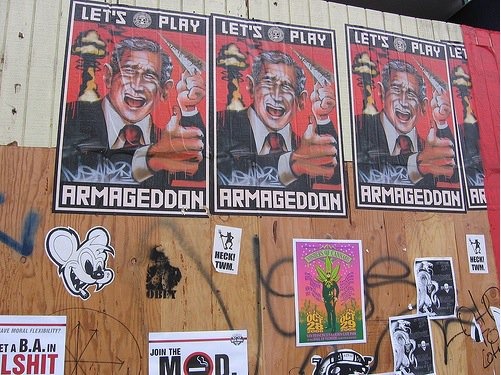
Mear One: Their continued relevance is, ironically, a testament to the fact that little has fundamentally changed. The circumstances may differ, the players may change, but the underlying issues persist. These works highlight an ongoing condition within the human experience, and it is crucial for Bitcoiners to remember our past struggles and the innovative remedies we choose to implement. In this spirit of urgency, these "Relics of Revolution" serve as a powerful call to action—the time for change is always now.
The Unfolding Cycle: War, Money, and the Bitcoin Response
BMAG: You were creating anti-war street art during the first Gulf War. Now, over three decades later, we are witnessing another military escalation in the Middle East, this time involving Iran. While the machinations and justifications may appear different, the underlying economic architecture remains strikingly similar. For a generation that came of age witnessing 9/11 used as a pretext for two decades of conflict, and then observed the 2008 crash expose the financial system underwriting it all as fundamentally flawed, does this cyclical repetition feel like a confirmation of your long-held message, or does it signify a sense of failure—that the message has not fully resonated?
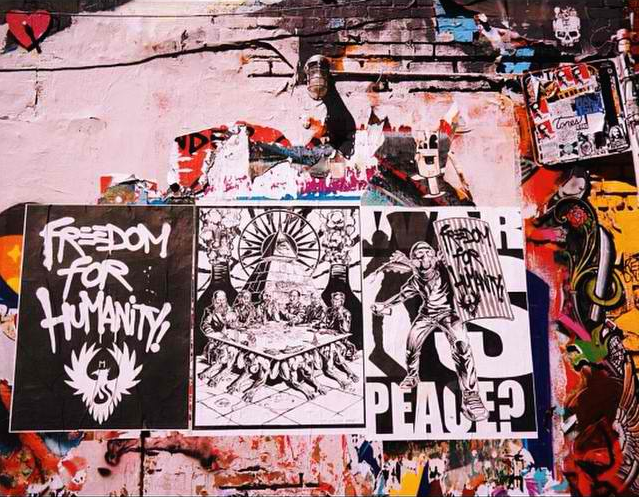
Mear One: As you rightly pointed out, all wars are fundamentally banker’s wars. For centuries, we have been fed a narrative that misidentifies our true adversaries. Many truths I’ve attempted to illuminate through my art have made my life considerably more challenging. I’ve faced criticism, censorship, near-cancellation, death threats, and been labeled with various opprobrious terms. Despite these obstacles, I have persevered, remaining unapologetic and unfazed in my artistic pursuits. At times, it feels as though I am standing on a street corner, pointing at the sky and shouting about chemtrails, only to be dismissed as irrational. This is often the initial reception to challenging conventional narratives. However, people are awakening. Creating art that critiques the established system is not easy, just as it is not easy to confront oneself and accept the mundane, mediocre reality that often passes for social norms. The reward lies in witnessing the emergence of movements like Bitcoin and connecting with like-minded individuals who share a passion for revolutionary change.
Art as Allegory: Decoding the Connection Between War and Money
BMAG: There is a pervasive argument within Bitcoin discourse—one that runs deep—that wars are not truly fought over ideology or territory, but rather over monetary control. The assertion is that major conflicts are ultimately waged to protect or reconfigure economic orders that benefit those orchestrating them. Your artwork has been visually articulating this connection since the 1990s. How do you articulate the relationship between war and money to an audience that may not have previously considered it from this perspective?
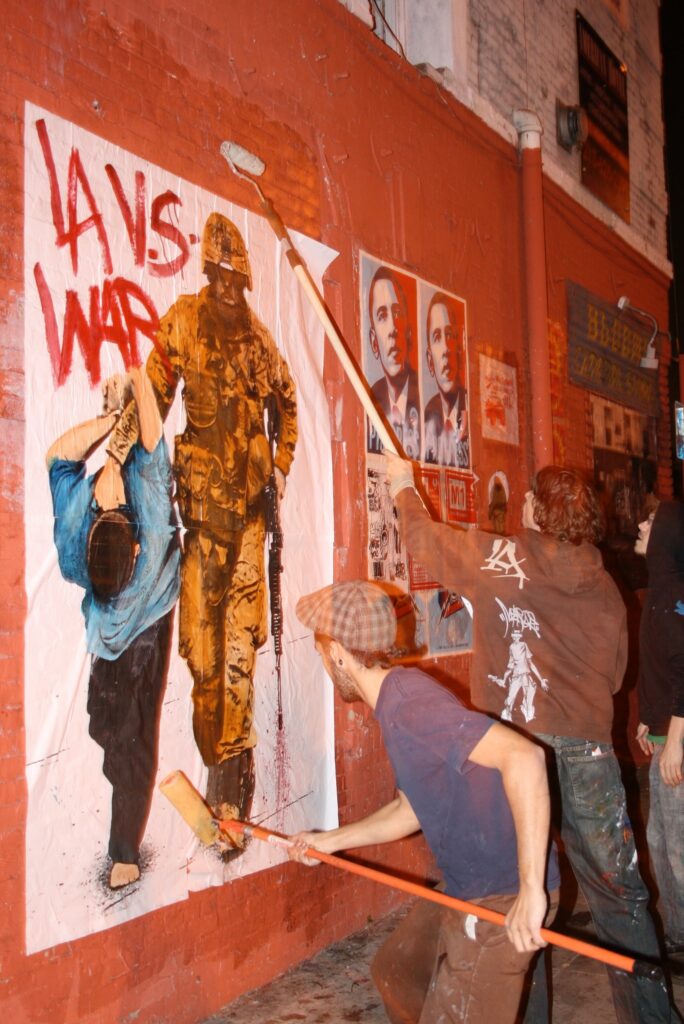
Mear One: I create allegories that encapsulate the core elements of this complex issue, striving to present them in the most digestible form possible. Given the intricate nature of the subject matter, this challenge often leads me to incorporate subliminal, psychedelic, and mythological archetypes and symbolism. These elements coalesce to assist in conveying the narrative, not only to create visually compelling pieces but also to foster discussion and engagement among people. Through narrative art, we can introduce ideas that individuals might struggle to grasp in abstract terms.
Bitcoin: An Exit Strategy or Another Absorbed Opposition?
BMAG: The 2008 crash, the subsequent bailouts, the Occupy movement, and now what appears to be another cycle of inflation, debt, and escalating military spending—do you perceive Bitcoin as the first genuine exit from this recurring loop, or merely the latest attempt to construct something outside a system that has a history of co-opting its opposition?
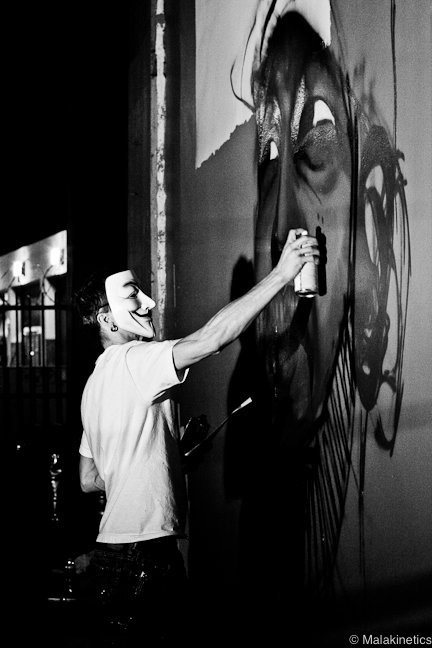
Mear One: I am naturally non-dogmatic. To me, Bitcoin represents the initial wave of a new technological paradigm that may steer us away from the fiat currency "slave system." However, I remain unconvinced that it is the ultimate panacea for our current predicament. As we observe Wall Street’s attempts to co-opt Bitcoin, coupled with internal ideological disputes, the original ethos of Bitcoin can become obscured. These are ongoing challenges that the community is actively working through. I am a firm believer in innovation and welcome the emergence of many more new inventions into our sphere. Ultimately, the current monetary reality must run its course. What follows, I hope, will be a spiritual revolution. I view Bitcoin as a crowbar in an emergency—a necessary tool to "break the glass" in a critical situation, paving the way for the next iteration of human development as we approach the 2030s. I do believe we are moving towards a state of ultimate freedom, where the concept of money itself may become obsolete as we rebuild a new world.
The Spark of Understanding: Encountering Bitcoin
BMAG: How did you first encounter Bitcoin, and was there a specific moment when it resonated with you as being intrinsically connected to the values and frustrations that had fueled your street art practice for decades?
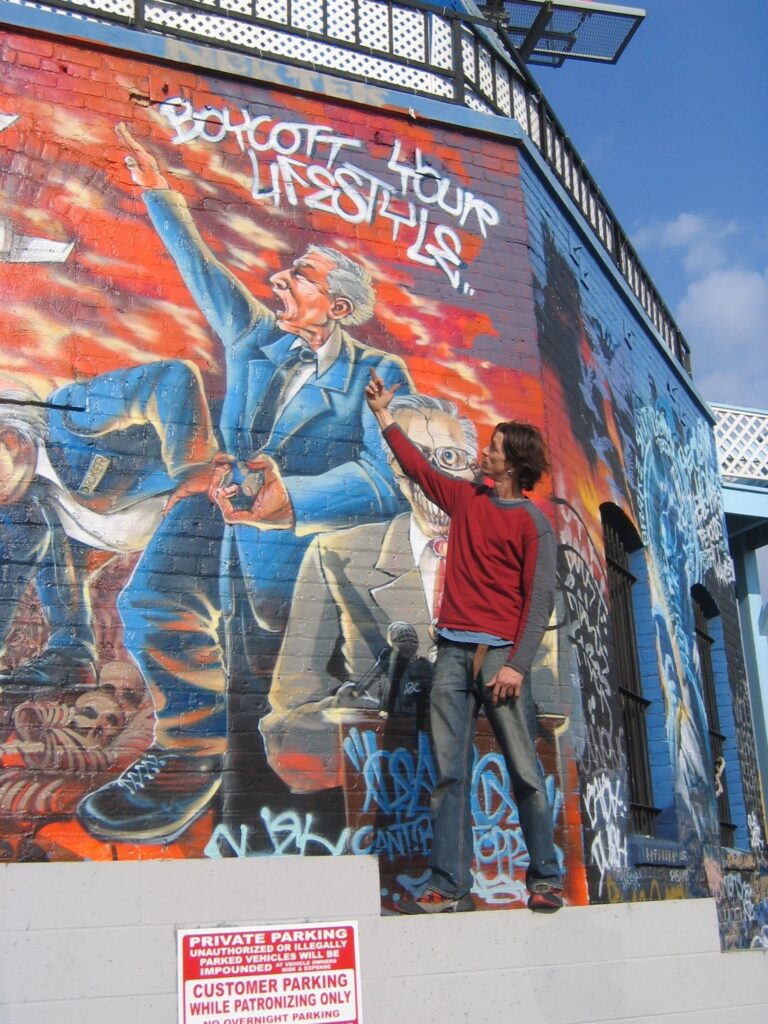
Mear One: My introduction to Bitcoin occurred in 2009 when I met a mathematician at a coffee shop in my neighborhood. Our conversation about my art led him to introduce me to Bitcoin. Initially, I never envisioned myself investing in money itself, so it remained an intriguing concept in the back of my mind. My understanding deepened through my involvement with Occupy and the creation and subsequent fallout of my London mural in 2012. Eventually, my partner and I attended our first Bitcoin conference at Anarchapulco in Mexico. There, we connected with a community of anarchists who shared similar sentiments regarding politics and lifestyle. I had a multitude of questions, and everyone was eager to provide answers, allowing me to absorb this knowledge like a sponge. I created two live art pieces for the community, which were subsequently auctioned off. The collectors of these pieces were instrumental in helping me set up my first wallet and facilitating the transactions in exchange for my proof-of-work. It was at that moment, upon earning my first coins, that the connection truly solidified for me.
The Revolution Continues
BMAG: The exhibition is titled "Relics of a Revolution." Do you believe the revolution it references is concluded, ongoing, or has yet to fully commence?
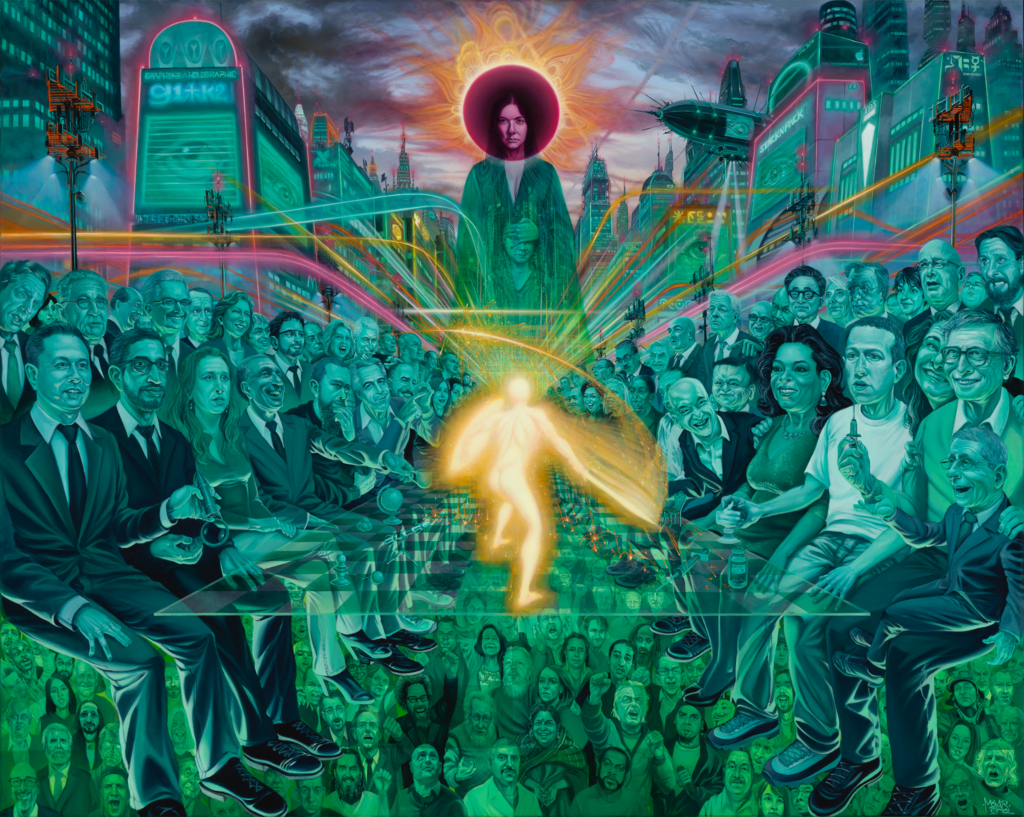
Mear One: Revolution is a daily occurrence, an inevitable aspect of life that one either participates in or is consumed by. Revolution, in its essence, signifies a cyclical process that we experience across different seasons, cultures, times, and spaces. Numerous revolutions are currently unfolding. What is remarkable about Bitcoin is its ability to connect and bridge these diverse movements, as ultimately, it seeks what we all desire: freedom from the existing system.
From Diagnosis to Protocol: The Genesis Block and Artistic Legacy
BMAG: This exhibition, "Relics of a Revolution," features your protest works alongside an original copy of The Times newspaper from January 3, 2009—the very headline Satoshi embedded in the Genesis Block. This newspaper represents the critical juncture where a diagnosis of systemic failure transformed into a functional protocol. It marks the moment when the frustration Mear One had been expressing on walls, and that Kolin would later convey on a sign in Tokyo, was encoded into something immutable—resistant to being buffed, censored, or bailed out. When you see your work displayed alongside this artifact, what is the key takeaway you hope visitors will glean, particularly those who may perceive Bitcoin solely as a price ticker and are unaware of its historical origins and motivations?
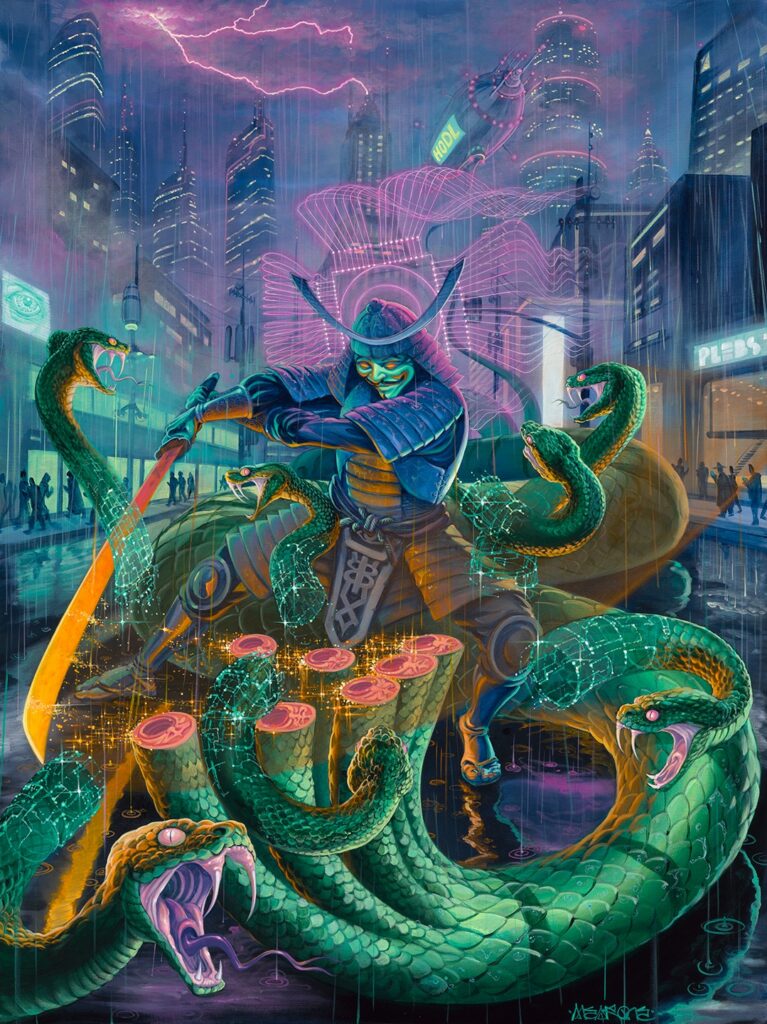
Mear One: Collect these works of art! And I don’t mean that facetiously. Every significant art movement has had its patrons, its Medicis, whose power and influence defined the style and ideas of a generation. All the artworks displayed here are denominated in Bitcoin, created by artists whose work is inspired by the philosophical underpinnings of the greatest piece of Bitcoin artwork of them all: the Genesis Block. Much like Bitcoin, art serves as a profound store of value. However, the cultural preservation of these fine art assets of freedom, created by accomplished artists, necessitates the patronage of individuals with a genuine passion for these aesthetic visions. We are currently facing unprecedented global challenges: World War III looms, economic destruction is widespread, and trade and agricultural systems are collapsing. Bitcoin offers a circuit breaker, disrupting this cycle of suffering and punishment. Our ultimate struggle is against the controllers of money and their fraudulent fiat institutions, rendering their scheme obsolete and irrelevant.
This article is Part II of a three-part interview series accompanying the "Relics of a Revolution" exhibition. Part I features Kolin Burges, and Part III, featuring Afroman, is forthcoming.
Fix the money. Fix the world.
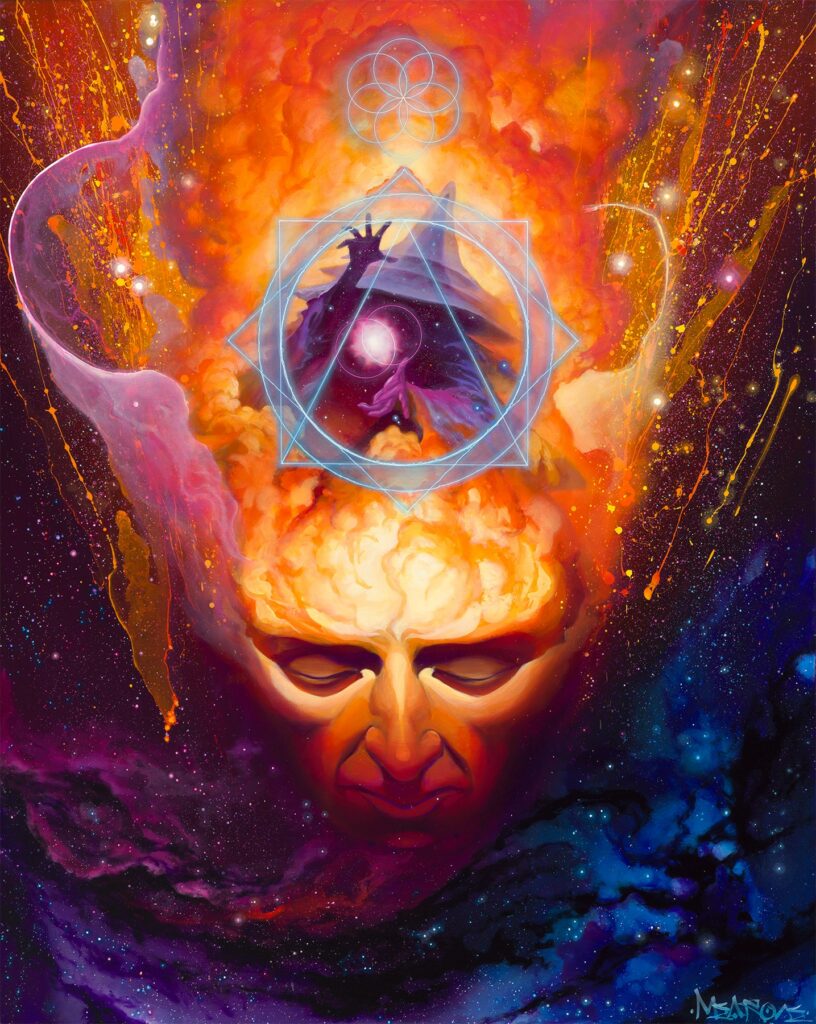
Mear One will be demonstrating his live painting process in the BMAG art gallery throughout Bitcoin 2026, from April 27-29, at The Venetian Resort in Las Vegas. He will also participate in a panel discussion moderated by Dennis Koch titled "Looking at Bitcoin Art Through a Protest Lens." A unique print by Mear One, titled "The Magician," is available exclusively through BMAG. Previews of Mear One’s historic protest works featured in the "Relics of a Revolution" exhibition are available in the BMAG B26 auction.
The Bitcoin Museum & Art Gallery (BMAG) serves as the curatorial and cultural programming division of BTC Inc and the Bitcoin Conference. Since 2019, the BMAG conference art gallery has facilitated over 120 BTC in sales of art and collectibles. Further information about BMAG can be found at museum.b.tc. Follow BMAG on Twitter @BMAG_HQ. Attendees can bundle their Bitcoin 2026 passes with accommodation at The Venetian, receiving a fourth night free by using code AFTERS for a complimentary After Hours Pass, or secure their passes individually.
