

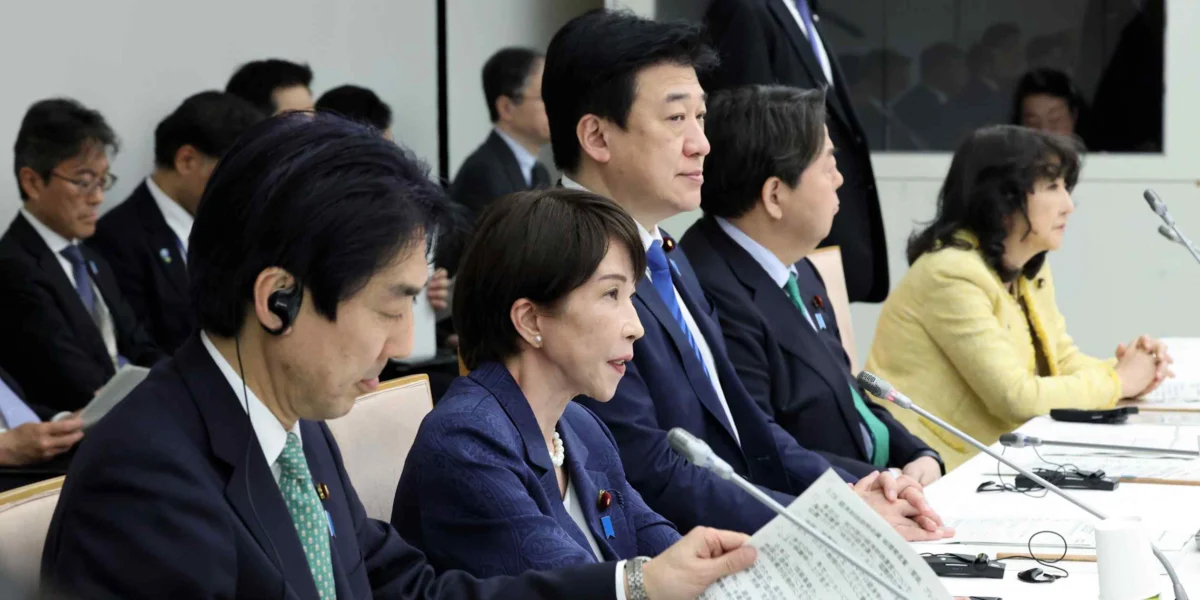
TOKYO – Prime Minister Sanae Takaichi’s administration is navigating a delicate balancing act, aiming for a “responsible expansionary fiscal policy” that stimulates economic growth while maintaining fiscal prudence. The recent convocation of the Council on Economic and Fiscal Policy on Thursday, March 26, 2026, provided a significant platform for this discussion, notably featuring the participation of two distinguished economists from American universities. Their presence underscored the international interest in Japan’s economic trajectory and offered external perspectives, including potential cautionary notes, on the government’s chosen path. The meeting, held in Tokyo, highlighted the ongoing debate surrounding the optimal strategy to foster robust and sustainable economic recovery in the world’s third-largest economy.
The Council on Economic and Fiscal Policy: A Forum for Strategic Economic Debate
The Council on Economic and Fiscal Policy (CEFP), established in 2001, serves as a critical advisory body to the Prime Minister of Japan. Its mandate is to deliberate on fundamental economic and fiscal issues, formulate long-term economic strategies, and provide recommendations on budgetary policies. The composition of the CEFP typically includes key cabinet ministers, government officials, and prominent experts from academia and the private sector. The inclusion of international economists in this high-level forum signifies a strategic move by Prime Minister Takaichi to gain diverse insights and reinforce the credibility of her economic agenda on the global stage.
The backdrop to this meeting is a complex global economic environment characterized by persistent inflationary pressures in some regions, ongoing geopolitical uncertainties, and the lingering effects of past supply chain disruptions. For Japan, the challenge lies in stimulating domestic demand, addressing demographic shifts such as an aging population and declining birthrate, and fostering innovation while managing a substantial national debt. The government’s stated objective of a “responsible expansionary fiscal policy” suggests an intent to utilize fiscal tools – such as government spending and tax adjustments – to invigorate the economy, but with a clear emphasis on sustainability and avoiding the accumulation of excessive debt that could jeopardize future economic stability.
International Perspectives on Japanese Fiscal Policy
The participation of economists from leading American universities offered a valuable external viewpoint. While the specific names of the economists were not immediately disclosed in the initial reports, their presence suggests a focus on macroeconomics, public finance, or international economics. Such experts often bring a wealth of empirical research and theoretical frameworks to bear on policy discussions. Their input likely encompassed analyses of the potential benefits and risks associated with expansionary fiscal measures, drawing comparisons with international experiences and offering data-driven insights.
In the context of Japan’s considerable public debt, which stood at approximately 236% of its Gross Domestic Product (GDP) at the end of 2025, any expansionary fiscal policy naturally invites scrutiny regarding its long-term sustainability. Economists often emphasize the importance of the debt-to-GDP ratio as a key indicator of fiscal health. While Japan has maintained relatively low interest rates, allowing it to service its debt more easily than many other nations, a sustained increase in borrowing could eventually lead to higher interest payments, crowding out other essential public expenditures.
The "responsible" aspect of Prime Minister Takaichi’s policy likely refers to a commitment to fiscal consolidation measures in the medium to long term, or a strategic deployment of funds that demonstrably boosts productivity and future revenue streams. This could involve investments in areas such as green technology, digital infrastructure, education, and research and development, which are often viewed as having high multipliers and contributing to long-term economic growth potential.
Potential Areas of Discussion and Expert Counsel
The discussions within the CEFP meeting likely revolved around several key economic levers and their potential impacts. These might include:
- Infrastructure Investment: Targeted spending on modernizing infrastructure, particularly in areas critical for future economic competitiveness like digital networks and sustainable energy, could be a cornerstone of the expansionary policy. International experience suggests that well-chosen infrastructure projects can stimulate demand in the short term and enhance productivity in the long term.
- Support for Innovation and Startups: Fiscal incentives, such as tax breaks or direct grants, could be employed to encourage private sector investment in research and development and to foster a more dynamic startup ecosystem. This aligns with the goal of boosting Japan’s global competitiveness in emerging technologies.
- Labor Market Reforms and Human Capital Development: Addressing the challenges of an aging workforce and low birth rates requires policies that support labor participation, upskilling, and lifelong learning. Fiscal measures could be directed towards childcare support, vocational training programs, and incentives for companies to invest in their employees.
- Fiscal Consolidation Pathways: The economists may have offered advice on credible plans for future fiscal consolidation. This could involve identifying areas for spending efficiency, potential revenue enhancements, or structural reforms that broaden the tax base over time. The key is to ensure that any expansionary measures are accompanied by a clear and achievable roadmap for debt reduction.
- Inflationary Risks and Monetary Policy Coordination: While the focus was on fiscal policy, the interplay with monetary policy is crucial. Economists would likely have discussed how fiscal expansion might influence inflation and the role of the Bank of Japan in managing price stability.
Chronology of Relevant Economic Policy Developments
To understand the context of this meeting, a brief chronology of Japan’s recent economic policy efforts is pertinent:
- Abenomics Era (2012-2020): Former Prime Minister Shinzo Abe’s "three arrows" of monetary easing, fiscal stimulus, and structural reforms aimed to combat deflation and revive the Japanese economy. While achieving some success in boosting corporate profits and stock markets, sustained GDP growth and a clear end to deflation remained elusive.
- COVID-19 Pandemic Response (2020-2022): The Japanese government implemented significant fiscal stimulus packages to mitigate the economic impact of the pandemic, including direct payments to citizens and support for businesses. This led to a further increase in the national debt.
- Post-Pandemic Recovery Efforts (2023-2025): Following the immediate crisis, the focus shifted towards sustainable recovery, with ongoing debates about the appropriate level of fiscal stimulus versus the need for fiscal consolidation. Different administrations have presented varying approaches, with Prime Minister Takaichi’s current focus on “responsible expansionary fiscal policy” representing the latest iteration.
- March 26, 2026: The CEFP meeting where international economists provided input on the government’s fiscal strategy.
Supporting Data and Economic Indicators
The discussions within the CEFP would undoubtedly be informed by key economic indicators. As of early 2026, Japan’s economic landscape presented a mixed picture:
- GDP Growth: While showing signs of recovery, GDP growth had been modest, often hovering around 1-2% annually in the preceding years. The government aims to accelerate this through fiscal stimulus.
- Inflation: Japan has experienced a gradual rise in inflation, moving away from decades of deflation. However, the pace of inflation has been a subject of debate, with concerns about whether it is demand-driven or primarily cost-push, influenced by global commodity prices. The Bank of Japan’s inflation target is 2%.
- Unemployment Rate: Japan’s unemployment rate has remained relatively low, typically below 3%, reflecting a tight labor market.
- Household Consumption: Consumer spending, a critical driver of the Japanese economy, has shown some resilience but has also been sensitive to price increases and economic uncertainty.
- Corporate Investment: Business investment has been a bright spot, with many companies reporting strong profits and reinvesting them, partly driven by government incentives and a focus on technological advancement.
Official Responses and Strategic Implications
Prime Minister Takaichi’s administration has consistently emphasized the importance of a balanced approach to economic management. The engagement with international experts signals a commitment to evidence-based policymaking and a willingness to consider diverse viewpoints. The "responsible" aspect of their fiscal policy is likely designed to reassure both domestic and international stakeholders about the government’s long-term fiscal discipline.
The implications of this policy approach are far-reaching:
- Investor Confidence: A clear and credible fiscal strategy can bolster investor confidence, both domestic and foreign. Demonstrating a commitment to both growth and sustainability can attract investment and lower the cost of borrowing for the government and Japanese corporations.
- Economic Growth Potential: If the expansionary measures are well-targeted and effectively implemented, they have the potential to boost domestic demand, stimulate business investment, and create jobs, leading to higher and more sustainable economic growth.
- Fiscal Sustainability: The long-term success of this policy hinges on the government’s ability to manage the debt-to-GDP ratio. Failure to do so could lead to increased borrowing costs, reduced fiscal flexibility, and potential economic instability in the future.
- International Cooperation: Japan’s approach to fiscal policy can influence its standing in international economic forums and its ability to cooperate on global economic challenges.
The insights provided by the American economists, whether they offered commendations for specific aspects of the policy or raised concerns about potential pitfalls, will undoubtedly contribute to the ongoing refinement of Prime Minister Takaichi’s economic agenda. The CEFP meeting serves as a crucial juncture in shaping Japan’s economic future, balancing the immediate need for growth with the imperative of long-term fiscal health. The government’s commitment to engaging with international expertise underscores a recognition that navigating complex economic challenges often requires a global perspective and a data-driven, nuanced approach. The coming months will reveal how these expert recommendations are integrated into concrete policy actions and their subsequent impact on the Japanese economy.
