

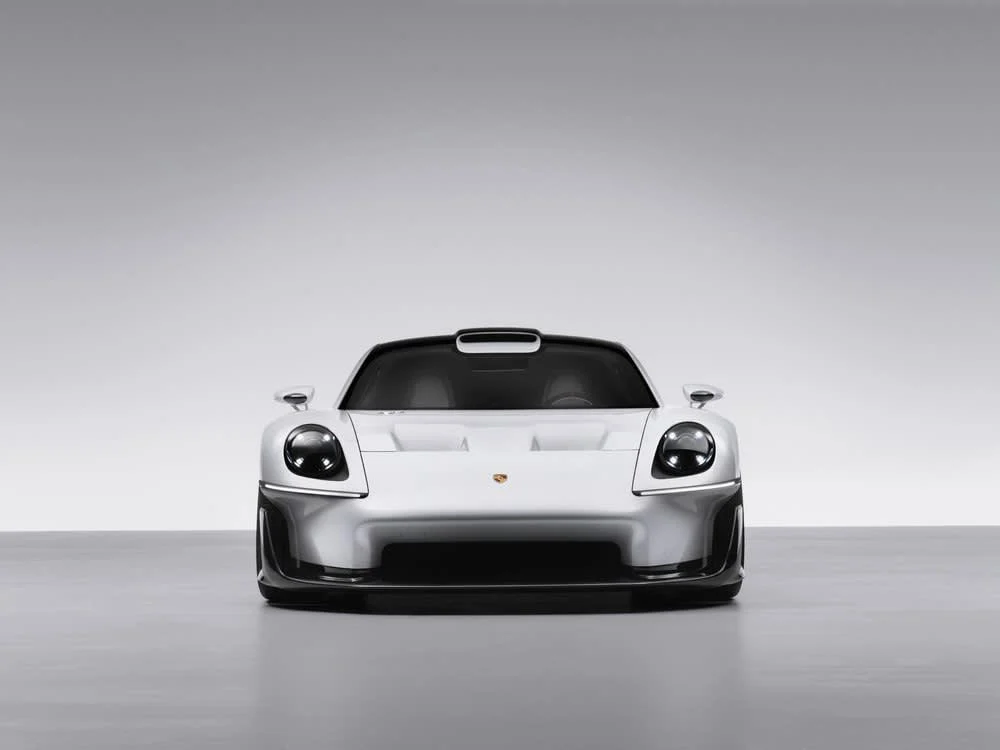
Stuttgart, Germany — Porsche, the venerable German sports car manufacturer, on Thursday revealed the Mission S concept car, an audacious mid-engine vehicle that not only previews an evolved design identity for the brand but also heralds the arrival of a new flagship model positioned above its iconic 911. This unveiling is a cornerstone of a comprehensive turnaround strategy, dubbed "Sportwagenschmiede ’35," introduced by the Volkswagen-controlled luxury marque just last week. The ambitious plan aims to rejuvenate profitability through a sharpened focus on higher-end products and optimized sales volumes, signifying a pivotal moment in Porsche’s storied history.
The Mission S Concept: A Design Evolution and Aggressive Stance
The Mission S concept car immediately captures attention with its sleek, aerodynamic profile and unmistakably Porsche lineage, yet it introduces a significantly more aggressive aesthetic compared to the brand’s current production models. The design language, while retaining the core tenets of Porsche’s visual identity, pushes boundaries with innovative elements that hint at future production vehicles. Key visual differentiators include prominent new hood vents designed for enhanced thermal management and aerodynamic efficiency, along with a distinctive roof scoop that further underscores its performance-oriented intentions. The rear of the Mission S is particularly striking, showcasing a more differentiated flair where the vehicle’s integrated spoiler seamlessly flows into its sculpted rear panels, creating a cohesive and dynamic silhouette that emphasizes width and stability.
This evolution is a deliberate move to project an image of advanced performance and cutting-edge design. The concept’s proportions suggest a finely tuned balance of form and function, characteristic of Porsche engineering, but with an added layer of visual drama. From the intricate detailing of its lighting signatures to the muscular haunches over the rear wheels, every element contributes to a sense of speed and precision, designed to captivate both loyalists and new enthusiasts. The interior, though only briefly glimpsed, is expected to marry high-tech interfaces with luxurious materials, embodying the blend of driver-centricity and premium comfort that defines modern Porsche cabins.
Leadership’s Vision and Strategic Imperative
Porsche Chairman Michael Leiters articulated the philosophy behind the new concept, stating in a release, "A Porsche must be recognisable as a Porsche at first glance. The Mission S provides a glimpse of the ideas and design features that will shape Porsche in the coming years." This statement underscores the delicate balance the brand aims to strike: innovating and evolving its design language while fiercely safeguarding its heritage and brand recognition. The Mission S is not merely an aesthetic exercise; it represents a "super sports car platform," indicating a foundational architecture capable of delivering extreme performance that will be positioned squarely above the venerable 911 series. This strategic elevation of its product hierarchy aims to tap into an even more exclusive segment of the automotive market.
Automakers routinely deploy concept vehicles as strategic tools to gauge public and media interest, showcase nascent technologies, and signal a future direction for a specific model line or the entire brand. For Porsche, the Mission S serves multiple purposes: it acts as a tangible manifestation of its evolved design identity, a testbed for future performance technologies, and a clear statement of intent regarding its ambition in the ultra-luxury performance segment. While specific pricing or performance specifications for future production models derived from the Mission S were not disclosed, the current 911 lineup provides a contextual benchmark, with entry-level Carrera models starting around $135,500 and high-performance variants like the Carrera 4 GTS convertible exceeding $203,000. The new flagship is expected to command a significantly higher premium, reflecting its elevated positioning and exclusive capabilities.
"Sportwagenschmiede ’35": The Turnaround Plan Unveiled
The unveiling of the Mission S is inextricably linked to Porsche’s "Sportwagenschmiede ’35" turnaround plan, which was formally presented during the company’s Capital Markets Day on October 7. This comprehensive strategy is designed to steer the carmaker back to robust profitability and sustainable growth amidst a challenging global economic landscape. At its core, the plan emphasizes a renewed focus on its highest-margin products: high-end sports cars and luxury SUVs. This pivot is a direct response to a significant erosion of Porsche’s financial performance in recent times.
The urgency for such a turnaround is evident in the company’s recent financial disclosures. Porsche’s operating margin, a critical indicator of profitability, stood at a mere 1.1% in the last fiscal year (likely 2023), a stark contrast to its historical performance and strategic targets. For comparison, the company had achieved an operating margin of 14.1% in previous healthier periods (e.g., 2022 or an earlier benchmark year), demonstrating the severity of the recent decline. This downturn has been attributed to a confluence of factors, including escalating production costs, the impact of U.S. tariffs on imported goods, and a notable decline in sales volumes within the crucial Chinese market, which has historically been a significant driver of growth for luxury automotive brands.
The "Sportwagenschmiede ’35" plan is an ambitious roadmap intended to address these headwinds head-on. It outlines a long-term target for the group operating margin to reach a robust 15%, signifying a return to industry-leading profitability. Concurrently, the plan introduces a midterm breakeven point set at 200,000 units or below annually. This revised target represents a strategic shift from pure volume chasing, emphasizing higher individual vehicle profitability over sheer sales numbers. This contrasts sharply with recent sales figures, such as the 279,449 units sold in the fiscal year 2022, indicating a deliberate strategy to achieve financial resilience through exclusivity and premium pricing, rather than broad market penetration.
Financial Resilience and Market Positioning
Porsche’s strategy to reduce its breakeven point and target a 15% operating margin is a bold move in an industry often characterized by scale. This approach acknowledges that in the ultra-luxury segment, exclusivity can often drive greater profitability than high volumes. By potentially selling fewer cars at higher average prices and with richer feature sets, Porsche aims to enhance its brand value, reinforce its premium image, and achieve superior financial returns. This strategy also provides a buffer against market fluctuations, as lower fixed costs and a stronger per-unit profit margin make the company less vulnerable to downturns in demand.
The focus on "higher-end products" extends beyond the introduction of new flagships like the Mission S. It also implies a greater emphasis on bespoke customization options, limited-edition models, and enhanced luxury features across its existing lineup, including the 911, Cayenne, and Panamera. This allows Porsche to cater to the increasingly discerning demands of affluent customers who seek unique and personalized automotive experiences. The company believes that by elevating the perceived value and exclusivity of its offerings, it can command higher prices and improve its gross margins significantly.
Historical Context of Porsche Flagships
Porsche has a rich history of introducing halo cars that define eras and push the boundaries of automotive engineering. While the 911 has remained the bedrock of the brand, models like the Carrera GT and the 918 Spyder have served as ultimate expressions of Porsche’s technological prowess and design philosophy. The Carrera GT, launched in the early 2000s, was a raw, analog supercar powered by a naturally aspirated V10 engine, representing a pinnacle of pure driving exhilaration. A decade later, the 918 Spyder emerged as a groundbreaking hybrid hypercar, showcasing Porsche’s foresight in integrating electric power with internal combustion to achieve unprecedented performance and efficiency.
The Mission S, therefore, steps into a lineage of vehicles designed not just to sell in numbers, but to elevate the entire brand. It signifies Porsche’s commitment to innovation and its willingness to define the future of high-performance motoring. By positioning the Mission S platform "above its iconic 911 sports car," Porsche is creating a new tier of aspiration, potentially paving the way for a series of ultra-exclusive, cutting-edge models that will sit at the very apex of its product pyramid, much like the Carrera GT and 918 Spyder did in their respective times. This move also ensures that the 911, while still the brand’s heart and soul, can continue its evolution without the pressure of being the absolute pinnacle of performance, allowing it to maintain its distinct character and broad appeal.
The Competitive Landscape
Porsche’s strategic repositioning with the Mission S and the "Sportwagenschmiede ’35" plan places it in direct, intensified competition with other titans of the ultra-luxury and supercar segments. Brands like Ferrari, Lamborghini, McLaren, and Aston Martin have long mastered the art of exclusivity, limited editions, and bespoke offerings. Ferrari, for instance, consistently maintains high margins through carefully controlled production volumes and a strong focus on its Corse Clienti and Special Projects divisions. Lamborghini has seen remarkable success with its aggressive styling and limited-run models, while McLaren continues to innovate with lightweight carbon fiber architectures and cutting-edge performance. Aston Martin, though facing its own financial challenges, also relies on a heritage of exclusivity and bespoke craftsmanship.
The global market for ultra-luxury performance vehicles is increasingly characterized by demand for personalization, advanced technology, and often, some form of electrification. As competitors unveil their own hybrid and fully electric hypercars, Porsche’s "super sports car platform" suggests an intention to integrate advanced powertrains, potentially including significant hybridization or full electrification, to maintain its competitive edge. This segment thrives on innovation, and the Mission S indicates Porsche’s resolve to lead, not just follow, in these critical areas. The strategy to reduce unit sales while increasing profitability is a common playbook among these elite manufacturers, leveraging brand prestige to command higher prices and protect residual values.
Technological Underpinnings and Future Implications
The designation of Mission S as a "super sports car platform" implies more than just a new design; it suggests a foundational shift in Porsche’s engineering approach for its top-tier vehicles. Such a platform would likely incorporate advanced materials like carbon fiber for chassis and body components to achieve significant weight reduction, critical for both performance and efficiency. Expect highly sophisticated active aerodynamics, advanced suspension systems, and state-of-the-art braking technology.
Crucially, the "platform" aspect hints at scalability and adaptability. This new architecture could be designed to accommodate various powertrain configurations, including highly potent hybrid systems that combine powerful internal combustion engines with electric motors, or even a fully electric setup for future iterations. The industry is rapidly moving towards electrification, even in the supercar realm, and Porsche, as part of the Volkswagen Group, has significant resources to develop such technologies. The Mission S could very well be the progenitor of a new generation of Porsche supercars that seamlessly blend traditional performance hallmarks with sustainable, cutting-edge electric propulsion. This strategic technological investment will be vital for Porsche to meet increasingly stringent emissions regulations while simultaneously delivering the exhilarating performance its clientele expects.
Industry Reactions and Analyst Outlook
Initial reactions from automotive analysts and industry observers regarding Porsche’s "Sportwagenschmiede ’35" plan and the Mission S concept have largely been cautiously optimistic. Analysts generally commend the clarity of Porsche’s strategic direction to prioritize profitability and brand exclusivity, especially given the current economic climate and the challenges faced in key markets like China. The focus on higher margins and a lower breakeven point is seen as a financially prudent move that can stabilize the company’s performance.
However, the execution of such an ambitious plan will not be without its hurdles. Integrating new, complex technologies into production, managing supply chain constraints, and successfully communicating the evolved design identity to a conservative customer base will be critical. There is a general consensus that while the Mission S showcases an exciting future, the true measure of success will lie in its eventual production form and its market reception. Investors will be closely watching for consistent progress towards the 15% operating margin target and the successful rejuvenation of sales in challenging regions. The balancing act between preserving Porsche’s cherished heritage and embracing radical innovation will be a defining challenge for Leiters and his team.
The Road Ahead: Challenges and Opportunities
The road ahead for Porsche is marked by both significant challenges and immense opportunities. The "Sportwagenschmiede ’35" plan is an ambitious undertaking, requiring disciplined execution across design, engineering, manufacturing, and marketing. Global economic uncertainties, fluctuating raw material costs, and the ongoing transition to electric mobility all present formidable obstacles. However, by leveraging its strong brand equity, unparalleled engineering expertise, and the financial backing of the Volkswagen Group, Porsche is well-positioned to navigate these complexities.
The Mission S concept is more than just a show car; it is a declaration of intent. It signals Porsche’s unwavering commitment to its core identity as a maker of ultimate sports cars, even as it boldly embraces new design directions and technological frontiers. By strategically elevating its product offerings and sharpening its financial focus, Porsche aims not only to recover its robust profitability but also to solidify its position at the pinnacle of the global automotive luxury landscape, continuing its legacy of innovation and performance for decades to come.
