

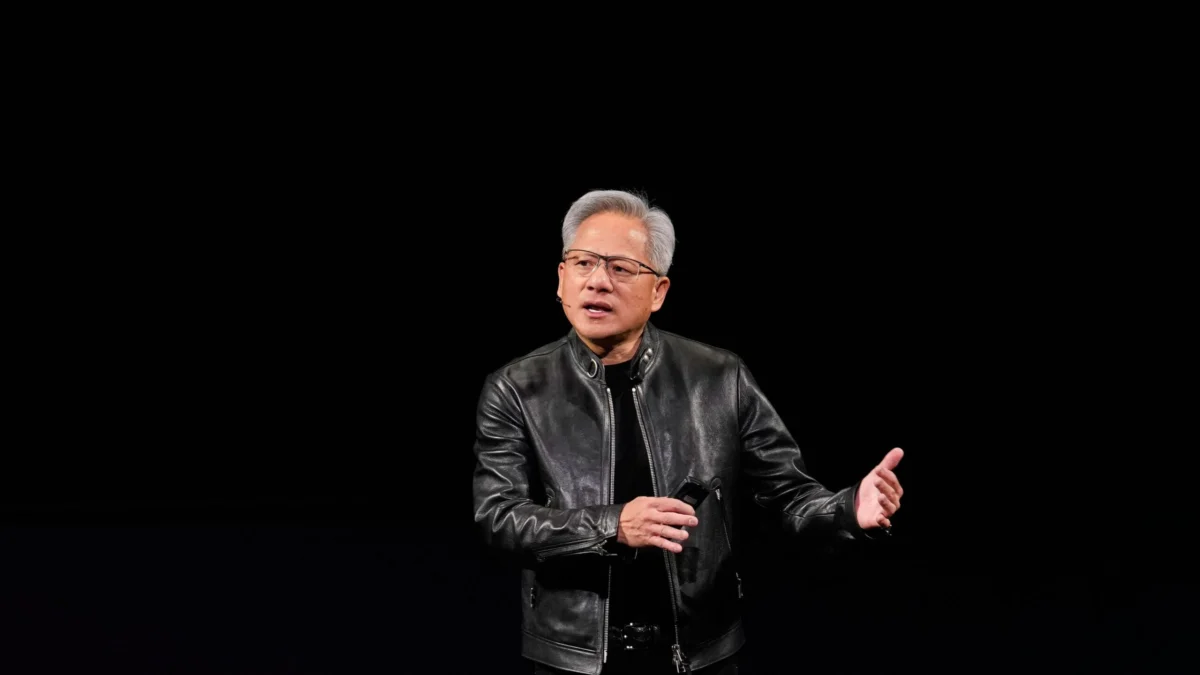
The technological landscape of artificial intelligence is undergoing a significant transformation, with a pronounced shift from model training to inference—the process by which AI systems answer user queries and perform real-world tasks. This evolution was a central theme in a recent presentation by Jensen Huang, CEO of Nvidia, where he declared, "The inflection point for inference has been reached." To solidify its position in this burgeoning market, Nvidia announced the integration of a new AI system built upon the foundational technology of startup Groq, signaling a strategic move to enhance its inference capabilities and capture a larger share of this rapidly expanding sector.
The Strategic Pivot to AI Inference
For years, the dominant narrative in AI development has revolved around the immense computational power required for training complex models. Companies like Nvidia have built their success on providing the high-performance GPUs essential for these computationally intensive tasks. However, as AI models become more sophisticated and widely deployed, the efficiency and speed of inference—the stage where these trained models are actually put to use—are becoming paramount. The ability to deliver rapid, accurate responses to user prompts, process vast amounts of data in real-time, and power interactive AI applications is now a critical differentiator.
Huang’s assertion that the "inflection point for inference has been reached" suggests that the industry has moved beyond the initial phase of extensive model development and is now entering an era where the practical application and deployment of AI are taking center stage. This shift implies a growing demand for hardware and software solutions specifically optimized for inference, which often requires different architectural considerations than those prioritized for training. Inference workloads typically demand lower latency, higher throughput, and greater energy efficiency to ensure a seamless and cost-effective user experience.
Nvidia’s Strategic Acquisition and Technological Integration
The announcement that Nvidia is incorporating technology from Groq into its new AI system is a testament to this strategic pivot. While the specifics of the deal were not fully disclosed in the initial report, the mention of a potential acquisition for $20 billion dollars underscores the significant value Nvidia places on Groq’s specialized expertise in AI inference. Groq, a relatively young company, has rapidly gained recognition for its innovative approach to designing custom silicon and software stacks specifically engineered to accelerate AI inference workloads. Their proprietary tensor streaming processor (TSP) architecture is designed to deliver unparalleled performance for deep learning inference, promising significantly faster processing speeds and lower power consumption compared to traditional GPU-based solutions for this specific task.
This integration is not merely about acquiring a new technology; it represents a strategic enhancement of Nvidia’s existing AI ecosystem. Nvidia’s strength lies in its comprehensive platform, which includes GPUs, software libraries (like CUDA), and development tools. By incorporating Groq’s inference-focused technology, Nvidia aims to offer a more complete end-to-end solution that caters to both training and inference needs, thereby addressing a wider spectrum of customer requirements. This move is particularly significant for enterprise clients and cloud service providers who are increasingly deploying AI at scale and require optimized solutions for both phases of the AI lifecycle.
Background Context: The Evolution of AI Hardware
The journey of AI hardware has been a dynamic one. Initially, CPUs were used for AI tasks, but their limitations in parallel processing quickly became apparent. The advent of GPUs, with their massively parallel architectures, revolutionized AI training by enabling the processing of large datasets and complex neural networks much more efficiently. Nvidia, through its relentless innovation in GPU technology and its robust CUDA software platform, became the undisputed leader in this domain.
However, the distinct requirements of inference began to surface as AI applications moved from research labs into production environments. Training often involves batch processing of large datasets, demanding immense raw computational power. Inference, on the other hand, frequently involves processing individual requests with extremely low latency, such as in real-time voice assistants, autonomous driving systems, or interactive chatbots. This led to the emergence of specialized AI accelerators designed to optimize for these inference-specific characteristics. Companies like Google (with its Tensor Processing Units or TPUs) and various startups began developing hardware tailored for inference.
Groq’s approach has been to design a new class of processor, the TSP, which is fundamentally different from traditional GPUs. Their architecture is optimized for streaming data and executing a high volume of operations with minimal overhead, making it exceptionally well-suited for the demands of AI inference. By integrating this technology, Nvidia is signaling its recognition of the limitations of even its most advanced GPUs for certain inference scenarios and its commitment to providing the most performant solutions across the entire AI spectrum.
Timeline and Key Developments
While the specific timeline for the integration and potential acquisition of Groq by Nvidia is still unfolding, this development can be seen as a culmination of several trends:
- Early 2010s: Rise of deep learning and the increasing reliance on GPUs for AI model training. Nvidia establishes dominance with its CUDA platform.
- Mid-2010s: Growing recognition of specialized hardware needs for AI, leading to the development of AI accelerators beyond general-purpose GPUs.
- Late 2010s – Early 2020s: Proliferation of AI applications in production, highlighting the critical importance of efficient and low-latency inference. Startups like Groq emerge, focusing on optimizing for inference.
- Present: Nvidia, recognizing the strategic imperative of inference, makes significant moves to bolster its offerings in this area, including the integration of Groq’s advanced inference technology.
The mention of a potential $20 billion dollar acquisition price for Groq suggests that this move is a high-priority strategic initiative for Nvidia. Such a substantial investment would indicate a deep belief in Groq’s technology and its potential to significantly impact the AI inference market. This figure also places Groq among the top-tier acquisitions in the semiconductor and AI space, reflecting the intense competition for cutting-edge AI capabilities.
Supporting Data and Market Trends
The market for AI inference hardware is experiencing exponential growth. According to various industry analysts, the AI inference chip market is projected to reach tens of billions of dollars in the coming years, with some estimates suggesting a compound annual growth rate (CAGR) exceeding 30%. This surge is driven by several factors:
- Ubiquitous AI Deployment: AI is no longer confined to research labs; it is being embedded in everything from smartphones and smart home devices to industrial machinery and autonomous vehicles. Each of these applications requires robust inference capabilities.
- Edge AI: The trend towards processing AI tasks at the "edge" – closer to the data source, rather than relying solely on centralized cloud servers – is accelerating. This requires highly efficient and power-conscious inference hardware.
- Generative AI Growth: The recent explosion in generative AI models (like large language models and image generators) has further amplified the need for efficient inference. While training these models is incredibly resource-intensive, their widespread use for generating content and responding to prompts demands highly scalable and performant inference solutions.
- Cost Optimization: As AI adoption scales, the operational costs of running inference become a significant concern. Optimized hardware can drastically reduce energy consumption and improve processing efficiency, leading to substantial cost savings for businesses.
Nvidia’s existing dominance in AI training positions them favorably, but their commitment to inference, particularly with the integration of specialized technology like Groq’s, is crucial for maintaining their leadership. Their current GPU offerings, while powerful, may not always be the most cost-effective or performant solution for every inference scenario. By bringing in Groq’s expertise, Nvidia can offer a more nuanced and optimized portfolio of solutions.
Official Responses and Industry Reactions (Inferred)
While direct quotes from other industry players might not be immediately available, the implications of Nvidia’s move are significant and would likely elicit various reactions:
- Competitors: Companies like Intel, AMD, and other AI chip startups would undoubtedly view this development with keen interest. They would be analyzing the technical merits of Groq’s technology and Nvidia’s integration strategy to inform their own product roadmaps and competitive responses. The pressure to innovate in inference acceleration would intensify.
- Cloud Service Providers (CSPs): Major CSPs like Amazon Web Services (AWS), Microsoft Azure, and Google Cloud, which are massive consumers of AI hardware, would be evaluating how this new offering impacts their infrastructure choices. The availability of a more performant and potentially cost-effective inference solution could influence their purchasing decisions and their own AI service offerings.
- AI Developers and Enterprises: For developers and businesses building AI applications, this news signals a potentially enhanced ecosystem. Access to more powerful inference capabilities could enable the development of more sophisticated and responsive AI services, leading to improved user experiences and new business opportunities. They would likely be eager to test and benchmark the new integrated system.
- Investors: The stock market reaction to such strategic moves is often telling. An investment of $20 billion in Groq would signal strong confidence from Nvidia’s leadership and likely be viewed positively by investors, especially if it solidifies their position in a rapidly growing market.
Nvidia’s proactive approach in addressing the inference market is a clear indication of their understanding of the evolving AI landscape. By investing in and integrating cutting-edge inference technology, they are not just reacting to market trends but actively shaping them.
Broader Impact and Implications
The integration of Groq’s technology into Nvidia’s AI systems has several far-reaching implications:
- Democratization of Advanced AI: By making inference more efficient and accessible, Nvidia can help lower the barrier to entry for deploying sophisticated AI applications. This could empower smaller businesses and developers to leverage AI in ways that were previously cost-prohibitive.
- Accelerated Innovation: With faster and more efficient inference, the pace of innovation in AI-powered products and services can accelerate. Developers can iterate more quickly, experiment with new ideas, and bring cutting-edge AI features to market faster.
- Enhanced User Experiences: For end-users, this translates to more responsive and intelligent AI interactions. Imagine chatbots that feel more natural and human-like, virtual assistants that understand complex commands instantly, or real-time translation services that are seamless.
- New Hardware Paradigms: Groq’s TSP architecture represents a departure from traditional GPU designs for inference. This could inspire further exploration and development of novel processor architectures specifically tailored for the unique demands of AI workloads.
- Intensified Competition: While Nvidia is making a significant move, the AI hardware market remains highly competitive. This announcement will likely spur further investment and innovation from other players, ultimately benefiting the entire AI ecosystem.
In conclusion, Jensen Huang’s declaration of an "inflection point for inference" is not merely a statement of market observation but a strategic imperative that Nvidia is actively addressing. The integration of Groq’s advanced inference technology signals a comprehensive approach to the AI lifecycle, aiming to provide customers with unparalleled performance and efficiency from model training to real-world deployment. This move underscores Nvidia’s commitment to staying at the forefront of AI innovation and its understanding that the future of artificial intelligence lies not just in building smarter models, but in making them work smarter, faster, and more effectively in the hands of users worldwide. The potential $20 billion dollar acquisition of Groq, if finalized, would represent a landmark event, solidifying Nvidia’s strategic advantage in the critical and rapidly expanding domain of AI inference.
