

North Korea is experiencing an unprecedented economic and resource windfall through its clandestine military support for Russia’s invasion of Ukraine, receiving crucial foreign currency and energy supplies in exchange for a steady stream of munitions and potentially even personnel. This burgeoning partnership, forged in the crucible of international isolation and geopolitical tension, has dramatically altered the economic landscape for Pyongyang, offering a lifeline that circumvents stringent international sanctions. The clandestine nature of these transactions, while difficult to quantify precisely, is demonstrably reshaping the strategic calculus of both nations and raising alarms among global powers.
The Shifting Sands of Geopolitical Alliances
The genesis of this unusual alliance can be traced back to the escalating conflict in Ukraine, which began with Russia’s full-scale invasion in February 2022. Faced with mounting Western sanctions and a strained domestic industrial base struggling to meet the voracious demands of modern warfare, Moscow turned to its few remaining international partners. North Korea, long ostracized by the international community due to its nuclear weapons program and human rights record, found itself in a unique position to capitalize on Russia’s desperation.
For Pyongyang, the benefits have been manifold. The influx of foreign currency, primarily U.S. dollars and Euros, provides a vital injection into its struggling economy, which has been heavily reliant on illicit activities and limited trade. This hard currency allows the regime to import essential goods, procure raw materials for its own military industries, and potentially finance its weapons development programs, a core objective of the Kim Jong Un government. Furthermore, reports suggest that North Korea has also received substantial quantities of energy supplies, a critical commodity for any industrial nation, particularly one facing energy shortages. This energy aid could be instrumental in powering its factories and sustaining its population.
A Timeline of Escalating Cooperation
While the full extent of the North Korea-Russia arms-for-aid deal remains shrouded in secrecy, a discernible timeline of escalating cooperation has emerged.
- Early 2022: Following the February 2022 invasion of Ukraine, Russia’s initial military successes began to stall, and it became apparent that its stockpiles of certain munitions, particularly artillery shells, were being depleted at an alarming rate.
- Mid-2022: Intelligence reports and satellite imagery began to indicate increased North Korean activity, including the movement of large cargo vessels between North Korea and Russia. These shipments were initially suspected to be food or other humanitarian aid, but the scale and frequency raised concerns.
- Late 2022 – Early 2023: Western intelligence agencies, including those of the United States and South Korea, began to publicly assert that North Korea was providing artillery shells and rockets to Russia. These initial assessments were based on analysis of intercepted communications and observed logistical movements.
- Mid-2023: The United States, under the Biden administration, began to more forcefully publicize its intelligence findings, directly accusing North Korea of supplying Russia with military equipment for use in Ukraine. This included claims of ballistic missile sales and the potential deployment of North Korean artillery crews to train Russian soldiers.
- September 2023: A rare summit between North Korean leader Kim Jong Un and Russian President Vladimir Putin at the Vostochny Cosmodrome in Russia marked a significant public acknowledgment of deepening ties. While official statements downplayed the military nature of the meeting, analysts widely interpreted it as a confirmation of their strategic alignment and a discussion of further military cooperation. Following this meeting, the pace and scale of suspected shipments appeared to increase.
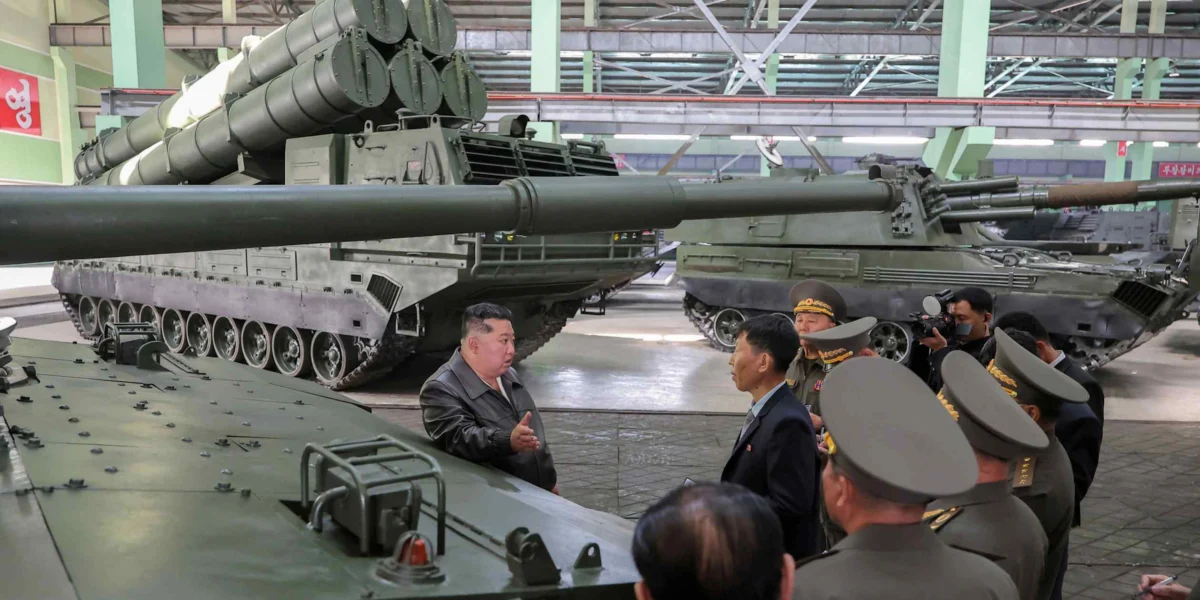
- Late 2023 – Present: Ongoing intelligence assessments continue to indicate a steady flow of North Korean weaponry to Russia. This includes vast quantities of artillery shells, rockets, and potentially short-range ballistic missiles. In return, Russia is believed to be providing North Korea with advanced military technology, including components for its missile programs, as well as critical energy supplies. The image accompanying this report, showing Kim Jong Un inspecting a weapons factory, suggests a direct involvement in overseeing and potentially expanding this production for export.
Supporting Data and Unconfirmed Reports
Quantifying the exact volume and value of the arms-for-aid exchange is inherently challenging due to the covert nature of the transactions. However, various intelligence assessments and expert analyses offer insights:
- Artillery Shells: South Korea’s Defense Minister Shin Won-sik stated in November 2023 that North Korea had shipped approximately 1 million artillery shells to Russia since August 2023. He also suggested that North Korea had supplied around 300,000 artillery shells in the initial months of the war. This figure, if accurate, represents a substantial portion of Russia’s overall artillery ammunition consumption in Ukraine.
- Missile Deliveries: The U.S. has presented evidence suggesting North Korea has provided Russia with short-range ballistic missiles, specifically the KN-23, which bear similarities to the Russian Iskander missile. These missiles are believed to have been used by Russia in attacks on Ukrainian cities.
- Foreign Currency Inflow: While specific figures are unavailable, intelligence suggests that North Korea has received hundreds of millions of dollars in foreign currency from these arms sales. This injection of funds is critical for an economy estimated to be worth around $28 billion annually, heavily impacted by decades of sanctions.
- Energy Supplies: The exact amount of energy supplies is also difficult to ascertain. However, given North Korea’s chronic energy deficits, any significant influx of oil or refined petroleum products would be a substantial economic boon.
- Personnel: While less confirmed, there have been intelligence reports suggesting the potential deployment of North Korean artillery crews to Russia to assist in operating and maintaining the supplied weaponry, or even to train Russian soldiers on its use.
Official Responses and International Condemnation
The international community has largely condemned this deepening military cooperation between North Korea and Russia.
- United States: U.S. officials have repeatedly warned both nations against engaging in such transactions, emphasizing that they violate multiple United Nations Security Council resolutions that prohibit North Korea from exporting arms and engaging in military cooperation with other countries. The U.S. has also imposed sanctions on entities and individuals involved in facilitating these transfers.
- South Korea: Seoul has expressed grave concern over the arms deal, viewing it as a direct threat to its own security and a violation of international law. South Korean officials have called for stricter enforcement of sanctions and have pledged to work with allies to counter this growing threat.
- European Union: The EU has also condemned the arms transfers and has called for accountability for those involved. The bloc has maintained its sanctions regime against North Korea and has urged Russia to cease its involvement in the conflict.
- United Nations: The UN Security Council has been largely paralyzed in taking decisive action due to the veto power of Russia and China, which have historically resisted punitive measures against North Korea. However, reports from UN experts have documented evidence of North Korean-origin ballistic missiles used by Russia in Ukraine, further bolstering the claims.
Broader Impact and Implications
The North Korea-Russia arms-for-aid deal carries significant implications that extend far beyond the immediate battlefield in Ukraine:
- Erosion of Sanctions Regimes: The ability of North Korea to circumvent international sanctions by engaging in illicit arms sales undermines the effectiveness of these diplomatic tools. It suggests that with sufficient geopolitical leverage, even heavily sanctioned states can find ways to sustain their economies and pursue their strategic objectives.
- Strengthening of Authoritarian Regimes: This partnership bolsters both the Kim Jong Un regime in North Korea and the Putin administration in Russia. It provides them with tangible benefits that solidify their grip on power and demonstrate their capacity to defy international norms and pressures.
- Escalation of Regional Tensions: The transfer of advanced military technology from Russia to North Korea, even if limited, could enhance Pyongyang’s offensive capabilities. This poses a direct threat to South Korea, Japan, and potentially U.S. interests in the Indo-Pacific region. The development of new missile technologies or the refinement of existing ones could destabilize regional security dynamics.
- Shifting Global Power Dynamics: The tacit alliance between North Korea and Russia, coupled with China’s strategic alignment with Moscow, signals a growing challenge to the existing international order. This bloc of nations, often at odds with the West, appears to be solidifying its cooperation, creating new geopolitical fault lines.
- Implications for Global Security: The unchecked proliferation of weapons and military technology, particularly from a state like North Korea with a history of irresponsible behavior, poses a long-term threat to global security. The resources gained from these sales could fuel further weapons development and potentially lead to more sophisticated and dangerous arsenals.
The unprecedented windfall enjoyed by North Korea through its military support for Russia represents a critical juncture in international relations. It highlights the limitations of current sanctions regimes, the adaptability of authoritarian regimes, and the evolving geopolitical landscape. As the conflict in Ukraine grinds on, the clandestine economic lifeline provided by this arms-for-aid deal will likely continue to empower Pyongyang, with far-reaching consequences for regional and global stability. The image of Kim Jong Un inspecting a weapons factory serves as a stark visual reminder of the tangible, and potentially dangerous, outcomes of this evolving partnership.
