

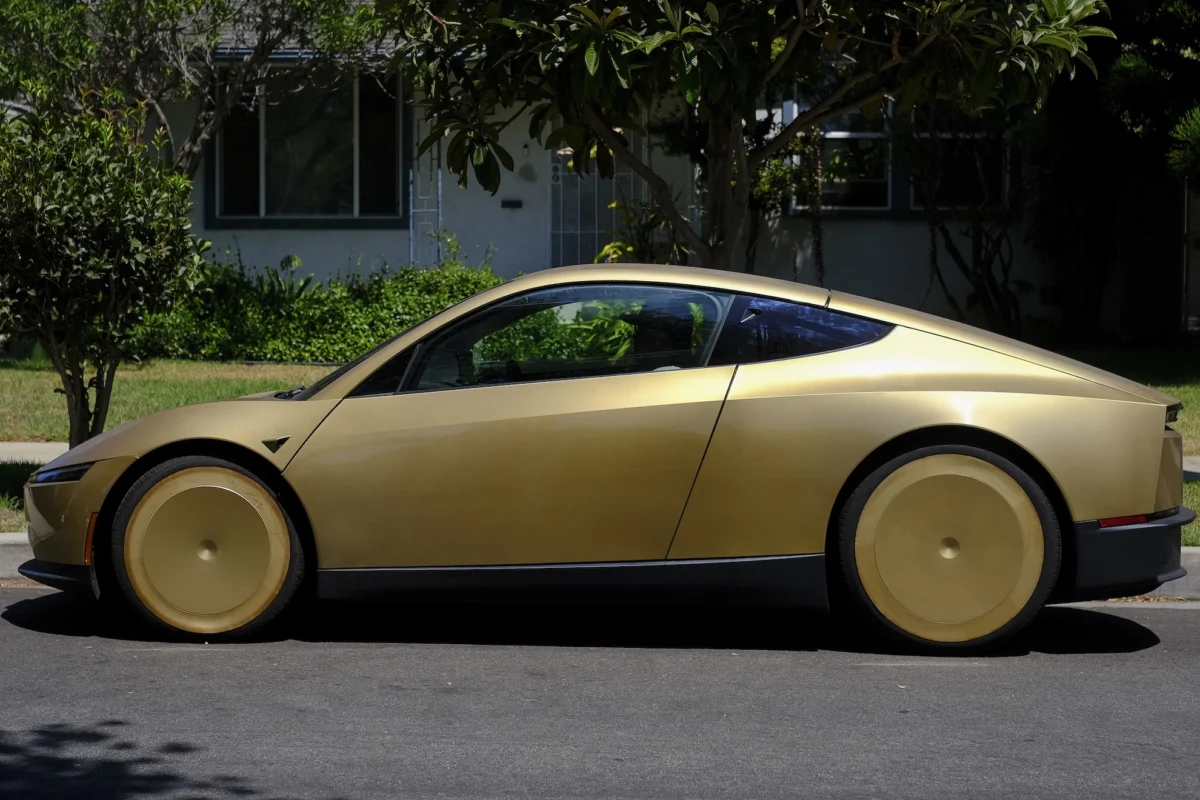
The United States’ leading automotive safety regulator has initiated a formal investigation into Tesla’s controversial decision to deploy its newly unveiled Cybercab on public roads in Austin, Texas, entirely devoid of a steering wheel or traditional manual controls. This unprecedented move by Tesla, which began with the Cybercab’s inaugural street appearances on Friday morning, was met with immediate scrutiny from the National Highway Traffic Safety Administration (NHTSA), highlighting a burgeoning conflict between technological innovation and established safety protocols. The probe, announced by NHTSA just hours after the Cybercabs were spotted in public circulation, centers on Tesla’s self-certification process and the contentious claim that the vehicle complies with all Federal Motor Vehicle Safety Standards (FMVSS) despite its radical design.
The Immediate Catalyst: Cybercab’s Unconventional Debut
On September 4, 2026, the streets of Austin, Texas, witnessed the public rollout of Tesla’s Cybercab, a vehicle that epitomizes the company’s long-held vision for fully autonomous robo-taxis. Unlike any mass-market vehicle before it, the Cybercab presented a stark, futuristic design, notably lacking the conventional steering wheel and brake pedals that have been standard safety features in automobiles for over a century. This deployment was not merely a test run on private grounds but a public debut, allowing the Cybercabs to operate alongside human-driven vehicles. The immediate consequence of this bold launch was a swift and decisive response from NHTSA, which, by Friday morning, had officially opened an investigation into the matter, registering it as an inquiry into "Tesla’s decision to launch its new Cybercab on public roads with no steering wheel or pedals" under NHTSA ID AQ26002.
The core of the regulatory challenge lies in existing federal vehicle safety regulations, which explicitly mandate the inclusion of manual controls such as brake pedals. While the Department of Transportation (DOT) under the previous administration had, in June 2026, proposed amendments to these requirements, suggesting the removal of such mandates for vehicles specifically designed for autonomous operation, these proposals had not yet been finalized or codified into law. This regulatory gap creates a significant grey area that Tesla appears to be navigating with its self-certification strategy, pushing the boundaries of what is legally permissible versus what is technologically achievable.
Understanding the Regulatory Framework and Tesla’s "Self-Certification"
The Federal Motor Vehicle Safety Standards (FMVSS) are a comprehensive set of regulations established by NHTSA, dictating the design, construction, performance, and durability requirements for motor vehicles and their equipment. These standards are critical for ensuring vehicle safety and protecting public health. Traditionally, automakers are responsible for "self-certifying" that their vehicles comply with these FMVSS rules. This means that manufacturers conduct their own tests and attest to the government that their vehicles meet all applicable safety standards before bringing them to market. It’s a system built on trust and the understanding that manufacturers possess the engineering expertise and testing capabilities to verify compliance.
However, Tesla’s self-certification of the Cybercab presents a unique challenge to this established system. By certifying a vehicle that fundamentally deviates from conventional designs and lacks mandated manual controls, Tesla is effectively asserting that either the existing standards are inapplicable to the Cybercab’s autonomous design or that its autonomous capabilities sufficiently compensate for the absence of these controls. NHTSA’s filing explicitly states that the agency is opening the investigation to "examine the process and technical data on which Tesla relied when certifying the Cybercab and related issues." Furthermore, the agency will specifically "consider the extent to which the company’s certification depended on determinations that certain federal motor standards are inapplicable to the Cybercab." This suggests NHTSA is not merely questioning the technical data but also the legal interpretation and application of FMVSS by Tesla in a rapidly evolving technological landscape.
Tesla’s Autonomous Ambitions and History of Regulatory Scrutiny
Tesla’s foray into fully autonomous vehicles, culminating in the Cybercab, is the realization of a vision articulated by CEO Elon Musk for over a decade. Musk has consistently championed the idea of a vast robo-taxi network, predicting millions of self-driving vehicles generating passive income for their owners and revolutionizing urban mobility. The Cybercab is designed to be a dedicated autonomous vehicle, optimized for ride-sharing services without human intervention, representing a significant departure from Tesla’s existing vehicles which, while offering "Full Self-Driving" (FSD) beta software, still retain traditional manual controls and require active driver supervision.
Tesla’s development of FSD has been a source of both innovation and contention. While the company boasts millions of miles driven by FSD beta users, the system has also been subject to numerous criticisms and investigations. NHTSA has previously initiated multiple probes into Tesla’s Autopilot and FSD systems, often following reports of crashes involving emergency vehicles or instances of phantom braking. For example, in 2021, NHTSA launched an investigation into Tesla’s Autopilot system after a series of crashes involving parked emergency vehicles, encompassing over 765,000 vehicles. These ongoing investigations underscore a pattern of regulatory caution and a heightened level of scrutiny applied to Tesla’s autonomous technologies, especially given the company’s aggressive deployment strategies. The Cybercab’s launch without any manual override options escalates these concerns significantly, transforming a driver-assist system into a primary, fully autonomous transport solution.
The Cybercab: A Glimpse into a Driverless Future?
The Cybercab itself is a testament to radical design, echoing the angular, minimalist aesthetic of the Cybertruck. Its interior, stripped of a steering wheel, pedals, and traditional dashboard, is configured for passenger comfort and space, designed to maximize capacity and efficiency in a ride-sharing context. This design choice is not merely stylistic but fundamental to its intended function: a vehicle operated entirely by artificial intelligence, managed remotely if necessary, and summoned via a mobile application.
The concept of a robo-taxi fleet promises numerous benefits, including reduced traffic congestion, lower emissions, increased accessibility, and potentially enhanced safety by eliminating human error. Proponents argue that purpose-built autonomous vehicles, designed from the ground up without human controls, can optimize interior space, improve aerodynamic efficiency, and streamline the manufacturing process. However, the absence of manual controls also eliminates the possibility of human intervention in critical situations, placing absolute reliance on the vehicle’s AI and sensor suite. This paradigm shift from human-assisted autonomy to complete machine autonomy is precisely what raises the most profound safety and regulatory questions.
Broader Industry Landscape and Competitive Dynamics
The autonomous vehicle industry is a fiercely competitive arena, with numerous players vying to bring robo-taxi services to market. Companies like Waymo (Google’s self-driving unit) and Cruise (General Motors’ AV subsidiary) have been operating limited robo-taxi services in select cities for several years, albeit often with safety drivers initially or within carefully geofenced areas. These companies have generally adopted a more phased approach, often starting with vehicles that retain manual controls or have human operators for remote assistance, gradually removing them as confidence and regulatory approvals grow. Waymo, for instance, has operated fully driverless services in Phoenix and San Francisco, but their vehicles typically maintain a more conventional layout or have established protocols for remote human oversight.
Tesla’s aggressive, almost "big bang" approach with the Cybercab, launching a vehicle without manual controls directly onto public roads, sets it apart. While it aligns with Musk’s characteristic "move fast and break things" philosophy, it also positions Tesla at the vanguard of regulatory challenges. The outcome of NHTSA’s investigation into the Cybercab could therefore have far-reaching implications, not just for Tesla, but for the entire autonomous vehicle industry. It could set precedents for how future autonomous vehicle designs are evaluated, certified, and deployed, influencing the strategies of competitors and the pace of innovation across the sector.
Stakeholder Reactions and Expert Commentary
While official statements from Tesla regarding this specific investigation were pending, industry observers and safety advocates offered insights. Consumer safety groups are likely to reiterate long-standing concerns about the rapid deployment of unproven autonomous technologies, especially those without human safeguards. They would point to the inherent risks of introducing novel vehicle designs that bypass established safety norms without comprehensive independent validation. Legal experts suggest that the "self-certification" loophole, if exploited broadly, could undermine the very purpose of FMVSS, leading to a patchwork of interpretations that jeopardize public safety.
Conversely, proponents of autonomous technology might argue that current regulations are outdated and ill-suited for the pace of technological advancement. They might contend that requiring manual controls on a vehicle designed to be fully autonomous is counterproductive, hindering progress and imposing unnecessary design constraints. This investigation thus becomes a crucial test case, forcing a reevaluation of how regulations can adapt to transformative technologies without compromising safety. The Department of Transportation’s earlier proposal to remove brake pedal requirements for AVs, while not yet enacted, underscores this ongoing debate within governmental bodies about the appropriate regulatory response to a driverless future.
Potential Ramifications of the Investigation
The NHTSA investigation carries several significant potential ramifications for Tesla, the broader AV industry, and future regulatory policy:
- Deployment Delays and Recalls: If NHTSA finds that Tesla’s self-certification is flawed or that the Cybercab does not comply with applicable FMVSS, it could compel Tesla to halt Cybercab operations, recall deployed vehicles, or implement design changes (potentially reintroducing manual controls, at least temporarily). Such actions would significantly delay Tesla’s robo-taxi ambitions and incur substantial financial costs.
- Reputational Damage and Public Trust: A negative finding from NHTSA could severely impact public perception of Tesla’s autonomous technology and, by extension, the entire autonomous vehicle industry. Building public trust in driverless cars is paramount for widespread adoption, and any safety controversies could set back this effort.
- Legal Precedents: The outcome of this investigation could establish critical legal precedents for the interpretation of FMVSS in the context of fully autonomous vehicles. It may clarify the limits of self-certification for novel designs and delineate the responsibilities of manufacturers in proving safety without traditional manual overrides.
- Regulatory Reform: This probe could accelerate the review and revision of existing FMVSS regulations to better accommodate autonomous vehicle technology. It might spur lawmakers and regulators to create specific, updated standards for vehicles without human controls, providing clearer guidelines for the industry.
- Impact on Tesla’s Financials and Stock: Any significant delays or mandated design changes could negatively impact Tesla’s stock performance, as investors often tie the company’s long-term valuation to its ambitious autonomous driving projects.
The Path Forward
The NHTSA investigation into the Cybercab is likely to be a meticulous and complex process, involving detailed examination of Tesla’s internal testing data, safety analyses, and its interpretation of federal regulations. The agency will scrutinize the technical basis upon which Tesla concluded that the Cybercab, despite its lack of conventional controls, meets the rigorous safety standards designed for human-operated vehicles. This could involve extensive dialogue with Tesla engineers, potentially leading to requests for additional data or modifications to the vehicle’s design or operational parameters.
Ultimately, the resolution of this investigation will play a pivotal role in shaping the future of autonomous mobility. It will test the boundaries of regulatory adaptability in the face of rapid technological change, underscore the importance of robust safety oversight, and determine the immediate trajectory of Tesla’s highly anticipated robo-taxi service. The world watches as regulators and innovators navigate the uncharted waters of a truly driverless future.
