

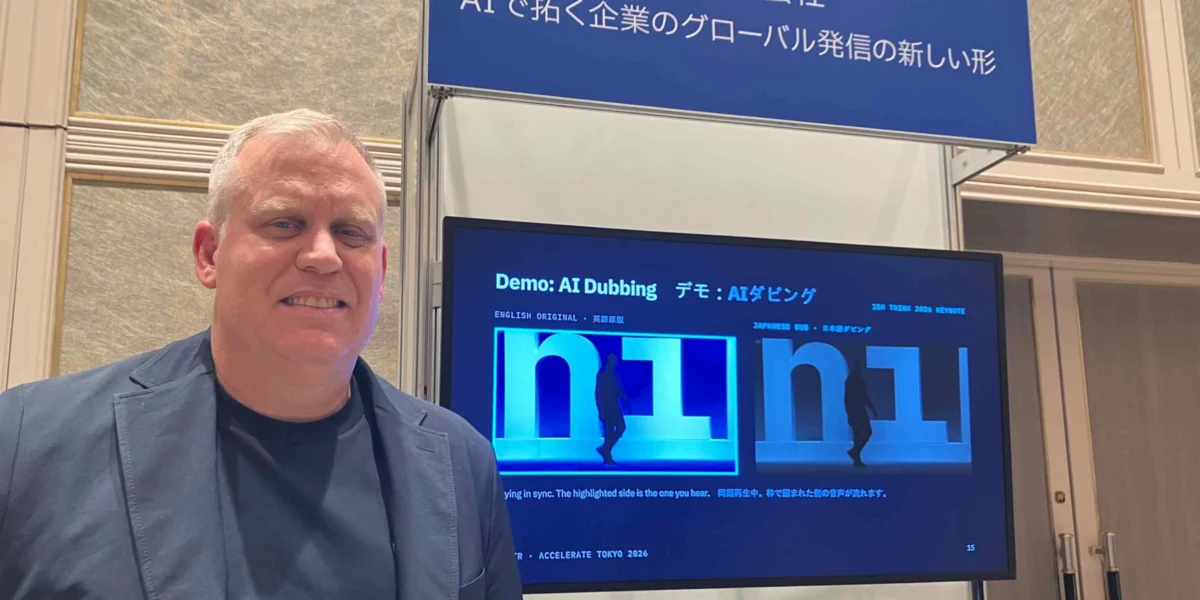
TOKYO – A pioneering investor information services provider based in New Zealand has launched an innovative artificial intelligence-powered dubbing service designed to translate corporate executive videos into multiple languages instantaneously. This groundbreaking technology promises to democratize global investor communications, breaking down linguistic barriers that have long hindered the seamless dissemination of crucial company information. The service, developed by Arbitr Group, a firm specializing in financial data and communication solutions, aims to address the inherent limitations of traditional dubbing methods, which often struggle to accurately convey the subtle nuances of human speech and emotion.
The AI dubbing solution leverages sophisticated natural language processing and deep learning algorithms to not only translate spoken content but also to replicate the original speaker’s vocal characteristics, intonation, and emotional tone. This is a significant departure from existing translation services, which often result in a robotic or unnatural-sounding output. David Sowerby, co-chief executive of Arbitr Group, highlighted this critical distinction, stating that "traditional dubbing has not always captured a speaker’s passion and nuance." He further elaborated that the AI system has been trained on vast datasets of human speech, enabling it to learn and reproduce the subtle emotional inflections that are vital for effective communication, particularly in conveying conviction and sincerity during investor presentations.
The development of this AI dubbing technology comes at a time of increasing globalization within the financial markets. Companies are increasingly seeking to engage with investors and stakeholders across diverse geographical regions, making clear and accessible communication paramount. However, the cost and time associated with professional human dubbing services have often presented a significant hurdle, particularly for smaller or mid-cap companies. Furthermore, the delay in disseminating translated content could mean missing critical market windows or failing to respond promptly to investor queries. Arbitr Group’s solution addresses these pain points by offering a near real-time translation and dubbing capability, allowing companies to reach a global audience with their messages simultaneously.
Background and Development Timeline
The genesis of Arbitr Group’s AI dubbing service can be traced back to early 2024, when the company identified a persistent challenge faced by its corporate clients: the need for rapid and accurate translation of executive video content for international investor relations. Initial research and development efforts focused on analyzing the shortcomings of existing machine translation tools, which, while improving, still lacked the ability to capture the full spectrum of human vocal expression.
By mid-2025, Arbitr Group had assembled a dedicated team of AI researchers, linguists, and audio engineers. Their objective was to create a system that could go beyond mere word-for-word translation. This involved developing proprietary algorithms capable of analyzing vocal patterns, emotional cues, and even subtle pauses within the original speech. The team then embarked on an extensive data collection and training phase, utilizing a diverse range of professional voice actors and corporate presentations to build a robust AI model.
A significant milestone was reached in early 2026 with the successful completion of beta testing. During this phase, the AI dubbing system was used to translate and dub a series of investor presentations for a select group of pilot clients. Feedback from these early adopters was overwhelmingly positive, with many commending the naturalness of the dubbed audio and the speed of delivery. One notable success story involved a Japanese technology firm that was able to instantly translate an earnings call announcement into English, German, and Mandarin, reaching its international investor base within hours of the original Japanese release.
The official launch of the AI dubbing service was scheduled for November 1, 2026, coinciding with a period of heightened investor activity in global markets. The company has positioned this technology as a transformative tool for investor relations professionals, enabling them to foster greater transparency and engagement with a broader spectrum of stakeholders.
Supporting Data and Market Context
The demand for effective cross-border communication in the financial sector is underscored by several key trends. According to a recent report by the International Finance Corporation (IFC), cross-border capital flows reached an estimated $5.5 trillion in 2025, indicating a significant appetite for global investment. However, language barriers remain a persistent obstacle to the free flow of information and capital. A study by the Association of Financial Marketers revealed that over 60% of institutional investors cited language as a significant impediment to fully understanding company disclosures from foreign markets.
Furthermore, the increasing prevalence of video content in corporate communications adds another layer of complexity. A survey conducted by Investor Relations Magazine found that 85% of companies now utilize video content for investor presentations, earnings calls, and company updates. The need to make this rich media accessible to a global audience is therefore more pressing than ever.
Arbitr Group’s AI dubbing service directly addresses this gap. The system can reportedly process and dub a 30-minute video in over 15 languages in under an hour, a stark contrast to traditional methods that could take days or even weeks for a single language. This efficiency translates into significant cost savings, with Arbitr Group estimating that their service can reduce dubbing costs by up to 70% compared to conventional human voice-over services. The company also claims a significant improvement in accuracy, with its AI achieving a translation accuracy rate of over 98% for common financial terminology.
Analysis of Implications
The implications of Arbitr Group’s AI dubbing technology extend far beyond mere cost and time savings. By enabling instant, high-quality multilingual communication, the service has the potential to level the playing field for companies of all sizes. Smaller companies, which may have previously lacked the resources to invest in extensive translation services, can now communicate their value proposition to a global investor base with greater confidence and reach. This could foster greater investment in emerging markets and democratize access to capital.
Moreover, the ability to convey emotional nuance in executive communication can significantly impact investor perception. Sincerity, conviction, and transparency are crucial elements in building trust between companies and investors. When these are lost in translation, it can lead to misunderstandings and a diminished sense of confidence. Arbitr Group’s AI, by preserving these subtle vocal cues, can help maintain the integrity of the original message, fostering stronger relationships and potentially influencing investment decisions.
The technology also has implications for crisis communications. In situations requiring rapid dissemination of critical information, such as during an economic downturn or a major corporate announcement, the ability to quickly translate and dub executive statements into multiple languages can be invaluable in managing public perception and investor sentiment.
However, the widespread adoption of such AI technologies also raises questions about the future of human translators and voice actors in the financial communication industry. While Arbitr Group’s service is positioned as an enhancement rather than a replacement, the increasing sophistication of AI may lead to a shift in the demand for traditional services. The company has indicated that its focus is on augmenting human capabilities, allowing professionals to concentrate on higher-level strategic communication rather than the repetitive tasks of translation and dubbing.
Official Responses and Future Outlook
While specific official responses from major financial institutions have yet to be widely published, industry analysts are already expressing optimism about the potential of Arbitr Group’s innovation. "This technology represents a significant leap forward in investor relations," commented Dr. Anya Sharma, a leading expert in financial communications at the Global Financial Institute. "The ability to communicate complex financial information accurately and empathetically across language barriers is a game-changer. We anticipate rapid adoption by companies looking to expand their global reach."
Arbitr Group has indicated plans for further development, including the integration of real-time captioning in multiple languages and the expansion of its AI’s language capabilities to include more specialized dialects and regional accents. The company is also exploring partnerships with major financial news outlets and stock exchanges to embed its AI dubbing technology directly into their platforms, further streamlining the dissemination of corporate information.
The success of Arbitr Group’s AI dubbing service could pave the way for similar innovations across other industries that rely on cross-cultural communication, such as education, media, and international business. As artificial intelligence continues to evolve, its capacity to bridge linguistic and cultural divides is set to play an increasingly pivotal role in shaping global interactions and commerce. The investment community will undoubtedly be watching closely to see how this technology reshapes the landscape of corporate communication and international investor engagement in the years to come. The company’s strategic positioning in Tokyo, a major hub for global finance and technology, further underscores its ambition to become a leader in this burgeoning field.
