

Frederick Go, finance secretary of the Philippines, writes that collaborative approaches among nations in the Asia-Pacific region are essential for enhancing the resilience and efficiency of global supply chains. In an era marked by geopolitical volatility, climate change impacts, and the lingering effects of a global pandemic, the interconnectedness of our economies has never been more apparent, nor has the fragility of the systems that underpin international trade. The events of the past few years have served as a stark reminder that over-reliance on single sources or geographically concentrated production hubs can leave nations vulnerable to disruptions, leading to shortages, price hikes, and significant economic instability.
The Philippines, as a key player in global manufacturing and a vital node in many critical supply networks, is acutely aware of these challenges. The nation’s strategic location in Southeast Asia, coupled with its skilled workforce and growing industrial capacity, positions it to be a significant contributor to a more robust regional supply chain ecosystem. However, achieving this requires a deliberate and concerted effort to foster deeper cooperation with neighboring countries and international partners.

The Imperative for Regional Supply Chain Resilience
The concept of supply chain resilience has moved from a niche concern for logistics professionals to a central tenet of national economic security. Discrepancies in trade flows, sudden lockdowns, and natural disasters can have cascading effects, disrupting the availability of everything from essential medicines and semiconductors to consumer electronics and food products. The COVID-19 pandemic, in particular, exposed the vulnerabilities of highly optimized, just-in-time supply chains that often lacked sufficient buffers or diversification.
Data from the World Trade Organization (WTO) has consistently highlighted the interconnectedness of global trade. For instance, in 2023, global merchandise trade volume experienced a modest increase after a contraction in the previous year, underscoring the ongoing reliance on intricate international networks. However, the composition of these flows and the origins of production remain critical. A significant portion of global manufacturing, particularly in electronics and textiles, is concentrated in Asia, making the region a focal point for supply chain strategies.

The current geopolitical landscape, characterized by increasing trade tensions and a push towards regionalization and onshoring/nearshoring, further amplifies the need for adaptable and resilient supply chains. Nations are increasingly looking to secure critical supplies and reduce dependencies on potentially unstable sources. This trend, often referred to as "friend-shoring" or "near-shoring," suggests a shift towards building supply chains within allied or geographically proximate regions.
Leveraging Regional Strengths: A Philippines Perspective
The Philippines has been actively participating in global supply chains for decades, notably in sectors such as electronics manufacturing, business process outsourcing (BPO), and agriculture. The country’s participation in the assembly of semiconductors, for example, is a critical component of the global electronics industry. According to the Semiconductor Industry Association (SIA), the Asia-Pacific region accounts for the vast majority of global semiconductor manufacturing capacity. The Philippines, though not a leading-edge chip producer, plays a crucial role in assembly, testing, and packaging, which are vital downstream processes.

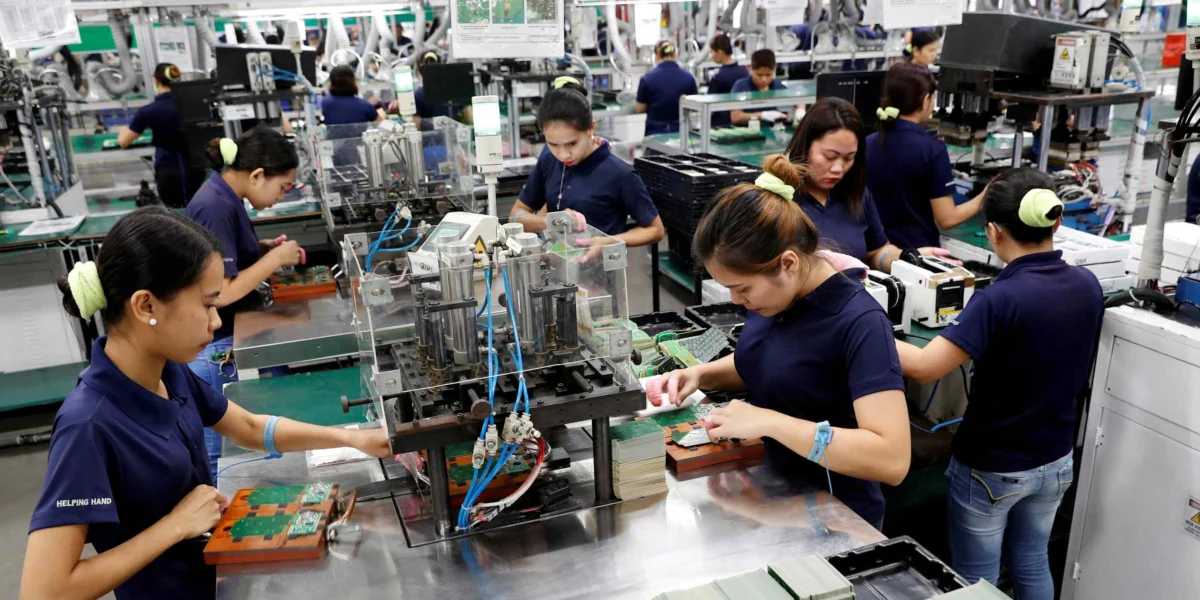
The Kinpo Electronics factory in Malvar, Batangas, a facility that has been operational for many years and serves as an example of the country’s manufacturing capabilities, underscores the importance of these operations. Such facilities are integral to the global electronics supply chain, highlighting the need for their uninterrupted operation and robust logistical support. The image provided, showing Filipino workers on an assembly line, serves as a visual testament to the human capital and industrial infrastructure that the Philippines offers.
Beyond electronics, the Philippines is a significant producer of agricultural goods, including rice, fruits, and seafood, which are crucial for regional food security. Its BPO sector is a global leader, providing essential services that underpin many international businesses. These diverse contributions highlight the Philippines’ potential as a hub for regional economic activity.

Building Blocks for Collaborative Supply Chains
The establishment of stronger regional supply chains requires a multi-faceted approach, encompassing policy, infrastructure, and strategic partnerships.
1. Policy Harmonization and Trade Facilitation
One of the most immediate steps is to streamline trade procedures and harmonize regulations among regional partners. This includes reducing non-tariff barriers, simplifying customs processes, and establishing common standards for quality and safety. Initiatives like the ASEAN Trade Facilitation Agreement (ATFA) are crucial in this regard, aiming to expedite the movement of goods across borders.

- Background Context: The ASEAN region, with its ten member states, has been actively pursuing economic integration for decades. Agreements such as the ASEAN Free Trade Area (AFTA) have laid the groundwork for closer economic ties, but further efforts are needed to optimize supply chain operations.
- Supporting Data: According to ASEAN Secretariat reports, implementation of ATFA measures has led to significant reductions in trade transaction times for member states. For example, studies have shown that streamlining customs procedures can reduce the time taken to import or export goods by up to 30 percent.
- Implications: Harmonized policies reduce the cost and complexity of cross-border trade, making regional supply chains more attractive and efficient. This can encourage businesses to diversify their sourcing and production within the region, thereby enhancing resilience.
2. Infrastructure Development and Connectivity
Robust infrastructure is the backbone of any supply chain. This includes investments in ports, airports, roads, railways, and digital connectivity. Enhanced physical and digital infrastructure within the Philippines and across the region is critical for the seamless flow of goods and information.
- Timeline/Chronology: The Philippines has been undertaking significant infrastructure projects under its "Build, Build, Build" program and its successor initiatives. These aim to improve connectivity between major production centers, ports, and domestic markets. For example, the North-South Commuter Railway project is designed to enhance passenger and freight transport efficiency in Luzon.
- Related Parties’ Reactions (Inferred): Business groups and industry associations have consistently called for accelerated infrastructure development, citing it as a key enabler of competitiveness. International development banks, such as the Asian Development Bank (ADB), have been significant financiers of such projects, recognizing their regional economic impact.
- Analysis: Improved infrastructure reduces transit times, lowers logistics costs, and enhances the reliability of supply chains. This makes regional sourcing and production more competitive compared to distant alternatives.
3. Diversification of Sourcing and Production
Encouraging businesses to diversify their suppliers and production locations within the region is a critical strategy. This can be facilitated through investment incentives, risk-sharing mechanisms, and the promotion of inter-firm collaboration.

- Background Context: The "China Plus One" strategy, where companies seek to diversify their manufacturing base beyond China, presents a significant opportunity for countries like the Philippines and its ASEAN neighbors.
- Supporting Data: A survey by the Association of Chartered Certified Accountants (ACCA) in 2023 indicated that a growing number of businesses were actively exploring diversification strategies, with Southeast Asia being a primary target region for new investments and supply chain reconfigurations.
- Implications: Diversification reduces the impact of localized disruptions. If one facility or supplier in a particular country faces an issue, other regional options can be activated to maintain production and supply continuity.
4. Technological Adoption and Digitalization
The integration of digital technologies, such as artificial intelligence, blockchain, and the Internet of Things (IoT), can revolutionize supply chain management. These technologies enable greater transparency, real-time tracking, predictive analytics for demand forecasting, and improved inventory management.
- Analysis: Digitalization allows for greater agility and responsiveness in supply chains. Blockchain technology, for instance, can enhance transparency and traceability of goods, ensuring authenticity and reducing fraud. IoT sensors can provide real-time data on inventory levels, environmental conditions, and the location of shipments.
- Potential Partnerships: Collaboration on developing and implementing these technologies across the region, perhaps through joint research initiatives or shared platforms, could accelerate adoption and create economies of scale.
5. Strategic Sectoral Cooperation
Focusing on specific critical sectors that are vital for regional economic stability and security can yield significant benefits. This could include collaboration on semiconductors, renewable energy components, pharmaceuticals, and essential food supplies.

- Background Context: The global shortage of semiconductors during the pandemic highlighted the strategic importance of this sector. Efforts are underway globally to build more resilient and geographically diverse semiconductor supply chains.
- Inferred Statements/Reactions: Governments within the region have expressed a commitment to strengthening their domestic capabilities and fostering regional cooperation in strategic sectors. Industry leaders are also actively seeking opportunities to expand their footprint and collaborate on research and development.
- Implications: By working together on these key sectors, nations can collectively enhance their production capacities, share expertise, and develop more robust regional supply networks that are less susceptible to external shocks.
The Philippines’ Role in a Resilient Regional Ecosystem
The Philippines is well-positioned to play a leading role in building these stronger regional supply chains. Its strategic location, a young and increasingly skilled workforce, a growing domestic market, and a government committed to economic development provide a strong foundation.
Finance Secretary Frederick Go’s perspective emphasizes the necessity of proactive engagement and collaboration. The nation’s commitment to attracting foreign direct investment, coupled with ongoing efforts to improve the ease of doing business, are crucial steps. Furthermore, fostering a domestic ecosystem that supports innovation and technological adoption will be vital for the Philippines to not only participate in but also lead in the development of advanced supply chain solutions.

The vision is one of a more integrated and resilient Asia-Pacific region, where countries work together to mitigate risks, enhance efficiency, and ensure the smooth flow of goods and services that are essential for economic prosperity and stability. This is not merely an economic imperative but a strategic necessity in an increasingly unpredictable global environment. By strengthening regional partnerships, the Philippines and its neighbors can build supply chains that are not only more robust but also more sustainable and inclusive, benefiting all stakeholders. The journey towards such a future requires sustained political will, strategic investments, and a shared commitment to collaboration, transforming potential vulnerabilities into collective strengths.
