

Morgan Stanley, one of the world’s leading financial services firms, reported third-quarter results that largely surpassed analyst expectations, driven by an exceptionally strong performance in its equities trading division. The mixed financial landscape of Q3 2023, characterized by persistent inflation concerns, rising interest rates, and geopolitical tensions, presented a challenging environment, yet the bank demonstrated resilience in key areas, particularly its institutional securities segment. However, the firm’s overall performance was tempered by declines in fixed income trading and a subdued investment banking environment, leading to a cautious market reaction despite the headline beat.
A Detailed Look at Third Quarter Financials
For the third quarter, Morgan Stanley announced a profit increase of 6.5% year-over-year, reaching $4.91 billion, translating to $3.03 per share. This figure represented a solid beat against the average analyst estimate. Concurrently, the firm’s total revenue climbed 12% to an impressive $20.34 billion, also exceeding market forecasts. These headline figures painted a picture of a robust quarter, yet a deeper dive into the divisional performance revealed a more nuanced reality, showcasing both significant strengths and areas facing headwinds.
The standout performer for the quarter was undoubtedly Morgan Stanley’s equities trading division. Long considered a cornerstone of the firm’s institutional securities business, this segment delivered a blockbuster performance, with revenue surging an extraordinary 41% to $5.8 billion. This figure comfortably surpassed the StreetAccount estimate by approximately $909 million, underscoring the division’s exceptional quarter. The firm attributed this widespread strength to robust activity across its diverse range of equities products, including cash equities, derivatives, and prime brokerage services. Geographically, Asia was specifically highlighted as a source of particular strength, indicating a resurgence or sustained activity in key Asian markets that benefited the bank. This exceptional showing in equities proved crucial, acting as a significant counterbalance to underperformance in other areas of the business.
In contrast, the fixed income trading division faced considerable challenges during the quarter. Revenue from fixed income, currencies, and commodities (FICC) trading declined by 7% year-over-year, settling at $2.01 billion. This result fell roughly $260 million below market expectations, reflecting a tougher environment for bond and commodity markets. The primary drivers for this decline were cited as reduced activity and lower profitability in credit and commodities trading. The broader market context for fixed income in Q3 2023 included sustained interest rate hikes by central banks globally, which introduced volatility and uncertainty, alongside a general slowdown in corporate debt issuance and commodity price fluctuations. Investors and corporations became more cautious, impacting trading volumes and the bid-ask spreads that fuel FICC revenues.
The investment banking division, traditionally a bellwether for corporate activity and economic confidence, showed only a modest improvement. Investment banking revenue edged up a mere 2% to $2.16 billion, falling approximately $110 million short of analyst estimates. This slight increase was primarily driven by an uptick in advisory revenue, stemming from a greater number of completed mergers and acquisitions (M&A) transactions. While M&A activity showed nascent signs of recovery, particularly for larger, strategic deals, the overall environment remained subdued compared to the boom years of 2021 and early 2022. This modest gain in advisory was largely offset by significant declines in both equity underwriting and fixed income underwriting. The market for initial public offerings (IPOs) remained largely frozen, with few significant new listings, while secondary offerings and debt capital markets also saw reduced activity as companies deferred fundraising plans amid higher borrowing costs and economic uncertainty.
Analyst Perspectives and Market Reaction
Despite the headline beat on profit and revenue, the mixed performance across divisions led to a somewhat tempered reaction from market analysts and investors. Wells Fargo analyst Mike Mayo, a prominent voice in the banking sector, characterized the results as "good, but not great." In a note released Wednesday following the earnings announcement, Mayo highlighted that some business metrics showed slower improvement than anticipated, suggesting that while the firm exceeded expectations, the underlying trends in certain segments might still warrant caution. This sentiment resonated with the market, as Morgan Stanley shares declined about 3% in midday trading following the earnings release. The dip indicated that investors were carefully weighing the stellar equities performance against the softness in fixed income and investment banking, perhaps signaling concerns about the sustainability of growth in a volatile economic climate and the challenges in diversifying revenue streams. The market often looks for consistent, broad-based strength, and the reliance on one particular segment, however strong, can sometimes lead to skepticism about overall stability.
CEO’s Economic Outlook and Strategic Vision

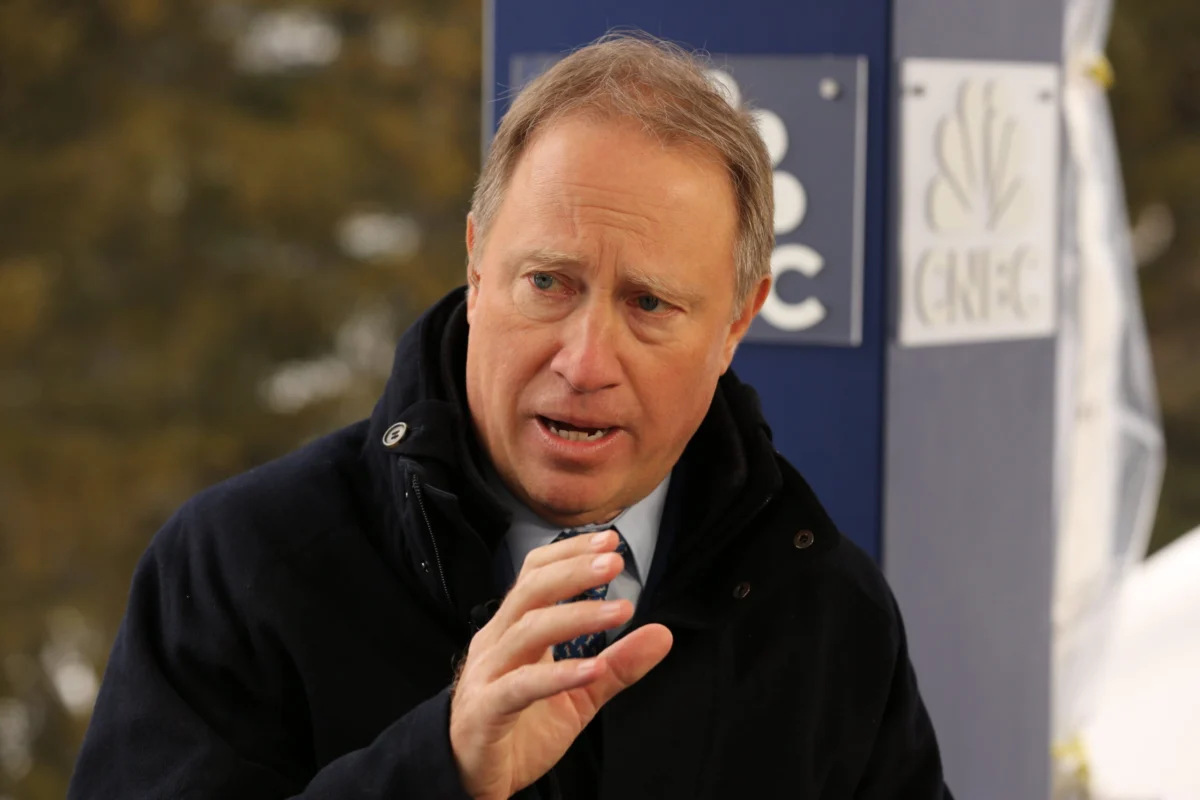
Morgan Stanley CEO Ted Pick provided valuable insights into the broader economic landscape and the forces currently shaping global markets during an interview with CNBC’s Leslie Picker on Wednesday. Pick articulated that the global economy is presently subject to two powerful, often conflicting, forces: the significant boost derived from the artificial intelligence (AI) buildout and the drag imposed by escalating geopolitical strife.
Pick elaborated on the AI phenomenon, describing it as a powerful, positive narrative driving innovation, investment, and productivity gains across various sectors. The demand for advanced computing, data centers, and AI-driven solutions is creating new opportunities for capital allocation, M&A activity, and technological advancements, which can directly benefit investment banks through advisory services, capital raising, and trading related to technology stocks. However, he stressed that this positive momentum is continuously being challenged by the weight of geopolitical tensions.
The CEO noted a palpable shift in market sentiment beginning in early September, where concerns surrounding overseas conflicts, persistent inflationary pressures, and surging bond yields began to significantly slow activity across Wall Street. These factors created a more cautious environment, impacting everything from corporate deal-making to investor appetite for risk. The interaction of the AI phenomenon and geopolitics, Pick stated, has been "the dominant reality the whole year." He expressed a desire for the positive narrative of AI to prevail, contingent on achieving "some control over the geopolitics." This statement underscores the interconnectedness of global economics and politics, and how geopolitical stability is increasingly becoming a prerequisite for sustained economic growth and market confidence.
Looking ahead, Pick conveyed a "cautiously optimistic" outlook for markets in the fourth quarter. This measured optimism suggests that while he sees potential for continued strength in certain areas, particularly those benefiting from the AI trend, he remains acutely aware of the persistent risks. Factors contributing to this cautious optimism could include the potential for central banks to signal an end to rate hikes, a stabilization of inflation, or even a de-escalation of some geopolitical tensions. Conversely, the "cautious" element reflects ongoing concerns about sticky inflation, the potential for further interest rate increases, the unpredictable nature of global conflicts, and the looming possibility of economic slowdowns in major economies.
Broader Industry Context and Implications
Morgan Stanley’s third-quarter performance, particularly its stellar equities results, places it within a complex narrative for the broader financial industry in 2023. Many large investment banks have grappled with a challenging environment for investment banking and fixed income, as corporate clients have been hesitant to engage in major M&A or capital markets activities due to economic uncertainty. Those banks with strong trading franchises, especially in equities, have generally fared better in this volatile climate, as market fluctuations often spur increased trading volumes and client activity. Morgan Stanley’s diversified business model, with a significant presence in wealth management (though not the primary focus of this earnings report), also provides a degree of insulation against the more cyclical institutional securities business.
The slowdown in investment banking reflects broader economic indicators. A decrease in IPOs and underwriting activity often signals a lack of confidence among companies to tap public markets and a general ‘wait-and-see’ approach by investors. Conversely, the slight uptick in advisory revenue, even as overall investment banking remains subdued, could suggest that strategic M&A, particularly for companies seeking to consolidate or acquire new technologies (like AI capabilities), is still occurring, albeit at a slower pace and for more compelling strategic reasons.
The FICC division’s decline across major banks, including Morgan Stanley, highlights the impact of interest rate policy. As central banks globally tightened monetary policy to combat inflation, bond markets experienced significant shifts, leading to less predictable trading environments and often lower client activity in interest rate products. Commodity markets also faced volatility due to geopolitical events and supply chain disruptions, further impacting trading revenues.
Looking forward, the interaction between technological advancement (AI) and geopolitical stability will remain a critical determinant of financial market performance. Banks like Morgan Stanley are strategically positioned to capitalize on the AI boom through technology-focused advisory, capital raising, and trading services. However, their ability to fully harness these opportunities will depend heavily on the global political and economic environment. Continued geopolitical instability, trade tensions, or unexpected economic shocks could easily overshadow the benefits of technological progress, creating a persistent drag on overall market activity and corporate confidence. The "cautiously optimistic" stance articulated by CEO Ted Pick encapsulates this delicate balance, reflecting a deep understanding of the forces shaping both the bank’s immediate future and the broader global economy.
