

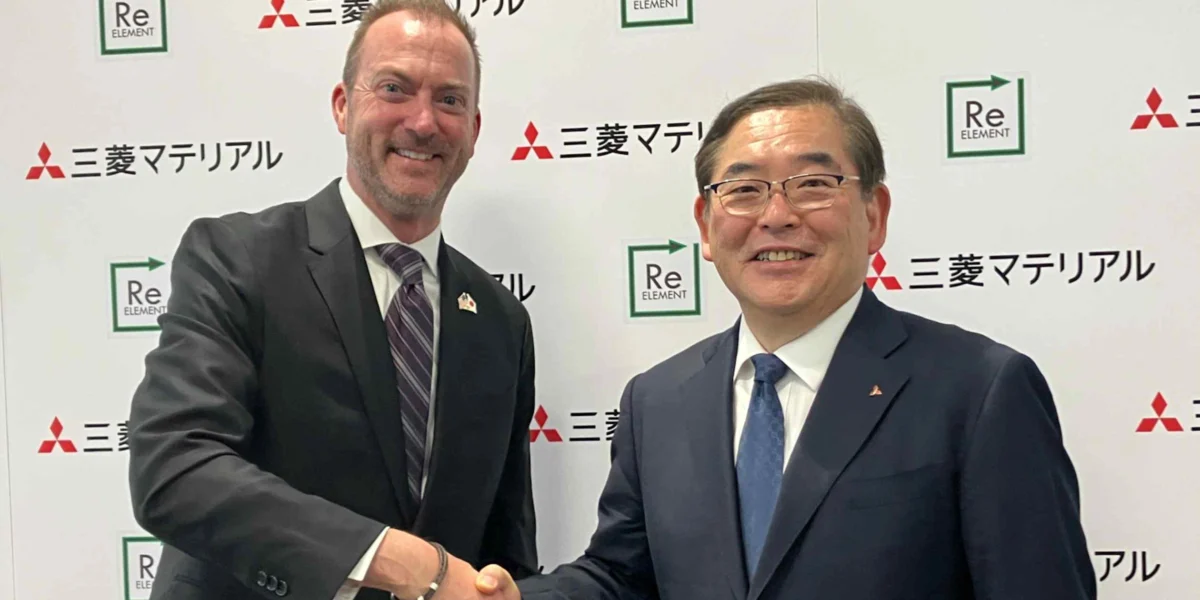
TOKYO – Mitsubishi Materials Corporation announced on Tuesday its significant investment in a U.S. company specializing in the recovery of rare earth elements from industrial waste, marking a determined second foray into this critical sector. The move underscores the Japanese industrial conglomerate’s strategic pivot towards advanced recycling technologies, aiming to leverage innovative refining processes that promise to significantly reduce the cost of obtaining these vital materials. This investment signals a renewed commitment by Mitsubishi Materials to secure a stable and cost-effective supply chain for rare earths, elements indispensable for a vast array of modern technologies, from consumer electronics and renewable energy infrastructure to advanced defense systems.
The announcement, made in Tokyo with Mitsubishi Materials CEO Tetsuya Tanaka and ReElement Chief Financial Officer Kirk Taylor present at the signing, highlights a growing global imperative to diversify sources of rare earth supply and reduce reliance on geographically concentrated production. For Mitsubishi Materials, this endeavor represents a calculated effort to overcome past challenges and establish a robust position in the burgeoning rare earth recycling market. The company’s previous attempts to enter this field underscore the complexities and strategic importance it places on securing a sustainable supply of these strategic metals.
Strategic Rationale and Market Context
The global demand for rare earth elements (REEs) has surged in recent decades, driven by the rapid expansion of high-tech industries. These 17 metallic elements, including neodymium, praseodymium, dysprosium, and terbium, possess unique magnetic, catalytic, and phosphorescent properties that make them crucial components in permanent magnets for electric vehicles (EVs) and wind turbines, advanced electronics, and sophisticated defense applications. However, the overwhelming majority of global rare earth production and processing has historically been dominated by China, creating significant supply chain vulnerabilities and geopolitical concerns for importing nations.
This concentration of supply has spurred a global race to develop alternative sources and recycling capabilities. Japan, in particular, has been acutely aware of its dependence on foreign rare earth imports, making the development of domestic and allied recycling infrastructure a national security and economic priority. Mitsubishi Materials’ investment in ReElement, a U.S.-based firm, aligns with this broader geopolitical and economic trend, seeking to build resilience and foster technological innovation outside of traditional supply channels.
The economic feasibility of rare earth recycling has long been a significant hurdle. Traditional methods have often been energy-intensive and costly, making it difficult to compete with the price of primary extraction, especially when Chinese producers benefit from economies of scale and, at times, lower environmental standards. ReElement’s purported advanced refining technology is therefore central to Mitsubishi Materials’ strategy, offering the potential to unlock the economic viability of recycling by significantly lowering operational costs and increasing the purity and yield of recovered rare earths.
ReElement: A Technological Edge
While specific details of ReElement’s proprietary technology remain under wraps for competitive reasons, the company has indicated its processes are designed for greater efficiency and environmental sustainability. This approach likely involves sophisticated chemical separation and purification techniques that can effectively extract REEs from complex industrial waste streams, such as spent magnets from electronics, batteries, and other high-tech components. The ability to process diverse waste streams and achieve high recovery rates is crucial for making rare earth recycling a scalable and economically attractive proposition.
ReElement’s focus on industrial waste is particularly significant. Such waste often contains concentrated amounts of REEs, making it a potentially richer source than consumer-level e-waste, which requires more extensive pre-processing. By targeting these industrial byproducts, ReElement can potentially streamline its operations and achieve higher yields, further enhancing its cost-competitiveness.
Chronology of Engagement and Strategic Evolution
Mitsubishi Materials’ renewed focus on rare earth recycling is not its first engagement with the sector. The company has a long history in materials science and processing, including involvement in the rare earth industry in the past. However, previous ventures may have faced economic headwinds or technological limitations. This second attempt, characterized by a significant investment in a specialized U.S. firm, suggests a more targeted and technologically driven approach.
The timeline leading to this announcement likely involved extensive due diligence, technical assessments of ReElement’s capabilities, and negotiations on investment terms. Mitsubishi Materials would have evaluated ReElement’s pilot projects, intellectual property, and the potential for commercial scalability. The decision to invest now, in 2026, reflects the confluence of several factors: the escalating strategic importance of REEs, advancements in recycling technology, and a more favorable market environment for sustainable sourcing solutions.
The partnership with a U.S. company also signals a broader trend of international collaboration in critical mineral supply chains, particularly between countries seeking to de-risk their dependencies on single sources. This collaboration could facilitate the development of a North American-based rare earth ecosystem, from collection and processing to downstream applications.
Supporting Data and Market Projections
The global rare earth market is projected to grow substantially in the coming years. According to various market research reports, the demand for rare earths is expected to increase at a compound annual growth rate (CAGR) of over 6% from 2023 to 2030. This growth is predominantly fueled by the burgeoning electric vehicle and renewable energy sectors. For instance, permanent magnets used in EV motors typically contain significant quantities of neodymium and dysprosium, while wind turbine generators also rely heavily on these powerful magnets.
The recycling market, though nascent, is poised for even more rapid expansion. As the volume of end-of-life products containing rare earths increases, so too will the potential for recycled supply. Projections suggest that by 2030, recycled rare earths could account for a significant portion of the global supply, though estimates vary widely depending on technological advancements and policy support. The environmental benefits of recycling are also substantial, reducing the need for new mining operations, which can have significant ecological impacts.
Mitsubishi Materials’ investment is a direct response to these market dynamics and the pressing need for diversified and sustainable rare earth sources. By backing a company with advanced recycling technology, Mitsubishi Materials aims to capture a share of this growing market and secure a more predictable and environmentally responsible supply of critical materials for its own operations and for its customers.
Official Responses and Broader Implications
The announcement from Mitsubishi Materials has been met with keen interest from industry observers and policymakers alike. While direct reactions from ReElement are not detailed in the initial report, the CFO’s presence at the signing suggests a positive and collaborative outlook. For ReElement, the investment from a major industrial player like Mitsubishi Materials provides crucial capital, technical expertise, and market access, enabling it to scale its operations and accelerate the commercialization of its technology.
For Japan, this development reinforces its strategy to build a more resilient rare earth supply chain. It aligns with government initiatives aimed at fostering domestic recycling capabilities and supporting international partnerships. The success of this venture could serve as a model for other Japanese companies looking to engage in critical mineral recycling.
The broader implications of this investment are significant:
- Supply Chain Diversification: It contributes to reducing the global reliance on a single dominant producer, enhancing supply chain security for nations and industries that depend on rare earths.
- Technological Advancement: It signals a commitment to innovation in recycling processes, potentially leading to more efficient, cost-effective, and environmentally friendly methods for rare earth recovery.
- Circular Economy: It promotes the principles of a circular economy by transforming industrial waste into valuable resources, reducing landfill burden and the environmental impact of mining.
- Geopolitical Influence: It could shift the geopolitical landscape of rare earth supply, empowering nations with advanced recycling capabilities and reducing the leverage of traditional producers.
- Economic Opportunities: It opens new avenues for economic growth and job creation in the advanced materials and recycling sectors, particularly in regions that can establish robust collection and processing infrastructure.
Mitsubishi Materials’ strategic investment in ReElement represents a forward-looking move in a critical global industry. By betting on advanced recycling technology, the company is not only seeking to secure its own supply of essential materials but also contributing to a broader global effort to create a more sustainable, diversified, and resilient rare earth supply chain for the technologies of today and tomorrow. The success of this venture will be closely watched as a bellwether for the future of rare earth recycling and its role in the global economy.
