

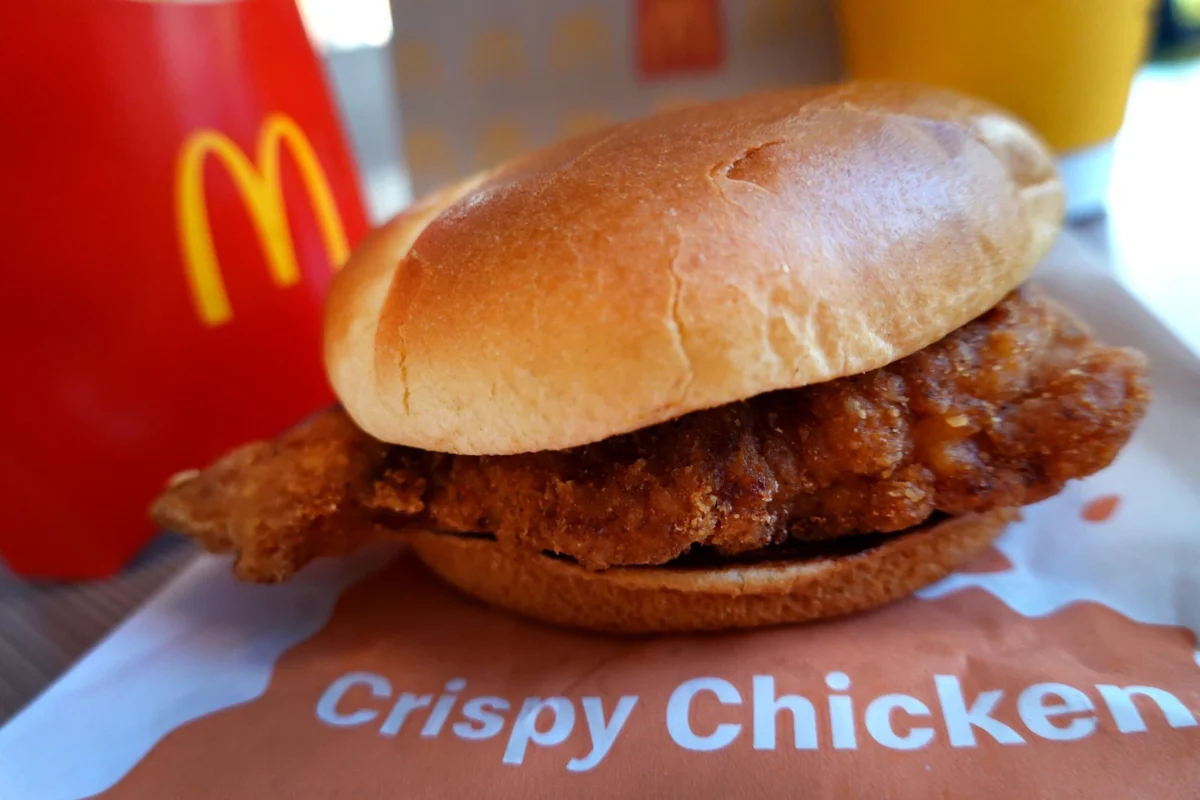
McDonald’s, the global fast-food behemoth, is embarking on an ambitious strategic pivot, banking heavily on expanding its footprint in the chicken and beverage sectors to catalyze its next significant phase of growth. This bold initiative, unveiled during its September investor day, targets an additional 1.5 percentage points of global market share in both categories by 2030, a clear signal of the company’s intent to broaden its revenue streams beyond its historically dominant beef offerings. However, this strategic redirection is unfolding against a backdrop of intense competition, with new consumer spending data suggesting formidable challenges from established rivals who specialize in these very segments, indicating that McDonald’s faces an uphill battle to capture the desired market share.
The Strategic Imperative: Beyond Beef
CEO Chris Kempczinski articulated the rationale behind this strategic shift, highlighting the vast market potential within these categories. "Chicken is a $130 billion category. We have about a 20% share of chicken. Beverages is about a $230 billion category. We have a 10% share of beverages," Kempczinski stated, emphasizing the considerable headroom for growth compared to the more saturated $50 billion global beef market, where McDonald’s already commands a substantial 40% share. This perspective underscores a fundamental recognition within McDonald’s leadership: while beef remains central to its identity, sustained, high-magnitude growth necessitates venturing more aggressively into adjacent, high-volume segments.
The plan, dubbed "Accelerating the Arches," is not merely about introducing new menu items but represents a comprehensive, long-term vision to redefine McDonald’s as a leader across multiple fast-food categories. It encompasses significant investments in restaurant remodels, enhanced employee training, and sophisticated digital engagement strategies, all aimed at creating a more compelling and efficient customer experience across its global network of over 40,000 restaurants. The investor day presentation detailed a multi-pronged approach, including leveraging its massive scale for supply chain efficiencies, refining its operational model to handle increased menu complexity, and tailoring its offerings to local tastes across diverse international markets.
Navigating a Crowded Competitive Landscape
Despite McDonald’s formidable brand recognition and operational scale, the path to achieving its chicken and beverage ambitions is fraught with competitive obstacles. Exclusive data shared by Consumer Edge, a firm that meticulously tracks credit and debit card transactions, paints a revealing picture of the current competitive dynamics. The data indicates that many of the restaurant chains successfully attracting spending from McDonald’s existing customer base are, in fact, specialists in the very categories McDonald’s is targeting.
In the third quarter, among McDonald’s diners, Chick-fil-A emerged as the most significant gainer in the limited-service restaurant segment, capturing an additional 0.58 percentage points of spending compared to the previous year. This performance highlights Chick-fil-A’s enduring appeal, driven by its consistent product quality, renowned customer service, and highly efficient drive-thru operations, which have cultivated a fiercely loyal customer base. Chick-fil-A’s focused menu, almost exclusively centered on chicken, allows it to optimize its operations and deliver a premium experience, a stark contrast to McDonald’s broader, more diversified menu.
The beverage sector presents an equally challenging environment. The data reveals a significant shift in spending towards specialized coffee businesses. Drive-thru-only chain 7 Brew added 0.4 percentage points of spending from McDonald’s customers, demonstrating the burgeoning demand for convenient, quality coffee options. Global coffee giant Starbucks, alongside rapidly expanding regional players Dutch Bros. Coffee and the established Dunkin’, also ranked among the top 10 gainers. Collectively, these four coffee chains amassed an impressive 0.88 percentage points of spending share, signaling a clear consumer preference for dedicated coffee destinations over generalist fast-food options for their beverage needs. This trend underscores the importance of a strong, specialized beverage platform, an area where McDonald’s McCafé has historically faced intense scrutiny regarding consistency and perception.
While McDonald’s undeniably remains the largest individual chain in customers’ overall limited-service restaurant spending, its share experienced a discernible decline from the previous year. Intriguingly, within the burger segment, Restaurant Brands International-owned Burger King managed to gain 0.24 percentage points, marking the largest increase among burger chains. This suggests a complex interplay of consumer choices, where value propositions, specific promotional campaigns, or even localized menu innovations might be swaying diner preferences. Michael Gunther, senior vice president at Consumer Edge, succinctly summarized the prevailing market condition: "There’s a big battle for a smaller amount of restaurant spend as people become more selective in what they spend." This environment necessitates not just offering new products but truly compelling reasons for consumers to choose McDonald’s over specialist alternatives.
Historical Context and the Chicken Sandwich Wars
McDonald’s entry into the intensified chicken market is not without precedent, nor is it a simple undertaking. The company has a long history with chicken, dating back to the introduction of Chicken McNuggets in the early 1980s, a revolutionary product that diversified its menu beyond beef. The enduring popularity of the McChicken sandwich further solidified its presence. However, the landscape has dramatically shifted, particularly in the wake of the "Chicken Sandwich Wars" that ignited in 2019. Popeyes’ introduction of its wildly popular fried chicken sandwich sent shockwaves through the industry, forcing competitors like Chick-fil-A, KFC, and Wendy’s to innovate or refine their own offerings.
McDonald’s officially entered this fray with its Crispy Chicken Sandwich in 2021, a product designed to compete directly with the market leaders. While initially met with strong sales, sustaining that momentum against deeply entrenched and highly specialized chicken brands has proven challenging. The planned "next chicken platform," which, according to Bernstein analyst Danilo Gargiulo, includes "hand-breaded chicken and grilled chicken menu items," signifies McDonald’s intention to move beyond a single sandwich offering to a more comprehensive and differentiated chicken portfolio. This strategy aims to cater to diverse tastes and preferences, from classic fried chicken enthusiasts to those seeking healthier grilled options. However, developing and rolling out these items across a global chain of McDonald’s scale involves immense logistical, supply chain, and operational complexities.
The Evolving Beverage Market and McCafé’s Role
Similarly, McDonald’s foray into the advanced beverage market has a significant history. The launch of McCafé in 2009 was a direct strategic move to compete with Starbucks and Dunkin’, offering an array of espresso-based drinks, iced coffees, and smoothies at more accessible price points. McCafé has seen varying degrees of success, largely dependent on regional execution and consumer perception. While it has broadened McDonald’s beverage offerings beyond traditional sodas and basic coffee, it has struggled to carve out a distinct identity against the premium positioning of Starbucks or the everyday convenience of Dunkin’.
The current market trend, as indicated by the Consumer Edge data, shows a clear preference for specialized drive-thru coffee chains like 7 Brew and Dutch Bros., which offer speed, customization, and a distinct brand experience. These newer players often focus on high-energy interactions and a diverse menu of customizable drinks, appealing to a younger demographic. For McDonald’s, the challenge in beverages extends beyond merely offering a wide selection; it involves ensuring consistent quality, efficient service even during peak hours, and marketing that resonates with consumers who increasingly view coffee and specialty drinks as a daily ritual rather than just an add-on to a meal. The company’s goal to gain 1.5 percentage points of market share by 2030 implies a need for significant innovation not just in product but in the entire McCafé experience, potentially integrating more sophisticated equipment, barista training, and a dedicated marketing push.
Operational Hurdles and Analyst Scrutiny
The ambitious nature of McDonald’s growth strategy has not escaped the notice of Wall Street analysts, who are scrutinizing the feasibility and financial implications of such a significant pivot. Bernstein analyst Danilo Gargiulo expressed reservations following the investor day, noting that "U.S. beverage launches had not generated enough sales to offset broader weakness," and that the company’s next chicken platform was "further away than he expected." Gargiulo also highlighted the substantial financial commitment required, stating, "The scale of investment required to deliver [the company’s growth plan] McDonald’s Next was above our expectations and introduces additional pressure on near-term earnings." He maintained a market perform rating on the stock with a $295 price target, a figure that stood in contrast to the stock’s closing price of around $235 on the Friday following the investor day.
These concerns underscore several operational hurdles. Expanding into new categories requires significant capital expenditure for new kitchen equipment, training for a vast workforce, and potentially reconfiguring restaurant layouts to accommodate specialized preparation areas. Moreover, managing increased menu complexity can strain operational efficiency, potentially slowing down service times and impacting the core fast-food promise of speed and convenience. McDonald’s global supply chain, while robust, will also need to adapt to sourcing new ingredients and maintaining quality standards across millions of new chicken and beverage items annually.
Signs of Adaptation and Future Outlook
Despite the challenges and analyst skepticism, McDonald’s executives have pointed to glimmers of improvement. CEO Chris Kempczinski noted signs of strengthening sales towards the end of the third quarter. This sentiment is corroborated by Consumer Edge data, which showed a narrowing of McDonald’s year-over-year spending share declines across every income group in September. This suggests that while the overall competitive landscape remains fierce, McDonald’s efforts, including potential value offerings or specific promotional campaigns, may be beginning to resonate with some segments of its customer base. The company’s digital investments, including its loyalty program and mobile ordering capabilities, are also key components of its strategy, designed to enhance convenience and personalize the customer experience, which could drive repeat business in both existing and new categories.
The overarching implications of McDonald’s strategy are far-reaching. For the fast-food industry, it signals a renewed intensity in the battle for market share, pushing competitors to innovate further in their own chicken and beverage offerings. For consumers, it promises a wider array of choices and potentially higher quality options from a brand historically associated with a more limited menu. However, the success of this monumental undertaking hinges on McDonald’s ability to not only develop compelling products but also to execute flawlessly at scale, maintain consistent quality, and effectively communicate its new value proposition to a discerning public. The journey to gain 1.5 percentage points in two highly competitive global markets by 2030 will require sustained innovation, substantial investment, and a profound shift in consumer perception, making it one of the most significant strategic endeavors in the company’s recent history. The coming years will reveal whether the Golden Arches can truly become a dominant force in chicken and beverages, or if the specialists will continue to hold their ground.
