

TOKYO — Japan’s Ministry of Defense is poised to adopt the foundational technology of NTT’s groundbreaking Innovative Optical Wireless Network (IOWN) to revolutionize communication across its Self-Defense Forces (SDF) personnel and bases nationwide. This strategic move signals a significant leap forward in Japan’s defense modernization efforts, aiming to create a robust and highly responsive network capable of seamlessly integrating advanced artificial intelligence (AI) for enhanced operational effectiveness. The integration of IOWN technology is expected to equip Japan’s defense apparatus with unprecedented data processing and analytical capabilities, crucial for navigating the increasingly complex and technologically driven geopolitical landscape of the 21st century.
The Imperative for Next-Generation Defense Networks
The decision to adopt IOWN technology stems from a growing recognition within Japan’s defense establishment of the limitations of current communication infrastructures in supporting the demands of modern warfare. As military operations become increasingly data-intensive, relying on vast streams of information from diverse sources such as radar systems, sophisticated sensors, and autonomous drones, the need for high-speed, low-latency, and secure communication channels is paramount. Traditional networks often struggle to handle the sheer volume and velocity of this data, creating bottlenecks that can impede real-time decision-making and strategic agility.
The integration of AI into defense systems promises to unlock new levels of efficiency and effectiveness, from predictive maintenance and logistics optimization to advanced threat detection and autonomous targeting. However, the successful deployment of these AI capabilities is intrinsically linked to the underlying communication network’s ability to ingest, process, and transmit massive datasets with unparalleled speed and reliability. IOWN, with its focus on optical technology and advanced computing, is designed precisely to meet these stringent requirements, offering a paradigm shift in network performance.
Understanding IOWN: A Technological Leap
NTT’s Innovative Optical Wireless Network (IOWN) is not merely an incremental upgrade to existing telecommunications infrastructure; it represents a fundamental reimagining of how data is transmitted and processed. At its core, IOWN leverages the power of light-speed communication through optical fiber and advanced wireless technologies, aiming to achieve significantly higher bandwidth, lower latency, and greater energy efficiency compared to conventional electrical networks.
Key technological pillars of IOWN include:
- All-Photonic Networks (APN): This aims to transmit data entirely through light signals from end-to-end, minimizing the need for optoelectronic conversions that introduce latency and energy loss. This enables near-instantaneous data transfer.
- Cognitive Foundation: IOWN incorporates AI and machine learning at its core, allowing the network to intelligently manage traffic, predict potential issues, and dynamically optimize its performance based on real-time demand and environmental factors.
- Advanced Computing: The initiative envisions a distributed computing architecture, bringing processing power closer to the data source, thereby reducing the reliance on centralized data centers and further minimizing latency for critical applications.
The implications of these advancements for defense are profound. For instance, real-time analysis of data from a swarm of drones or a network of distributed sensors could enable immediate identification of enemy movements or anomalies, allowing for rapid response and strategic adjustments. The low latency also means that commands sent to remote autonomous systems, such as unmanned aerial vehicles (UAVs) or robotic ground units, will be executed with near-perfect synchronicity, crucial for coordinated operations.
Strategic Integration and Timeline
The adoption of IOWN technology by the Ministry of Defense is not an immediate, overnight deployment but rather a phased strategic integration. While specific timelines remain under wraps due to national security considerations, preliminary discussions and development phases have been underway for some time. Nikkei’s reporting indicates that the core communication infrastructure will be the initial focus of integration, connecting SDF personnel and bases across Japan.
The process will likely involve:
- Pilot Programs and Testing: Initial phases will involve rigorous testing of IOWN components within controlled defense environments to assess their performance, security, and compatibility with existing defense systems.
- Infrastructure Rollout: A gradual deployment of IOWN-enabled communication lines and equipment will commence, prioritizing critical command and control centers, forward operating bases, and sensor deployment sites.
- AI Integration: Concurrently, the ministry will work on developing and integrating AI algorithms designed to leverage the enhanced network capabilities. This includes systems for data fusion, threat analysis, intelligence gathering, and decision support.
- Personnel Training: A significant undertaking will be the training of SDF personnel to effectively utilize the new systems and understand the capabilities of AI-powered operations.
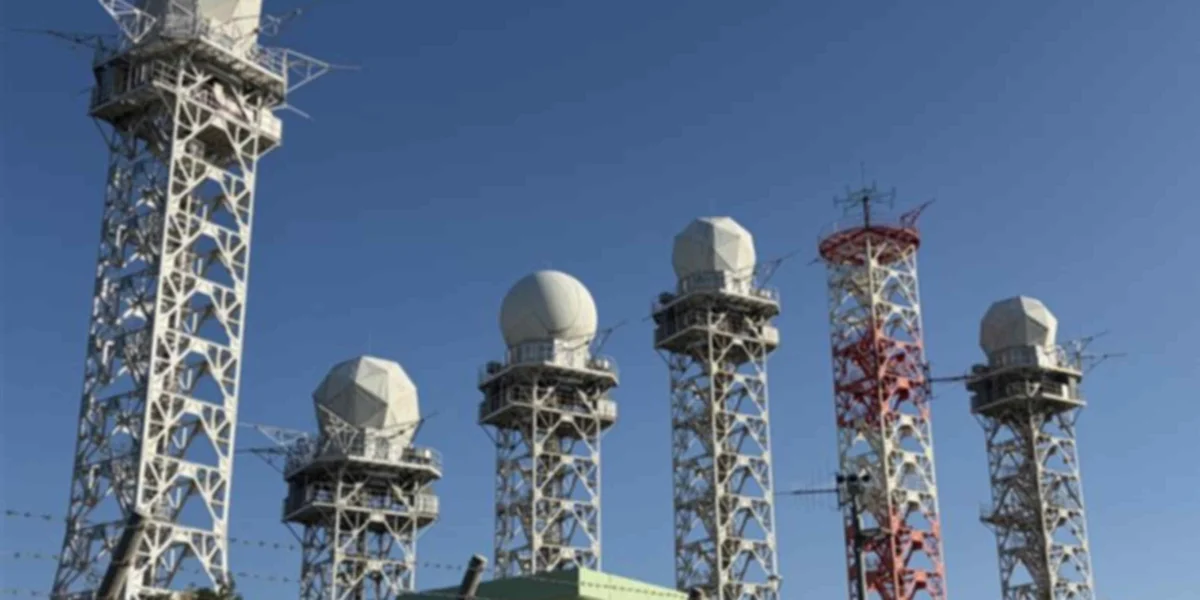
The visual accompanying the report, depicting a radar system in Okinawa, underscores the type of frontline defense assets that will benefit from this upgrade. Okinawa, a strategically vital prefecture with a significant U.S. military presence and a key location in Japan’s defense posture in the East China Sea, is likely to be an early beneficiary of enhanced communication and data analysis capabilities. The radar, along with other sensors and drones, will feed data into a network designed for immediate AI analysis, enabling faster detection and response to potential incursions or threats in the region.
Supporting Data and the Geopolitical Context
Japan’s defense spending has seen a consistent upward trend in recent years, reflecting a proactive approach to regional security challenges. In its fiscal year 2023 budget, Japan allocated a record ¥5.4 trillion (approximately $40 billion) to defense, with further increases anticipated. This surge in investment is driven by growing concerns over China’s assertive military activities in the East China Sea and the Taiwan Strait, as well as North Korea’s missile development programs.
The implementation of IOWN technology aligns with Japan’s broader defense strategy, which emphasizes technological superiority, interoperability with allies (particularly the United States), and the development of a more agile and resilient defense force. The ability to process and analyze vast amounts of sensor data in near real-time is critical for maintaining situational awareness in a contested environment. For instance, tracking the trajectory of multiple ballistic missiles simultaneously, identifying the origins of maritime incursions, or discerning the intent behind complex aerial maneuvers all require sophisticated data processing that IOWN can facilitate.
Furthermore, the integration of AI is seen as a force multiplier, allowing Japan to maximize the effectiveness of its limited resources. AI-powered systems can automate tasks that would otherwise require significant human oversight, freeing up personnel for more complex strategic roles. This is particularly relevant as Japan faces demographic challenges, including an aging population and a declining birthrate, which can impact military recruitment and retention.
Potential Implications and Future Outlook
The adoption of IOWN technology by the Ministry of Defense carries significant implications for Japan’s national security and its role in regional and global affairs.
- Enhanced Deterrence: A more capable and responsive defense network, powered by AI, can bolster Japan’s deterrence posture by presenting a more formidable and unpredictable adversary. The ability to rapidly detect, analyze, and respond to threats can dissuade potential aggressors.
- Interoperability with Allies: As Japan deepens its security cooperation with the United States and other allies, a common, high-performance communication infrastructure becomes increasingly vital. IOWN’s advanced capabilities could facilitate more seamless data sharing and joint operations with partner nations.
- Technological Leadership: By pioneering the integration of advanced communication and AI technologies into its defense apparatus, Japan positions itself as a leader in defense innovation. This could lead to export opportunities for Japanese defense technology and further solidify its technological prowess.
- Cybersecurity Challenges: While IOWN promises enhanced security, any advanced networked system is also a potential target for cyberattacks. The ministry will need to invest heavily in robust cybersecurity measures to protect this critical infrastructure from state-sponsored or other malicious actors.
While NTT has been a driving force behind IOWN, it is plausible that other technology firms and defense contractors will be involved in the implementation and integration phases. The successful deployment will require close collaboration between civilian technology developers and the military, a common trend in modern defense procurement.
The Ministry of Defense’s embrace of IOWN technology marks a pivotal moment in its modernization journey. By investing in next-generation communication and AI capabilities, Japan is signaling its commitment to maintaining a robust defense posture and adapting to the evolving demands of the global security environment. This strategic adoption is not merely about upgrading equipment; it is about fundamentally transforming how Japan defends itself and contributes to regional stability in the years to come. The promise of an AI-driven defense, enabled by the speed and capacity of IOWN, positions Japan at the forefront of military technological advancement.
