

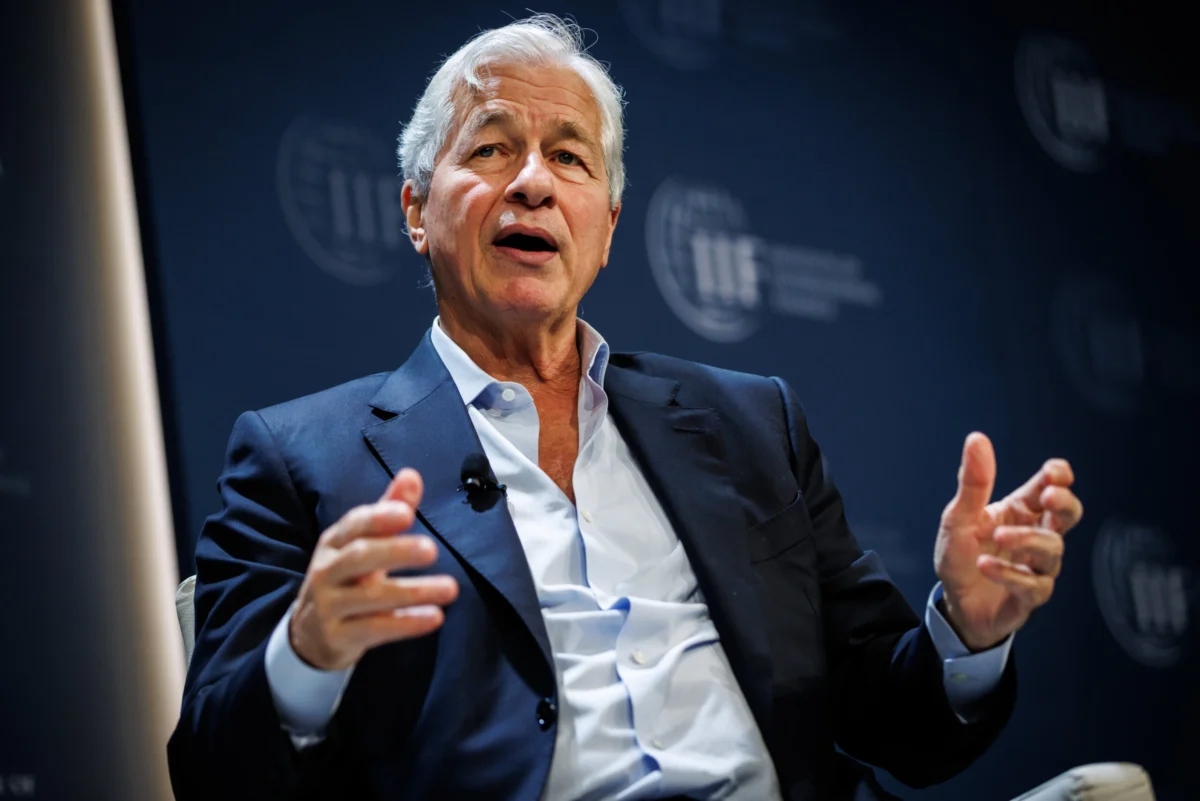
Jamie Dimon, the influential Chief Executive Officer of JPMorgan Chase & Co., delivered a series of striking observations at the 2025 IIF annual membership meeting in Washington, D.C., suggesting that the ongoing conflict with Iran, despite its immediate volatility, could paradoxically enhance the long-term prospects for lasting peace in the Middle East. Speaking on Tuesday, October 16, 2025, Dimon’s commentary, shared during an interview with Palantir executive and former Congressman Mike Gallagher, extended beyond regional dynamics to encompass deep frustrations with American industrial policy, its strategic dependence on China, and the broader implications for global stability. His remarks, coming from the head of the world’s largest bank by market capitalization, offered a candid and often contrarian perspective on the intricate web of geopolitical and economic forces shaping the contemporary world.
Dimon’s Contrarian View on Middle East Peace
Dimon articulated a nuanced position regarding the recent escalation in the Middle East, positing that while the "Iran war" undeniably introduces significant short-term risks and uncertainty, it may, in a long-term analysis, foster an environment conducive to peace. "I think the Iran war makes it a better chance in the long run – it’s probably riskier in the short run, because we don’t know the outcome of it," Dimon stated. His optimism, or rather, his strategic calculation, hinges on a perceived convergence of interests among key regional and international players. According to Dimon, nations such as Saudi Arabia, the United Arab Emirates, Qatar, the United States, and Israel are increasingly aligned in their desire for permanent stability in the Middle East. He emphasized a notable shift in attitude among Persian Gulf states, asserting that their willingness to pursue this direction is markedly different from two decades prior. "The attitude is not what the attitude was 20 years ago," Dimon observed. "They all want it."
This desire for peace, Dimon argued, is intrinsically linked to economic imperatives. Gulf nations, in particular, have embarked on ambitious economic diversification plans, such as Saudi Arabia’s Vision 2030 and the UAE’s various strategic initiatives, all of which rely heavily on attracting substantial foreign direct investment (FDI). Such investment, crucial for building non-oil economies, advanced infrastructure, and technological hubs, is profoundly sensitive to geopolitical instability. Dimon underscored this by stating, "They can’t have neighbors lobbing ballistic missiles into their data centers." The need for a stable, predictable environment for capital to flow freely, for businesses to operate without fear of disruption, and for long-term development projects to flourish, is, in Dimon’s view, a powerful motivator pushing these nations towards genuine and lasting regional accord.
The Genesis of the "Iran War": A Recent Escalation
The conflict Dimon referenced began just last month, in September 2025, with a series of significant military actions. The United States and Israel launched hundreds of coordinated strikes against targets within Iran, marking a dramatic escalation in an already volatile region. A pivotal moment in this offensive was a strike that resulted in the death of Iran’s supreme leader, an event that sent shockwaves across the globe and significantly heightened fears of a broader regional conflagration. The targets of these strikes reportedly included critical military infrastructure, command and control centers, missile launch sites, and elements of Iran’s nuclear program infrastructure, though official confirmation on the latter remains contentious.
The immediate repercussions of this conflict were acutely felt in global markets. Oil prices surged dramatically, with Brent crude climbing over 15% in the initial days following the strikes, reaching levels not seen in over a decade, as concerns mounted over potential supply disruptions from the Strait of Hormuz, a critical chokepoint for global oil shipments. Energy analysts warned of potential stagflationary pressures if the conflict prolonged. Global stock markets experienced significant volatility, with initial sharp declines reflecting widespread investor anxiety.
Amidst this turmoil, President Donald Trump, through a social media post, claimed that the sides "had talked" about a "complete and total resolution" to the war. This statement provided a brief respite for markets, with stocks climbing on Monday, October 13, 2025, on hopes of de-escalation. However, this optimism was short-lived, as Iranian officials swiftly and unequivocally denied that any such talks were underway, leading to a renewed downturn in market sentiment and underscoring the deep distrust and communication chasm between the warring parties. This rapid succession of claims and denials highlighted the fragility of diplomatic efforts and the pervasive uncertainty surrounding the conflict’s trajectory.
Economic Underpinnings: The Lure of Stability and FDI
The economic rationale underpinning Dimon’s assessment of the Middle East’s potential path to peace is deeply rooted in the ambitious transformation agendas of the Gulf Cooperation Council (GCC) states. For years, these nations have been aggressively pursuing economic diversification strategies aimed at reducing their historical dependence on hydrocarbon revenues. Initiatives like Saudi Arabia’s Vision 2030, the UAE’s various strategic plans, and Qatar’s National Vision 2030 are designed to foster vibrant, knowledge-based economies driven by technology, tourism, logistics, and advanced manufacturing.
These blueprints critically depend on massive inflows of foreign direct investment. In 2024, for instance, Gulf nations collectively attracted an estimated $160 billion in FDI, funding megaprojects ranging from futuristic smart cities like NEOM in Saudi Arabia to advanced logistics hubs in Dubai and renewable energy parks across the region. However, such capital is inherently risk-averse. Investors scrutinize geopolitical stability, regulatory predictability, and the security of assets. The prospect of "neighbors lobbing ballistic missiles into their data centers," as Dimon vividly put it, directly undermines the core premise of these long-term investments.
The recent surge in oil prices, while providing a temporary revenue boost for oil-exporting nations, also carries the risk of deterring foreign investment in non-oil sectors by increasing operational costs and creating economic uncertainty. Moreover, the conflict could disrupt supply chains, escalate insurance premiums, and diminish investor confidence in the region’s long-term growth prospects. Dimon’s argument suggests that the economic imperative to secure FDI and ensure sustainable growth will ultimately compel regional powers to prioritize de-escalation and work towards a more stable security architecture, even if the current conflict seems counterintuitive to that goal. The financial stakes for these nations are simply too high to allow prolonged, destabilizing conflict to derail their transformative economic visions.
Regional Reactions and International Perspectives
While Dimon’s comments offer a financial titan’s analytical lens, the ground reality involves a complex interplay of diplomatic maneuvering, security concerns, and national interests. Inferred reactions from key regional actors largely align with a long-standing desire for stability, albeit through different means. Saudi Arabia, the UAE, and Qatar, while condemning the initial Iranian actions that led to the US-Israeli response, have historically sought to de-escalate regional tensions and promote dialogue, particularly as their economic futures depend on it. Their public statements, even prior to the current conflict, have often emphasized regional security cooperation and the importance of diplomatic solutions, albeit with a firm stance against perceived Iranian destabilization. The current crisis likely intensifies their internal deliberations on how to achieve this long-term stability without compromising their own security interests.
Israel, a primary target of Iranian proxy forces and a key participant in the recent strikes, prioritizes its national security above all else. Its engagement in the conflict is rooted in a determination to neutralize perceived existential threats from Iran. While the immediate focus remains on military objectives, the prospect of a "permanent peace" would undoubtedly be attractive if it guaranteed long-term security and integrated Israel more fully into a stable regional alliance structure, which has been a goal of recent normalization efforts.

Internationally, the United Nations Security Council convened emergency sessions following the escalation, with various member states calling for restraint, humanitarian aid, and an immediate cessation of hostilities. Major global powers, including the G7 nations, have expressed grave concerns about the potential for wider regional conflict and its devastating impact on global energy markets and international trade. While publicly advocating for de-escalation and diplomatic engagement, the underlying geopolitical currents, particularly regarding the Iranian nuclear program and its regional influence, complicate any easy resolution. Dimon’s perspective, therefore, finds resonance in the broad international desire for stability, even if the path he outlines is unconventional.
Dimon’s Broader Geopolitical Warnings: A ‘Deeply Frustrated’ America
Beyond the Middle East, Dimon’s address delved into a broader critique of America’s national security posture and its industrial base. He expressed profound frustration with domestic policies that he believes are setting the U.S. back, particularly in industries crucial for national security. "I am deeply frustrated… about our own policies in America, which set us back," Dimon asserted. He specifically cited the nation’s inability to adequately manufacture essential munitions as a glaring example of these systemic shortcomings.
Dimon drew a stark comparison to Europe, lamenting that the U.S. has become similarly "unable to move and change, change budgeting, change procurement." This refers to bureaucratic inertia, political stalemates, and a lack of strategic foresight that he believes hinders America’s capacity to adapt quickly to evolving geopolitical threats. The challenges in ramping up defense production, particularly for complex systems and munitions, have been evident in various global conflicts, underscoring the erosion of industrial capacity and the vulnerabilities introduced by decades of offshoring and just-in-time manufacturing.
It was partly this deep-seated concern that motivated JPMorgan Chase to launch a significant $1.5 trillion initiative last year, aimed at investing in key industries vital to national security and economic resilience. This initiative targets sectors such as advanced manufacturing, cybersecurity, critical infrastructure development (including renewable energy and data centers), and strategic technologies like quantum computing and artificial intelligence. The bank’s commitment reflects a broader recognition within the private sector that national security extends beyond traditional military might to encompass economic and technological sovereignty, and that a robust domestic industrial base is indispensable for both.
The China Challenge: Interdependence, Competition, and Taiwan
Dimon did not shy away from addressing the complex and increasingly fraught relationship between the United States and China, arguing that both the U.S. government and corporate sector "made a huge mistake" over the past few decades by allowing America to become overly dependent on China for critical components. This dependence spans a wide array of sectors, from rare earth minerals essential for advanced electronics and defense technologies, to active pharmaceutical ingredients, and key components for renewable energy infrastructure and consumer goods. The COVID-19 pandemic and subsequent supply chain disruptions starkly exposed these vulnerabilities, prompting a renewed focus on reshoring and friend-shoring supply chains.
While acknowledging China’s remarkable achievements in economic development and technological innovation, Dimon cautioned against complacency. "We should acknowledge [China has] done some things magnificently well," he said, highlighting China’s prowess in manufacturing batteries, electric vehicles, drones, and ships. This recognition serves as a call for the U.S. to critically assess its own industrial shortcomings and competitive gaps.
The ultimate geopolitical flashpoint, according to Dimon, remains China’s ambition regarding Taiwan. He urged Americans to operate under the assumption that a conflict over Taiwan "may one day arise," necessitating thorough preparation. The economic implications of such a conflict would be catastrophic, given Taiwan’s pivotal role in global semiconductor manufacturing. Dimon’s emphasis is not on seeking confrontation, but on strategic readiness: "We should look at our own shortcomings, and then be prepared, if they ever become an adversary, to face off against them."
Furthermore, Dimon connected the outcomes of current conflicts to the broader strategic competition with China. He stated that "winning the wars in Ukraine and Iran would be very helpful" in dealing with China. This suggests a view that successful resolution of these conflicts, particularly in demonstrating American resolve and capabilities, could serve as a deterrent and strengthen the U.S. negotiating position in the Indo-Pacific. The ability of the U.S. and its allies to manage and ultimately prevail in these complex regional challenges would project an image of strength and effectiveness that could influence Beijing’s strategic calculus regarding Taiwan and its regional ambitions.
Expert Analysis and Market Implications
Dimon’s comprehensive geopolitical outlook, particularly his contrarian stance on the Iran conflict, has prompted varied reactions from economic and geopolitical analysts. Some geopolitical strategists find merit in his argument about a long-term convergence of interests, noting that the sheer economic cost of sustained regional instability, coupled with evolving security threats, could indeed push reluctant actors towards a more pragmatic and stable framework. They point to historical precedents where conflicts, after periods of intense violence, have sometimes led to re-evaluations and new peace architectures.
However, many others caution against overly optimistic interpretations. They highlight the deep-seated ideological divides, historical grievances, and complex proxy networks that characterize the Middle East. They argue that the current conflict, especially with the killing of a supreme leader, could easily spiral into a wider, more protracted struggle, making any talk of imminent long-term peace premature. Economic models, while confirming the negative impact of instability on FDI, also suggest that the immediate disruptions to oil markets and trade routes could trigger a global economic slowdown, further complicating the path to recovery and stability.
Market participants, accustomed to Dimon’s authoritative pronouncements, are likely weighing his insights carefully. His comments underscore the increasing entanglement of finance with geopolitics, where the stability of global supply chains, energy prices, and investment climates are directly influenced by conflicts and policy decisions thousands of miles away. JPMorgan Chase, as a global financial behemoth, is uniquely positioned to observe these intricate connections, and Dimon’s willingness to articulate such broad, strategic views solidifies his role not just as a banking CEO, but as a significant voice in global affairs.
In conclusion, Jamie Dimon’s remarks at the IIF meeting offered a compelling, if provocative, assessment of the current global landscape. From his surprising optimism regarding long-term peace in the Middle East stemming from the present conflict, to his deep frustrations with America’s industrial preparedness and his urgent warnings about the strategic challenge posed by China, Dimon painted a picture of a world in profound flux. His analysis serves as a powerful reminder that in an increasingly interconnected era, economic prosperity and national security are inextricably linked, demanding foresight, adaptability, and a willingness to confront uncomfortable truths.
