

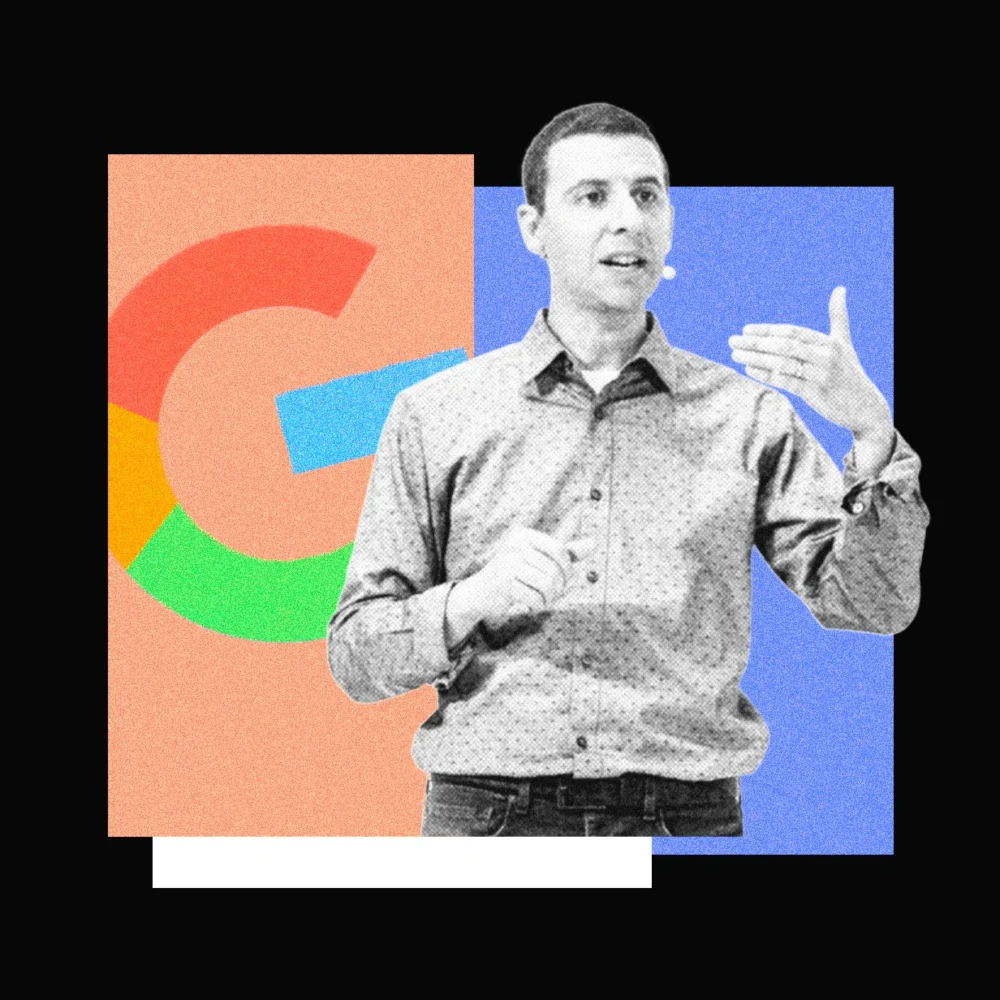
Google executives have shifted their stance on the integration of advertisements within its flagship artificial intelligence product, Gemini. While previously asserting no immediate plans for ad insertion, senior vice president of knowledge and information, Nick Fox, has now indicated that the tech giant is “not ruling them out.” This subtle but significant recalibration suggests a strategic re-evaluation of how to monetize its rapidly growing AI services, a move that mirrors efforts by competitors and underscores the evolving landscape of digital advertising in the age of generative AI.
Shifting Stance on AI Advertising
The initial firm denial of advertisements in Gemini, reiterated by Google DeepMind CEO Demis Hassabis at Davos in January, has been nuanced by Fox’s recent interview with WIRED. Hassabis had stated the company had no “plans” for ads in Gemini, a sentiment that now appears to be a matter of timing and prioritization rather than outright prohibition. Fox’s comments suggest that learnings from current ad experiments within Google’s AI Mode, which powers parts of its Search product, will likely inform future decisions regarding the Gemini app.
“I would expect that the learnings that we get from ads in AI Mode would likely carry over to what we might want to do in the Gemini app down the road,” Fox stated. He further elaborated on Google’s long-standing user research, noting, “It’s an odd thing to say, but our research shows that users actually like ads within the context of Search. Over time, we’ll figure out what makes sense in the Gemini app.” This indicates a measured approach, emphasizing user acceptance and the delivery of relevant, useful advertising.
The Race for AI Monetization: A Competitive Landscape
Google’s apparent openness to ads in Gemini arrives amidst an intense race to capture market share and devise sustainable revenue streams in the burgeoning AI chatbot sector. The past year has seen Google accelerate its efforts to compete with OpenAI, the creator of ChatGPT. Gemini has experienced remarkable growth, boasting over 750 million monthly active users, a significant leap from the 350 million recorded in March of the previous year. This user base dwarfs that of many other emerging AI platforms, positioning Google favorably. In contrast, OpenAI, while not releasing monthly active user figures, has reported a staggering 900 million weekly active users for its products.
The challenge for both Google and OpenAI, and indeed the broader AI industry, lies in effectively monetizing these vast free user bases. OpenAI initiated its own ad testing phase for ChatGPT’s free tier in the United States in January, a move that naturally intensified speculation about Google’s own plans. As the operator of the world’s largest online advertising business, Google’s potential entry into AI advertising was a widely anticipated development.
Google’s Strategic Advantage: A Healthy Business Foundation
Despite the competitive pressures, Google appears to be in a more advantageous financial position than OpenAI. The company recently reported its first year exceeding $400 billion in revenue in 2025, providing it with the flexibility to avoid hasty monetization strategies for Gemini. This financial robustness allows Google to prioritize user experience and gather comprehensive data from its AI Mode experiments before potentially implementing ads in the Gemini app.
In contrast, OpenAI is reportedly aiming to more than double its 2026 revenue forecast to $30 billion, with a substantial portion of this growth expected to stem from ChatGPT. This aggressive revenue target may necessitate a quicker rollout of monetization features.
Industry Counter-Narratives and User Trust Concerns
Not all players in the AI space are embracing advertising as a primary monetization strategy. Anthropic, for instance, has taken a diametrically opposed stance, launching a Super Bowl commercial that highlighted the potential negative impacts of ads in AI. This campaign ignited a broader discussion about ethical advertising practices in AI and the preservation of user privacy. Similarly, Perplexity executives announced in February that they would cease experimenting with ads in their AI, citing concerns about the potential erosion of user trust.
These contrasting approaches underscore the complex debate surrounding the integration of advertising into AI interfaces. While some see it as an inevitable and necessary step for sustainable growth, others prioritize user privacy and trust as paramount.
Personal Intelligence and the Future of AI-Driven Search
A key area of exploration for Google involves the integration of ads with its “Personal Intelligence” feature. Launched in January, this capability allows Gemini to access a user’s Gmail, Photos, and Calendar to provide more contextual responses. While Fox clarified that there are currently no ads within the Gemini app, and that Google does not sell user data to advertisers, the potential for targeted advertising based on this personalized context remains a significant consideration.
“From an advertising point of view, there are no ads in the Gemini app at this point. Within AI Mode, we’re still working through it. We don’t sell data to advertisers,” Fox stated. He added, “All this stuff is very nascent, but probably what we’ll figure out is how to make sure that an ad can be targeted and relevant to the context in a query. Maybe in this case, it could have known the specific brand of goggles.” The company emphasizes that any ad targeting would be consistent with the organic response and would strictly adhere to user privacy, ensuring that personal information is not shared with advertisers.
The question of whether Personal Intelligence will be integrated into traditional Search remains open, though Fox described personalizing Search as his long-standing “holy grail.” He indicated that the evolution of this feature would depend on technological advancements, emerging use cases, and, crucially, user adoption and comfort. The opt-in nature of Personal Intelligence is a deliberate choice to ensure user agency and prevent any feeling of unwelcome intrusion.
The Evolution of Search: A Seamless, AI-Infused Experience
Google’s overarching vision for Search is to create a more intuitive and comprehensive experience, allowing users to ask any question and receive the most relevant response, whether it’s a link to a webpage, a collection of news articles, or an AI-generated answer. The lines between traditional Search, AI Overviews, and AI Mode are blurring, with the ultimate goal of a unified and holistic Search experience.
Fox explained, “Search is becoming AI search, and the Gemini app is your personal assistant. Those areas have overlap for sure.” He further elaborated that users should not have to differentiate between various Search modalities, as the platform aims to seamlessly integrate them. This evolving landscape suggests a future where AI is deeply embedded in the core of Google’s search functionalities, offering unparalleled personalization and utility.
The company’s extensive experience, spanning over two decades, in developing and refining its advertising business provides a significant advantage. This expertise is crucial in navigating the complexities of delivering effective and user-respectful advertising within the novel context of AI. As Google continues to innovate and gather insights, the integration of ads into Gemini, while not immediate, appears to be a strategic consideration for the company’s long-term AI monetization strategy. The success of this endeavor will hinge on Google’s ability to replicate the user trust and value it has cultivated in Search, extending it to the realm of artificial intelligence.
