

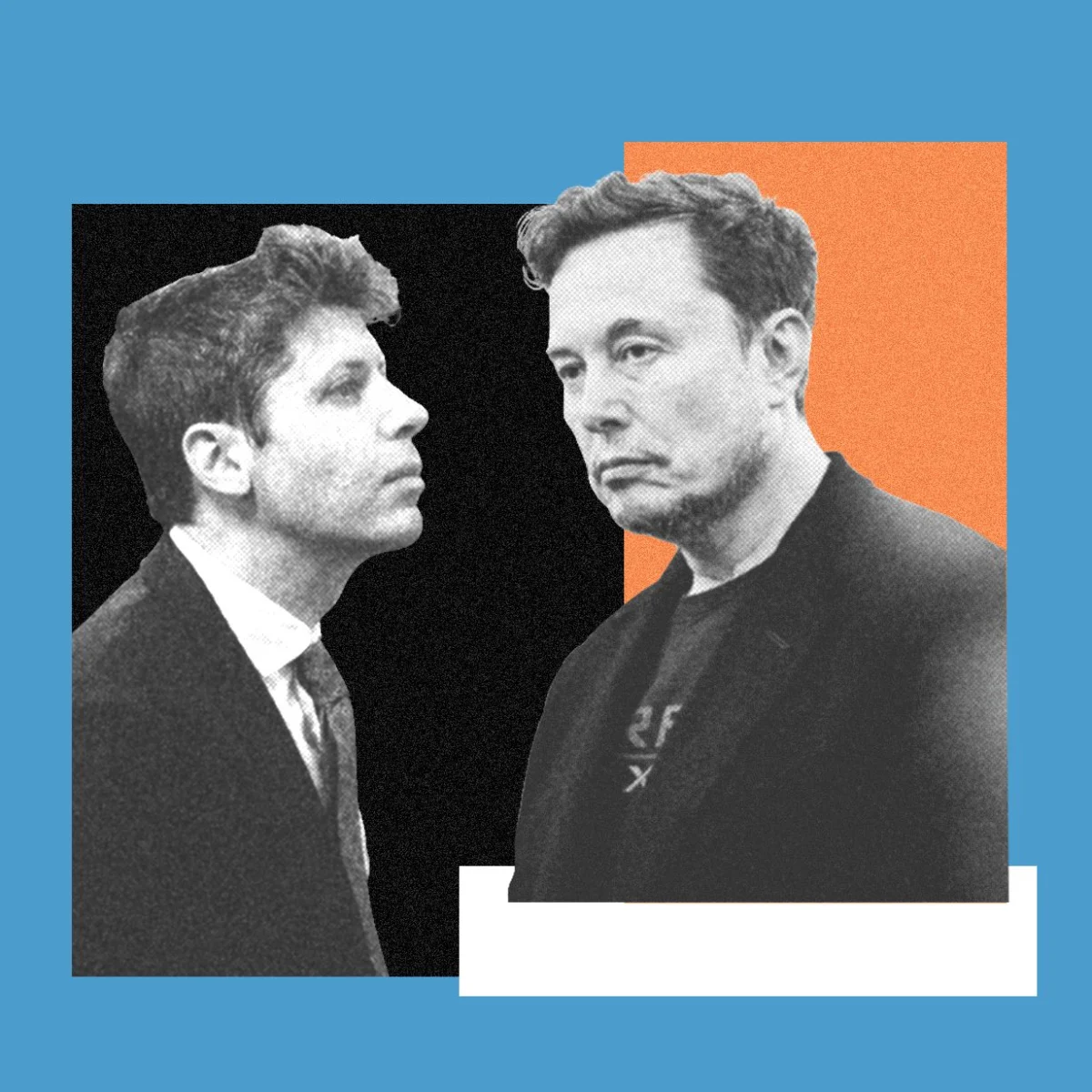
The courtroom in Oakland, California, is poised to become the battleground for a pivotal legal showdown this month, as nine jurors prepare to adjudicate a years-long dispute between two titans of the tech world: Elon Musk and Sam Altman. At the heart of this high-stakes litigation lies the founding mission of OpenAI, the company that has propelled artificial intelligence into the global consciousness with its groundbreaking ChatGPT models. While internecine conflicts among Silicon Valley’s elite are not uncommon, this particular case has drawn intense scrutiny from former OpenAI employees and AI ethics advocates alike, owing to the profound implications its outcome could have on the control and dissemination of one of the most transformative technologies of our era. The ruling could significantly shape the trajectory of the world’s leading AI developer, influencing not only its internal governance but also its external partnerships and its impending pursuit of an Initial Public Offering (IPO).
The stakes for OpenAI’s corporate future are exceptionally high. A detrimental verdict in the "Musk v. Altman" case could cast a long shadow over its ambitious plans to go public later this year. The ChatGPT-maker finds itself in a fervent race to the stock market, competing with rivals such as Anthropic and Musk’s own burgeoning AI venture, xAI. Musk’s dual role as a plaintiff and a direct competitor, potentially poised to gain substantial benefits if the legal proceedings favor him, has ignited critical questions regarding his suitability to present this case before a jury. While the possibility of an out-of-court settlement remains, legal experts and individuals closely connected to the proceedings deem it improbable.
The Genesis of the Dispute: A Divergent Vision for AGI
The lawsuit, filed by Elon Musk, fundamentally alleges that OpenAI has deviated from its foundational charter: to ensure that Artificial General Intelligence (AGI), a hypothetical AI system capable of performing a wide array of intellectual tasks at a human level, ultimately serves the betterment of humanity. The named defendants in this landmark case include OpenAI itself, its CEO and co-founder Sam Altman, OpenAI President and co-founder Greg Brockman, and critically, Microsoft, OpenAI’s largest and most influential investor.
Despite generating billions of dollars in annual revenue, OpenAI maintains a unique corporate structure, with a controlling nonprofit entity overseeing its operations. Musk, a foundational co-creator of the original OpenAI nonprofit, had been a significant early investor, contributing approximately $38 million during its nascent stages. However, his departure in 2018 was precipitated by escalating disagreements with Altman and Brockman. The lawsuit has since been refined, focusing on three central claims against OpenAI.
The first claim centers on the alleged breach of OpenAI’s charitable trust. Musk asserts that during the company’s formative years, he understood his investment to be in a nonprofit organization dedicated to open-source principles, advocating for the widespread, free accessibility of its AI technologies. He contends that Altman and Brockman have not honored this initial vision. OpenAI has since established a for-profit arm that generates substantial revenue, and the company has adopted a highly proprietary approach to the code underlying its most advanced AI models. OpenAI, in its defense, maintains that Musk was aware as early as 2017 of the necessity for a for-profit division and even assisted in establishing the requisite corporate framework. Microsoft is accused of complicity in this alleged breach of trust.
The second core allegation pertains to fraud, specifically that Altman and Brockman deliberately misled Musk regarding their intentions to transition OpenAI into a for-profit enterprise. The third claim is unjust enrichment, positing that Altman, Brockman, and other OpenAI investors have personally profited at Musk’s expense.
The defendants have categorically refuted these claims, characterizing them as unfounded and driven by Musk’s strategic objective to undermine OpenAI as he cultivates his own AI rival, xAI.
Musk is seeking a multifaceted set of remedies from the court. These include the removal of Altman and Brockman from their leadership positions at OpenAI, the repatriation of OpenAI’s "ill-gotten gains" to the company’s nonprofit foundation, and an injunction preventing OpenAI from operating as a public benefit corporation, the current classification of its for-profit arm.
When approached for comment, an OpenAI spokesperson directed inquiries to a statement on the company’s blog, which reads, "Motivated by jealousy, regret for walking away from OpenAI and a desire to derail a competing AI company, Elon has spent years harassing OpenAI through baseless lawsuits and public attacks." Representatives for Musk did not respond to repeated requests for comment.
A Timeline of Divergence
The seeds of this legal conflict were sown in the early days of AI development, a period characterized by both immense optimism and profound apprehension about the future of intelligent machines.
-
2015: OpenAI is founded as a non-profit research laboratory by a group of prominent figures, including Elon Musk, Sam Altman, Greg Brockman, Ilya Sutskever, and others. The stated mission is to ensure that artificial general intelligence (AGI) benefits all of humanity. Early funding comes from a mix of personal contributions and grants.
-
2017-2018: Disagreements begin to emerge within OpenAI’s leadership regarding the pace of development, the necessity of commercialization to fund ambitious research, and the degree of openness for the developed technologies. Musk, advocating for a more open and less commercially driven approach, expresses concerns about the direction the organization is taking under Altman and Brockman’s leadership.
-
February 2018: Elon Musk announces his departure from OpenAI, citing potential conflicts of interest with his work at Tesla, which was also heavily investing in AI. He publicly states his belief that OpenAI needed to increase its scale and resources, which he felt was being hampered by its nonprofit structure.
-
2019: OpenAI establishes a capped-profit subsidiary, OpenAI LP, to attract external investment and provide incentives for employees. Microsoft makes a significant investment of $1 billion in this subsidiary, marking a pivotal shift towards a more commercialized model. This move further fuels the debate about the company’s adherence to its original mission.
-
2020-2022: OpenAI develops and releases increasingly powerful AI models, including GPT-3. The company’s research begins to garner significant public attention, and the scale of its operations and the commercial potential of its technologies become increasingly apparent.
-
Late 2022: The public release of ChatGPT triggers a global AI fervor. The model’s remarkable capabilities and accessibility capture the imagination of millions, solidifying OpenAI’s position as a leader in the field.
-
Early 2023: Elon Musk publicly criticizes OpenAI’s direction, suggesting it has strayed from its original mission and become a de facto subsidiary of Microsoft. He begins to signal his intent to pursue legal action.
-
March 2024: Elon Musk files a lawsuit against Sam Altman, Greg Brockman, and OpenAI, alleging breach of contract, fraud, and unjust enrichment, among other claims. The lawsuit seeks to hold OpenAI accountable to its founding principles and prevent it from operating as a for-profit entity.
-
June 2024: The "Musk v. Altman" case is scheduled to go to trial in an Oakland federal courtroom, setting the stage for a legal battle that could redefine the future of AI development and governance.
The Stakes for the AI Landscape and Beyond
The ramifications of the "Musk v. Altman" trial extend far beyond the personal animosity between two tech moguls. The outcome could profoundly influence the governance of powerful AI systems, the balance between open research and commercial interests, and the very definition of what it means for AI to "benefit humanity."
For former OpenAI employees and AI safety advocates, the case represents a crucial opportunity to hold a leading AI developer accountable to its founding principles. Jacob Hilton, a former OpenAI employee and signatory to an amicus brief supporting Musk, articulated this sentiment: "It’s definitely important that OpenAI lives up to its mission. I think we’re still seeing a lot of things that OpenAI is doing that, in my view, aren’t really consistent with its mission. One recent example people are talking about is backing this Illinois state bill that would shield them from liability." This concern reflects a broader apprehension that commercial pressures may be eclipsing ethical considerations, potentially leading to the deployment of AI technologies with unforeseen or detrimental consequences.
The legal arguments presented will likely delve into complex questions of corporate law, fiduciary duties, and the interpretation of founding documents. Musk’s legal team will aim to demonstrate that OpenAI’s transformation into a profit-driven entity, particularly its deep integration with Microsoft, constitutes a violation of its charitable trust and the agreement under which he invested. Conversely, OpenAI and its co-defendants will seek to prove that their actions were consistent with the evolving needs of AI development and that Musk’s claims are motivated by personal vendetta and competitive ambition.
The broader implications for the AI industry are significant. A ruling in favor of Musk could set a precedent for holding AI companies to stricter ethical and operational standards, potentially slowing down the pace of commercialization but fostering a more cautious and humanity-centric approach to AI development. Conversely, a victory for OpenAI could solidify the current model of rapid innovation driven by substantial private investment, with the potential for greater commercialization and broader market adoption of AI technologies.
Furthermore, the case is taking place against a backdrop of increasing regulatory scrutiny of AI globally. Governments are grappling with how to govern AI’s development and deployment to mitigate risks related to bias, misinformation, job displacement, and existential threats. The "Musk v. Altman" trial could provide a crucial legal framework that informs these broader regulatory efforts, influencing how future AI ventures are structured and held accountable.
The impending trial is not merely a dispute over past decisions; it is a critical juncture that will help shape the future of artificial intelligence, determining whether the pursuit of profit will ultimately dictate the trajectory of a technology with the potential to reshape civilization. The nine jurors in Oakland will not only be deciding the fate of a multi-billion-dollar company but will also be contributing to the ongoing global conversation about humanity’s relationship with its most powerful creations.
