

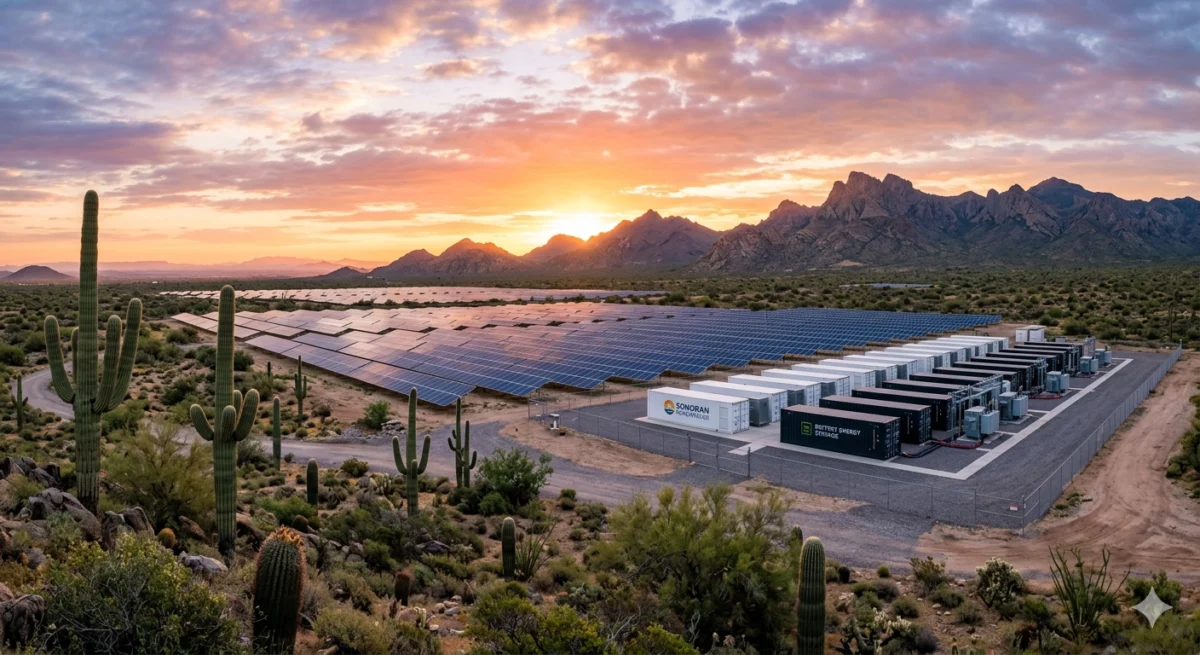
The global transition toward a decarbonized power grid reached several critical milestones this week as billions of dollars in new financing, large-scale solar completions, and international technology partnerships were announced across the renewable energy sector. From the high-stakes negotiations at the Infocast Solar + Wind Finance & Investment Summit in Phoenix to the first international deployment of iron-air battery technology in Ireland, the industry is demonstrating a sophisticated maturation in both project finance and long-duration energy storage. These developments underscore a broader trend of institutional capital flowing into increasingly complex renewable energy structures, moving beyond simple generation toward integrated, grid-resilient ecosystems.
The Pulse of Renewable Finance: The Phoenix Summit
The industry’s momentum was palpable this week at Infocast’s Solar + Wind Finance & Investment Summit held at the Biltmore in Phoenix, Arizona. Operating under Chatham House Rules—which allow for the reporting of information while protecting the identity and affiliation of the speakers—the summit serves as a critical barometer for the health of the energy transition. The closed-door nature of the event facilitated candid discussions regarding the current hurdles facing the industry, including interconnection delays, supply chain volatility, and the evolving landscape of tax equity following the implementation of the Inflation Reduction Act (IRA).
Industry sentiment coming out of the summit suggests a shift from speculative development to a focus on execution. Financial institutions are increasingly prioritizing developers with proven track records and "shovel-ready" projects that can navigate the complexities of modern grid requirements. The consensus among banking and development executives indicates that while capital remains available, the bar for due diligence has risen, favoring projects that incorporate storage or utilize innovative financing mechanisms to mitigate risk.

Corporate Decarbonization: Avantus Completes Norton Solar for Toyota
In a significant win for corporate renewable procurement, project developer Avantus announced the final completion of the Norton Solar project in Runnels County, Texas. The facility, which boasts a capacity of 159 megawatts (MWdc) or 125 MWac, represents a successful collaboration between large-scale developers and corporate end-users. Toyota Motor North America has secured the full output of the plant through a long-term Virtual Power Purchase Agreement (VPPA) arranged via Toyota Tsusho America (TAI).
The Norton Solar project achieved substantial completion in October 2023, with this week marking the final operational handoff. The project’s construction was managed by RES, providing engineering, procurement, and construction (EPC) services. During its peak construction phase, the project supported approximately 250 local jobs. For Toyota, the VPPA serves as a cornerstone of its broader environmental strategy, allowing the automotive giant to offset its operational emissions by injecting clean energy into the ERCOT (Electric Reliability Council of Texas) grid.
Avantus, which maintains a massive development pipeline of 24 gigawatts (GW) of solar and 75 gigawatt-hours (GWh) of energy storage across the Western United States, views the Norton completion as a blueprint for future corporate partnerships. By aligning utility-scale generation with the specific ESG (Environmental, Social, and Governance) goals of multinational corporations, developers are creating stable, long-term revenue streams that are less susceptible to wholesale market volatility.
Innovative Financing: Doral Renewables Secures Over Half a Billion in Capital
Philadelphia-based Doral Renewables demonstrated the increasing complexity and scale of renewable finance by announcing two major funding milestones. The company secured approximately $525 million in cross-border Letter of Credit (LC) facilities designed to support its aggressive growth trajectory. These facilities include a $385 million Deferred Equity Contribution Guarantee (DECG) and a $140 million All Purpose Guarantee Facility (APGF).

The DECG structure is particularly notable as it allows Doral to issue sponsor equity LCs to project beneficiaries while preserving liquidity and maintaining higher equity return rates at the project level. This type of financial engineering is becoming essential for independent power producers (IPPs) who need to manage capital across massive portfolios, such as Doral’s Mammoth Solar project in Indiana—one of the largest solar installations in the United States.
Simultaneously, Doral finalized the funding for its Great Bend Solar project in Meigs County, Ohio. This 48 MW project involved a sophisticated multi-party financial arrangement, including a $27 million tax equity investment from Fifth Third Bank and the sale of $35 million in investment tax credits to a third-party buyer. The transaction allowed Doral to repay $38 million in construction debt and issue $33 million in term debt through HSBC and KeyBank. These moves reflect a growing trend of "tax credit transferability," a mechanism popularized by the IRA that allows developers to monetize tax credits more efficiently than traditional tax equity structures.
Strengthening the European Grid: Project Sophocles in Italy
Across the Atlantic, the European Investment Bank (EIB) and Natixis Corporate & Investment Banking joined forces with Sunprime Holdings to launch Project Sophocles. This €507 million ($585.6 million) program is designed to deploy one of Italy’s largest integrated solar and storage portfolios. The initiative will finance the construction of approximately 200 photovoltaic (PV) plants totaling 290 MWp, paired with 350 MW of battery energy storage systems (BESS).
Project Sophocles represents a strategic shift in European energy policy, focusing on "distributed generation." By placing many of these installations on industrial rooftops and commercial surfaces, the project minimizes land-use conflicts while placing generation closer to the point of consumption. Once operational, the portfolio is expected to generate 416 GWh of electricity annually—enough to power 160,000 Italian households.

The BESS component is critical for Italy’s grid flexibility, providing services such as frequency regulation and peak-shaving. This reduces the country’s reliance on gas-fired "peaker" plants and supports the REPowerEU objectives of ending dependence on fossil fuel imports. The financing structure involves six to 12 cross-collateralized clusters, ensuring that the diverse array of small-to-medium sites can be managed as a single, bankable entity.
Technology Breakthroughs: Form Energy’s International Expansion
In a landmark moment for long-duration energy storage (LDES), U.S.-based Form Energy announced its first international deployment. Partnering with FuturEnergy Ireland, Form Energy will deploy a 10 MW/1,000 MWh iron-air battery system in the northwest of Ireland. Unlike traditional lithium-ion batteries, which typically provide four hours of discharge, Form Energy’s iron-air technology is designed to provide 100 hours of continuous power.
The project, scheduled for completion in 2029, aims to address the specific challenges of Ireland’s wind-heavy grid. Ireland often faces periods of "wind droughts" where renewable generation drops for several days. Form Energy’s technology uses a process of "reversible rusting"—discharging energy as the iron turns to rust and charging energy as the rust is converted back to iron—to provide a low-cost, multi-day storage solution.
Analysis suggests that integrating such multi-day storage could reduce Ireland’s renewable energy curtailment and lower generation costs by more than 25% annually. This international move follows Form Energy’s domestic success, including a 30 GWh project with Xcel Energy and Google. The agreement was signed at Form Energy’s headquarters in Massachusetts, with high-ranking officials from both the Irish and U.S. governments in attendance, signaling the geopolitical importance of energy storage technology.

Community Solar and Distributed Power: New Mexico and GSPP
The week also saw significant progress in the "democratization" of energy through community solar and distributed generation. In New Mexico, a partnership between Forefront Power, Standard Solar, and Pluma Construction announced an eight-project, 48.4 MW community solar portfolio. These projects are among the first to be realized under New Mexico’s Community Solar Program, which was expanded in late 2024 to increase energy access for low-to-moderate-income residents.
The portfolio is expected to generate over 103,000 MWh in its first year, with Solstice leading customer acquisition for approximately 2,500 new subscribers. This model allows residents who cannot install rooftop solar—such as renters or those with shaded properties—to benefit from lower electricity bills by subscribing to a share of a local solar farm.
Finally, Connecticut-based GS Power Partners (GSPP) closed a $250 million capital raise provided by Deutsche Bank. This debt facility will establish a centralized corporate capital platform to fuel GSPP’s development pipeline. The involvement of a major global institution like Deutsche Bank as the lead lender and arranger serves as a significant endorsement of the distributed generation sector. GSPP leadership noted that the flexibility of this capital will allow them to move quickly on new acquisitions and development opportunities, reflecting the high level of institutional trust now present in the decentralized solar market.
Analysis of Broader Implications
The events of this week illustrate a maturing renewable energy market that is successfully navigating a transition from "simple" to "complex." The integration of massive storage capacities, the use of sophisticated cross-border financial instruments, and the expansion of community-based access points all point to a sector that is becoming the backbone of the global economy.

Several key themes emerge from these updates:
- Storage is No Longer Optional: Whether it is the 350 MW BESS in Italy or the 1,000 MWh iron-air battery in Ireland, storage is now being integrated at the foundational level of project design to ensure grid stability.
- Financial Rigor: The move toward innovative LC facilities and tax credit transferability shows that developers are finding creative ways to maintain liquidity despite higher interest rates and complex regulatory environments.
- Policy as a Catalyst: New Mexico’s community solar progress and Italy’s Fer-X mechanism demonstrate that clear, supportive policy frameworks remain the primary driver for attracting private investment.
As the industry moves toward the second half of the decade, the focus is likely to remain on "de-risking" the grid. The projects announced this week are not just about generating electrons; they are about creating a resilient, flexible, and economically viable energy system that can withstand the volatility of both the weather and the global markets. For investors and developers alike, the message from this week is clear: the energy transition is accelerating, and those who can master the intersection of technology and complex finance will lead the next era of global power.
