

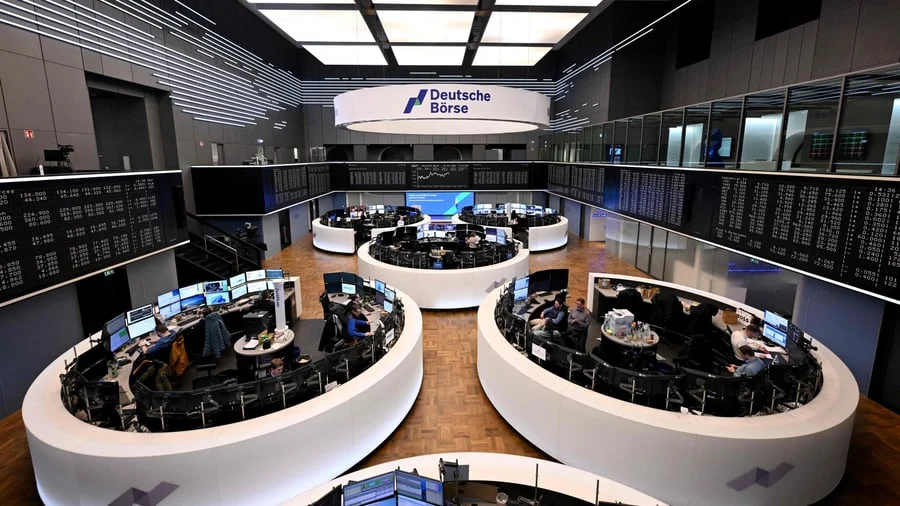
The seismic tremors that began on Wall Street yesterday afternoon have now firmly gripped the German stock market, with the Dax experiencing a significant downturn. As trading opened on Friday, the German benchmark index shed 1.7 percent, losing over 400 points to settle at 25,873. This sharp decline follows a period of robust growth, where the Dax had climbed more than 1,800 points in the preceding month, signaling a potential profit-taking phase by investors.
Market Turmoil: A Cascade of Events
The market’s volatility appears to be a confluence of factors, including the results of the US midterm elections, perceived diplomatic progress in the Iran conflict, falling energy and bond yields, and a backdrop of positive corporate earnings. However, the immediate trigger for the sharp sell-off seems to be linked to a dramatic and rapid erosion of market capitalization on Wall Street. Reports from sources like the Kobeissi Letter on the social media platform X indicated that the S&P 500 lost a staggering two trillion dollars in market value within a mere 40 minutes on Thursday. This rapid deleveraging event has been described as one of the swiftest in stock market history, creating a ripple effect across global financial markets.
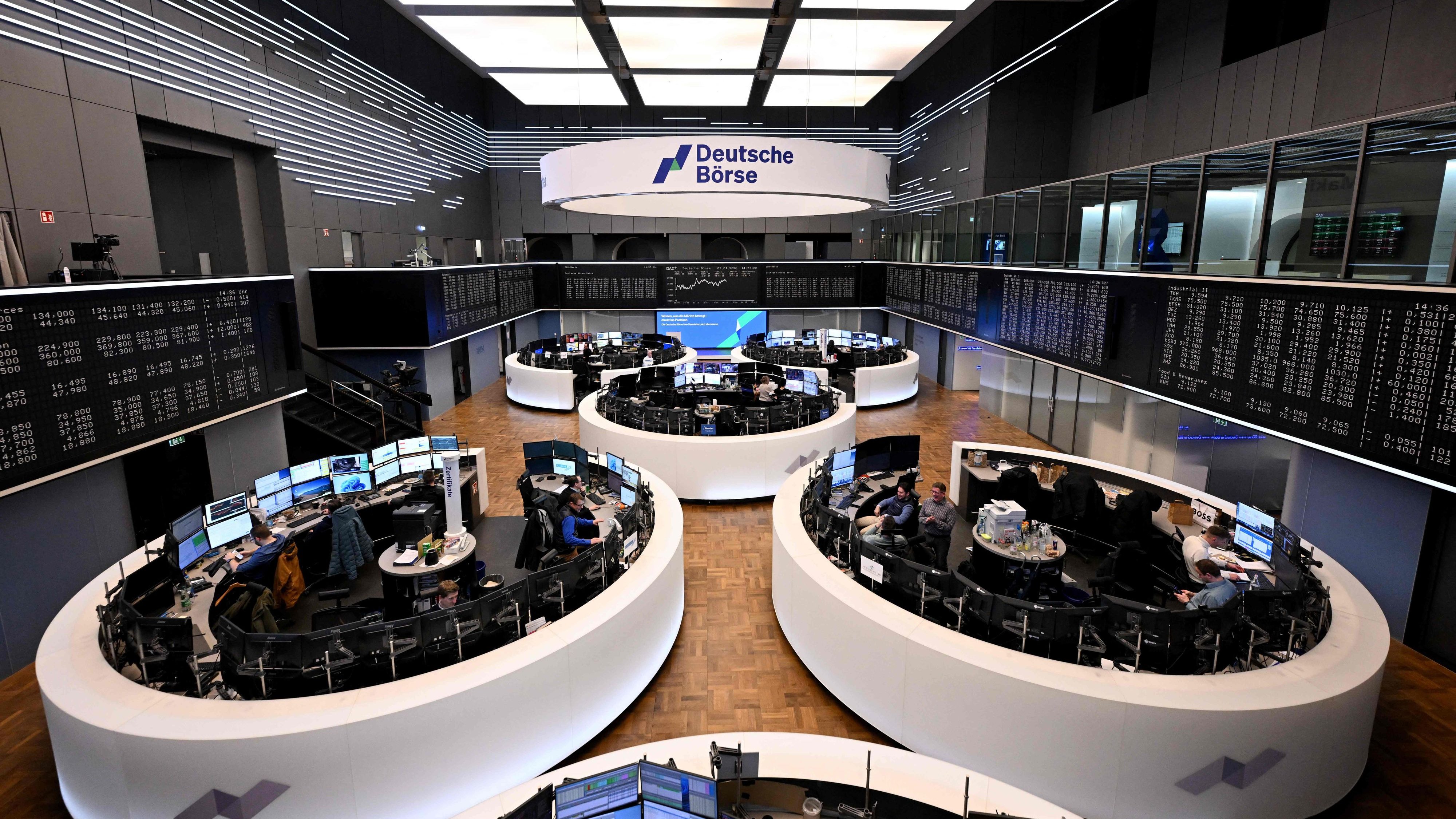
Tech Sector Recovery Amidst AI Investment Concerns
In a notable shift, technology stocks on the German market showed initial signs of recovery on Friday. This follows a significant decline of between eight and fourteen percent yesterday, highlighting the sector’s sensitivity to broader market sentiment. Jochen Stanzl, Chief Market Analyst at Consorsbank, commented on this trend, stating, "After the index rose by over 1,800 points in a month, investors are taking profits. The reaction is understandable. Those who invest in the DAX likely also invest in AI stocks." This suggests that the recent market correction might be partly driven by investors re-evaluating their positions in high-growth technology companies, particularly those heavily invested in artificial intelligence (AI).
Concerns are mounting regarding the future trajectory of AI investments. Kyle Rodda, Senior Financial Market Analyst at capital.com, explained, "Markets are increasingly questioning AI-driven trades, as the performance of the ‘Magnificent Seven’ has fallen short of growth expectations, and worries about a slowdown in AI investment are emerging." This sentiment is further amplified by the potential for increased tech regulation, especially with a Democratic-controlled Congress in the United States. The uncertainty surrounding future regulatory frameworks can create a chilling effect on investment in innovative technologies.
Political Shifts and Data Center Uncertainty
Beyond the immediate market reactions, evolving political landscapes are also contributing to investor apprehension. Andreas Lipkow of CMC Markets highlighted concerns surrounding data center projects, stating, "New majority conditions and political leadership changes at the state level could potentially put previously considered secure data center projects back under scrutiny. This increases uncertainty about future investment needs and the pace of planned capacity expansion." This suggests that geopolitical and domestic policy shifts in key economic regions can have a tangible impact on long-term investment strategies, particularly in capital-intensive sectors like data infrastructure.

Oil Prices Rebound Amidst Geopolitical Tensions
On the commodity front, oil prices have seen a resurgence towards the end of the week. A barrel of Brent crude for January delivery rose by 1.4 percent to $99.70, while US WTI light crude for December delivery increased by 1.1 percent to $91.50. This rebound comes after a significant price drop earlier in the week, which was partly attributed to the Democratic gains in the US midterm elections. Despite the recent uptick, Brent crude remains approximately 15 percent down on a weekly basis.
The market’s renewed optimism for oil prices is linked to hopes for a swifter resolution to the conflict between the United States and Iran. However, significant differences between the parties persist. Tehran’s demands for the lifting of the US sea blockade, sanctions relief, and the unfreezing of assets are prerequisites for the full reopening of the Strait of Hormuz. Pavel Molchanov, an analyst at Raymond James, told Bloomberg that the crucial factor is whether the White House alters its strategy towards Iran. A lasting diplomatic agreement that leads to the reopening of the Strait of Hormuz could further depress oil prices, but skepticism remains warranted.
Key Economic Indicators and Corporate Performance
The market’s performance on Thursday was initially buoyed by a combination of factors. The outcome of the US midterm elections, a perceived diplomatic breakthrough in the Iran conflict, declining energy prices and bond yields, and positive corporate earnings reports all contributed to a rally. The Dax reached a new record high at midday, peaking at 25,685.23 points. This rapid ascent, however, appears to have set the stage for the subsequent profit-taking and market correction.

Individual Stock Performance in Focus
In specific corporate news, Munich Re (Münchener Rück) saw its shares fall by 2.4 percent after analysts at JP Morgan downgraded the company’s stock to "Neutral" from "Overweight." This recalibration by a major financial institution suggests a shift in outlook for the reinsurance giant.
Daimler Truck reported a significant increase in profits on Friday. However, investors appeared unconvinced by the results, as the company’s shares declined by 3.9 percent. This divergence between reported earnings and market reaction could indicate concerns about future growth prospects or broader market sentiment impacting even fundamentally strong companies.
Broader Economic Context and Implications
The current market turbulence underscores the interconnectedness of global financial markets and the rapid dissemination of information in the digital age. The speed at which market capitalization can be erased, as witnessed with the S&P 500, highlights the potential for swift and significant shifts in investor sentiment. This volatility can create opportunities for agile investors but also poses considerable risks for those who are less prepared for rapid market movements.

The interplay between geopolitical events, domestic policy decisions, technological advancements, and commodity prices creates a complex web of factors influencing market behavior. Investors are continuously seeking to navigate this intricate landscape, with a keen eye on both short-term fluctuations and long-term trends. The recent events serve as a stark reminder of the inherent unpredictability of financial markets and the importance of a diversified and resilient investment strategy.
The renewed focus on AI investment and potential regulatory actions in the tech sector could have far-reaching implications for innovation and economic growth. Companies that are heavily reliant on AI technologies will need to closely monitor regulatory developments and adapt their strategies accordingly. Similarly, the fluctuating oil prices, influenced by geopolitical tensions and supply-demand dynamics, will continue to be a key consideration for industries dependent on energy, impacting transportation costs, inflation, and consumer spending.
The German Dax’s reaction to the global market tremors, coupled with specific corporate news, paints a picture of a market undergoing a period of adjustment. While the initial shock may have subsided, the underlying factors contributing to this volatility – from the political landscape in the US to the geopolitical situation in the Middle East and the ongoing evolution of the AI sector – will likely continue to shape market sentiment in the coming weeks and months. Investors and analysts will be closely watching for further developments and reassessments as the market seeks a new equilibrium.

This article was compiled with material from the news agencies dpa and Reuters.
