

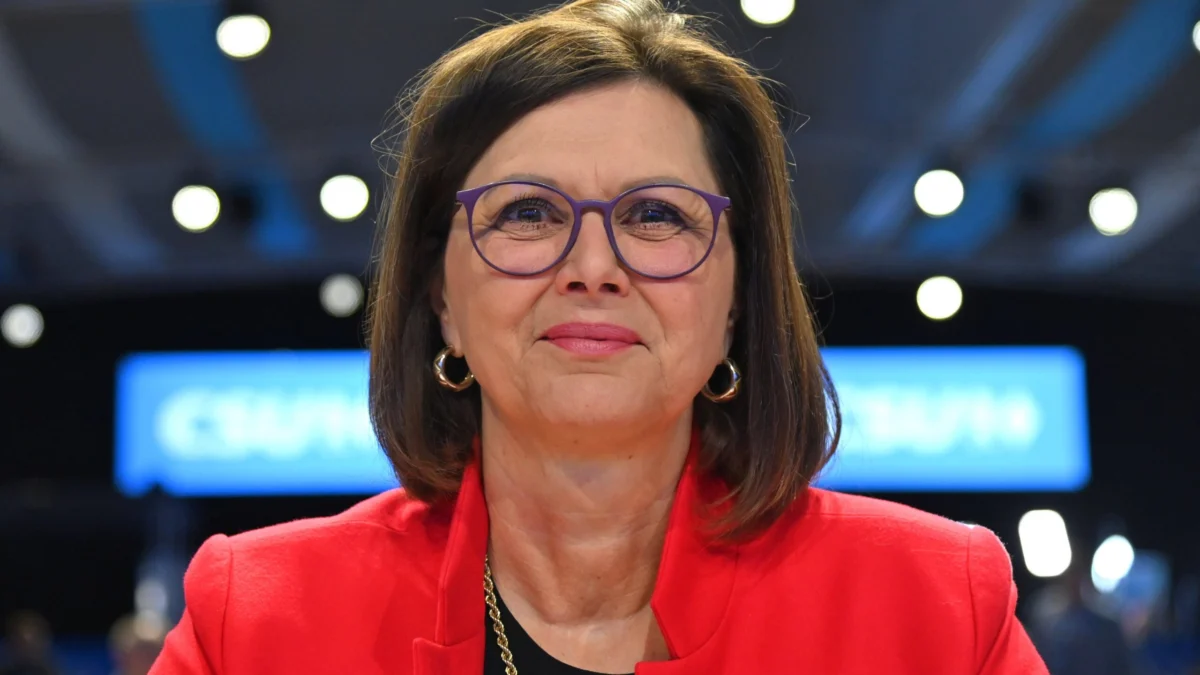
Berlin – In a significant political development, the Christian Democratic Union (CDU) is reportedly set to nominate Ilse Aigner, a prominent figure within the Christian Social Union (CSU), for the esteemed position of Federal President of Germany. This strategic move, if confirmed, would mark a pivotal moment in the ongoing search for a successor to the current incumbent, Frank-Walter Steinmeier. The information, widely disseminated on Friday, has been corroborated by leading German media outlets, including Bild, Der Spiegel, and the Süddeutsche Zeitung.
While the official confirmation from CDU leader and Chancellor Friedrich Merz remains pending, sources close to the party leadership indicate a strong inclination towards Aigner. When approached by Handelsblatt for comment, the Chancellor’s office offered a terse response, stating that the matter would be addressed in the party’s upcoming committee meetings on Monday and that they would not comment on ongoing reports. This reticence, however, has done little to quell the burgeoning speculation, which suggests that the nomination process is nearing its conclusion, with Aigner emerging as the frontrunner.
The Path to Nomination: A Carefully Orchestrated Process
The search for the next Federal President has been a subject of intense political discourse and behind-the-scenes maneuvering for months. Frank-Walter Steinmeier, currently serving his second term, is nearing the end of his tenure, prompting the political landscape to focus on identifying a suitable candidate who can represent Germany with gravitas and political acumen. The CDU, as the leading party in the federal government, holds significant influence in this selection process, which ultimately involves the Federal Convention.
Sources within the CDU leadership have indicated to Handelsblatt that the consensus is building around Aigner. Several influential CDU politicians have publicly expressed their support for her potential candidacy, suggesting a broader acceptance of the proposal within the party ranks. This backing is particularly noteworthy given the traditional regional considerations in German federal politics, where the CSU, the Bavarian sister party to the CDU, often seeks representation at the federal level.
The CSU, for its part, has openly signaled its support for Aigner’s candidacy. This alignment between the CDU and CSU on a key federal nomination underscores the strength of their continued alliance. Furthermore, influential figures within the CDU, including all three CDU Minister-Presidents from the eastern German states, have voiced their endorsement of Aigner, signaling a unified front across different regional interests within the party.
Friedrich Merz himself has previously articulated his preference for a female candidate for the presidency, a stance that aligns with the potential nomination of Aigner. However, he had refrained from naming any specific individuals until now, maintaining a degree of strategic ambiguity throughout the selection process. The timing of these reports, just days before crucial party meetings, suggests a deliberate strategy to build momentum and consolidate support for Aigner’s candidacy.
Ilse Aigner: A Profile in Political Experience
Ilse Aigner is a seasoned politician with a distinguished career spanning several decades. Currently serving as the State Minister for Economic Affairs, Regional Development and Energy in Bavaria, she has held various significant positions within both the Bavarian state government and the federal Bundestag. Her political journey began in the CSU, where she quickly rose through the ranks, demonstrating a keen understanding of economic policy, social issues, and regional development.
Aigner’s political experience includes serving as a Member of the German Bundestag from 2001 to 2013. During her tenure at the federal level, she held important roles, including Chairwoman of the Committee on Food, Agriculture and Consumer Protection and later as Federal Minister of Food, Agriculture and Consumer Protection from 2008 to 2013. This period at the federal helm provided her with invaluable insights into national policy-making and international relations.
Her return to Bavarian state politics in 2013 as a State Minister has further solidified her reputation as a capable and pragmatic leader. Her portfolio, encompassing economic affairs and regional development, has allowed her to engage directly with the practical challenges and opportunities facing one of Germany’s most economically vital states. This experience has equipped her with a deep understanding of the intricate workings of the German economy and the social fabric of the nation.
Aigner is widely regarded for her measured approach to political issues, her ability to articulate complex policy proposals clearly, and her commitment to consensus-building. Her supporters often highlight her strong work ethic, her integrity, and her dedication to public service. These qualities are considered essential for the role of Federal President, which demands a high degree of impartiality, moral authority, and the ability to represent the entire nation.
The Federal President’s Role and Significance
The Federal President of Germany is the head of state, a largely ceremonial role that carries significant moral and symbolic weight. While the President’s powers are primarily representative, they play a crucial role in providing political guidance, representing Germany internationally, and acting as a moral compass for the nation. The President is elected by the Federal Convention, a body comprising members of the Bundestag and an equal number of delegates elected by the state parliaments.
The selection of the Federal President is often a delicate balancing act, requiring broad political consensus and consideration of various regional and party interests. The current President, Frank-Walter Steinmeier, has been widely praised for his dignified conduct, his commitment to democratic values, and his ability to unite the country during challenging times. The search for his successor is therefore a matter of considerable importance, as the chosen individual will shape the public image and symbolic leadership of Germany for the next five years.
Upcoming Political Milestones
The coming days are crucial for solidifying Aigner’s nomination. On Sunday evening, Friedrich Merz is scheduled to meet with the CDU Presidium and the chairpersons of the CDU/CSU state parliamentary groups. This meeting is expected to be a key forum for finalizing the party’s strategy and potentially securing a formal agreement on the presidential candidate.
Following this, on Monday, the Presidium and Executive Committee of the federal CDU will convene for their regular meetings. These sessions are anticipated to be dedicated to the formal discussion and endorsement of the proposed presidential nominee. The outcome of these meetings will be closely watched by the public and political observers alike, as they are expected to signal the CDU’s definitive stance.
The nomination of Ilse Aigner by the CDU would represent a significant cross-party collaboration, bridging the traditionally distinct political spheres of the CDU and CSU. It would also fulfill Merz’s stated preference for a female candidate, reflecting a modern approach to leadership and representation. The broad support Aigner has garnered from influential figures within the CDU, including the eastern German Minister-Presidents, suggests a strong foundation for her potential candidacy.
Analysis and Implications
The reported nomination of Ilse Aigner for Federal President carries several notable implications for the German political landscape. Firstly, it signifies a continued strengthening of the CDU-CSU alliance, demonstrating their ability to find common ground on crucial national appointments. This unity could translate into greater stability and coherence within the governing coalition.
Secondly, if Aigner is indeed nominated and subsequently elected, it would mark the first time in several decades that a CSU politician holds the office of Federal President. This would be a symbolic victory for Bavaria and the CSU, highlighting their enduring influence within the federal political system.
Thirdly, Aigner’s background in economics and regional development could lend a distinct perspective to the presidency. Her focus on practical policy and economic stability might resonate with a broad segment of the German population, particularly in the current global economic climate. Her extensive experience in both federal and state government positions her as a candidate with a deep understanding of Germany’s multifaceted governance structure.
The emphasis on a female candidate by Friedrich Merz also aligns with broader societal trends and the ongoing discussion about gender equality in leadership positions. Aigner’s potential presidency would undoubtedly be seen as a step forward in this regard, offering a role model for women in politics and public life.
However, the process is not without its potential challenges. While broad support appears to be building, the formal election by the Federal Convention will require the backing of a majority. The opposition parties will likely scrutinize Aigner’s candidacy and her political record, and the election itself could become a platform for broader political debates.
The coming days will be critical in determining the definitive path forward. The CDU’s formal announcement and the subsequent proceedings of the Federal Convention will reveal the extent of consensus and the ultimate outcome of this significant political decision. The potential nomination of Ilse Aigner represents a compelling narrative of experience, alliance, and a forward-looking approach to the symbolic leadership of Germany.
