

DETROIT – General Motors (GM) is set to reintroduce hybrid models into its U.S. vehicle lineup, marking a significant strategic pivot for an automaker that had previously committed to an "all-electric future." This decision comes as sales of hybrid vehicles continue to surge, driven by persistent inflationary pressures on gas prices, a discernible slowdown in the adoption rate of all-electric cars, and an evolving regulatory environment. The move signifies GM’s responsiveness to prevailing market conditions and growing consumer demand for diversified propulsion options.
Mike Anderson, GM’s vice president of propulsion engineering, recently reconfirmed the automaker’s plans to integrate hybrids into its portfolio. While declining to specify a precise timeline for the rollout of these vehicles – which had been previously anticipated as early as next year – Anderson emphasized the company’s commitment to meeting customer needs. "It’s fair to say that [hybrids are] part of the plan," Anderson, a veteran of 35 years at GM, stated in an interview. "We’re not tone deaf to our customers. We know what they want and we want to give that to them as quickly as we can."
A Strategic Re-evaluation: GM’s Hybrid Comeback
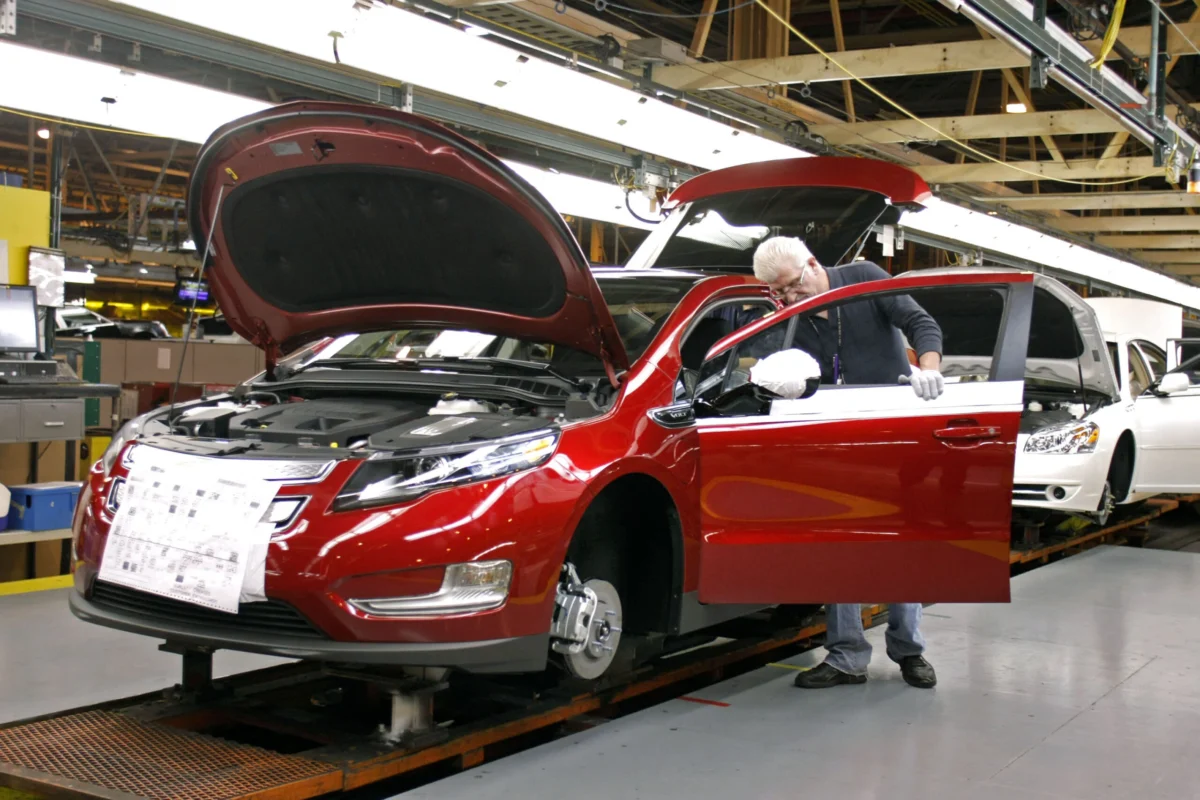
GM’s renewed focus on hybrids represents a notable departure from its aggressive electrification strategy initiated earlier in the decade. In January 2021, under the leadership of CEO Mary Barra, General Motors announced an ambitious goal to exclusively offer electric vehicles by 2035, pledging billions of dollars towards research, development, and manufacturing of its Ultium battery technology and dedicated EV platforms. This "all-in" approach saw the company largely absent from the mainstream hybrid market, choosing instead to channel its resources into accelerating its EV transition. The Chevrolet Volt, a pioneering plug-in hybrid electric vehicle (PHEV), was discontinued in 2019, symbolizing GM’s initial shift away from hybrid solutions. The sole exception in its current lineup, the 2024 Chevrolet Corvette E-Ray, is a performance hybrid designed for enhanced power rather than primary fuel economy, underscoring the previous strategic direction.
However, the automotive landscape has proven to be more dynamic and complex than initially projected. The pace of EV adoption has encountered headwinds, including higher upfront costs for consumers, concerns about charging infrastructure availability and speed, and lingering range anxiety. Concurrently, hybrid technology has advanced, offering compelling fuel efficiency gains and lower emissions without demanding a fundamental change in driver behavior or reliance on an nascent charging network. This confluence of factors has prompted GM, like other automakers, to reassess its path forward. Anderson acknowledged this evolution, stating, "Our long-term vision is an all-electric future. That’s our goal. That’s the end state, but it’s going to be a journey that involves technology diversity."
The Evolving Automotive Landscape: Why Hybrids Are Surging
The resurgence of hybrid vehicles in the U.S. market is not merely anecdotal; it is firmly supported by robust sales data and shifting consumer preferences.
Surging Hybrid Sales and Stalling EV Growth:
According to data compiled by Cox Automotive, hybrid vehicle sales in the U.S. witnessed a substantial 23% increase in the second quarter of this year compared to the same period a year earlier. This growth propelled hybrids to a record 16.3% share of total U.S. sales from April through June. In stark contrast, all-electric vehicles accounted for approximately 5.8% of sales during the same quarter. This widening gap underscores a clear market trend: while EVs continue to grow, hybrids are accelerating at a faster pace and capturing a significantly larger portion of the market. This surge is largely dominated by established players like Toyota, which has been a consistent leader in hybrid technology for decades, alongside strong showings from Honda, Hyundai, and Kia, all of whom offer a broad array of hybrid options across various segments.
The Hybrid Value Proposition:
Several factors contribute to the escalating appeal of hybrids. For many consumers, hybrids offer a pragmatic middle ground, delivering improved fuel economy and reduced emissions compared to traditional internal combustion engine (ICE) vehicles, without the higher upfront cost or perceived inconveniences associated with all-electric cars. The ability to refuel at any gas station, combined with the electric assist for city driving, provides a seamless transition for drivers. Persistent inflation, particularly impacting gasoline prices, continues to make the prospect of better fuel efficiency highly attractive. Stephanie Valdez Streaty, Cox’s director of industry insights, succinctly summarized the trend: "Hybrid vehicles continue to be the clearest growth story in the electrified market." The fastest-growing segments for hybrids in the U.S. are compact crossover/SUVs and mid-size vehicles, indicating that practicality, versatility, and family-friendliness are key drivers for hybrid adoption.
Navigating Regulatory Tides: Emissions Standards and Policy Influence
The decision to re-embrace hybrids is also influenced by the dynamic regulatory landscape surrounding vehicle emissions. Automakers operate under federal mandates from agencies like the Environmental Protection Agency (EPA) and the National Highway Traffic Traffic Safety Administration (NHTSA), which dictate tailpipe emissions standards and fuel economy targets. These regulations significantly shape product development cycles and market strategies.
In mid-2024, GM had initially announced plans to introduce PHEVs by 2027, a decision heavily influenced by what were then anticipated to be increasingly stringent federal tailpipe emissions standards under the Biden administration. However, the regulatory environment has since shifted. Subsequent policy adjustments have seen these stricter standards either lowered or eliminated, particularly under the influence of the Trump administration. This rollback effectively reduces some of the immediate pressure on automakers to transition solely to battery-electric vehicles, providing more flexibility to explore transitional technologies like hybrids and PHEVs. The uncertain future of federal emissions policies, dependent on future election outcomes, further incentivizes a diversified approach, allowing automakers to hedge against potential policy swings. For GM, this means that while their long-term EV vision remains, the immediate path to compliance and market relevance can be more varied, incorporating technologies that offer environmental benefits while also being readily accepted by consumers.
GM’s Hybrid Roadmap: A Phased Approach

While GM has reconfirmed its hybrid plans, the specific timeline and product details remain under wraps, reflecting a cautious and deliberate approach shaped by past experiences and a desire to align closely with market demand.
Reconfirmed Plans, Undisclosed Timing:
Mike Anderson’s statements confirm that hybrids are now a core part of GM’s strategy, indicating a responsiveness to market signals. "We know what they want and we want to give that to them as quickly as we can," he reiterated, underscoring the urgency driven by customer preference. This echoes earlier sentiments from CEO Mary Barra, who in January stated that GM was "still studying" plug-in hybrid electric vehicles (PHEVs) for its U.S. lineup, as well as traditional hybrids. She had also hinted to Bloomberg that month that a "handful" of such models were indeed coming, though without a firm timeline. GM’s caution is understandable; the company has been "burned in the past" by technology preference changes, likely referring to the market reception and eventual discontinuation of the Chevrolet Volt. This historical context emphasizes the importance of a well-researched and strategically executed re-entry into the hybrid segment.
Projected Launch and Portfolio Integration:
Despite the official silence on timing, industry analysts offer insights into GM’s potential hybrid rollout. AutoForecast Solutions, a prominent automotive data and consulting firm, projects that GM could begin offering PHEVs in late 2027 to early 2028. Casey Selecman, the firm’s director of powertrain forecasts, suggests these PHEVs will feature an impressive 70-mile all-electric range and be integrated "throughout its portfolio." This widespread integration would mean hybrid options could appear in popular GM models ranging from the compact Chevrolet Equinox SUV to the full-size Chevrolet Silverado pickup truck. A 70-mile EV range is particularly significant for PHEVs, as it would allow many commuters to complete their daily driving purely on electric power, significantly reducing gasoline consumption and tailpipe emissions for routine trips, while still offering the flexibility of a gasoline engine for longer journeys. This approach would allow GM to leverage its existing popular vehicle architectures, making the introduction of hybrid variants more cost-effective and faster to market.
Sourcing Strategy: Internal vs. External:
Anderson also shed light on GM’s approach to technology sourcing for its upcoming hybrids, stating that the strategy "will be a mix" of internal and external technologies, determined by factors such as cost, segment, and product requirements. This blended approach suggests that while GM is heavily invested in its proprietary Ultium EV platform, it may opt to partner with suppliers for certain hybrid components, such as transmissions, electric motors, or specific battery cells, especially for faster market entry. This pragmatic strategy aligns with how rivals like Ford Motor and Stellantis (Chrysler’s parent company) have successfully leaned on suppliers to accelerate their hybrid vehicle launches. Anderson clarified the rationale: "We’re deliberate because, usually for strategic reasons, we need to control our own destiny. We need to control our own timing. Or, if it’s commodity, go get it. Go get the best price you can." This indicates a flexible strategy aimed at optimizing both technological control and cost efficiency.
The Hybrid Race: Competitors and Market Position
GM’s re-entry into the hybrid market places it in direct competition with established leaders and rivals who have already carved out significant market shares.
Established Hybrid Leaders:
Toyota stands as the undisputed pioneer and market leader in hybrid technology, with its Prius model having introduced hybrid-electric vehicles to the mass market over two decades ago. Toyota’s extensive lineup, including hybrid versions of popular models like the RAV4, Camry, and Highlander, has consistently topped sales charts, giving the Japanese automaker a substantial competitive advantage. Other Asian automakers, including Honda, Hyundai, and Kia, have also made significant inroads, offering a diverse range of hybrid and PHEV options that appeal to a wide customer base. These companies have benefited from years of continuous investment in hybrid powertrains, refining their efficiency and performance.
Detroit Rivals’ Approach:
GM’s crosstown rivals have taken different, but equally impactful, paths in the hybrid segment. Ford Motor has aggressively expanded its hybrid offerings, successfully integrating hybrid powertrains into key models such as the Maverick compact pickup, the F-150 PowerBoost full-size truck, and the Escape SUV. Ford’s strategy has been to offer hybrids in its most popular and profitable segments, directly addressing consumer demand for fuel-efficient trucks and SUVs. Stellantis, on the other hand, has focused heavily on plug-in hybrids, particularly with its Jeep brand, exemplified by the highly successful Jeep Wrangler 4xe and Grand Cherokee 4xe. These models offer significant electric-only range while retaining the off-road capabilities that define the Jeep brand. Both Ford and Stellantis leveraged external suppliers to expedite the development and launch of their hybrid and PHEV vehicles, a strategy GM now appears poised to emulate. GM’s absence from this rapidly growing segment has allowed these competitors to capture market share and establish strong brand recognition for their hybrid offerings, creating a challenging environment for GM’s belated re-entry.
Implications for GM, Consumers, and the Industry
GM’s strategic shift to re-embrace hybrid vehicles carries significant implications across the automotive landscape, influencing its corporate trajectory, consumer choices, and the broader industry’s path towards electrification.
For General Motors:
This move represents a crucial risk mitigation strategy. By diversifying its propulsion options, GM reduces its vulnerability to the unpredictable pace of EV adoption and fluctuating market preferences. It allows the company to tap into a rapidly growing and profitable market segment, potentially bolstering its financial performance in the short to medium term. Furthermore, by demonstrating responsiveness to customer demand, GM can enhance its brand perception, potentially appealing to a segment of consumers who felt overlooked by its singular focus on EVs. The challenge, however, will be managing internal resources and strategic messaging, ensuring that the "all-electric future" vision remains credible while simultaneously investing in transitional technologies. This could lead to internal strategic conflicts or a dilution of focus if not carefully managed.
For Consumers:
The reintroduction of GM hybrids will undoubtedly offer consumers more choices in the burgeoning market for fuel-efficient vehicles. Hybrids serve as a practical and accessible bridge technology for those hesitant to commit fully to an EV due to range anxiety, charging infrastructure concerns, or higher upfront costs. Consumers will gain access to electrification benefits, such as improved fuel economy and reduced emissions, at potentially lower entry prices compared to many dedicated EVs. This expanded choice empowers consumers to select vehicles that best suit their lifestyles, budgets, and environmental aspirations without having to compromise on practicality.
For the Automotive Industry and Environment:
GM’s pivot signals a potential "re-balancing" act within the automotive industry. The initial rush towards an exclusive all-electric future is giving way to a more pragmatic, diversified propulsion strategy that acknowledges the complexities of market transition. This indicates that the journey to full electrification will likely be a prolonged process, with hybrids playing a vital role for an extended period. Environmentally, while not achieving zero tailpipe emissions like EVs, hybrids offer significant reductions in fuel consumption and greenhouse gas emissions compared to conventional gasoline-powered vehicles. Their widespread adoption can contribute meaningfully to climate goals in the interim, bridging the gap until the necessary infrastructure and cost parity for EVs are fully realized. This renewed focus could also spur further innovation in hybrid technology, leading to even more efficient engines, advanced battery systems, and sophisticated powertrain management. Ultimately, GM’s decision underscores a fundamental truth in the automotive sector: market success hinges on adaptability and a keen understanding of evolving consumer needs and regulatory realities.
