

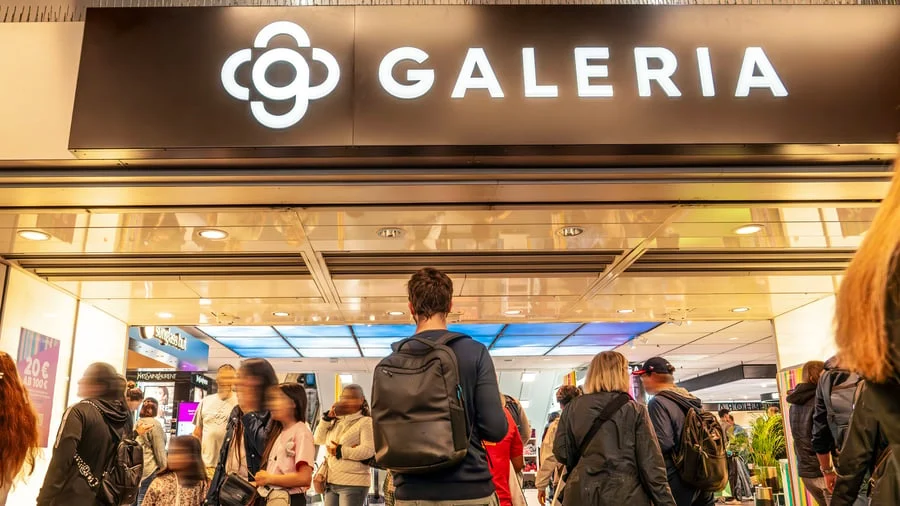
Düsseldorf, Germany – Galeria, the iconic German department store chain, has once again found itself facing severe financial headwinds, filing for insolvency at the Düsseldorf District Court on Friday morning. This marks the fourth such filing since 2020, a stark indicator of the protracted struggles plaguing the once-dominant retailer. The company confirmed the filing in a statement, revealing that creditors and the state have already had to waive claims totaling nearly five billion euros over the course of these previous financial crises.
A Familiar Path: Galeria’s Recurrent Insolvency Proceedings
The latest insolvency petition underscores the deep-seated financial challenges that have beleaguered Galeria for years. The department store sector in Germany, as in many parts of the world, has been undergoing a significant transformation, with a marked shift in consumer behavior towards online shopping and a decline in foot traffic to traditional brick-and-mortar establishments. Galeria, with its extensive network of large, often centrally located stores, has been particularly vulnerable to these seismic shifts in retail.
The company’s statement framed the insolvency filing as a necessary step to "create the legal framework to order the current situation, stabilize the company, and create the conditions for a sustainable future for Galeria." However, this optimistic outlook is tempered by the stark reality of the company’s repeated financial distress. Sources close to the matter indicate that this is likely to be an ordinary insolvency proceeding, rather than a self-administration procedure, suggesting a greater degree of external oversight and potentially a more challenging path to restructuring. Frank Kebekus has reportedly been proposed as the insolvency administrator, a figure who will play a crucial role in navigating the complex legal and financial landscape ahead.
A Timeline of Turmoil: Tracing Galeria’s Financial Decline
The history of Galeria’s recent financial difficulties is a grim chronicle of attempts to adapt and survive in a rapidly evolving retail environment.
- 2020: The COVID-19 pandemic dealt a significant blow to the retail sector, and Galeria was no exception. Faced with lockdowns, reduced consumer spending, and the acceleration of online retail, the company filed for insolvency protection. This period saw a substantial restructuring effort, including store closures and job cuts, aimed at streamlining operations and improving financial stability.
- 2021: Following the initial insolvency, Galeria emerged under new ownership. However, the underlying challenges persisted. The pandemic continued to impact physical retail, and the company struggled to regain its footing.
- 2022: Despite efforts to revitalize its brand and offerings, Galeria again found itself in financial straits, leading to a second insolvency filing. This round of proceedings focused on further cost-cutting measures and a reassessment of its store portfolio.
- 2023: The year saw yet another insolvency filing, highlighting the persistent difficulties in achieving sustainable profitability. This filing was accompanied by renewed efforts to find strategic investors and implement further operational adjustments.
The current filing in 2024 represents a continuation of this difficult journey, raising serious questions about the long-term viability of the department store chain.
The Scale of the Crisis: Financial Data and Previous Losses
The nearly five billion euros in waived claims by creditors and the state paint a vivid picture of the financial magnitude of Galeria’s struggles. This figure represents a substantial burden on the German economy and highlights the significant investment that has been made in attempts to keep the company afloat.
- Creditor Losses: A significant portion of these waived claims would typically be owed to suppliers, landlords, and financial institutions. The scale of these losses indicates the widespread impact of Galeria’s financial instability.
- State Support: The involvement of the state in waiving claims suggests that taxpayer money has, directly or indirectly, been used to support the company through various rescue or restructuring packages. This raises questions about the effectiveness of previous interventions and the allocation of public funds.
The department store sector in Germany has faced immense pressure. In 2023, for example, retail sales in Germany, while showing some signs of recovery, remained challenged by inflation and shifting consumer habits. Large department stores, in particular, have struggled to compete with the agility and specialized offerings of online retailers and smaller, niche brick-and-mortar stores. Galeria’s business model, heavily reliant on a broad range of products and a traditional shopping experience, has proven difficult to adapt to these changing market dynamics.
Internal Communications and Stakeholder Reactions
The decision to file for insolvency was reportedly preceded by a crisis meeting of shareholders on Thursday evening. This high-level discussion likely involved a stark assessment of the company’s financial position and a deliberation on the available options. Senior employees were reportedly informed of the situation around 8:30 PM, followed by the broader workforce at 11:00 AM on Friday. Such communication strategies are standard in insolvency proceedings, aiming to manage the flow of information and prepare employees for the impending changes.
While specific statements from creditors or government officials are still emerging, the repeated nature of these filings often leads to a tone of cautious concern and a call for decisive action from all parties involved. The German Trade Union Confederation (DGB) has consistently expressed concern for the employees of Galeria, emphasizing the need for social plans and support for affected workers during restructuring processes. Landlords of Galeria’s numerous properties will also be closely monitoring the situation, as store closures can lead to significant vacancies and financial losses.
Analysis of Implications: The Future of Galeria and German Retail
The latest insolvency filing casts a long shadow over the future of Galeria and the broader German retail landscape. The company’s extensive store network, employing thousands of people, is at the heart of this uncertainty.
- Job Security: The primary concern for many will be the impact on employment. Previous restructurings have resulted in significant job losses, and it remains to be seen what further measures will be implemented in this round of insolvency. The proposed insolvency administrator will be tasked with finding a way to preserve as many jobs as possible, but this will depend on the viability of the business going forward.
- Real Estate Impact: Galeria operates a large number of prime retail spaces across Germany. Store closures can have a cascading effect on local economies, particularly in city centers that rely on the foot traffic generated by these large stores. The future of these properties will be a key consideration in the insolvency proceedings.
- Consumer Impact: For consumers, the potential closure of Galeria stores means a reduction in choice and a loss of a familiar shopping destination. The company has historically offered a wide range of products, from clothing and home goods to electronics and cosmetics, often at competitive prices.
- Industry Benchmarking: Galeria’s struggles serve as a cautionary tale for other traditional retailers in Germany. The ongoing need for adaptation, digital transformation, and a keen understanding of evolving consumer preferences is paramount for survival in the modern retail environment. The success or failure of Galeria’s restructuring efforts will likely offer valuable lessons for the entire sector.
While the company’s statement expresses a desire for a "sustainable future," the repeated insolvency filings suggest that the path ahead is fraught with challenges. The success of this latest attempt to navigate financial distress will depend on a multitude of factors, including the willingness of creditors to compromise, the ability of the insolvency administrator to implement effective restructuring measures, and, crucially, the potential for a revitalized business model that can resonate with today’s consumers. The coming months will be critical in determining whether Galeria can indeed forge a sustainable future or if this marks the beginning of the end for the venerable department store chain.
