

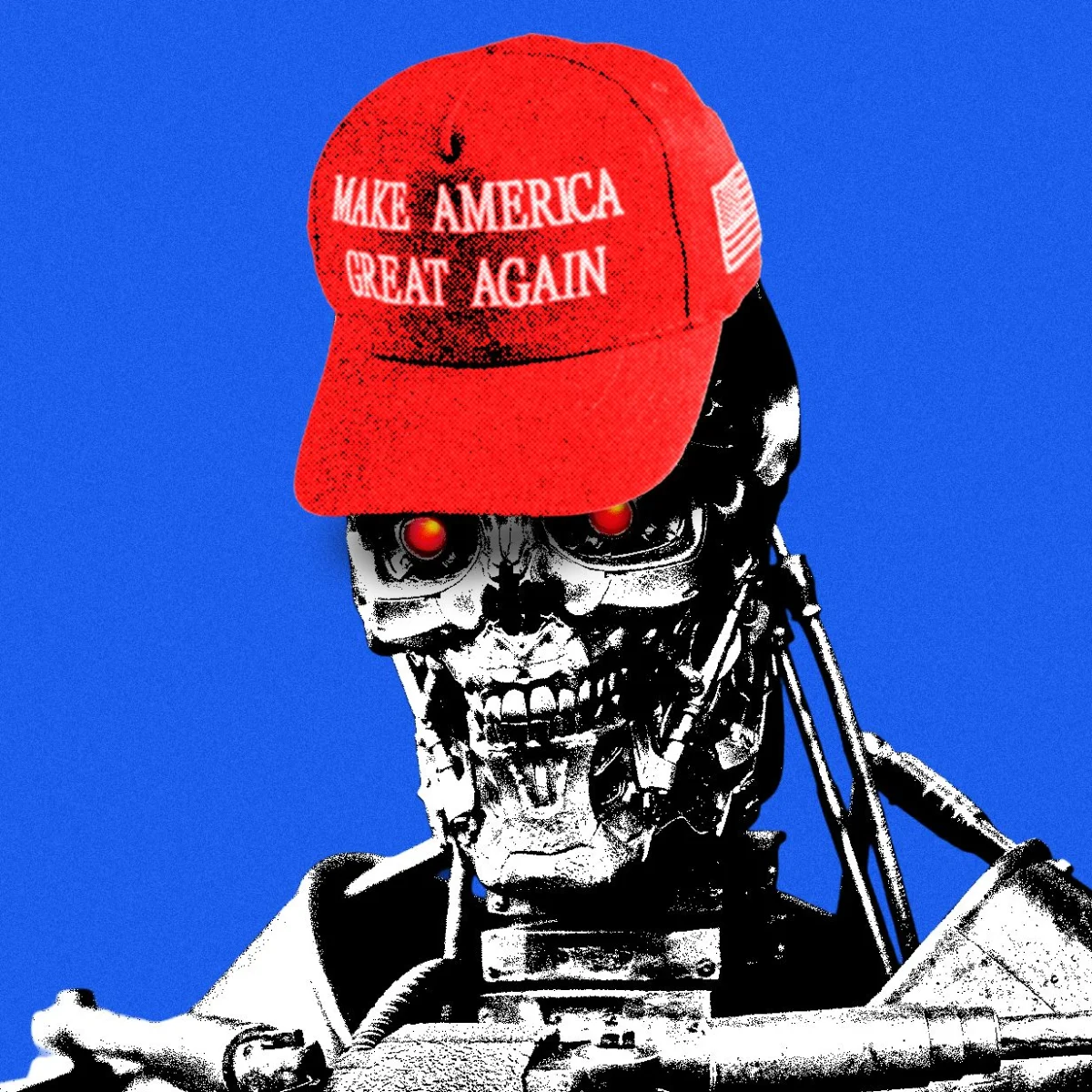
While many technology companies are focused on integrating humanoid robots into domestic chores or augmenting the workforce, Sankaet Pathak and his startup, Foundation Future Industries, are charting a decidedly different course: the development of an “all-American robot supersoldier.” Pathak, the CEO of Foundation, indicated in recent statements that the company is on the verge of equipping its humanoids with lethal capabilities, a significant escalation in the burgeoning field of military robotics. Though specific details remain undisclosed, Pathak alluded to "kinetic things we’re exploring," a euphemism for weapon systems, and anticipated an unveiling within the next few months. Beyond direct combat applications, Foundation posits its robots could serve critical roles in logistics, reconnaissance, and inspection on the battlefield.
The Growing Nexus of Humanoids and Defense
The U.S. military has long harbored an interest in humanoid robots, recognizing their potential to overcome the limitations of existing unmanned systems. The Defense Advanced Research Projects Agency (DARPA) played a pivotal role in fostering this interest through major humanoid robotics contests held between 2012 and 2015. More recently, the U.S. Army’s xTechHumanoids program actively funds the development of technologies aimed at creating "militarized humanoid capabilities." This strategic push aligns with a broader global trend in military modernization, where nations are rapidly exploring and adopting autonomous and semi-autonomous systems across various domains, including aerial drones, naval vessels, and ground vehicles.
The inherent advantage of legged systems, particularly humanoids, lies in their ability to traverse complex and challenging terrains that often prove insurmountable for wheeled or tracked vehicles. The overarching hope is that these advanced robots can assume a multitude of tasks currently performed by human soldiers, thereby reducing risk and increasing operational efficiency. The ongoing conflict in Ukraine has served as an inadvertent, yet critical, testing ground for many of these emerging technologies. Foundation has publicly stated that its flagship humanoid, the Phantom MK1, has undergone testing with Ukrainian forces, underscoring the real-world relevance and immediate demand for such capabilities.
A Lucrative Niche with High-Profile Backing
Foundation Future Industries’ singular focus on the military market appears to be a strategic masterstroke, yielding significant financial returns and attracting influential support. The company boasts government contracts valued in the millions of dollars and has secured high-profile backing that amplifies its mission. Notably, Eric Trump, the eldest son of former President Donald Trump, serves as both an investor and the company’s Chief Strategy Advisor. Pathak has spoken of Trump’s engineering inclinations, noting, "People don’t realize he actually is an engineer at heart, so he does a lot of milling and things like that at his home." This suggests a shared vision and a deep understanding of the technological underpinnings of Foundation’s ambitions.
During a Fox Business interview on April 23, Eric Trump enthusiastically promoted the company’s robotic advancements. He described interactions with the bots, highlighting their ability to "fist-bump you, they high-five you, they follow your commands." Trump further articulated the transformative potential of artificial intelligence and autonomy, stating, "When you bring in AI autonomy, it’s going to change industry, going to change military application, it’s going to change hospitality. The uses are unlimited, and I think it’s a very beautiful thing." This sentiment underscores a belief in the broad applicability and positive impact of advanced robotics across diverse sectors.
Genesis and Early Acquisitions
Foundation Future Industries was established in 2024, a relatively recent entrant into the competitive robotics landscape. Shortly after its inception, the company strategically acquired Boardwalk Robotics, a firm with a well-established track record of collaboration with the Institute for Human and Machine Cognition (IHMC). IHMC, a prominent nonprofit research institute based in Florida, is renowned for its pioneering work in humanoid robotics, providing Foundation with immediate access to specialized expertise and intellectual property.
Contractual Realities and Perceptions
While Eric Trump’s Fox Business appearance touted a "$24 million contract with the Pentagon," a closer examination of Foundation’s contractual portfolio reveals a more nuanced picture. When queried by WIRED for details regarding its government contracts, the company disclosed information pertaining to two contracts inherited from Boardwalk Robotics and three others secured through IHMC. This suggests that Foundation has not yet independently secured substantial new government funding but is leveraging the existing relationships and contracts of its acquired entities. This distinction is important in assessing the company’s current financial standing and its independent traction within the defense sector.
Expert Perspectives on Military Humanoids
Despite the complexities surrounding its contractual acquisitions, the strategic rationale for developing military humanoids remains compelling to many in the field. One roboticist, who requested anonymity due to business relationships, articulated the perceived value proposition: "If you put a military hat on, it makes a lot of sense, because it’s where soldiers still die—that first entry through a door." The roboticist invoked historical examples like the urban combat in Fallujah, where U.S. troops faced significant risks clearing buildings occupied by insurgents, highlighting the potential for robots to mitigate such dangers. The expert added, "I think it is so close to feasible that I’m surprised they’re not already fielded," underscoring the perceived urgency and practical applicability of this technology.
However, the narrative often presented by humanoid companies, including Foundation, frequently depicts robots performing tasks with a level of autonomy that remains aspirational. Other experts caution that fully autonomous robot soldiers are, at best, a distant prospect. Robert Griffin, a senior research scientist specializing in robotics at IHMC and a former technical advisor to Foundation, commented on the challenge of differentiating current capabilities from future potential. "Right now, it is difficult to disentangle the current state of the art from the potential of the state of the art," Griffin stated. He elaborated on the myriad challenges inherent in creating a functional combat humanoid, encompassing "the whole gamut of robotics."
Technological Hurdles and the Road Ahead
Recent advancements in robotics, driven by more affordable and efficient motors, sensors, and sophisticated AI algorithms, have enabled humanoids to perform increasingly complex dynamic movements, from parkour to martial arts. Nevertheless, critical challenges persist, particularly in perception and navigation when operating in unfamiliar or dynamic environments. While humanoids can exhibit remarkable balance, their ability to adapt to varied terrains often requires extensive, specialized training. Furthermore, the intricate task of physical manipulation—essential for actions as basic as grasping a weapon—remains a significant unsolved problem in robotics.
Robotics pioneer and MIT Professor Emeritus Rodney Brooks projects that humanoids will require more than a decade to reliably operate in complex and unpredictable settings. He outlines the rigorous demands for a combat-ready humanoid, including the capacity to traverse diverse terrains and building structures, navigate debris-strewn stairs, and overcome obstructed doorways. Brooks estimates that the transition from a successful laboratory demonstration to initial deployment in robotics typically spans "at least 10 years."
Ethical Considerations and the "Terminator" Factor
Beyond the technical hurdles, the deployment of advanced military autonomy, particularly in the form of humanoid combat robots, raises profound ethical questions. Concerns surrounding reliability, accountability, and the potential for reduced human oversight in decisions involving lethal force are paramount. The very notion of placing humanoid robots in combat scenarios evokes dystopian science fiction imagery, most notably the "Terminator" franchise, fueling public apprehension.
Pathak, however, appears dismissive of these doomsday scenarios. "From my perspective, the whole doomsday scenarios are very, very overblown for humanoids," he asserted. He also expressed a belief that robots and associated technologies could enhance the precision and efficiency of warfare, potentially leading to reduced collateral damage. "I wish I could end wars, but I don’t think I can," Pathak stated, "But I can definitely contribute in making war more precise, reducing collateral damage as much as possible."
Looking towards future iterations, Pathak indicated that the next version of Foundation’s humanoid, the Phantom MK2, is slated to be the first to feature both waterproof and dustproof capabilities, signaling a continued focus on ruggedization and operational resilience for demanding battlefield conditions. The development trajectory suggests a methodical approach to building increasingly robust and capable robotic systems for military applications, albeit one that faces substantial technological and ethical considerations.
