

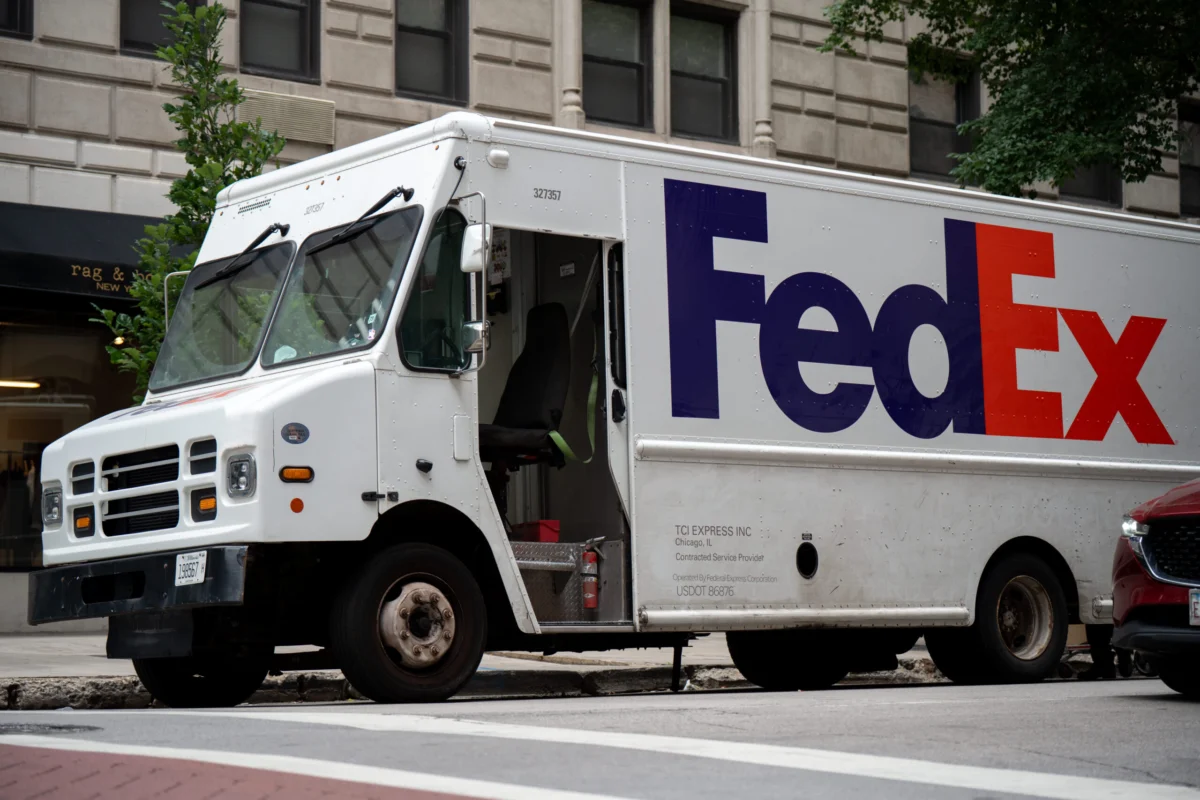
FedEx, the global logistics giant, announced on Wednesday an impressive performance for its latest fiscal quarter, surpassing Wall Street’s expectations on both revenue and adjusted earnings per share. This strong showing comes as the company navigates a period of profound strategic transformation, including a significant realignment of its fiscal calendar and the successful spin-off of its less-than-truckload (LTL) freight division. Despite the positive financial results and an upward revision to its full-year guidance, shares of the company experienced a slight dip in extended trading, a common market reaction often attributed to profit-taking or recalibration of forward-looking expectations following significant news.
Detailed Financial Performance: Navigating One-Time Adjustments
For the period ending September 30, FedEx reported adjusted earnings per share (EPS) of $3.74, a figure that comfortably exceeded the consensus analyst estimate, which had generally hovered around $3.40 to $3.50 per share. This beat on the bottom line was complemented by a revenue performance that also surpassed analyst projections, signaling robust operational execution and effective market navigation. The company’s ability to outperform in a dynamic global economy underscores the impact of its ongoing strategic initiatives aimed at enhancing efficiency and profitability.
However, a closer look at the reported figures reveals a distinction between GAAP net income and adjusted earnings, which is critical for a comprehensive understanding of FedEx’s financial health. The company reported a net income of $290 million, or $1.21 per share, for the quarter. This represents a notable decrease compared to the $650 million, or $2.73 per share, reported during the comparable period a year prior. This apparent decline in unadjusted net income was primarily influenced by several significant one-time items that, when excluded, paint a more accurate picture of the company’s core operational profitability. These adjustments included losses related to short-term investments, which can fluctuate with market conditions; gains on the extinguishment of debt, reflecting strategic balance sheet management; and certain restructuring costs associated with its ongoing transformation efforts. By removing these non-recurring or non-operational items, the adjusted EPS of $3.74 provides a clearer metric of the company’s underlying business performance.
The revenue performance, while not explicitly detailed in its entirety, was robust enough to beat top-line expectations. This indicates that despite potential macroeconomic headwinds, FedEx managed to maintain or grow its market share and pricing power, contributing to the overall positive financial narrative. The strength in key segments, particularly the Express U.S. division, played a pivotal role in this outcome, demonstrating effective strategies in yield management and volume growth.
A New Era: Fiscal Year Realignment and Strategic Spin-Offs
This quarter’s report marks a significant milestone for FedEx, as it represents the first earnings disclosure under its newly realigned fiscal year. The company has shifted the end of its fiscal calendar from May 31 to December 31. This strategic change is not merely an accounting adjustment; it reflects a broader initiative to better align its reporting periods with the calendar year, providing clearer comparability with industry peers and a more intuitive reflection of its performance, especially concerning the critical holiday shipping season. The previous fiscal year end often meant that the busiest period for logistics — the holiday season — was split across two reporting periods, making quarter-over-quarter and year-over-year comparisons less straightforward for analysts and investors. The new alignment is expected to streamline financial analysis and offer a more coherent narrative of the company’s annual performance.
Adding to the complexity and strategic depth of this reporting period is the successful spin-off of FedEx Freight into a separate publicly traded company. FedEx Freight, known for its less-than-truckload (LTL) shipping services, which cater to shipments too large for parcel services but not large enough to fill an entire truck, has historically been a strong performer for FedEx. The decision to spin it off into a distinct entity, now trading under its own ticker, FDXF, is a classic move designed to unlock shareholder value. By separating the LTL business, FedEx aims to allow both the core express and ground operations and the freight division to pursue independent strategic objectives, optimize their capital structures, and attract investor bases that may value each business segment differently.
The rationale behind such a significant structural change is multifaceted. For FedEx (the remaining express and ground operations), it allows for a sharper focus on its core parcel delivery network, potentially streamlining management attention, capital allocation, and strategic decision-making. The LTL business, while profitable, operates with different asset intensity, market dynamics, and competitive landscapes compared to express and ground parcel delivery. The spin-off is expected to create two more agile companies, each better positioned to capitalize on its respective market opportunities and respond to industry challenges. Analysts generally view such spin-offs positively, anticipating that the sum of the parts could be worth more than the whole, thereby enhancing shareholder value in the long term.
These structural changes are integral components of FedEx’s broader transformation program known as "DRIVE." Initiated with ambitious goals, the DRIVE program is a multi-year, multi-billion-dollar initiative designed to modernize the company’s operations, enhance efficiency, reduce costs, and improve service levels across its global network. The program encompasses everything from network optimization and automation in sortation facilities to digital transformation efforts aimed at improving customer experience and internal processes. The successful execution of DRIVE is seen by management as crucial to sustaining long-term profitability and competitiveness. The positive results reported this quarter are, in part, attributed to the early successes and ongoing progress of the DRIVE program, demonstrating that the strategic investments and operational adjustments are beginning to yield tangible financial benefits.
Operational Strengths and Market Dynamics
A key driver of the strong quarterly performance was the Express U.S. segment, which reported a significant increase in operating income. This improvement was primarily fueled by higher package yields and increased volume. "Yield" in the shipping industry refers to the average revenue generated per package, indicating strong pricing power and a favorable mix of services. The increase in volume suggests robust demand for FedEx’s express services, potentially benefiting from ongoing e-commerce growth, a resilient business-to-business (B2B) shipping market, or successful market share capture. This performance is particularly noteworthy given the broader macroeconomic environment, which has presented a mixed bag of challenges and opportunities for logistics providers.
Globally, the logistics sector has been navigating a complex landscape characterized by fluctuating fuel costs, persistent labor market tightness, and evolving consumer spending patterns. While inflation has been a concern, potentially dampening consumer demand for non-essential goods, the continued reliance on e-commerce and the need for reliable supply chain solutions for businesses have provided a foundational level of demand. FedEx’s ability to increase yields in this environment indicates effective pricing strategies and a focus on high-value market segments, as highlighted by CEO Raj Subramaniam.
The competitive landscape remains intense, with formidable rivals such as UPS, Amazon Logistics, and various regional carriers vying for market share. In this environment, FedEx’s strategic investments in network optimization, technology, and service differentiation become critical. The company’s emphasis on its global network and diverse service portfolio, from express air freight to ground parcel delivery, allows it to cater to a wide range of customer needs, positioning it strategically against more specialized competitors. The DRIVE program’s focus on efficiency and service enhancements is directly aimed at bolstering this competitive edge.
Leadership Transitions and Future Vision
Complementing the financial and operational transformations, FedEx has also announced a significant leadership change in its finance department. Earlier this week, the company named Jamere Jackson as its new Executive Vice President and Chief Financial Officer, with his appointment effective November 30. Jackson brings a wealth of experience from his previous role as CFO of AutoZone, a prominent automotive aftermarket retailer, and prior executive positions at Nielsen and General Electric. His appointment comes at a crucial time for FedEx, as it continues to execute its DRIVE transformation and integrate the financial implications of its fiscal year realignment and the Freight spin-off.
Jackson will succeed Claude Russ, who served as interim CFO since June 1, following the departure of John Dietrich, who had announced his step down from the role in April. The transition to a permanent CFO with a strong track record in financial strategy, operational efficiency, and investor relations signals FedEx’s commitment to robust financial stewardship during this period of intense change. A new CFO typically plays a pivotal role in shaping financial policy, capital allocation strategies, and investor communications, making Jackson’s arrival a key development for the company’s future trajectory.
CEO Raj Subramaniam’s statements consistently emphasize the ongoing commitment to strategic execution. His comment, "As our strong operating results and adjusted free cash flow demonstrate, FedEx is winning across high-value market segments while we optimize our network, driving an increase to our full-year outlook," encapsulates the company’s current strategic narrative. It highlights not only the financial successes but also the underlying operational improvements and market positioning that are driving these results. The focus on "adjusted free cash flow" is particularly important for investors, as it indicates the company’s ability to generate cash after accounting for capital expenditures, a key measure of financial health and flexibility for future investments or shareholder returns.
Revised Outlook: A Vote of Confidence
Perhaps one of the most significant takeaways from the earnings report is FedEx’s decision to raise its full-year outlook for the newly realigned fiscal year. The company is now expecting adjusted earnings per share to be in the range of $18.00 to $18.60, an increase from its prior guidance of $16.90 to $18.10. This upward revision is a strong vote of confidence from management, signaling their belief in the sustained momentum of their strategic initiatives and the company’s ability to navigate future market conditions successfully. Elevated guidance typically reassures investors and analysts that the company’s internal projections are optimistic and that it expects to continue delivering strong results.
Furthermore, FedEx revised its 2026 revenue growth expectation, now projecting a roughly 12% year-over-year increase, up from its previous guidance of an 11% increase. This revised revenue forecast, while a seemingly modest one percentage point increase, reflects improved visibility into market demand and the effectiveness of the company’s sales and pricing strategies. For a company of FedEx’s scale, a one percentage point increase in projected revenue growth can translate into billions of dollars, further solidifying the positive outlook. This indicates that management anticipates not only improved profitability through cost efficiencies but also continued top-line expansion, driven by market demand and competitive gains.
Chronology of Transformation: A Company in Motion
FedEx’s journey to this strong quarterly report has been marked by a series of deliberate strategic decisions and significant transformations. The seeds of the current strategic overhaul were planted in early 2022 with the announcement of the DRIVE program, signaling a renewed focus on efficiency and profitability under CEO Raj Subramaniam, who assumed the role in June 2022. This was followed by the initial announcements regarding the fiscal year realignment and the exploration of strategic alternatives for FedEx Freight.
Throughout late 2022 and 2023, the company provided regular updates on the progress of its DRIVE program, detailing cost-saving targets and network optimization efforts. The decision to spin off FedEx Freight was finalized and executed, becoming effective prior to this latest earnings report, culminating months of preparation and regulatory approvals. The various CFO transitions, from John Dietrich’s announced departure to Claude Russ’s interim leadership and now Jamere Jackson’s permanent appointment, also form part of this dynamic timeline, reflecting a continuous evolution in the company’s financial leadership structure to support its ambitious strategic agenda.
Looking ahead, the company’s immediate focus will be on the seamless integration of its new CFO, the continued rigorous execution of the DRIVE program, and navigating the crucial holiday shipping season under its new fiscal calendar. The next few quarters will provide further insights into the long-term impact of the Freight spin-off and the sustained benefits of the efficiency initiatives.
Broader Implications for the Logistics Sector
FedEx’s strong performance and optimistic outlook carry broader implications for the entire logistics and shipping sector. As one of the industry’s bellwethers, its results often serve as an indicator of global economic health and the resilience of supply chains. The company’s success in increasing yields and volumes in its express segment, alongside its strategic restructuring, suggests that premium, time-sensitive shipping remains robust and that companies capable of optimizing their networks and services can thrive even in uncertain economic climates.
The market’s initial subdued reaction to the strong report, with shares falling slightly in extended trading, might reflect a broader cautious sentiment among investors, or it could simply be a case of "buy the rumor, sell the news," where positive expectations were already priced into the stock. However, the upward revision of full-year guidance typically provides a more enduring boost to investor confidence, signaling a positive trajectory for the company’s financial performance.
The strategic moves by FedEx, particularly the fiscal year realignment and the Freight spin-off, could also set precedents or inspire similar transformations within the industry. Companies are increasingly seeking ways to unlock shareholder value, streamline operations, and focus on core competencies. The successful execution of such complex structural changes by FedEx demonstrates a blueprint for large, diversified logistics providers looking to adapt to an ever-evolving market landscape. The emphasis on operational efficiency, cost reduction, and strategic capital allocation will continue to be critical themes for all players in the global shipping industry as they contend with ongoing digital transformation, sustainability pressures, and dynamic customer expectations.
