

The report, authored by the London-based human rights consultancy Global Rights Compliance (GRC), details a sophisticated operation that appears to be facilitating the exploitation of North Korean laborers, circumventing international sanctions imposed on Pyongyang. The scheme, as outlined by GRC, involves a Moscow-based businessman, identified as Vladimir Sokolov, who allegedly uses an online platform to connect Russian companies with North Korean workers. Crucially, these workers are reportedly presented as students, a tactic designed to mask their true status and the nature of their employment, thereby sidestepping scrutiny related to sanctions against the Democratic People’s Republic of Korea (DPRK).
This revelation comes at a time of heightened international concern over North Korea’s continued development of its nuclear and ballistic missile programs, which have led to a stringent regime of United Nations Security Council sanctions. These sanctions explicitly prohibit the employment of North Korean nationals abroad, a measure intended to cut off a significant source of foreign currency for the regime. The alleged actions of Sokolov and his network represent a direct challenge to these international efforts.
The Modus Operandi: Masking Labor Exploitation
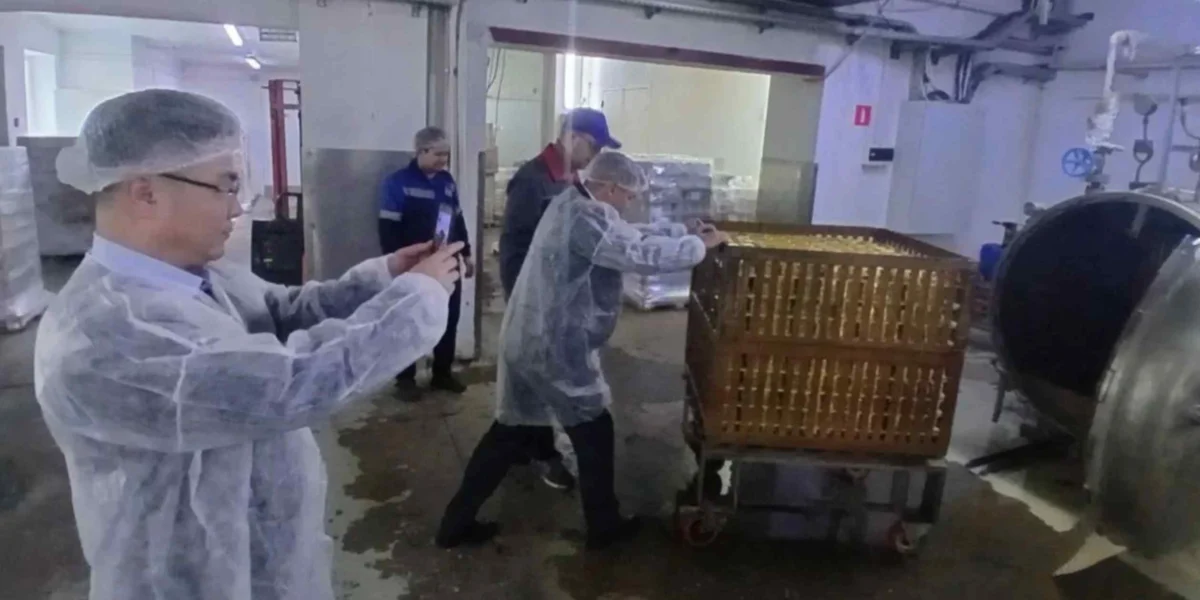
According to the GRC report, the operation leverages the guise of educational exchanges or internship programs to bring North Korean citizens into Russia. These individuals are then allegedly assigned to various Russian companies, often in sectors requiring manual labor, such as construction or manufacturing. The report points to social media postings by Sokolov, which allegedly showcase North Korean workers at facilities like KPP Ruskon in the Moscow Oblast, further substantiating the claims. These images, while presented without explicit commentary on their working conditions, are interpreted by GRC as evidence of the scheme’s operation.
The disguise as "students" is a critical element of this alleged forced labor program. By portraying the North Koreans as participants in academic or vocational training, the recruiters and employers can potentially avoid reporting requirements and labor inspections that would typically apply to foreign workers. This subterfuge allows for the workers to be engaged in employment without the legal protections and oversight afforded to legitimate laborers, making them vulnerable to exploitation.
Background: North Korea’s History of Overseas Labor and Sanctions
The use of overseas labor has historically been a significant source of revenue for the North Korean government. For decades, Pyongyang has dispatched tens of thousands of its citizens to work in countries like China, Russia, and formerly, Eastern European nations. These workers, often sent to construction sites, mines, and factories, typically earned wages that were heavily taxed by the state, with only a fraction reaching the workers themselves. This system has been widely condemned by international human rights organizations as a form of state-sanctioned forced labor, with workers facing harsh conditions, limited freedoms, and often, the confiscation of their passports by North Korean handlers.
In response to North Korea’s nuclear tests and missile launches, the UN Security Council has progressively tightened sanctions against the DPRK. Resolution 2397, adopted in 2017, notably mandated the repatriation of all North Korean nationals working abroad by the end of 2019. This resolution aimed to cripple a key source of foreign currency for the Kim Jong Un regime. Despite this, reports of North Korean laborers continuing to work abroad, often in violation of sanctions, have persisted.
The Role of Vladimir Sokolov and the Online Platform
Vladimir Sokolov, identified as the central figure in this operation, appears to be an entrepreneur who has found a way to profit from the demand for cheap labor in Russia while simultaneously circumventing international sanctions. The online platform he allegedly utilizes serves as a crucial intermediary, connecting him with Russian companies seeking workers and facilitating the logistical arrangements for bringing North Koreans into the country under false pretenses.
The exact nature and reach of this online platform remain under investigation. However, its existence suggests a degree of organization and sophistication in the operation. It implies that Sokolov has established channels for recruitment within North Korea and for the dissemination of these workers to various employers across Russia. The use of social media by Sokolov to publicize his activities, even if indirectly, points to an attempt to present a veneer of legitimacy or to boast about his operational capabilities.
Chronology of Allegations and the Report’s Findings
While the GRC report was released on Thursday, October 29, 2026, the alleged activities it describes have likely been ongoing for some time. The report’s findings are based on a comprehensive investigation that would have involved the collection and analysis of various forms of evidence. This typically includes open-source intelligence, such as social media posts, public records, and media reports, as well as potentially confidential sources and testimonies.
The specific timeline of Sokolov’s alleged involvement and the operation’s establishment is not detailed in the initial summary of the report. However, the fact that the report highlights a specific Moscow businessman and an online platform suggests a current and active operation. The GRC’s work often involves monitoring ongoing human rights abuses and identifying the actors responsible, indicating that this is not an isolated incident but part of a broader pattern of sanctions evasion.
Supporting Data and the Scale of the Problem
Quantifying the exact number of North Korean workers being supplied through such illicit channels is inherently challenging due to the clandestine nature of the operations. However, GRC’s report likely contains estimates or indicators of the scale of this particular network. Historically, North Korean overseas workers have numbered in the tens of thousands, with Russia being a significant destination. Even if Sokolov’s operation represents a fraction of this total, it still signifies a substantial number of individuals potentially subjected to forced labor.
The report’s emphasis on the "disguised as students" tactic is a key piece of supporting data. This method of deception highlights the lengths to which operators will go to circumvent sanctions and exploit vulnerable populations. The economic implications for Russia are also significant. Access to a supply of cheap, unprotected labor can provide a competitive advantage to companies that utilize it, potentially distorting the labor market and undermining fair competition.
Potential Reactions and Implications
International Scrutiny and Sanctions Enforcement: The GRC report is expected to trigger increased international scrutiny of Russia’s compliance with UN sanctions. Governments that have championed the sanctions regime, such as the United States, the European Union, and Japan, are likely to demand explanations from Moscow and may consider further measures if Russia is found to be complicit or negligent in preventing such activities. This could include targeted sanctions against individuals and entities involved, or even broader diplomatic pressure.
North Korea’s Response: Pyongyang is unlikely to publicly acknowledge or comment on such allegations, as it would contradict its official narrative of a sovereign nation with legitimate economic activities. However, internally, such reports could lead to increased efforts to tighten control over its overseas labor program and to ensure greater secrecy in its operations.
Human Rights Organizations: Human rights groups will likely seize upon the report as further evidence of the Kim regime’s ongoing human rights abuses and the international community’s responsibility to ensure that sanctions are effectively implemented. They will likely call for stronger enforcement mechanisms and for greater accountability for those who facilitate these exploitative practices.
Russian Companies: Russian companies identified as beneficiaries of this alleged labor scheme face significant reputational damage and potential legal repercussions. Companies that have profited from the use of North Korean labor under false pretenses could be subject to investigations, fines, and blacklisting. The report serves as a stark warning to businesses operating in Russia about the risks associated with engaging with potentially illicit labor supply chains.
Broader Impact and the Future of Sanctions
The implications of this report extend beyond the immediate case of Vladimir Sokolov. It underscores the persistent challenges in enforcing international sanctions against North Korea, particularly in a globalized economy where clandestine networks can exploit loopholes. The case highlights the adaptability of states and individuals seeking to circumvent international norms.
The effectiveness of sanctions is heavily reliant on comprehensive enforcement and the willingness of all member states to uphold them. This report suggests that gaps remain in Russia’s implementation of UN Security Council resolutions concerning North Korean labor. It raises questions about the adequacy of monitoring mechanisms and the effectiveness of penalties for violations.
The ongoing use of North Korean labor, even under the guise of legitimate employment, perpetuates a cycle of exploitation and human rights abuses. It also provides a financial lifeline to a regime that continues to defy international calls for denuclearization. For the international community, this situation presents a continuous dilemma: how to effectively pressure North Korea without further isolating its population, while simultaneously ensuring that economic activities do not inadvertently support its illicit weapons programs.
The GRC report, by shedding light on the intricate methods used to circumvent sanctions, serves as a critical call to action. It necessitates a re-evaluation of enforcement strategies, increased transparency in international labor markets, and a renewed commitment to holding accountable those who profit from human exploitation and undermine global security efforts. The challenge ahead lies in translating these findings into concrete actions that will dismantle such illicit networks and protect the rights of vulnerable workers.
