

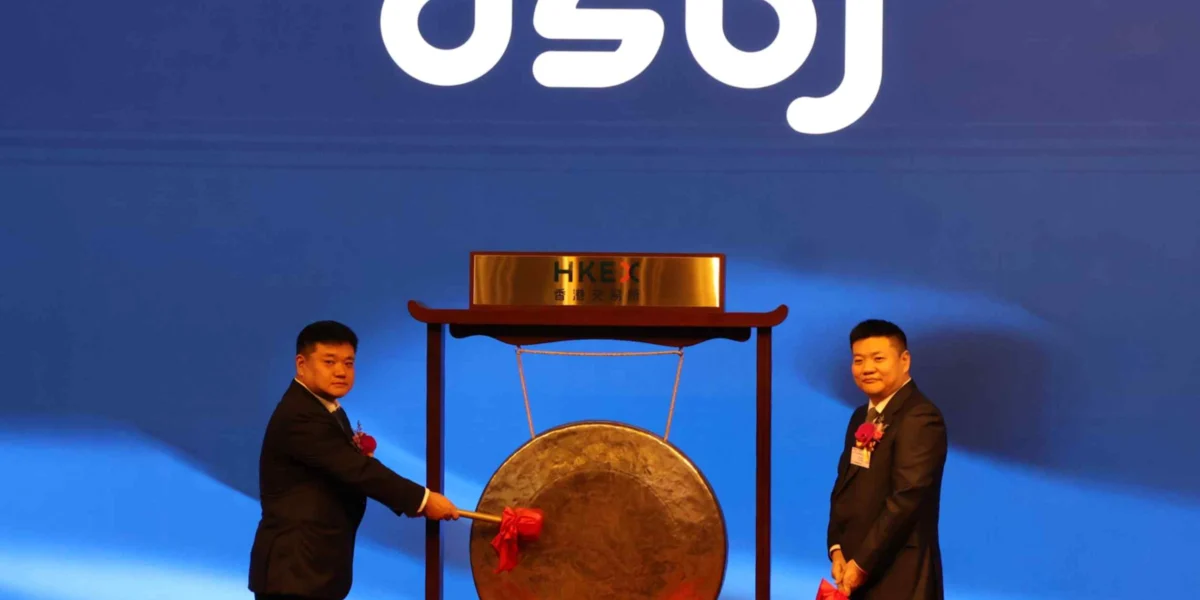
HONG KONG – Suzhou Dongshan Precision Manufacturing, a prominent Chinese supplier of critical components for artificial intelligence servers, encountered a subdued reception on its inaugural trading day on the Hong Kong Stock Exchange on Wednesday, October 28, 2026. The company’s initial public offering (IPO) saw its shares trade below expectations, reflecting a growing cautiousness among investors regarding the sustainability of the current artificial intelligence (AI) boom and its downstream supply chains. The listing, which had been anticipated as a key indicator of investor sentiment towards China’s burgeoning AI hardware sector, instead highlighted emerging headwinds and recalibrated market expectations.
Background to the IPO
The decision by Suzhou Dongshan Precision Manufacturing to list in Hong Kong followed a period of intense global interest in AI technology, which has fueled unprecedented demand for specialized hardware, particularly high-performance servers. The company, headquartered in Suzhou, a major industrial hub in China, has established itself as a key player in the manufacturing of precision components essential for these advanced computing systems. These components include intricate metal casings, heat dissipation solutions, and structural parts that are vital for the reliability and performance of AI servers. The company’s customer base reportedly includes some of the world’s leading technology giants and AI infrastructure providers, underscoring its strategic importance in the global technology ecosystem.
The IPO aimed to raise significant capital to fund the company’s expansion plans, including increased production capacity, research and development into next-generation components, and potentially strategic acquisitions. Analysts had projected a strong performance for Dongshan Precision, given the projected continued growth in AI deployments across various sectors, from cloud computing and data analytics to autonomous vehicles and scientific research. However, the company’s debut coincided with a broader market recalibration, where investors are increasingly scrutinizing the long-term profitability and competitive landscape of companies heavily reliant on the AI narrative.
Timeline of Events
The journey to Dongshan Precision’s IPO involved several key stages. Preliminary discussions and preparations for the listing likely began in late 2025 or early 2026, following a period of robust financial performance and growing recognition of the company’s role in the AI supply chain. The company formally submitted its listing application to the Hong Kong Stock Exchange in early 2026. The subsequent months were dedicated to rigorous due diligence, regulatory approvals, and roadshows to engage potential investors.
The roadshow phase, typically involving presentations to institutional investors, fund managers, and high-net-worth individuals, was crucial in building demand for the offering. During these sessions, company executives, including Chairman Yuan Yonggang and General Manager Yuan Yongfeng, would have articulated their vision, growth strategies, and the financial projections underpinning their valuation. The pricing of the IPO, a critical factor in determining the initial trading performance, would have been set after gauging investor appetite during the book-building process.
The IPO officially opened for subscription in mid-October 2026, allowing retail and institutional investors to place their orders. The closing of the subscription period and the announcement of the final IPO price typically precede the first day of trading by a few days. The trading debut on Wednesday, October 28, 2026, marked the culmination of this extensive process, but the market’s reaction fell short of the optimistic forecasts that often accompany IPOs in high-growth sectors.
Supporting Data and Market Context
The underwhelming debut of Suzhou Dongshan Precision Manufacturing comes at a time when the broader technology sector, and particularly the AI segment, is experiencing a period of reassessment. While the long-term prospects for AI remain exceptionally strong, investors are becoming more discerning. Data from market research firms indicates a significant increase in capital expenditure by major technology companies on AI infrastructure, including the procurement of AI servers. For instance, a report by IDC in Q3 2026 projected a 25% year-on-year growth in the global AI infrastructure market, reaching an estimated $200 billion by the end of 2027.
However, this growth is not without its challenges. Several factors may have contributed to the subdued investor sentiment surrounding Dongshan Precision’s IPO:
- Intensifying Competition: The AI hardware supply chain is becoming increasingly competitive. Numerous companies, both established and emerging, are vying for market share, potentially impacting profit margins for component suppliers.
- Geopolitical Tensions and Supply Chain Risks: Ongoing geopolitical uncertainties, particularly concerning trade relations between major global economies, can introduce volatility into supply chains. Investors might be factoring in potential disruptions, tariffs, or export restrictions that could affect Chinese manufacturers.
- Valuation Concerns: While the AI boom has driven valuations for many tech companies, there’s a growing concern about whether current valuations are sustainable or are based on overly optimistic growth projections. Investors may be applying a more conservative valuation multiple to companies in the hardware supply chain, seeking tangible profitability and market leadership.
- Sector Rotation: Markets often experience cyclical shifts. Investors might be rotating out of high-growth, speculative technology stocks and into more defensive or value-oriented assets, especially in the face of rising interest rates or broader economic uncertainties.
- Specific Company Performance Metrics: While the article does not provide these, it’s plausible that detailed financial disclosures preceding the IPO may have revealed margins or growth rates that, while healthy, did not meet the exceptionally high expectations set by the AI narrative, leading to a recalibration by investors.
Inferred Reactions and Analysis
While official statements from the company regarding their IPO performance are not yet available in this context, the subdued debut likely signals a degree of disappointment for Suzhou Dongshan Precision Manufacturing and its underwriters. The company’s leadership, Chairman Yuan Yonggang and General Manager Yuan Yongfeng, who are brothers, would have been aiming for a strong market entry to bolster confidence and facilitate future capital-raising efforts. The initial trading performance, however, suggests that investor sentiment is more cautious than anticipated.
From an analytical perspective, Dongshan Precision’s experience serves as a bellwether for the broader Chinese AI hardware sector’s reception in international markets. A strong debut would have reinforced Hong Kong’s position as a preferred listing venue for Chinese technology firms. Conversely, a weaker-than-expected performance could prompt other companies to re-evaluate their IPO strategies or timelines, potentially leading to a slowdown in new listings from the sector.
The implications extend beyond the company itself. For investors, it underscores the need for thorough due diligence beyond the headline AI narrative, focusing on the company’s fundamental strengths, competitive advantages, and realistic growth prospects. For the Hong Kong Stock Exchange, it highlights the ongoing challenge of attracting and retaining high-profile technology listings in a competitive global landscape, particularly when market sentiment shifts.
Broader Impact and Future Outlook
The performance of Suzhou Dongshan Precision Manufacturing on its IPO day is not merely a story of one company’s market entry; it reflects a significant inflection point in investor sentiment towards the AI sector. As the initial exuberance surrounding AI begins to mature, the market is demanding more evidence of sustainable profitability, defensible market positions, and resilient business models.
For companies like Dongshan Precision, the path forward will likely involve a greater emphasis on operational efficiency, innovation in component design to maintain a competitive edge, and a clear strategy to navigate potential supply chain disruptions. Diversification of their customer base and geographical markets, where feasible, could also be crucial for long-term stability.
The ongoing development of AI technology itself, with its rapid advancements and evolving applications, will continue to drive demand for sophisticated hardware. However, the companies that succeed in this dynamic environment will be those that can consistently deliver value, adapt to changing market conditions, and demonstrate robust financial health, irrespective of the prevailing market narrative. The quiet debut of Dongshan Precision serves as a potent reminder that in the world of high finance, even the most exciting technological frontiers are subject to the sober realities of investor scrutiny and market dynamics. The company’s ability to rebound and demonstrate its long-term value proposition in the coming months and years will be closely watched by the industry and the financial community alike.
