

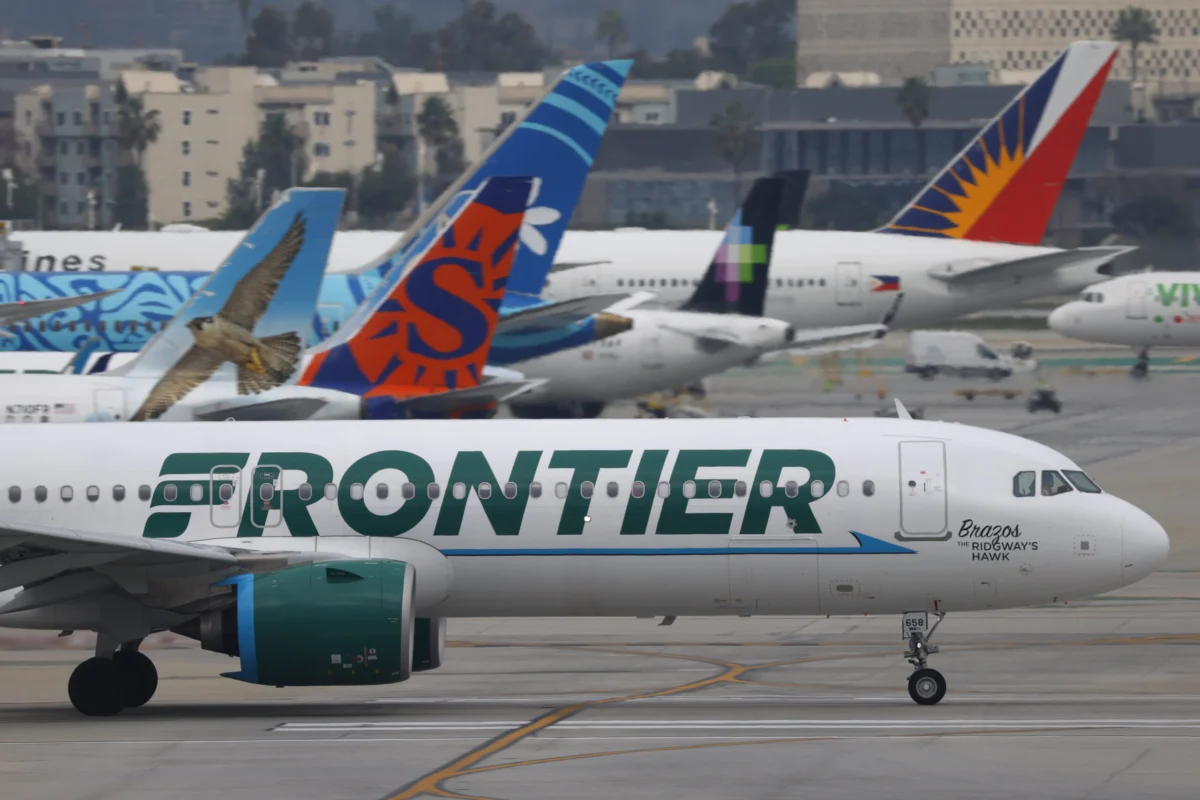
Denver-based Frontier Airlines reported a substantial 71% increase in average airfare during the third quarter, a strategic move by the nation’s largest budget airline to mitigate the impact of an even larger surge in jet fuel prices. Despite these significant price adjustments, the carrier demonstrated remarkable resilience in passenger demand, underscoring the enduring consumer appetite for travel even in a challenging economic environment.
Q3 Financial Performance: A Balancing Act
For the third quarter, Frontier’s fare revenue per passenger averaged $67.82, a sharp increase from $39.74 recorded in the same period last year. When factoring in the airline’s extensive array of ancillary fees—including charges for checked baggage, carry-on bags, seat selection, and other services—the total revenue per passenger climbed 30% year-over-year to $138.22. This impressive growth in per-passenger revenue reflects Frontier’s aggressive approach to revenue management and its reliance on the ultra-low-cost carrier (ULCC) business model, which often unbundles services to offer a lower base fare while generating significant income from add-ons.
Despite the higher prices, customer loyalty and demand remained strong. Frontier’s passenger count rose by a notable 18% during the quarter, transporting over 9.8 million people. This represents an increase of approximately 1.5 million passengers compared to the previous year’s third quarter, indicating that price sensitivity, while a factor for budget travelers, did not deter a significant portion of its target market. The company emphasized that demand continues to be robust, even at these elevated price points, suggesting that the post-pandemic travel rebound maintains its momentum.
However, the significant increase in revenue and passenger numbers was not enough to offset the spiraling operational costs. Frontier widened its third-quarter net loss to $104 million, a considerable increase from a $77 million loss reported in the prior year’s third quarter. The primary culprit behind this deepened loss was an astronomical 82% surge in its fuel bill, which soared to $425 million. This highlights the precarious position of airlines, particularly ULCCs with tighter margins, when faced with external economic pressures beyond their direct control.
The Jet Fuel Conundrum: An Industry-Wide Challenge
Jet fuel prices represent one of the largest operating expenses for airlines, typically second only to labor costs. The dramatic 82% increase in Frontier’s fuel bill underscores a pervasive challenge across the entire aviation industry. Global geopolitical instability, supply chain disruptions, and production cuts by major oil-producing nations have contributed to a volatile and upward-trending energy market. For ULCCs like Frontier, which often operate on thinner profit margins compared to full-service carriers, absorbing such massive increases in fuel costs without significantly impacting profitability is an extremely difficult task.
Airlines generally have a few strategies to manage fuel price volatility: hedging, implementing fuel surcharges, or increasing base fares. While hedging—a financial strategy to lock in future fuel prices—can offer protection, it also comes with risks and costs, and not all carriers engage in extensive hedging. Frontier’s substantial fare increase indicates a direct passing of these increased costs to consumers, a common tactic for budget airlines aiming to maintain their core low-fare proposition while covering rising expenses. The fact that other major carriers, from Delta Air Lines to Southwest, have also reported that customers are largely continuing to book flights despite higher fares confirms that this is an industry-wide trend of consumer resilience.
Historically, periods of high fuel prices have led to airline consolidation, capacity reductions, and sometimes even bankruptcies. The current environment tests the fundamental viability of the ULCC model, which relies heavily on high load factors, rapid aircraft turnarounds, and cost efficiency to offer competitive pricing. Maintaining this value proposition becomes increasingly difficult when a core input cost like fuel experiences such unprecedented escalation.
Passenger Resilience and Demand Trends
The sustained growth in passenger traffic, despite significant fare increases, points to several underlying factors. Firstly, the pent-up demand for travel following the global pandemic continues to be a powerful driver. Consumers, having forgone travel experiences for an extended period, appear willing to allocate a larger portion of their disposable income towards flights, even if it means paying more. Secondly, the overall economic environment, while showing signs of inflation, has also seen relatively strong employment figures in many regions, providing consumers with the financial capacity to absorb higher travel costs.
Thirdly, for many travelers, budget airlines like Frontier remain the most accessible option for air travel. Even with increased base fares and ancillary fees, the total cost of a Frontier ticket often undercuts those of legacy carriers, particularly on leisure routes. This positions ULCCs favorably in a market where value remains a key consideration, even if the definition of "value" has shifted slightly due to broader economic pressures. The 18% jump in passenger count for Frontier, translating to 1.5 million additional travelers, is a testament to the continued relevance of its model in capturing a large segment of the leisure and price-sensitive travel market.
The Ultra-Low-Cost Carrier Model Under Pressure
The ultra-low-cost carrier (ULCC) model is built on an aggressive cost-cutting strategy, often utilizing a single aircraft type (like the Airbus A320 family for Frontier) to streamline maintenance and training, operating point-to-point routes to avoid hub costs, and generating substantial revenue from ancillary services. For Frontier, ancillary revenues are not just supplementary; they are integral to its profitability. The reported total revenue per passenger of $138.22, which includes these fees, highlights their importance.
However, the recent financial results suggest that even with robust ancillary revenue generation and increased base fares, the ULCC model is under significant strain from external cost pressures. A widened loss, despite strong top-line revenue growth, indicates that the cost base is expanding at an even faster rate. This situation forces ULCCs to constantly evaluate their operational efficiencies, route networks, and pricing strategies to find the delicate balance between attracting price-sensitive customers and covering rapidly escalating expenses. The sustainability of passing on such significant cost increases to consumers without eventually eroding demand is a critical question for Frontier and its peers.
Frontier’s Strategic Landscape and Competitive Dynamics
Frontier’s financial performance occurs within a dynamic competitive landscape. The airline had already cemented its position as the largest discount carrier in the United States, notably eclipsing Spirit Airlines. Spirit, a long-time rival in the ULCC space, has faced mounting operational and financial pressures over recent years, issues that were projected to culminate in its reported shutdown in May 2026, according to earlier industry forecasts. Frontier’s ascendancy came as Spirit grappled with persistent flight disruptions, labor disputes, and the complexities of a proposed merger with JetBlue Airways that ultimately failed to materialize due to antitrust concerns.
The potential exit or significant contraction of Spirit Airlines from the market could reshape the competitive environment for Frontier. While it might reduce direct competition on certain routes, it also means a reallocation of capacity and potential consolidation among other budget airlines. Frontier, therefore, needs to solidify its market position, expand its route network strategically, and continue to differentiate its offerings to capture market share from former Spirit passengers while fending off other competitors like Allegiant Air and even the basic economy offerings of legacy carriers. The aggressive fare increases might be a calculated risk, betting on its established market presence and a strong demand environment to maintain its customer base.
Looking Ahead: Q4 Outlook and Future Challenges
Looking ahead, Frontier provided a forecast for the fourth quarter, indicating a potential return to adjusted profitability. The airline expects to post an adjusted loss of 15 cents per share to adjusted earnings of as much as 5 cents per share. This forecast suggests cautious optimism and a belief that cost management initiatives, coupled with continued strong demand and potentially stabilizing fuel prices, could lead to improved financial performance. Achieving profitability, even on an adjusted basis, would be a significant milestone after a challenging third quarter.
However, the path forward remains fraught with challenges. The volatility of jet fuel prices is notoriously difficult to predict, and any renewed surges could quickly derail profit forecasts. Labor costs, another significant expense, are also on an upward trend across the industry as airlines face a competitive market for pilots, flight attendants, and ground staff. Furthermore, consumer sentiment could shift if broader economic conditions deteriorate, potentially leading to a pullback in discretionary spending on travel.
Frontier’s ability to maintain its growth trajectory and improve its financial health will depend on its capacity to efficiently manage these external pressures while continuing to offer a compelling value proposition to its customers. Its strategy of relying heavily on ancillary revenue will likely intensify, with innovations in service bundling and new fee structures to maximize per-passenger yield.
Analyst and Market Reaction
Following the earnings report, Frontier shares experienced a positive reaction, climbing more than 9% in afternoon trading. This market response suggests that investors may be viewing the fare increases and robust passenger numbers as a sign of underlying strength and effective management in a difficult environment, rather than focusing solely on the widened net loss. Analysts likely recognized the strategic necessity of passing on fuel costs and the resilience of demand, indicating confidence in the airline’s ability to navigate current headwinds.
However, the long-term outlook will hinge on consistent profitability and sustainable growth. Investors will be closely watching for signs that Frontier can not only cover its escalating costs but also generate sufficient free cash flow to invest in fleet modernization, network expansion, and customer experience enhancements. The stock’s performance will remain tied to global energy markets and the broader economic health that influences consumer travel patterns.
Broader Industry Context and Implications
Frontier’s experience is not isolated; it mirrors broader trends across the airline industry. Carriers ranging from full-service giants like Delta Air Lines to other budget operators have universally acknowledged that record jet fuel prices are eroding profits, even as customer demand for flights remains remarkably strong. This collective experience points to a fundamental shift in the economics of air travel. The era of persistently low fares, especially for last-minute bookings, may be fading as airlines are compelled to price tickets closer to their actual cost of operation.
The implications for the broader travel ecosystem are significant. Travelers may need to adjust their expectations regarding airfare, planning further in advance and budgeting more for ancillary services. Airlines, in turn, will continue to innovate in cost control, revenue management, and customer segmentation to optimize their performance in this new economic reality. For Frontier, as the largest discount carrier, its ability to successfully adapt and thrive under these conditions will serve as a crucial barometer for the future viability and evolution of the ultra-low-cost model in the face of persistent inflationary pressures.
