

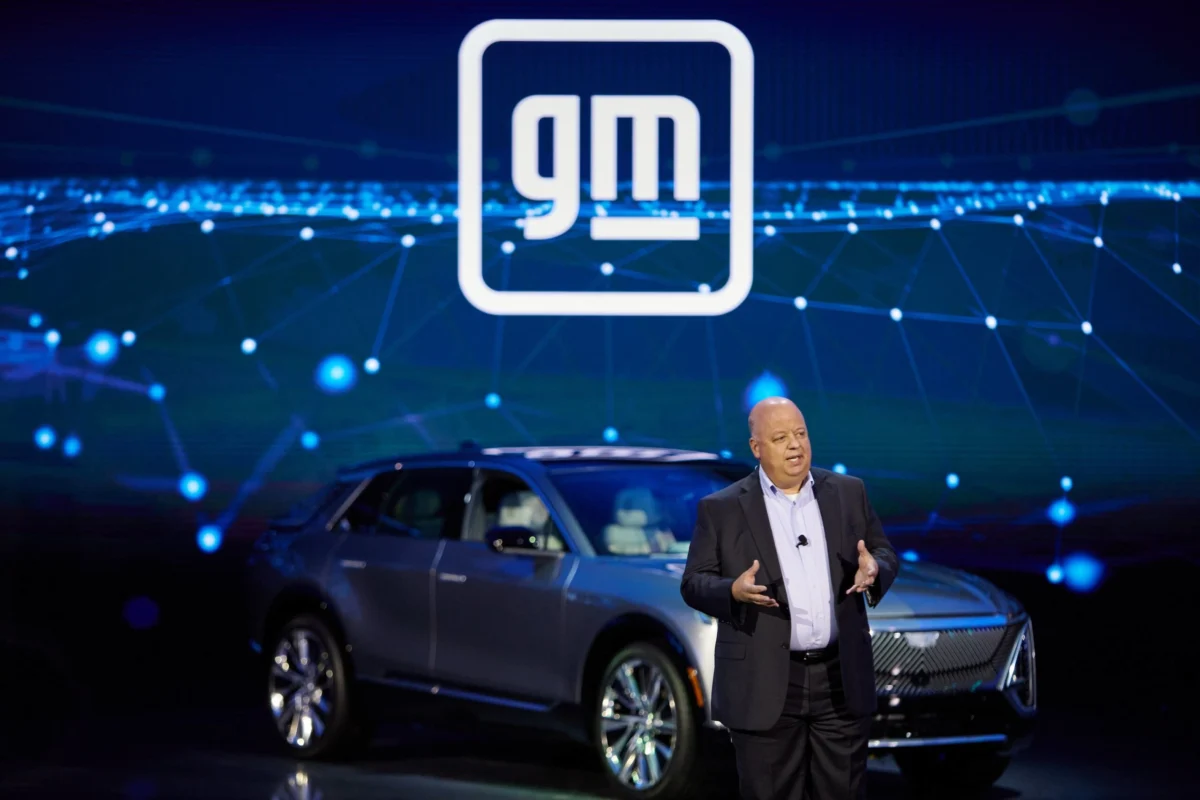
DETROIT – General Motors (GM), one of the automotive industry’s most storied companies, announced a significant strategic move on Tuesday, revealing its plans to transfer the listing of its common stock from the New York Stock Exchange (NYSE) to the Nasdaq Global Select Market. This transition, expected to take effect on November 17, will see the Detroit-based automaker retain its iconic "GM" ticker symbol, but it marks a profound repositioning as the company increasingly emphasizes its identity as a technology-focused enterprise. The decision underscores GM’s ambition to be recognized not merely as a traditional car manufacturer, but as a leader in electric vehicles (EVs), autonomous driving (AVs), and advanced software solutions, aligning its market presence with its evolving operational strategy.
A Strategic Pivot Towards Technology and Innovation
The move to Nasdaq is more than just an administrative change; it’s a declarative statement from General Motors about its future trajectory. Paul Jacobson, GM’s Chief Financial Officer, articulated this sentiment in a company release, stating, "GM’s customer-focused, technology-driven strategy is creating value for our stockholders, making Nasdaq a natural home for our listing as we grow." He also acknowledged the automaker’s long and valued relationship with the NYSE, recognizing its "remarkable legacy." This acknowledgment highlights the historical weight of the decision, given GM’s deep roots with the New York Stock Exchange, where it first listed in 1911 and relisted in 2010 following its government-backed bankruptcy and subsequent restructuring.
For decades, the NYSE was the quintessential home for industrial giants, manufacturers, and established corporations, often symbolizing stability and traditional economic power. Nasdaq, by contrast, has cultivated an image as the exchange for innovation, growth, and technology-centric companies, a perception largely shaped by its early adoption of electronic trading and its roster of Silicon Valley titans. By moving to Nasdaq, GM aims to strategically align itself with this narrative, signaling to investors, analysts, and the broader market that its core identity is shifting from internal combustion engines to electric propulsion, from human-driven cars to self-driving systems, and from hardware sales to recurring software revenues.
This strategic alignment is particularly pertinent given GM’s substantial investments in these future-oriented technologies. The company has committed tens of billions of dollars to its Ultium battery and EV platform, designed to power a diverse range of electric vehicles across its brands. Furthermore, its autonomous vehicle subsidiary, Cruise, represents a significant bet on the future of mobility, even amidst recent operational challenges and regulatory scrutiny. GM has also been aggressively developing its in-vehicle software capabilities, including its Super Cruise hands-free driving system and various subscription-based services, which it projects will generate significant annual revenues in the coming years. A recent technology-focused event hosted by GM just a week prior to the listing announcement provided executives with a platform to detail their roadmap for artificial intelligence and self-driving vehicle technologies, further cementing this tech-forward image.
Potential for Nasdaq-100 Inclusion and Market Visibility
A key driver cited by GM for the transfer is the eligibility for potential inclusion in the Nasdaq-100 Index. The Nasdaq-100 is a modified capitalization-weighted index composed of 100 of the largest non-financial companies listed on the Nasdaq Stock Market. Known for its heavy concentration of leading technology and growth companies like Apple, Microsoft, Amazon, and Nvidia, inclusion in this index offers several tangible benefits. It significantly boosts a company’s visibility among institutional investors, mutual funds, and exchange-traded funds (ETFs) that track the index. This increased exposure can lead to higher trading volumes, improved liquidity for GM shares, and potentially a broader, more diversified investor base.
For index funds and actively managed funds benchmarked against the Nasdaq-100, inclusion would necessitate buying GM shares, thereby creating consistent demand. This passive investment flow can contribute to stock price stability and potentially upward pressure. Furthermore, being associated with the Nasdaq-100 can influence how financial analysts categorize and value GM, potentially shifting their perception from a cyclical industrial stock to a growth-oriented technology play, which often commands higher valuation multiples.
A Growing Trend: Companies Shifting Exchanges
GM’s decision is not an isolated incident but rather part of a broader trend of prominent companies opting to transfer their listings to Nasdaq from the NYSE in recent years. This phenomenon reflects a dynamic shift in how companies perceive their public identity and where they believe they can best attract investment capital and market recognition. Notable companies that have made similar moves include retail giant Walmart, which, despite its traditional brick-and-mortar roots, has heavily invested in e-commerce, logistics technology, and data analytics. Similarly, DoorDash, a leading food delivery platform, and Palantir Technologies, a data analytics software company, both exemplify the digital-first, tech-driven businesses that Nasdaq traditionally attracts. More recently, Hilton Worldwide Holdings also announced plans to move its trading from the NYSE to Nasdaq, highlighting that this trend extends beyond pure tech firms to companies leveraging technology to transform their respective industries.

Nasdaq has actively courted these transfers, articulating various benefits that extend beyond mere optics. According to Nasdaq’s own publications, common reasons for listing transfers in 2024 included "index inclusion opportunities, cost effective fee structure, brand visibility partnership, access to Nasdaq’s event space, and Nasdaq’s suite of investor relations and ESG products." The "cost effective fee structure" can be a significant draw, especially for larger companies, as listing fees on exchanges can run into millions annually. Moreover, Nasdaq’s specialized investor relations tools and environmental, social, and governance (ESG) products cater to the evolving demands of modern corporate governance and investor engagement, providing companies with resources to better communicate their value proposition to a diverse shareholder base.
The Historical Context and Implications for NYSE
For the New York Stock Exchange, GM’s departure represents a symbolic, if not financially devastating, loss. GM’s initial listing in 1911 marked it as one of the titans of American industry, embodying the manufacturing prowess and economic strength of the 20th century. Its relisting in 2010, after emerging from one of the largest industrial bankruptcies in U.S. history, was a testament to its resilience and continued importance to the global economy. The NYSE has long prided itself on being the "Big Board," the home of blue-chip companies and traditional industrial powerhouses. The exodus of companies like GM, Walmart, and Hilton suggests that even these established giants are increasingly finding the Nasdaq platform more congruent with their forward-looking strategies and desired market perception.
While the NYSE maintains a diverse and robust roster of companies, the trend of high-profile transfers poses a challenge to its narrative as the undisputed home for all major public corporations. It highlights the intensifying competition between stock exchanges to attract and retain listings, a competition driven by evolving market dynamics, technological advancements, and shifting investor preferences. The NYSE will undoubtedly continue to leverage its legacy, global reach, and robust trading infrastructure, but it must also adapt to the growing demand for tech-oriented narratives and specialized services that Nasdaq has successfully capitalized on.
Financial Performance and Investor Confidence
General Motors’ decision to move its listing comes at a time when the company has shown considerable financial momentum and a renewed focus on shareholder value. Shares of GM have more than doubled since 2024, reflecting investor confidence in its transformative strategy and aggressive capital allocation. The company has been actively engaging in stock buybacks, a common strategy to return value to shareholders and signal management’s belief that the stock is undervalued. GM stock closed Tuesday at $80.54 a share, up 5% on the day, with a market capitalization of roughly $64.4 billion. This performance provides a strong backdrop for the listing transfer, suggesting that GM is making this move from a position of strength, seeking to further amplify its growth story rather than as a reactive measure.
The transfer to Nasdaq could further bolster investor confidence by aligning GM with a peer group often perceived as having higher growth potential and innovative business models. While traditional auto companies are often valued based on cyclical sales and manufacturing efficiency, tech companies are frequently assessed on intellectual property, future revenue streams from software and services, and market disruption potential. By positioning itself more squarely in the "tech" camp, GM hopes to unlock new valuation paradigms that better reflect its strategic pivot towards EVs, AVs, and software.
What Shareholders Need to Know
For current shareholders of General Motors, the company has clarified that no action is required regarding the transfer. Shares of GM common stock will simply begin trading on Nasdaq on November 17 under the same "GM" ticker symbol. The change is purely an administrative one concerning where the stock is listed and traded, and it does not impact ownership, dividend rights, or the fundamental value of the company. Investors will continue to hold their shares as before, with the primary difference being the exchange on which their shares are bought and sold.
In conclusion, General Motors’ move to Nasdaq is a meticulously calculated strategic decision, reflecting the automaker’s profound transformation into a technology-driven mobility company. It’s a statement about where GM sees its future, aiming to leverage Nasdaq’s brand association with innovation, its potential for index inclusion, and its suite of services to enhance market visibility and investor appeal. This landmark transfer not only reshapes GM’s public identity but also underscores the evolving landscape of capital markets, where traditional industry boundaries are blurring, and the quest for growth and technological leadership increasingly defines corporate strategy.
