

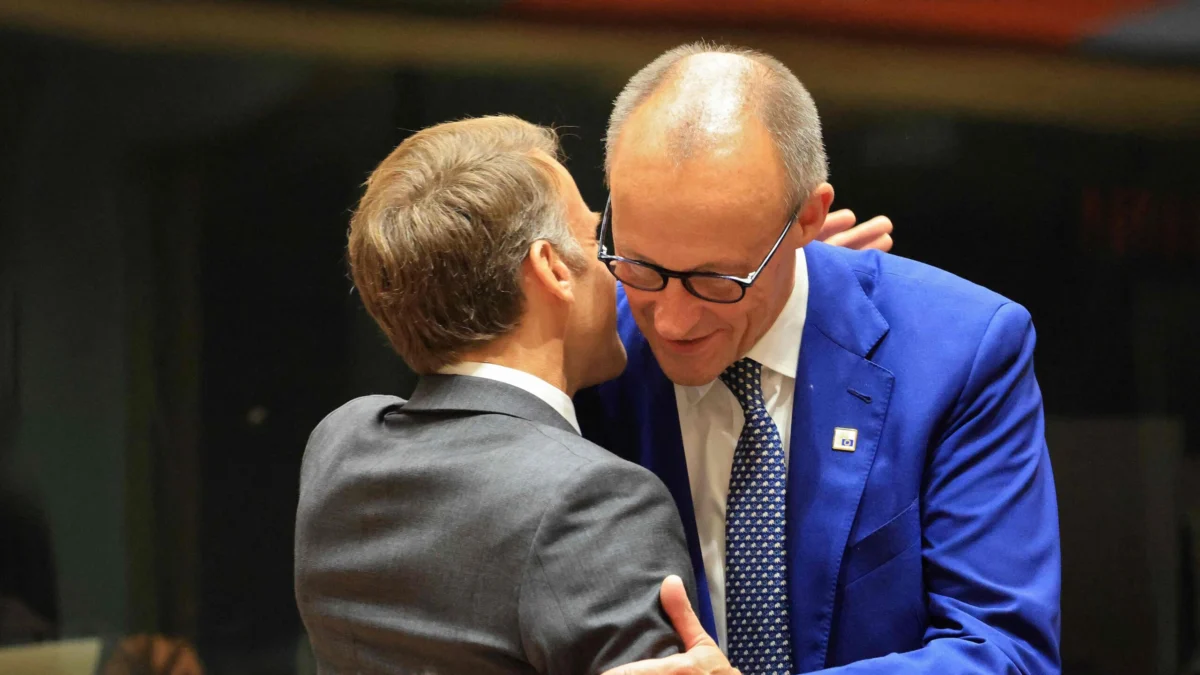
Brussels – German Chancellor Friedrich Merz (CDU) and French President Emmanuel Macron have reached a pivotal agreement on a comprehensive reform of European automotive policy, signaling a significant shift in the continent’s approach to vehicle emissions and industrial production. This landmark accord, forged in the heart of European policymaking, aims to balance ambitious climate goals with the imperative of bolstering the European automotive industry.
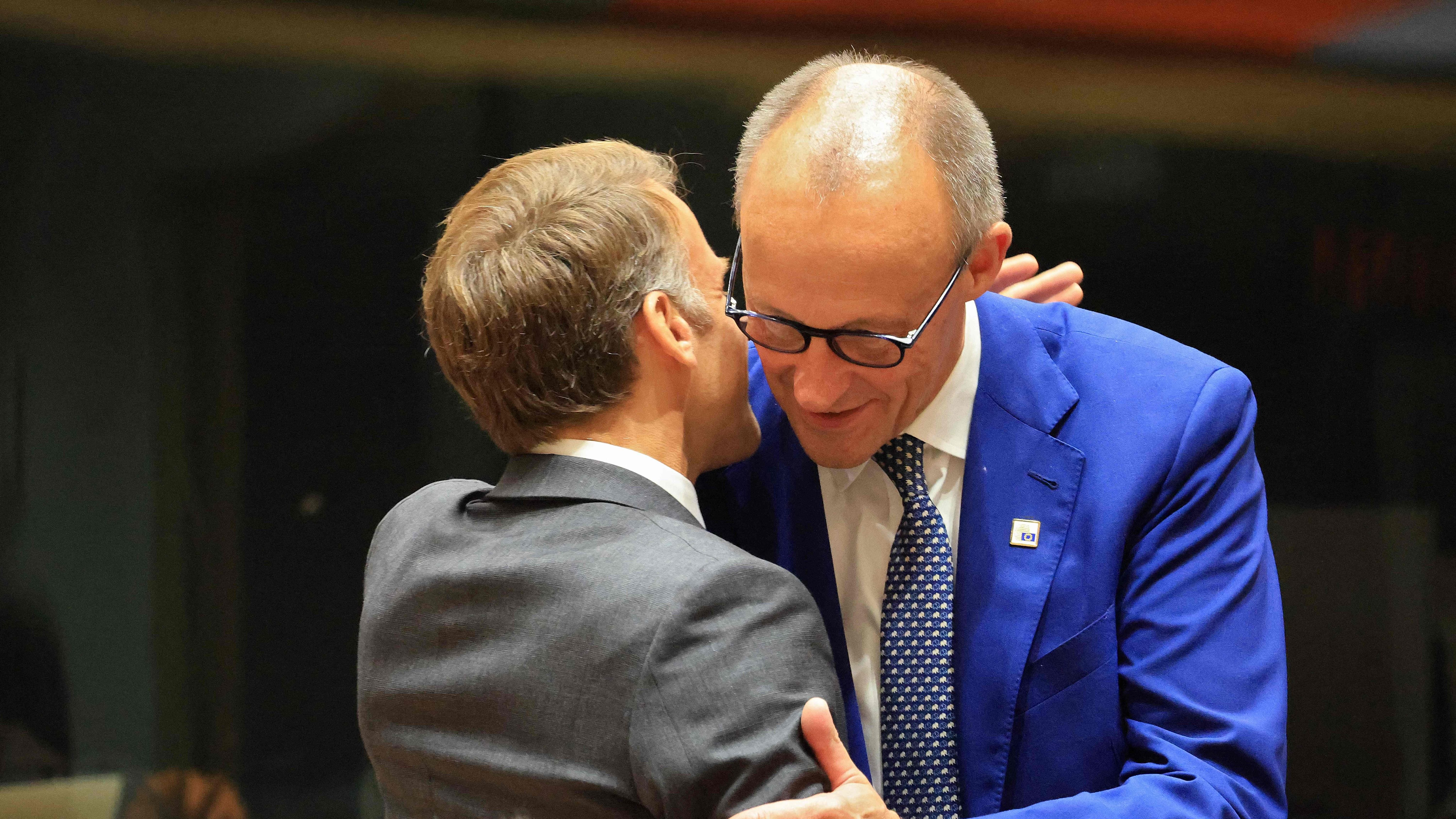
The agreement represents a strategic compromise between the two leading EU member states. At the core of the deal is a softening of the proposed 2035 ban on internal combustion engines (ICE), a measure initially championed by the European Commission. Chancellor Merz has successfully advocated for a more flexible interpretation of this regulation, one that acknowledges the ongoing role of combustion technology while still pushing for decarbonization. Furthermore, Merz secured a crucial concession: member states will no longer be mandated to enforce binding quotas for the electrification of large company car fleets. This deregulation is expected to provide businesses with greater flexibility in managing their vehicle transitions.
In return for these concessions on emissions targets, President Macron has achieved a significant victory in his push for stronger "Made in EU" provisions. The agreement stipulates that state subsidies, including purchase premiums and public procurement contracts for vehicles, will be preferentially directed towards automobiles manufactured within Europe. This strategic move is designed to stimulate domestic production and create a more robust internal market for European-made vehicles. Crucially, the deal also mandates that a growing proportion of batteries and key vehicle components must originate from European manufacturing facilities. This emphasis on local sourcing is intended to reduce the continent’s reliance on external supply chains, particularly those dominated by Asian manufacturers.

The agreement is the culmination of extensive negotiations, reflecting a shared ambition to shape the future of the European automotive sector in a manner that benefits both its environmental objectives and its economic competitiveness. The two largest EU economies have now committed to jointly advocating for these changes within the Council of the European Union, seeking to influence the final legislative proposals from the EU Commission.
Rethinking the Combustion Engine Ban
A key element of the Merz-Macron accord is the significant dilution of the planned 2035 ban on new internal combustion engine vehicles. While the original proposal from the EU Commission aimed for a complete phase-out of new ICE car sales from 2035, the revised approach introduces considerable flexibility. Under the new agreement, manufacturers will be required to reduce the average CO2 emissions of their new vehicle fleets by a substantial 90 percent by 2035, a figure still demanding significant progress. However, the contentious element of mandatory compensation for the remaining emissions has been removed. This means that manufacturers will be permitted to continue selling new petrol and diesel vehicles beyond 2035, provided their overall new car fleet meets the specified average emission reduction target.

This adjustment is a significant win for the German automotive industry, which has voiced concerns about the feasibility and economic implications of an abrupt transition solely to electric vehicles. The flexibility offered by the revised regulation allows manufacturers more time to adapt their production lines, invest in alternative technologies, and manage the economic impact of the transition. The intention is to ensure that the European automotive sector can navigate this profound technological shift without jeopardizing its global competitiveness or the livelihoods of its workforce.
Strategic Flexibility and Emissions Offset
Further refining the emissions targets, the agreement introduces provisions for managing annual CO2 deviations. Shortfalls in meeting emission reduction targets in 2030 can be offset by achieving greater reductions in 2031. Moreover, automakers will be allowed to accumulate CO2 credits as early as 2029 and apply them to the more stringent targets set for 2030. This forward-looking credit system offers a crucial buffer, enabling manufacturers to avoid substantial penalty payments even if they initially miss their yearly climate objectives. This mechanism acknowledges the complexities of large-scale industrial transformation and provides a more pragmatic pathway to achieving climate goals.

The inclusion of provisions for vehicles running on specific renewable or low-carbon fuels is another notable aspect of the agreement. Vehicles that can exclusively operate on such fuels will be legally recognized as zero-emission vehicles. This opens avenues for the continued development and utilization of advanced biofuels and synthetic fuels, offering a potential pathway for existing combustion engine technology to contribute to decarbonization efforts without requiring a complete replacement of the vehicle fleet.
Addressing Fleet Electrification and "Made in EU"
The agreement also introduces significant changes regarding the electrification of company car fleets. The European Commission had initially proposed that member states be obligated to implement mandatory electrification quotas for new registrations of large company vehicles from 2030. However, Germany and France have successfully negotiated to replace these compulsory national targets with voluntary national objectives. This shift from a top-down mandate to a more collaborative, state-led approach is expected to foster greater national autonomy in setting climate targets and implementing policies tailored to specific economic conditions.

In parallel, France has secured a crucial commitment from Germany regarding industrial preference. Paris has long advocated for stronger links between state funding and European manufacturing to bolster its domestic automotive industry. The "Made in EU" initiative aims to ensure that public funds, including purchase incentives and public tenders for vehicles, are primarily channeled towards vehicles manufactured within the European Union. This policy is designed to foster a more competitive European automotive ecosystem and reduce the reliance on vehicles and components imported from outside the continent.
Rebalancing Global Supply Chains
The "Made in EU" initiative extends beyond mere vehicle assembly. The agreement stipulates that by 2028, vehicles receiving state subsidies, such as purchase premiums, leasing incentives, or public procurement contracts, must be assembled in the EU or the United Kingdom. Furthermore, a minimum of 70% of the value of components used in these vehicles must originate from European production. This stringent requirement is particularly significant for the battery sector, which has been a major point of contention due to Europe’s heavy reliance on Asian suppliers, particularly China.

Recognizing the current dependence on China for battery production, the agreement includes a phased implementation for battery sourcing. For 2028 and 2029, at least 10% of batteries and three critical components must be of European origin, including battery cells. This percentage will then incrementally increase from 20% to 80% between 2030 and 2032. This staggered approach provides European manufacturers with vital time to establish domestic battery production capacity and reconfigure their supply chains, transitioning away from their current heavy reliance on Chinese suppliers. This strategy aims to build a more resilient and self-sufficient European battery industry, a critical element for the future of electric mobility.
Implications and Future Outlook
The ramifications of this Franco-German agreement are far-reaching. By recalibrating the emissions targets and strengthening "Made in EU" provisions, the deal seeks to create a more balanced and strategically advantageous environment for the European automotive industry. It acknowledges the economic realities and industrial strengths of member states while still upholding a commitment to environmental sustainability.

The flexibility introduced regarding combustion engines and emissions targets is likely to be welcomed by automotive manufacturers across the continent, potentially easing the financial burden of the transition to electrification. The emphasis on domestic production and component sourcing, particularly for batteries, could spur significant investment in European manufacturing facilities, creating new jobs and fostering technological innovation within the EU. This could reduce geopolitical risks associated with supply chain disruptions and create a more secure and independent automotive sector.
However, the agreement may also face scrutiny from other EU member states and environmental advocacy groups. Some may argue that the softening of emissions targets is insufficient to meet the urgency of the climate crisis. The details of the "Made in EU" provisions, particularly regarding potential exemptions for the UK, will also require careful navigation to ensure a level playing field within the single market.

The commitment to collectively push these proposals through the Council signifies a united front from two of the EU’s most influential nations. This united approach is likely to carry considerable weight in subsequent negotiations with the European Commission and other member states. The coming months will be critical as these proposals are debated and refined, ultimately shaping the trajectory of Europe’s automotive industry for decades to come, balancing the urgent need for climate action with the strategic imperative of industrial strength and technological sovereignty. This accord represents a pragmatic step towards a sustainable and competitive European automotive future.
