

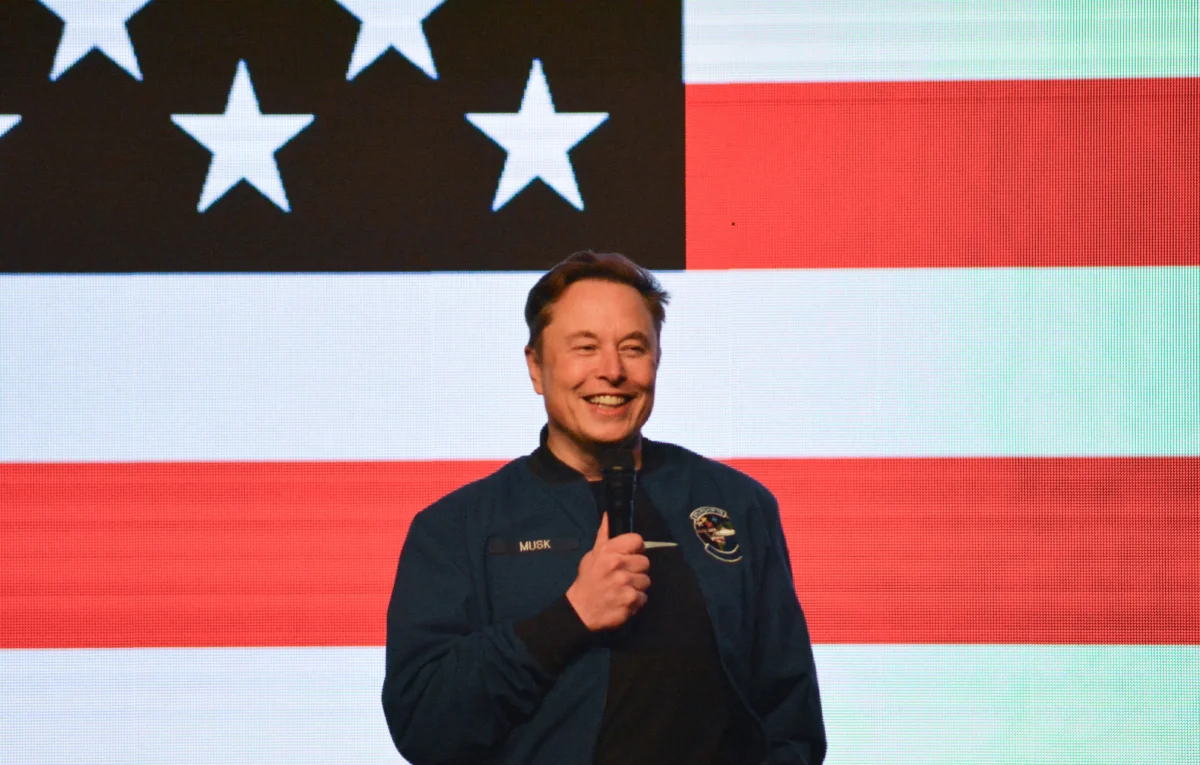
Elon Musk, the visionary entrepreneur behind Tesla, SpaceX, and X.AI, has recently outlined ambitious plans for a groundbreaking chip-building collaboration between his flagship companies. Dubbed "Terafab," this monumental initiative aims to establish a state-of-the-art semiconductor manufacturing facility in Austin, Texas, addressing what Musk identifies as critical bottlenecks in the supply of advanced chips essential for his ventures’ burgeoning artificial intelligence and robotics needs. The announcement, made during an event in downtown Austin on Saturday night, March 20, 2026, signals a significant strategic shift towards deeper vertical integration within Musk’s expansive technological ecosystem.
According to reports from Bloomberg, a photo displayed at the event suggested the "Terafab" facility would be strategically located near Tesla’s existing Austin headquarters and the colossal Gigafactory Texas. This proximity underscores a potential synergy, leveraging existing infrastructure and a skilled workforce already steeped in the culture of rapid innovation and ambitious engineering that defines Musk’s enterprises. The primary motivation behind this audacious undertaking, as articulated by Musk, stems from a perceived inability of conventional semiconductor manufacturers to meet the escalating demand for chips crucial to the development and deployment of his companies’ advanced AI models, autonomous systems, and sophisticated robotics. "We either build the Terafab or we don’t have the chips, and we need the chips, so we build the Terafab," Musk stated, emphasizing the existential necessity of the project for his companies’ future growth and technological independence.
The Rationale: Addressing Critical Shortages and Future Demands
Musk’s decision to venture into the highly complex and capital-intensive world of semiconductor manufacturing is not made in a vacuum. The global technology landscape has been grappling with persistent chip shortages for several years, a crisis exacerbated by supply chain disruptions and an unprecedented surge in demand across various sectors, from consumer electronics to automotive and data centers. Tesla, in particular, has experienced firsthand the impact of these shortages, with production schedules for its electric vehicles occasionally constrained by the availability of crucial electronic components. This vulnerability has likely solidified Musk’s conviction that in-house chip production offers a strategic advantage, providing greater control over supply, design, and performance optimization.
Beyond addressing current supply chain frailties, the Terafab initiative is primarily forward-looking, targeting the exponential growth in demand for specialized AI accelerators. The development of advanced AI, such as the large language models (LLMs) championed by X.AI and the sophisticated neural networks powering Tesla’s Full Self-Driving (FSD) capabilities and humanoid robots like Optimus, requires immense computational power. Current market leaders in AI chips, like NVIDIA, have seen their valuation skyrocket due to this demand, but even their formidable production capabilities struggle to keep pace with the insatiable appetite of leading AI developers. By building its own fabrication capabilities, Musk’s companies aim to tailor chips precisely to their unique AI and robotics architectures, potentially unlocking performance efficiencies and innovations that off-the-shelf solutions might not offer. This move aligns with a broader industry trend where major tech players, including Apple, Google, and Amazon, have increasingly invested in designing their own custom silicon to differentiate their products and services.
Terafab’s Ambitious Scope: Earth and Orbital Computing Power
The scale of Musk’s ambition for Terafab is truly staggering. He outlined a goal to manufacture chips capable of supporting between 100 to 200 gigawatts (GW) of computing power annually for terrestrial applications. To put this into perspective, 100 GW is roughly equivalent to the peak power output of over 100 large nuclear power reactors or the total electricity consumption of a medium-sized industrialized nation. While Musk’s phrasing of "gigawatts of computing power" typically refers to the electrical power consumption of computing infrastructure rather than raw processing units, this figure nonetheless underscores an immense envisioned capacity. Such a scale suggests a future where Tesla’s AI data centers, autonomous vehicle fleets, and robotics operations would require an unprecedented amount of dedicated processing capability and energy.
Even more futuristic is the target of supporting a full terawatt (TW) of computing power in space. This visionary goal aligns with Musk’s long-term aspirations for space colonization and the development of orbital data centers, a concept he has previously hinted at, as noted by TechCrunch in February 2026. A terawatt of power in space implies not just on-orbit processing for Starlink satellites but potentially massive data centers supporting future lunar or Martian missions, advanced space-based AI, or even powering an entire Martian civilization. The technological hurdles for such a venture are immense, requiring innovations in power generation, heat dissipation, radiation hardening, and manufacturing in a zero-gravity or microgravity environment. While the immediate focus of Terafab would undoubtedly be terrestrial production, the inclusion of a "terawatt in space" target highlights the ultimate, long-term vision underpinning Musk’s multi-planetary ambitions.
Austin: A Hub for Innovation and Expansion
The choice of Austin, Texas, as the site for Terafab is a logical extension of Musk’s existing investments and strategic footprint. Tesla’s relocation of its headquarters to Austin in 2021 and the subsequent establishment of Gigafactory Texas have transformed the city into a burgeoning hub for advanced manufacturing and technological innovation. The Gigafactory, already a colossal complex producing electric vehicles and battery packs, provides a ready foundation of infrastructure, logistics, and a growing talent pool. Locating Terafab in close proximity would facilitate seamless integration with Tesla’s R&D efforts, accelerate prototyping, and streamline the deployment of new chip designs into its products.
Austin also offers a favorable business environment, a skilled workforce drawn from local universities and the expanding tech sector, and a strategic position within the United States. The city’s status as a burgeoning tech epicenter, attracting major companies and venture capital, creates an ecosystem conducive to ambitious projects like Terafab. Furthermore, the state of Texas has historically offered incentives for large-scale industrial investments, potentially playing a role in attracting such a capital-intensive project. The presence of multiple Musk companies – Tesla, SpaceX (with facilities in Boca Chica, Texas), and X.AI – within the state creates a unique synergy that could facilitate cross-company collaboration and resource sharing for the Terafab initiative.
Navigating the Complexities of Semiconductor Manufacturing
While Musk has a proven track record of disrupting established industries, the semiconductor manufacturing sector presents a unique set of challenges. Building a state-of-the-art fabrication plant, or "fab," is an undertaking of unparalleled complexity, requiring multi-billion dollar investments, highly specialized equipment, an extremely precise manufacturing environment (cleanrooms are orders of magnitude cleaner than surgical operating rooms), and a deep bench of highly specialized engineering talent. Leading foundries like TSMC, Intel, and Samsung have spent decades perfecting their processes, investing hundreds of billions in R&D and infrastructure. A single leading-edge fab can cost upwards of $15-20 billion to construct and equip, with development cycles spanning several years before mass production commences.
Musk himself openly acknowledges his lack of a direct background in semiconductor manufacturing. This reality contrasts sharply with his deep expertise in electric vehicles, rocketry, and artificial intelligence. The intricacies of photolithography, etching, deposition, and packaging demand a level of institutional knowledge and process control that is difficult to acquire quickly. While Musk’s companies are adept at attracting top-tier talent, recruiting experienced professionals from the highly competitive semiconductor industry will be a formidable task. This will require not only competitive compensation but also a compelling vision that can entice engineers from established giants. The success of Terafab will hinge not just on capital investment but on the ability to rapidly assimilate and innovate within a field notorious for its exacting standards and unforgiving economics.
Musk’s Track Record: Innovation vs. Implementation Challenges
The announcement of Terafab, while exciting, inevitably draws scrutiny due to Elon Musk’s well-documented history of setting incredibly ambitious goals and often missing initial timelines. While his ventures have ultimately achieved remarkable feats – revolutionizing electric vehicles, making reusable rockets a reality, and launching a global satellite internet constellation – the path to these successes has frequently been marked by delays, revised schedules, and significant technical hurdles.
Examples abound:
- Full Self-Driving (FSD): Initially promised by 2017, Tesla’s FSD technology continues to be in beta, undergoing continuous refinement, far exceeding initial projections.
- Cybertruck: Unveiled in 2019, the futuristic electric pickup truck faced multiple production delays, with initial deliveries only commencing years after its original target.
- Tesla Roadster (Second Generation): Announced for 2020, its production has been pushed back multiple times.
- Dojo Supercomputer: Tesla’s ambitious in-house AI training supercomputer, while making progress, also faced initial challenges and adjustments to its deployment strategy and capacity scaling.
These instances highlight a pattern where Musk’s visionary pronouncements ignite public imagination but often outpace the practical realities of engineering and manufacturing timelines. For Terafab, industry observers will be keen to see if Musk can defy this pattern, or if the sheer complexity of semiconductor fabrication will impose its own, potentially protracted, development cycle. The absence of a specific timeline for Terafab’s completion in his announcement is thus a notable point, reflecting either a strategic decision to avoid early commitment or an acknowledgment of the inherent unknowns.
Industry Perspectives and Analyst Reactions
The news of Terafab has elicited a range of reactions from industry analysts and competitors. On one hand, there’s an acknowledgment of Musk’s unparalleled ability to attract capital, talent, and public attention to seemingly impossible projects. His track record of challenging norms and achieving breakthroughs in disparate fields lends credibility to even his most audacious plans. Analysts from firms like Gartner and IDC might suggest that if anyone can bootstrap a cutting-edge fab from scratch, it might be Musk, given his aggressive vertical integration strategy across his companies.
However, a strong undercurrent of skepticism persists, particularly regarding the immense technical and financial challenges. Semiconductor industry veterans might point to the highly specialized supply chain, the proprietary intellectual property, and the razor-thin margins that characterize the foundry business. Competing with established giants like TSMC, which commands over 50% of the global foundry market, or Intel, with its long history of chip manufacturing, requires not just capital but deep, institutionalized expertise. Industry analysts might project a timeline of at least five to seven years from groundbreaking to significant volume production for a project of this scale, assuming no major setbacks.
Competitors in the AI chip space, such as NVIDIA and AMD, are likely to monitor the Terafab project closely. While publicly maintaining a neutral stance, privately, they would be assessing the potential competitive threat. Their existing scale, R&D budgets, and customer relationships provide a significant barrier to entry for any newcomer, even one backed by Musk. Equipment manufacturers like ASML, Lam Research, and Applied Materials, critical suppliers to any fab, would view Terafab as a potential new customer, albeit one that needs to prove its long-term viability.
Broader Implications: Vertical Integration and Geopolitical Significance
The Terafab initiative represents the pinnacle of Elon Musk’s relentless pursuit of vertical integration across his business empire. From designing his own battery cells for Tesla to building the Starlink constellation for SpaceX, the strategy is consistent: control critical components and processes to optimize performance, reduce costs, and ensure supply chain resilience. For Tesla, in-house chips could lead to more efficient AI hardware for FSD and Optimus robots, directly impacting performance and cost-effectiveness. For SpaceX and X.AI, custom silicon could accelerate advancements in complex simulations, real-time data processing in space, and the development of superintelligent AI. This approach minimizes reliance on external suppliers, granting greater agility and strategic independence.
Beyond corporate strategy, Terafab carries broader geopolitical implications. The global race for semiconductor independence has intensified, particularly in light of geopolitical tensions and the recognition of chips as fundamental to national security and economic competitiveness. Governments worldwide are investing heavily in domestic chip production. A significant fab in the United States, even if privately funded by Musk, contributes to this national goal, bolstering domestic manufacturing capabilities and potentially reducing reliance on foreign supply chains, particularly those in geopolitically sensitive regions. This aspect could garner support or at least favorable attention from policymakers in Washington.
The audacious target of a "terawatt in space" also hints at a future where computing power is not just terrestrial but extends into the cosmos, fundamentally altering how we perceive and utilize data processing for space exploration and colonization. While seemingly distant, this long-term vision positions Terafab as more than just a chip factory; it’s a foundational element for a multi-planetary future envisioned by Musk.
The Road Ahead: Uncharted Territory
Elon Musk’s Terafab announcement marks a pivotal moment, signaling a bold new chapter in his relentless quest for technological mastery. The project, if successful, promises to revolutionize chip production for AI and space computing, fundamentally altering the competitive landscape and solidifying his companies’ strategic independence. However, the road ahead is fraught with immense technical, financial, and logistical challenges. The highly specialized nature of semiconductor manufacturing, Musk’s history of optimistic timelines, and the sheer scale of the investment required will test the limits of his organizational prowess and innovative spirit. As the world watches, the Terafab initiative stands as a testament to an unyielding ambition, poised to either redefine an industry or serve as a cautionary tale of overreach in the notoriously unforgiving realm of advanced manufacturing.
