

The artificial intelligence landscape witnessed a seismic shift recently as Amazon CEO Andy Jassy unveiled a landmark $50 billion investment deal with OpenAI, firmly positioning Amazon Web Services (AWS) as a pivotal enabler for the leading AI research firm. At the heart of this monumental agreement lies AWS’s custom-designed AI accelerator, Trainium, meticulously engineered in a specialized chip development lab. This strategic alliance underscores AWS’s aggressive push to innovate in custom silicon, directly challenging the entrenched dominance of Nvidia in the high-performance computing market for AI. Following this announcement, a rare private tour of this secretive chip development facility in Austin, Texas, offered a glimpse into the sophisticated engineering and strategic foresight driving Amazon’s ambitious foray into AI hardware.
The Dawn of a New Era: AWS’s $50 Billion Bet on OpenAI
The $50 billion investment in OpenAI, one of the largest private funding rounds in history, is a clear declaration of Amazon’s intent to become the indispensable backbone of the AI industry. This deal designates AWS as the exclusive cloud provider for OpenAI’s nascent AI agent builder, Frontier. Should AI agents fulfill their projected potential as a transformative technological paradigm, this exclusivity could form a significant pillar of OpenAI’s future revenue streams. However, the exact terms and endurance of this exclusivity are already under scrutiny. Reports from the Financial Times indicate that Microsoft, a long-standing partner and major investor in OpenAI, may perceive this arrangement as a violation of its own agreements, which grant Redmond access to all of OpenAI’s models and technology. This burgeoning tension highlights the intense competitive dynamics defining the cloud and AI sectors.

Beyond the strategic partnership, the concrete commitment from AWS is staggering: the cloud giant has pledged to supply OpenAI with an unprecedented 2 gigawatts of Trainium computing capacity. This commitment is particularly remarkable given that AWS’s existing AI partners, notably Anthropic, and its own Bedrock service, are already consuming Trainium chips at a pace that stretches Amazon’s production capabilities. The sheer scale of this provision signals both AWS’s confidence in its custom silicon and its willingness to invest heavily to secure a leading position in the AI infrastructure race.
AWS’s relationship with Anthropic, developers of the Claude AI model, predates the OpenAI deal, establishing AWS as a primary cloud platform for the AI lab since its inception. This foundational partnership has endured, even as Anthropic diversified its cloud infrastructure to include Microsoft. The experience gained from supporting Anthropic’s demanding AI workloads has undoubtedly been instrumental in refining Trainium’s capabilities and preparing AWS for even larger-scale deployments like the one with OpenAI.
Challenging the GPU Hegemony: Trainium’s Ascent
The advent of Trainium and its strategic deployment represents Amazon’s direct challenge to Nvidia’s near-monopoly in the AI chip market. Nvidia’s GPUs, particularly its H100 and A100 series, have long been the industry standard for AI training and inference, commanding significant market share and premium pricing due to their unparalleled performance and the robust CUDA software ecosystem. However, this dominance has also led to supply chain bottlenecks, high acquisition costs, and substantial operational expenses for companies dependent on these chips.

Trainium was initially conceived with a primary focus on accelerating AI model training—a critical, compute-intensive phase in AI development. However, as the industry matured, the bottleneck shifted significantly towards inference—the process of deploying a trained AI model to generate predictions or responses in real-world applications. Inference, particularly for large language models (LLMs), requires immense, cost-effective computational power to handle billions, if not trillions, of queries daily. Recognizing this evolving need, AWS engineers adeptly tuned and optimized Trainium for inference workloads. Today, Trainium2 chips handle the majority of inference traffic on Amazon’s Bedrock service, a platform designed to empower enterprise customers to build and deploy AI applications using a diverse array of models.
The current deployment figures underscore Trainium’s impact: AWS reports approximately 1.4 million Trainium chips deployed across three generations, with over 1 million Trainium2 chips dedicated to powering Anthropic’s Claude. Kristopher King, the lab’s director, highlighted the burgeoning demand, stating, "Our customer base is just expanding as fast as we can get capacity out there." He further articulated the long-term vision, suggesting, "Bedrock could be as big as EC2 one day," drawing a parallel to AWS’s foundational and enormously successful Elastic Compute Cloud (EC2) service.
Beyond offering a viable alternative to Nvidia’s often backlogged and expensive GPUs, Amazon asserts that its latest Trainium3 chips, running on its specialized Trn3 UltraServers, can achieve comparable performance at up to 50% lower operational costs compared to traditional cloud servers. This significant cost advantage, coupled with enhanced performance, is a powerful incentive for AI developers and enterprises looking to scale their AI operations more efficiently.
A Decade of Innovation: The Annapurna Labs Legacy

The foundation of AWS’s custom chip design prowess lies in its strategic acquisition of Israeli chip designer Annapurna Labs in January 2015 for approximately $350 million. This acquisition marked a pivotal moment, signaling Amazon’s long-term commitment to developing in-house silicon rather than solely relying on third-party vendors. Over the past decade, the Annapurna Labs team, whose logo remains ubiquitous throughout the Austin facility, has been the engine behind AWS’s custom chip portfolio.
Their initial breakout success was the Graviton processor, a low-power, ARM-based server CPU designed to optimize performance and cost for general-purpose workloads within AWS. Graviton chips quickly gained traction, demonstrating Amazon’s ability to compete with established CPU manufacturers. In a rare public endorsement in 2024, Apple’s director of AI lauded Graviton for its performance, offering a testament to the chip’s quality and efficiency. Apple also praised Inferentia, another chip designed by the same team, specifically for AI inference, and gave an early nod to Trainium shortly after its introduction. These endorsements from a notoriously secretive and quality-focused company like Apple speak volumes about the caliber of AWS’s custom silicon.
This strategy—identifying market needs, developing proprietary alternatives, and competing aggressively on price and performance—is a classic Amazon playbook. It reflects a deep-seated commitment to vertical integration, allowing AWS to exert greater control over its infrastructure, optimize for its specific workloads, and ultimately pass on cost efficiencies to its customers.
Beyond the Chip: Holistic Hardware Design

AWS’s custom silicon strategy extends far beyond the chips themselves to encompass the entire hardware stack. The team responsible for Trainium has also engineered innovative networking components and server designs. Key among these advancements are the new Neuron switches. Mark Carroll, director of engineering, emphasized their transformative impact: "What that gives us is something huge." These switches enable a full mesh configuration, allowing every Trainium3 chip to communicate directly with every other chip, drastically reducing latency in massive AI workloads. This architectural innovation is a primary driver behind Trainium3’s record-breaking performance, particularly in terms of "price per power"—a critical metric when managing trillions of tokens daily.
Further enhancing AWS’s infrastructure is "Nitro," a proprietary hardware-software combination that provides advanced virtualization technology. Nitro offloads virtualization functions from the main server CPU, freeing up resources for customer workloads, enhancing security through isolation, and improving overall performance and efficiency.
The team has also pioneered state-of-the-art liquid cooling technology. Unlike traditional air-cooled data centers, liquid cooling allows for much denser server racks and more efficient heat dissipation, which is crucial for the extreme power demands of modern AI accelerators like Trainium3. This closed-loop system also offers environmental benefits by reusing the cooling liquid, reducing water consumption and energy footprint.
All these components—the custom chips, Neuron switches, Nitro system, liquid cooling, and the specialized server "sleds" that house them—are meticulously designed and integrated by AWS. This holistic approach ensures optimal performance, reliability, and cost-efficiency across the entire AI computing infrastructure, giving AWS a distinct advantage in delivering high-performance, scalable AI services. This commitment to comprehensive hardware design is further evidenced by AWS’s recent partnership with Cerebras Systems, integrating Cerebras’s inference chips with servers running Trainium. This collaboration aims to deliver "superpowered, low-latency AI performance," showcasing AWS’s willingness to combine in-house innovation with best-in-class external technologies.

Breaking Down Software Barriers: The PyTorch Advantage
Historically, one of the most significant barriers to adoption for alternative AI accelerators has been the software ecosystem. Nvidia’s CUDA platform, with its extensive libraries, tools, and developer community, has created a formidable moat, making it time-consuming and costly for developers to re-architect applications for non-Nvidia hardware.
Recognizing this challenge, the AWS chip team has made significant strides in software compatibility. They proudly announced that Trainium now fully supports PyTorch, a popular open-source machine learning framework widely used for building AI models. This includes a vast array of models hosted on Hugging Face, a collaborative platform for open-source AI development. The critical breakthrough, according to Mark Carroll, is the ease of migration: transitioning an existing PyTorch model to run on Trainium requires "basically a one-line change, and then recompile, and then run on Trainium."
This simplification of the migration process is a direct assault on Nvidia’s software lock-in. By reducing the switching costs and friction for developers, AWS aims to democratize access to high-performance, cost-effective AI hardware. This move empowers a broader developer community to leverage Trainium’s capabilities without extensive re-engineering, thereby accelerating innovation and fostering a more competitive ecosystem for AI hardware.

Inside the Engine Room: The Austin Chip Lab
The nerve center for this ambitious hardware development is situated in Austin’s upscale "The Domain" district, often dubbed "Austin’s Silicon Valley." The office building, with its shiny, chrome-windowed facade, houses typical tech corporate amenities, but its true gem is tucked away on a high floor: the chip development lab. This industrial space, roughly the size of two large conference rooms, is a symphony of whirring fans from equipment, creating a noisy but vibrant atmosphere. Far from the pristine white lab coats often associated with chip manufacturing, engineers here are typically dressed in jeans, embodying the pragmatic, hands-on culture of hardware development.
This is not a manufacturing facility; the state-of-the-art 3-nanometer Trainium3 chips are fabricated by industry leader TSMC, with other chips produced by Marvell. Instead, this lab is where the critical "silicon bring-up" occurs—the moment of truth when a newly designed chip is powered on for the first time after 18 months of intensive work. King describes the bring-up as "like a big overnight party. You stay here, like a lock-in." It’s an intense, 24/7 period of problem-solving, where engineers verify that the chip functions as designed. AWS even shared a glimpse of the Trainium3 bring-up process on YouTube, offering a rare look into this demanding phase.
The bring-up process is rarely without its challenges. For Trainium3, an initial hurdle arose when the dimensions for attaching the air-cooling heat sink (the prototype was air-cooled before transitioning to liquid cooling) were slightly off, preventing activation. Unfazed, the team’s ingenuity shone through: "immediately got a grinder and just started grinding off the metal," King recounted, discreetly performing the noisy task in a conference room to avoid disrupting the "pizza party atmosphere." This anecdote perfectly encapsulates the resourceful, problem-solving ethos inherent in silicon development.

The lab is equipped with both custom-made and commercial tools for rigorous testing and analysis. Hardware lab engineer Isaac Guevara, a master welder, demonstrated the incredibly intricate work of welding tiny integrated circuit components under a microscope, a task so demanding that senior leader Mark Carroll openly admitted his inability to perform it. Signal engineer Arvind Srinivasan showcased how the lab meticulously tests each minute component on the chip, ensuring precision and reliability. The lab’s centerpiece is a row displaying each generation of the custom-designed "sleds"—the trays that house the Trainium and Graviton chips, along with supporting boards and components. These sleds, stacked together with custom-designed networking components, form the powerful systems that underpin services like Anthropic’s Claude.
Real-World Impact: Validation by AI Leaders
While the tour occurred shortly after the OpenAI deal, the engineers, deeply immersed in the demanding cycle of chip design (already working on Trainium4), conveyed a subtle but evident pride in the OpenAI partnership. Their immediate focus, however, remained on the tangible, high-volume workloads already running on Trainium. The largest deployment of Trainium2 chips powers Project Rainier, one of the world’s most extensive AI compute clusters, which went live in late 2025 with 500,000 chips exclusively used by Anthropic. This massive-scale deployment provides robust real-world validation of Trainium’s performance and scalability.
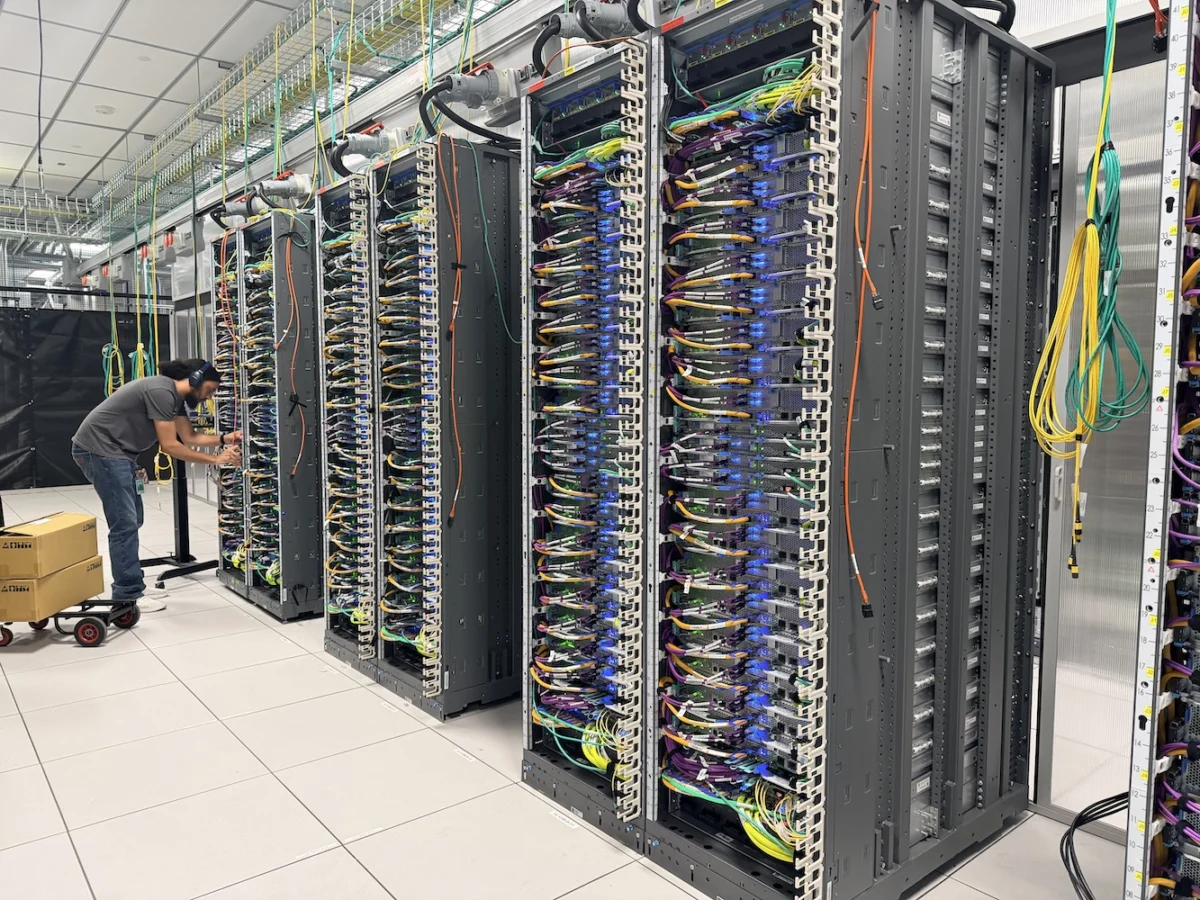
To ensure the quality and reliability of its custom silicon, AWS maintains its own private data center for testing purposes, separate from its customer-facing AWS data centers. Housed within a co-location facility, this highly secure site is a crucible where the newest hardware—Graviton CPUs, liquid-cooled Trainium3 chips, and Nitro systems—are rigorously tested. The environment is intensely loud, requiring mandatory ear protection, and the air carries the distinct, acrid scent of heated metal. Here, rows of servers hum with activity, showcasing the integrated efficiency of Amazon’s custom hardware. The closed-loop liquid cooling system not only optimizes performance but also minimizes environmental impact by recycling cooling agents. David Martinez-Darrow, a hardware development engineer, demonstrated routine maintenance on a sled within this demanding environment, underscoring the continuous operational rigor.

Amazon’s Strategic Imperative: A Multi-Billion Dollar Future
The strategic importance of AWS’s custom chip initiatives is consistently championed at the highest levels of Amazon. CEO Andy Jassy frequently highlights the lab’s achievements, publicly celebrating its products. In December, he proudly declared Trainium a "multibillion-dollar business for AWS," emphasizing its strategic value and competitive edge. He reiterated this praise during the OpenAI announcement, underscoring Trainium’s foundational role in Amazon’s AI strategy.
This executive endorsement translates into palpable pressure and motivation for the engineering team. They operate with a relentless focus, working around the clock for weeks during each bring-up event to swiftly identify and resolve issues, accelerating the chips’ readiness for mass production and deployment in data centers. "It’s very important that we get as fast as possible to prove that it’s actually going to work," Carroll affirmed, adding, "So far, we’ve been doing really well."
AWS’s commitment to custom silicon is a long-term play, designed to secure its position in the fiercely competitive cloud infrastructure market, particularly as AI continues to proliferate. By vertically integrating chip design with cloud services, AWS aims to offer unparalleled performance, cost efficiency, and flexibility to its customers. This strategy not only challenges established hardware giants like Nvidia but also intensifies the competition with other cloud providers like Google (with its TPUs) and Microsoft (with its own custom chip initiatives), all vying to build the foundational infrastructure for the AI-powered future. The success of Trainium and its siblings will be a critical determinant in Amazon’s ability to remain a leader in this rapidly evolving technological landscape, democratizing access to powerful AI capabilities and fostering a new era of innovation.

Disclosure: Amazon provided airfare and covered the cost of one night at a local hotel. Honoring its Leadership Principle of Frugality, this was a back-of-the-plane middle seat and a modest room. TechCrunch picked up the other associated travel costs like Ubers and luggage fees. (Yes, I checked a bag for an overnight trip. I’m high maintenance that way.)
