

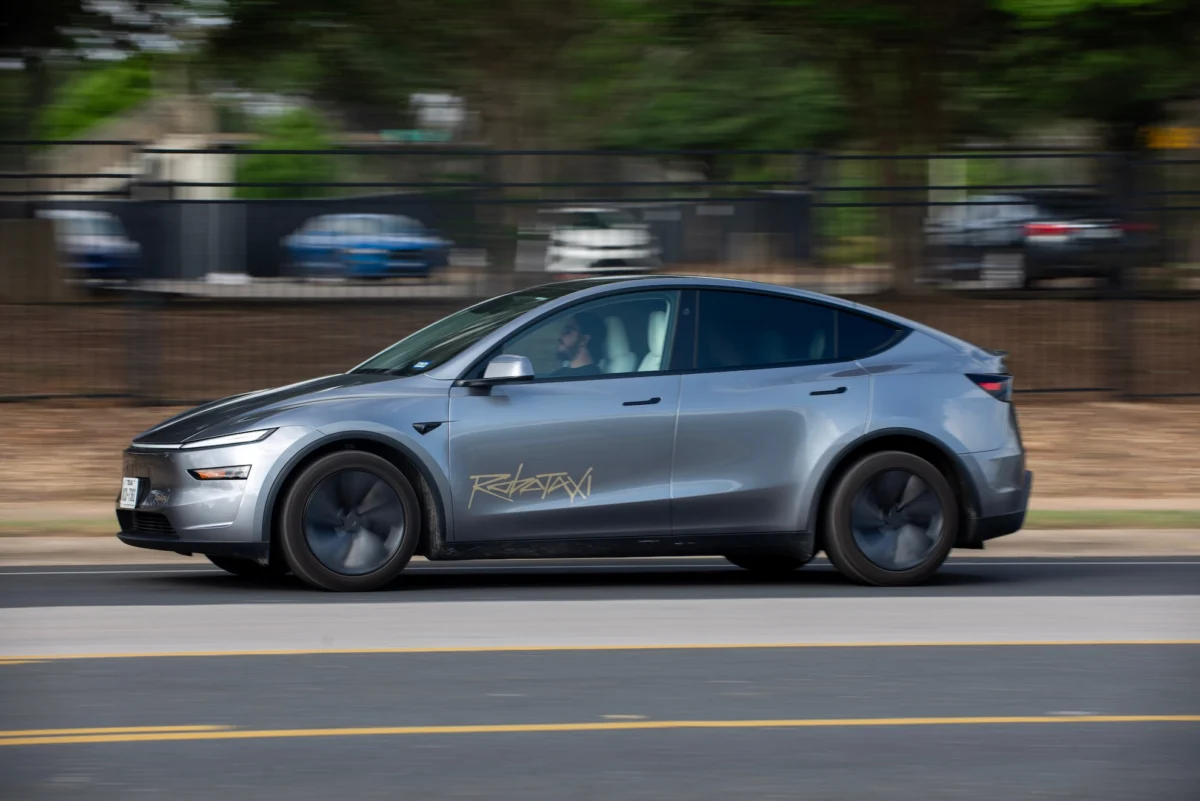
Tesla has announced the expansion of its fully driverless robotaxi service to Dallas and Houston, marking a significant step in the company’s long-term strategy for autonomous mobility. The revelation came via a social media post from the company, which stated, "Robotaxi is now rolling out in Dallas & Houston," accompanied by a 14-second video illustrating Tesla vehicles operating without human monitors or drivers in the front seat. This expansion entrenches Texas as a primary proving ground for Tesla’s autonomous technology, with Austin having served as the inaugural launch city for the service.
The move into two of Texas’s largest metropolitan areas follows the initial deployment of Tesla’s robotaxi service in Austin last year, specifically in 2025, according to previous reports. The Austin operation subsequently transitioned to fully driverless rides in January 2026, removing human safety drivers from the vehicles. This progression underscores Tesla’s commitment to deploying its "Full Self-Driving" (FSD) technology in a commercial, driverless capacity. However, the path has not been without its challenges; a February filing revealed that Tesla’s Austin robotaxis have been involved in 14 reported crashes since their launch, incidents that are currently under review by regulatory bodies.
The Genesis of Tesla’s Autonomous Ambitions
Tesla’s journey into autonomous driving has been characterized by ambitious pronouncements and iterative technological development stretching back over a decade. CEO Elon Musk has consistently championed a vision of a future where Tesla vehicles generate significant revenue for their owners by operating as a vast network of robotaxis. Early predictions, notably from Tesla’s "Autonomy Day" in 2019, envisioned millions of robotaxis on the road by specific target dates, promising a paradigm shift in personal transportation and urban logistics.
The foundation of this vision lies in Tesla’s "Full Self-Driving" (FSD) software, which has evolved through several beta iterations over the years. Initially offered as an advanced driver-assistance system requiring active human supervision, the FSD beta program has been collecting vast amounts of real-world driving data from hundreds of thousands of Tesla owners globally. This data is critical for training the company’s neural networks, which are designed to perceive and interpret the driving environment using an array of cameras, a strategy often referred to as "Tesla Vision." Unlike many competitors who integrate lidar and radar extensively, Tesla’s primary reliance on cameras represents a distinct, often debated, technological approach in the autonomous vehicle industry. The transition from a supervised FSD beta to a fully driverless robotaxi service in specific geofenced areas marks a significant leap from driver-assist functionality to true autonomous operation.
Chronology of Deployment and Regulatory Scrutiny
The operational timeline for Tesla’s robotaxi service in Texas highlights a methodical, albeit swift, expansion:
- 2025: Tesla officially launches its robotaxi service in Austin, Texas. Initially, these operations likely involved human safety drivers as a precautionary measure during the early testing phases. This marked the company’s first commercial foray into ride-hailing with its autonomous technology.
- January 2026: The Austin service progresses to fully driverless operation, removing human safety drivers from the vehicles. This crucial step signifies Tesla’s increasing confidence in the safety and reliability of its FSD software in a commercial context.
- February 2026: A filing indicates that Austin’s robotaxi fleet has been involved in 14 crashes since its launch. These incidents, reported to the National Highway Traffic Safety Administration (NHTSA), are part of ongoing safety oversight into advanced driver-assistance systems and autonomous vehicles. The nature and severity of these crashes are subject to investigation, but their occurrence underscores the inherent complexities and challenges of deploying cutting-edge autonomous technology.
- Current Announcement: Tesla publicly confirms the rollout of robotaxi services in Dallas and Houston, expanding its driverless footprint to three major Texas cities. This suggests that the company has gained sufficient confidence from its Austin operations to begin broader deployment within the state.
Beyond these fully driverless operations, Tesla also maintains a more limited ride service with human drivers in the San Francisco Bay Area. This distinction suggests different regulatory environments or stages of technological readiness for various regions, with California having a well-established, though stringent, framework for autonomous vehicle testing and deployment that often mandates human oversight in earlier phases.
The Strategic Importance of Texas
Tesla’s decision to concentrate its robotaxi expansion in Texas is strategically significant. The state offers a generally favorable regulatory environment for autonomous vehicle development and deployment, often considered more permissive than some other states with active AV testing programs. This "lighter touch" regulatory approach can accelerate testing and commercialization efforts, allowing companies like Tesla to iterate and scale more rapidly.
Furthermore, Texas is home to Tesla’s Gigafactory in Austin, which serves as a major manufacturing and operational hub for the company. This proximity streamlines logistics, maintenance, and technical support for the robotaxi fleet, reducing operational overheads and facilitating quicker responses to any operational issues. The demographics and urban characteristics of Austin, Dallas, and Houston also make them attractive markets. These are rapidly growing, car-centric cities with extensive road networks, diverse driving conditions, and a strong demand for transportation services, providing ideal environments for stress-testing and refining autonomous technology. Dallas and Houston, in particular, represent vast urban sprawls with millions of residents, offering immense potential for scaling a ride-hailing service.
Initial observations, however, suggest a cautious rollout in these new markets. Crowdsourced data from the Robotaxi Tracker website indicates that only a single Tesla vehicle is currently registered in each of Dallas and Houston for the robotaxi service. This contrasts sharply with Austin, where 46 active vehicles are logged, suggesting that Tesla is likely conducting an incremental, phased deployment in the new cities, gradually expanding its fleet as data is collected and performance is validated. This measured approach is typical for the autonomous vehicle industry, where safety and reliability are paramount.
The Broader Autonomous Vehicle Landscape
Tesla’s expansion occurs within a highly competitive and rapidly evolving autonomous vehicle (AV) industry. Major players like Waymo (an Alphabet subsidiary), Cruise (General Motors), and Zoox (Amazon) have been investing billions into developing and deploying their own self-driving technologies. Each company employs distinct technological stacks, operational strategies, and geographic focuses.
Waymo, for instance, has a long history of autonomous testing and operates fully driverless ride-hailing services in Phoenix, Arizona, and San Francisco, California, with recent expansions into Los Angeles. Their vehicles typically integrate a sophisticated array of lidar, radar, and cameras. Cruise, while having significant operations in San Francisco, faced a major setback in late 2023 when its driverless operations were paused and significantly restricted following an incident involving a pedestrian, highlighting the intense scrutiny and high stakes associated with AV safety. Zoox is also testing its purpose-built autonomous vehicles in several cities, including Las Vegas and Foster City, California.
The differing approaches—Tesla’s camera-centric "vision" versus the multi-sensor fusion preferred by many competitors—represent fundamental debates within the industry regarding the most effective and safest path to full autonomy. While Tesla touts the scalability and cost-effectiveness of its camera-only system, competitors argue that redundant sensor modalities provide greater robustness and safety, particularly in adverse weather conditions or complex scenarios.
Challenges and Implications for Urban Mobility
The expansion of robotaxi services carries significant implications for urban mobility, infrastructure, and the economy. The promise of autonomous ride-hailing includes reduced traffic congestion, decreased air pollution, improved road safety by eliminating human error, and enhanced accessibility for individuals who cannot drive. However, the path to widespread adoption is fraught with challenges.
- Safety and Public Trust: Gaining and maintaining public trust is perhaps the most critical hurdle. Incidents, even minor ones, can severely erode confidence. Regulators like NHTSA play a crucial role in investigating these incidents and establishing safety standards, which are still evolving for fully autonomous vehicles. The 14 crashes reported in Austin, while context is needed regarding their severity and fault, inevitably contribute to public discourse around AV safety.
- Regulatory Harmonization: The patchwork of state-level regulations in the U.S. creates complexities for AV companies seeking to operate nationally. A more harmonized federal framework could accelerate deployment, but also risks stifling local innovation or failing to address specific regional needs.
- Economic Impact: Widespread robotaxi adoption could disrupt traditional ride-hailing and taxi industries, potentially leading to job displacement for human drivers. Conversely, it could create new jobs in fleet management, maintenance, remote assistance, and data analysis.
- Scaling and Profitability: The capital expenditure required to develop, test, and deploy large-scale autonomous fleets is immense. Achieving profitability at scale remains a significant challenge for all players in the industry, necessitating efficient operations, high utilization rates, and competitive pricing models.
- Technological Hurdles: Despite rapid advancements, "edge cases"—unusual or unforeseen driving scenarios—continue to pose significant challenges for autonomous systems. The ability of AVs to consistently navigate these rare but critical situations safely is paramount for ubiquitous deployment.
Looking Ahead
Tesla’s expansion of its robotaxi service to Dallas and Houston marks a pivotal moment in its long-term strategy to monetize its FSD technology and realize Elon Musk’s vision of an autonomous transportation network. By deepening its footprint in Texas, the company is leveraging a favorable regulatory environment and large urban centers to accelerate data collection and operational refinement.
However, the journey to ubiquitous, safe, and profitable robotaxi services is far from complete. It will require continuous technological innovation, rigorous safety validation, proactive engagement with regulatory bodies, and, crucially, the sustained trust and acceptance of the public. The coming years will undoubtedly witness intense competition, further technological breakthroughs, and continued scrutiny as autonomous vehicles transition from niche services to a potentially transformative element of global transportation infrastructure. The success or challenges encountered in Dallas and Houston will provide invaluable insights into the future trajectory of Tesla’s ambitious robotaxi endeavor and the broader autonomous vehicle industry.
