

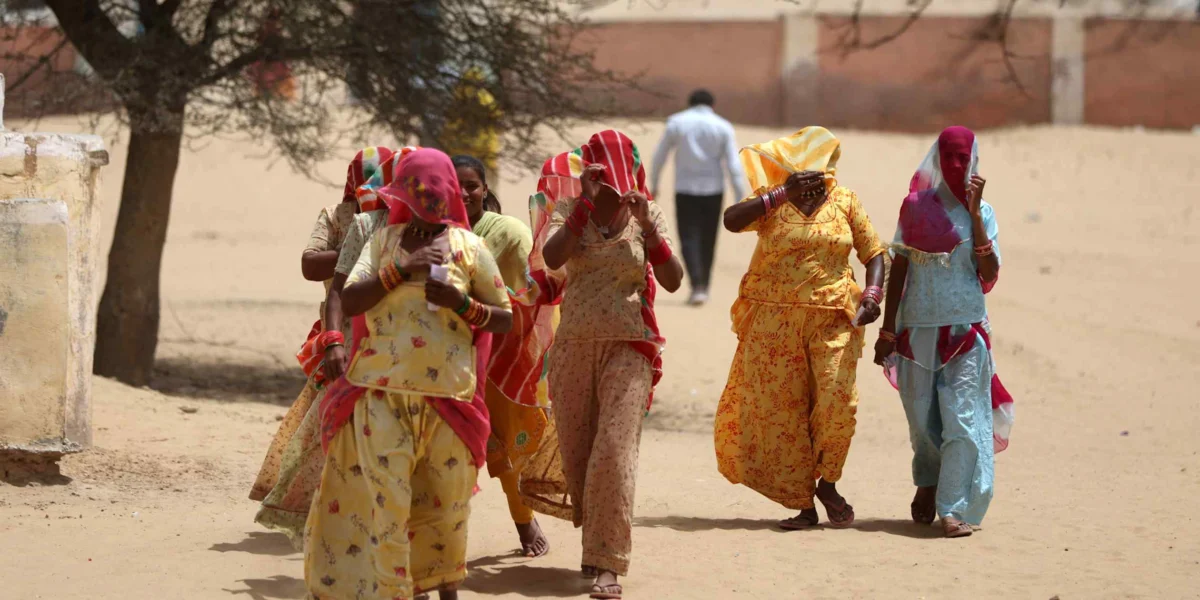
MUMBAI — Women residing in India’s most heat-vulnerable districts are reporting a disturbing increase in domestic violence during the scorching summer months, highlighting a critical yet often overlooked nexus between extreme heat and escalating risks for women, as well as a potent source of household tensions. This emerging pattern, detailed by researchers and observed by local community leaders, underscores the profound and multifaceted impacts of climate change extending beyond environmental degradation to penetrate the very fabric of domestic life, particularly in developing nations where resilience is already strained.
The Scorching Reality: Heat and Household Conflict
The link between elevated temperatures and aggression is not a new scientific observation. Studies across various disciplines have indicated that heat can exacerbate stress, irritability, and impulsivity in individuals. However, the systematic documentation of this phenomenon within the context of domestic violence, specifically affecting women in regions disproportionately exposed to extreme heat, presents a significant public health and human rights concern. In India, a nation grappling with rapid urbanization, population density, and a substantial agrarian workforce susceptible to climate fluctuations, this issue takes on particular urgency.
Districts identified as having the highest vulnerability to heat stress, often characterized by lower adaptive capacities, inadequate infrastructure for cooling, and a higher proportion of outdoor workers, are witnessing a discernible uptick in reported incidents of domestic violence during periods of prolonged and intense heatwaves. This surge is not confined to isolated incidents but appears to be a recurring trend, intensifying with each successive heatwave season. While precise, large-scale quantitative data directly linking heat to domestic violence is still in its nascent stages of collection and analysis, anecdotal evidence from NGOs, women’s shelters, and grassroots community organizers paints a grim picture.
A Growing Body of Evidence
Reports from organizations working on the ground in states like Rajasthan, Uttar Pradesh, and Bihar – regions frequently battered by severe heatwaves – suggest a correlation between days exceeding critical temperature thresholds and an increase in calls for help, as well as a rise in women seeking refuge from abusive partners. These women often cite increased irritability, frustration, and an inability to cope with the oppressive heat as contributing factors to escalated conflict within the home. The inability to escape the heat, coupled with economic anxieties often exacerbated by climate-related agricultural losses, creates a volatile environment where pre-existing tensions can quickly boil over into violence.
One such organization, operating in a rural district of Rajasthan known for its arid climate and susceptibility to extreme heat, reported a nearly 30% increase in domestic violence cases during the peak summer months of April to June in the last two years, compared to the preceding cooler months. While attributing this solely to heat is complex, the women who sought assistance frequently described the heat as a catalyst, making an already difficult living situation unbearable. "When the sun beats down relentlessly, and there’s no respite, tempers fray easily," explained a counselor at the organization, who requested anonymity to speak freely. "Men who are already stressed about crop yields or finding work become more aggressive, and women often bear the brunt of that frustration."
The Interplay of Factors: Heat, Stress, and Vulnerability
The phenomenon is not simply about physiological responses to heat; it is deeply intertwined with socio-economic vulnerabilities and gender inequalities. In many of these heat-vulnerable districts, women often have less access to resources, fewer economic opportunities, and are disproportionately responsible for household chores and caregiving, tasks that become significantly more arduous under extreme heat. Their ability to seek relief, either through personal cooling measures or by escaping the home, is often limited by societal norms and economic constraints.
Furthermore, the economic impact of climate change, particularly on agriculture, plays a crucial role. Failed harvests due to drought or excessive heat can lead to food insecurity and financial distress. When men, who are often the primary breadwinners in these communities, face mounting economic pressures exacerbated by climate-related crop failures, their stress levels can soar. This stress, combined with the physical discomfort of extreme heat, creates a fertile ground for domestic conflict, with women often becoming the immediate targets of displaced anger and frustration.
A Timeline of Escalation
The increasing frequency and intensity of heatwaves in India, a trend directly linked to global climate change, have been well-documented over the past two decades. While precise data directly linking heatwaves to domestic violence has only recently begun to be systematically collected, local observations suggest a gradual but discernible escalation.
- Early 2000s: While heatwaves were a known phenomenon, their intensity and duration were less pronounced. Anecdotal reports of increased household arguments during hot periods existed but were not widely studied as a direct consequence of climate change.
- Mid-2010s: A noticeable increase in the frequency and severity of heatwaves across India. This period saw a growing awareness among researchers and NGOs about the disproportionate impact of climate change on vulnerable populations. Early, localized studies began to explore the links between environmental stressors and social unrest.
- Late 2010s – Present: Intensified and prolonged heatwaves have become a recurring feature. This period has witnessed more systematic data collection by grassroots organizations and a growing body of academic research beginning to confirm the correlation between extreme heat and increased instances of domestic violence, particularly in heat-vulnerable regions. The COVID-19 pandemic, with its associated lockdowns and economic disruptions, further complicated the issue, often trapping women in abusive environments with limited avenues for escape.
Expert Perspectives and Official Responses
Climate scientists and social researchers have long warned about the cascading effects of climate change. Dr. Priya Sharma, a climatologist at the Indian Institute of Science, stated, "The warming planet is not just about rising sea levels or melting glaciers. It is about tangible impacts on human well-being, including social cohesion and individual safety. The data emerging from regions like India, linking heat to domestic tensions, is a stark reminder of this interconnectedness."
Sociologists specializing in gender and development have emphasized the need for a multi-pronged approach. "We cannot address the rise in domestic violence in these regions without acknowledging the role of climate change," commented Professor Rajesh Kumar from Delhi University. "Interventions must address both immediate safety needs for women and long-term climate adaptation strategies that build resilience at the household and community level. This includes providing access to cooling technologies, diversifying livelihoods, and strengthening social support systems for women."
While official government statistics on domestic violence do not typically disaggregate data by climatic conditions, there is growing recognition within policy circles of the broader socio-economic impacts of climate change. The National Action Plan on Climate Change and its various state-level counterparts are increasingly incorporating adaptation measures. However, the specific nexus between extreme heat and domestic violence requires more targeted research and dedicated policy interventions.
A spokesperson for the Ministry of Women and Child Development acknowledged the reports of increased stress in households during extreme weather events. "We are committed to ensuring the safety and well-being of women and children. We are working with state governments and NGOs to strengthen support mechanisms and awareness campaigns. Research into the specific impacts of climate change on domestic violence is crucial for developing more effective strategies."
Broader Implications and the Path Forward
The implications of this emerging trend are far-reaching. If climate change is indeed a significant contributor to domestic violence, it poses a considerable challenge to efforts aimed at achieving gender equality and sustainable development. It suggests that climate adaptation strategies must go beyond infrastructure and economic resilience to encompass social and psychological well-being.
Key implications include:
- Increased Burden on Support Services: Women’s shelters and domestic violence helplines in affected regions may face increased demand during hotter months, requiring enhanced resources and staffing.
- Challenges to Development Goals: The rise in domestic violence can hinder women’s participation in education and economic activities, impacting overall development progress.
- The Need for Integrated Solutions: Addressing this issue requires collaboration between climate scientists, social scientists, public health officials, and policymakers. Climate adaptation plans need to explicitly consider gender-sensitive approaches that mitigate the risks of increased household conflict.
- Urgency for Climate Action: The findings underscore the urgent need for global and national efforts to mitigate climate change and reduce the frequency and intensity of extreme weather events.
Moving forward, comprehensive research is needed to quantify the precise correlation between heat exposure and domestic violence, identify specific thresholds, and understand the mediating factors. This data will be invaluable for informing targeted interventions. Community-based programs that promote conflict resolution, provide psychological support, and empower women with economic alternatives are essential. Furthermore, ensuring access to affordable and sustainable cooling solutions in vulnerable households can play a critical role in reducing the physical and psychological stress exacerbated by extreme heat.
The invisible heat is now revealing a visible scar on the lives of many women in India. Recognizing and addressing this complex interplay between climate change and domestic violence is not just a matter of environmental policy; it is a fundamental imperative for safeguarding human rights and fostering resilient, equitable societies. As the planet continues to warm, understanding and mitigating these nuanced human impacts will become increasingly vital.
