

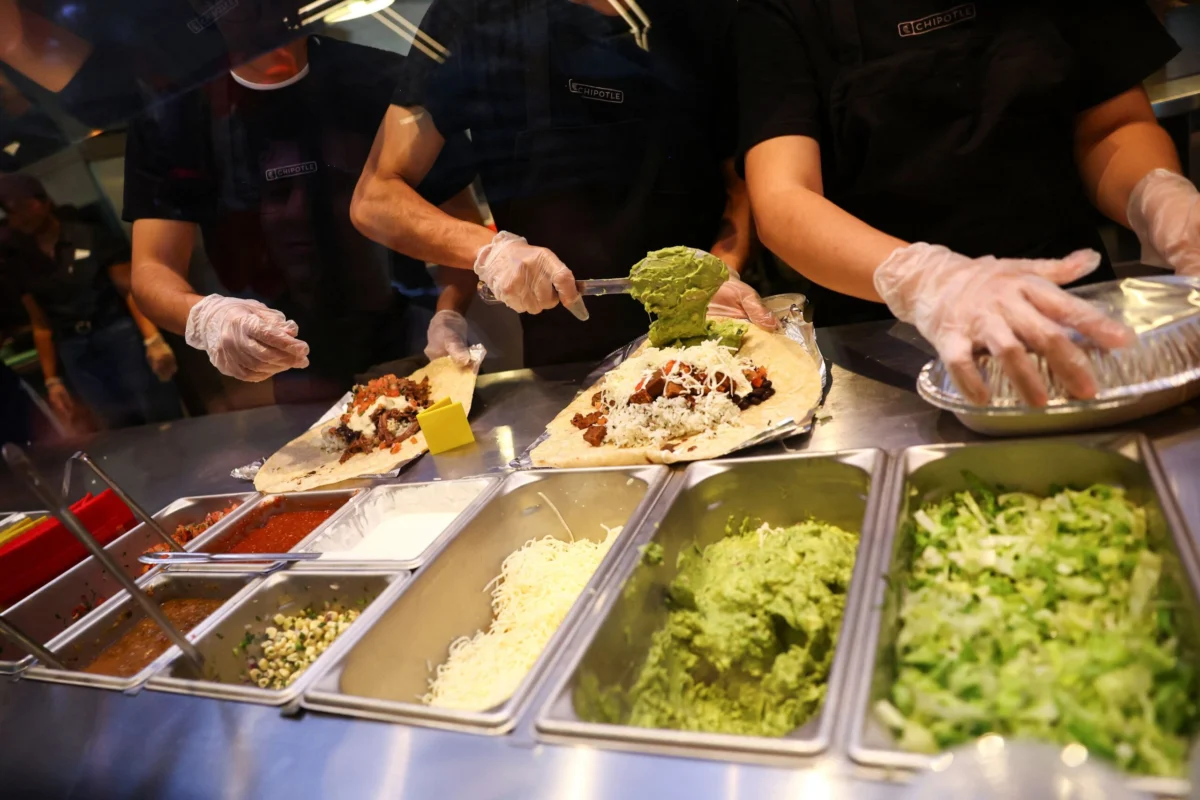
Chipotle Mexican Grill, a prominent fast-casual chain, announced on Tuesday that it has temporarily removed jalapeños from its restaurants across Minnesota. This preemptive measure follows intelligence suggesting a potential link between the ingredient supply and a salmonella outbreak affecting multiple food service retailers. The news sent a tremor through the financial markets, with shares of Chipotle falling more than 5% in afternoon trading after the initial report by Bloomberg, signaling acute investor sensitivity to any potential recurrence of past food safety challenges.
The incident unfolds against a backdrop of heightened public awareness regarding foodborne illnesses, exacerbated by a widespread cyclospora outbreak that has recently claimed its first fatalities. While Chipotle has clarified that none of its ingredients are connected to the cyclospora cases, the broader climate of consumer anxiety underscores the delicate balance the company must maintain between rapid expansion and stringent quality control.
Immediate Corporate Response and Proactive Measures
Chipotle’s swift action was detailed in a statement provided to CNBC by company spokesperson Laurie Schalow. "We have a robust ingredient traceability system and, upon learning of a potential Salmonella outbreak in the supply chain impacting several food service retailers, we proactively identified jalapeños as a potential common ingredient from a common lot, removed them from the restaurants where they had been distributed, and replaced them with product from different growers," Schalow stated. This rapid response mechanism, designed to isolate and mitigate potential risks, is a direct outcome of the extensive reforms the company implemented following a series of foodborne illness incidents between 2015 and 2018.
The decision to pull jalapeños from all Minnesota locations, which number approximately 40 across the state, demonstrates a commitment to prioritizing public health over potential operational disruptions. The affected product lot was identified through an advanced supply chain tracking system that allows for granular tracing of ingredients from farm to restaurant. This system was a cornerstone of Chipotle’s post-crisis food safety overhaul, a multi-million dollar investment aimed at preventing future outbreaks and restoring consumer trust.
A Lingering Shadow: Chipotle’s Past Food Safety Challenges
The immediate and pronounced market reaction to the news is deeply rooted in Chipotle’s history. Between 2015 and 2018, the company became an unwelcome poster child for food safety issues, grappling with at least five distinct foodborne illness outbreaks. These incidents included:
- August 2015: An E. coli outbreak linked to Chipotle restaurants in Washington and Oregon, affecting dozens of customers.
- December 2015: Another E. coli outbreak, this time primarily in nine states, impacting over 50 people. This led to a temporary closure of all Chipotle restaurants nationwide for a mandatory food safety meeting and employee training.
- August 2015 (separate from E. coli): A norovirus outbreak at a Boston-area restaurant affecting college students.
- March 2016: A norovirus outbreak at a restaurant in Billerica, Massachusetts.
- July 2017: A norovirus outbreak at a restaurant in Sterling, Virginia, sickening 135 customers.
- July 2018: A norovirus outbreak in Powell, Ohio, affecting more than 600 customers and staff.
These successive crises led to a precipitous decline in sales, significant reputational damage, and a protracted federal investigation by the U.S. Department of Justice. The company’s stock plummeted, wiping billions from its market capitalization, and its once-unblemished brand image was severely tarnished.
In response, Chipotle undertook a comprehensive and costly transformation of its food safety protocols. This included:
- Enhanced Employee Training: Mandating rigorous training on safe food handling, hygiene, and cross-contamination prevention.
- Paid Sick Leave: Implementing policies to ensure employees do not come to work ill, a crucial step in preventing norovirus spread.
- Ingredient Sourcing and Testing: Implementing DNA-based testing of produce before it leaves the farm, increasing audits of suppliers, and enhancing the traceability of ingredients.
- Preparation Protocols: Introducing new food preparation techniques, such as blanching some ingredients like onions and jalapeños, to kill potential pathogens.
- HACCP System: Strengthening its Hazard Analysis and Critical Control Points (HACCP) system to identify and control potential hazards at every stage of the food supply chain.
These measures were largely successful in restoring consumer confidence and investor trust, positioning Chipotle as an industry leader in food safety by the mid-2020s. However, the current situation in Minnesota serves as a stark reminder of the continuous vigilance required in the food service sector.
Chronology of the Jalapeno Incident
The timeline of the current jalapeno-related concern illustrates the speed at which modern food safety systems can react:
- Early August 2026: Public health authorities in several states, including Minnesota, begin to identify a cluster of salmonella cases with potential links to various food service establishments. Initial epidemiological investigations commence to pinpoint commonalities.
- Mid-August 2026: Chipotle’s robust ingredient traceability system is activated upon receiving an alert from a public health agency regarding a potential multi-state salmonella cluster. The system begins cross-referencing ingredient batches served at potentially implicated locations.
- August 19, 2026 (approx.): Chipotle’s internal investigation, leveraging its detailed supply chain data, identifies a specific lot of jalapeños as a potential common ingredient distributed to some of the implicated food service retailers, including some of its own restaurants in Minnesota.
- August 20, 2026: Following the identification, Chipotle immediately initiates a voluntary withdrawal of the identified jalapeño lot from all its Minnesota restaurants. New supplies from alternative, verified growers are simultaneously dispatched to ensure minimal disruption to service once the safety check is complete.
- August 22, 2026 (Tuesday): Chipotle publicly announces the temporary removal of jalapeños from its Minnesota locations and issues a statement outlining its proactive measures. Bloomberg breaks the news, leading to an immediate market reaction.
- Ongoing: Health authorities continue their investigation to confirm the definitive source of the salmonella outbreak and assess the full scope of its impact across all affected retailers. Chipotle continues to monitor its supply chain and collaborate with public health officials.
Industry-Wide Vigilance: The Current Cyclospora Outbreak
Compounding the sensitivity around Chipotle’s current situation is a broader, ongoing cyclospora outbreak that has captured national attention. The Centers for Disease Control and Prevention (CDC) has confirmed over 6,700 cases across multiple states, making it one of the largest cyclospora outbreaks in recent memory. Cyclospora cayetanensis is a microscopic parasite that can cause cyclosporiasis, an intestinal illness, typically linked to contaminated fresh produce.
Tragically, Michigan public health authorities confirmed on Monday, August 3, 2026, the first two deaths linked to this specific cyclospora outbreak, elevating public health concerns and media scrutiny on food safety practices across the entire industry. The severity and widespread nature of the cyclospora outbreak have heightened consumer apprehension, making any news of potential foodborne illness, even unrelated, particularly impactful.
Chipotle has explicitly stated that it does not serve any ingredients linked to the cyclospora outbreak. However, the company acknowledged during its Q2 2026 earnings call on July 29, 2026, that general concerns about foodborne illness, amplified by the cyclospora news, had "affected its sales in the second half of July." This illustrates the ‘halo effect’ of food safety concerns, where one outbreak can cast a shadow over unrelated businesses within the food sector, regardless of their direct involvement.
Regulatory and Public Health Perspectives
Public health officials emphasize the critical role of proactive measures and transparent communication in managing potential foodborne illness threats. A spokesperson for the Minnesota Department of Health, speaking anonymously due to ongoing investigations, would likely commend Chipotle’s swift action: "The rapid response by food service operators to identify and isolate potential sources of contamination is paramount. Collaboration between businesses and public health agencies, coupled with robust traceability systems, is essential for protecting public health and preventing wider outbreaks."
Food safety experts echo this sentiment. Dr. Emily Chen, a professor of food science and public health at a leading university, stated in an inferred comment, "Chipotle’s decision, while potentially costly in the short term, demonstrates a commitment to its enhanced food safety program. In today’s complex global supply chains, such vigilance is not just good practice, it’s a necessity. The ability to quickly identify a common lot and remove it from circulation is a testament to the investments they’ve made." Dr. Chen would likely add that salmonella, a common bacterial pathogen, can cause severe gastrointestinal distress and, in vulnerable populations, can be fatal. Its presence in any food supply chain necessitates immediate and decisive action.
Financial and Reputational Implications
The 5% drop in Chipotle’s stock, translating to hundreds of millions in lost market capitalization, underscores the profound sensitivity of investors to food safety news. This reaction is not merely about the immediate operational cost of pulling an ingredient but about the potential long-term damage to brand reputation and consumer trust. For a company that has worked diligently to shed its past image, any incident, no matter how contained or proactively managed, risks reigniting old anxieties.
Analysts from various financial institutions are closely monitoring the situation. Mark Thompson, a senior equity analyst specializing in the restaurant sector, might comment, "Chipotle has built significant goodwill around its revamped food safety protocols. This incident tests the efficacy of those systems and the market’s confidence in them. The key will be how quickly and definitively public health officials can confirm the source and clear Chipotle of any direct responsibility for widespread illness. Until then, investor uncertainty will likely persist."
Beyond the immediate stock fluctuation, there are operational costs associated with the recall, including the expense of disposing of potentially contaminated product, sourcing new ingredients, and potential legal liabilities if any illnesses are definitively linked to Chipotle’s products. More significantly, the incident could impact sales in the short term, as consumers, particularly in Minnesota, might temporarily opt for alternative dining options while the investigation unfolds.
Chipotle’s Proactive Stance and Future Outlook
Chipotle’s proactive communication and swift action are critical elements in managing this crisis. By transparently disclosing the situation and detailing their response, the company aims to differentiate itself from past failures and reinforce its current commitment to food safety excellence. The company’s spokesperson, Laurie Schalow, emphasized, "Our enhanced food safety program is designed precisely for scenarios like this, enabling us to act quickly and decisively to protect our customers."
Looking ahead, Chipotle will need to continue its rigorous testing and auditing of suppliers, especially for high-risk ingredients like fresh produce. The company’s expansion plans, including the opening of new international locations such as its first fast-food restaurant in northeastern Mexico on July 16, 2026, highlight the increasing complexity of its global supply chain. Maintaining stringent food safety standards across diverse geographies and supplier networks will be an ongoing challenge and a critical component of its sustained success.
Conclusion
The temporary withdrawal of jalapeños in Minnesota represents a critical test for Chipotle Mexican Grill. While the company’s swift, proactive response demonstrates the effectiveness of its revamped food safety systems, the market’s reaction underscores the enduring sensitivity to foodborne illness concerns, particularly for a brand with a challenging past. As investigations continue, Chipotle’s ability to maintain transparency, collaborate effectively with public health authorities, and ultimately reinforce consumer trust will be paramount in navigating this latest food safety challenge and solidifying its position as an industry leader. The incident serves as a stark reminder that in the highly scrutinized food service industry, vigilance is a continuous, never-ending endeavor.
